
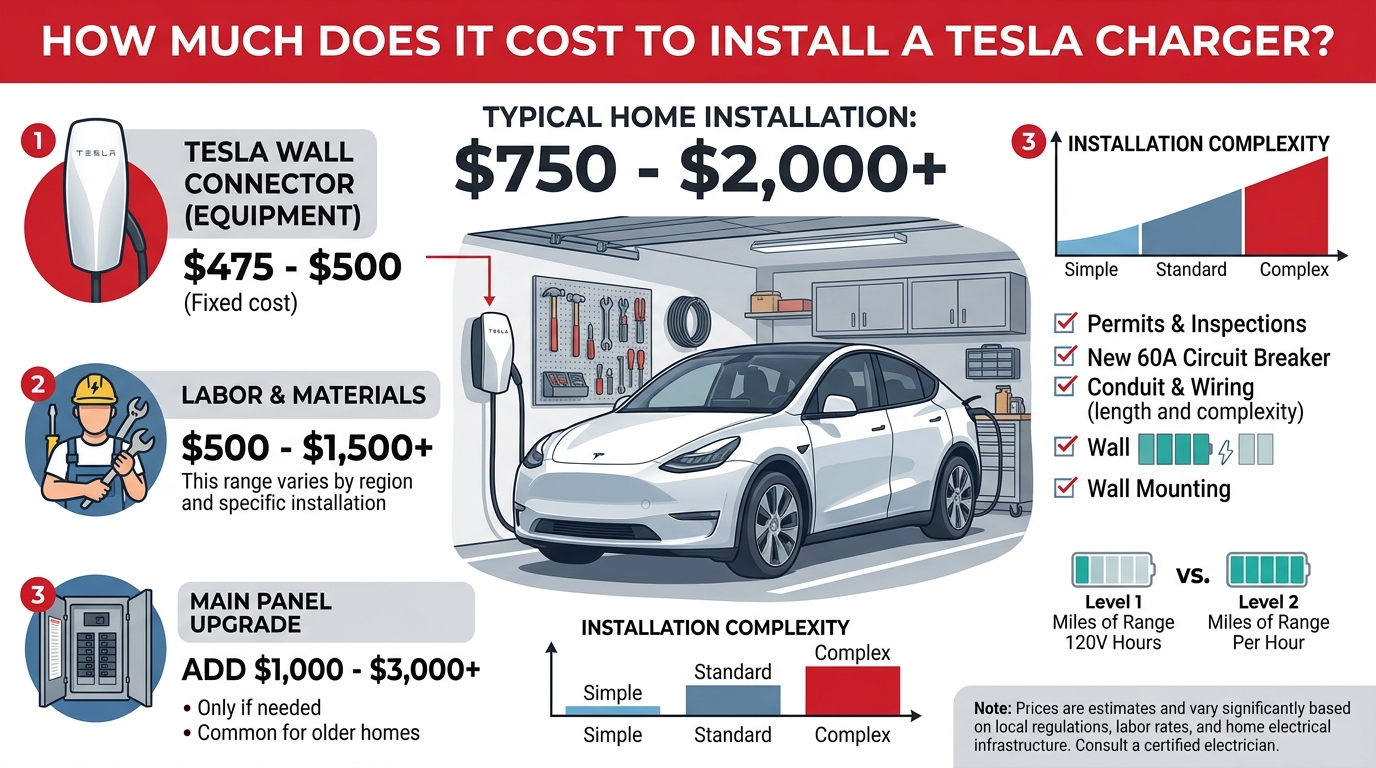
Installing a Tesla Wall Connector at home typically costs about $1,000 to $3,000 or more in the US, including the charger. The unit itself runs roughly $585 to $660, and a licensed electrician’s labor, materials and permit usually add $700 to $2,500. Distance from your panel, panel capacity and local permit rules cause the biggest swings.
Prices are in US dollars and reflect late 2026. Tesla has changed charger prices several times this year, so check the Tesla Shop before you budget.
Tesla Charger Installation Cost at a Glance
| Cost item | Typical range |
|---|---|
| Tesla Wall Connector (NACS plug) | About $585 |
| Tesla Universal Wall Connector | About $660 |
| Electrician labor and materials | $700 – $2,500+ |
| Permit and inspection | Varies by city |
| Panel upgrade (only if needed) | Extra, quoted separately |
| Typical total | $1,000 – $3,000+ |
Electrical panel work is the line most likely to blow up a budget, so ask for it as a separate line item.
Which Tesla Charger Are You Installing?
“Tesla charger” can mean three different things:
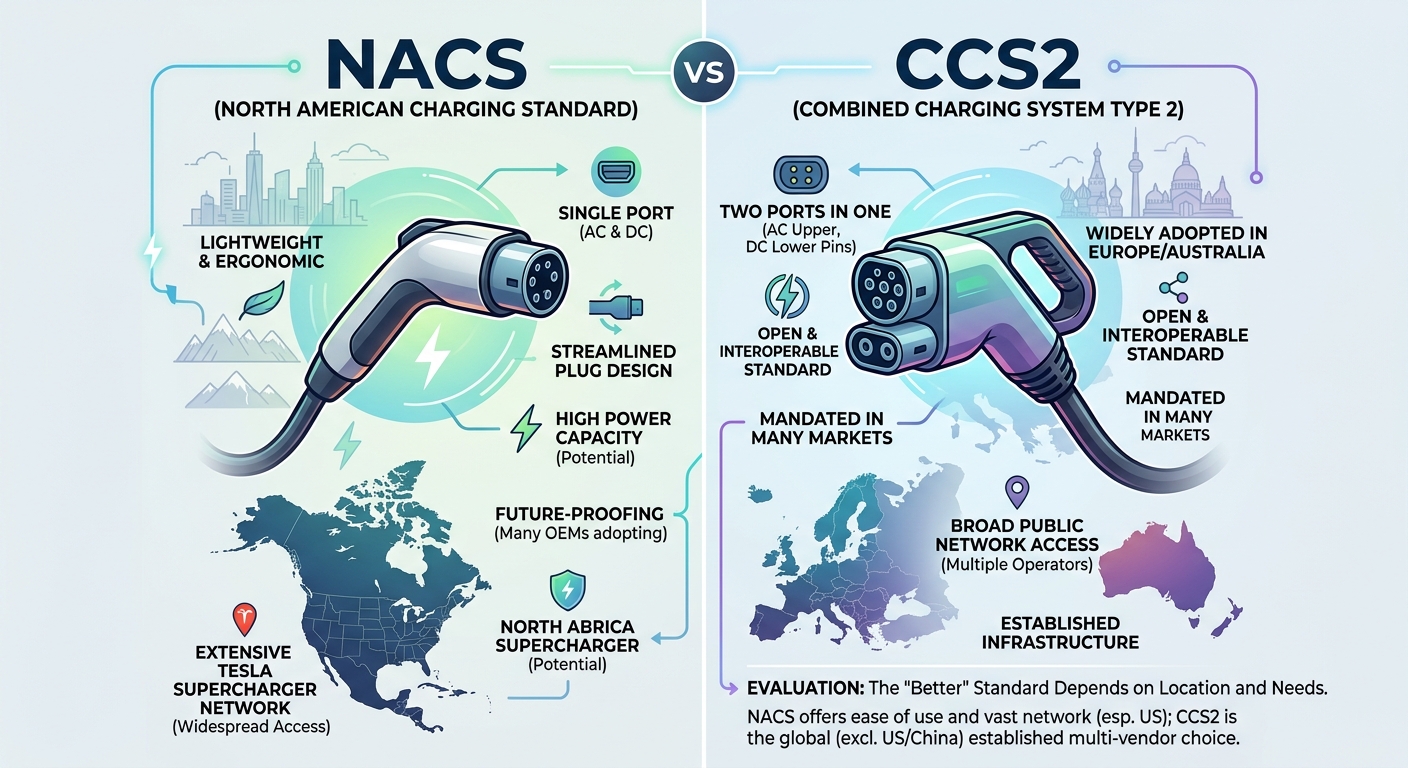
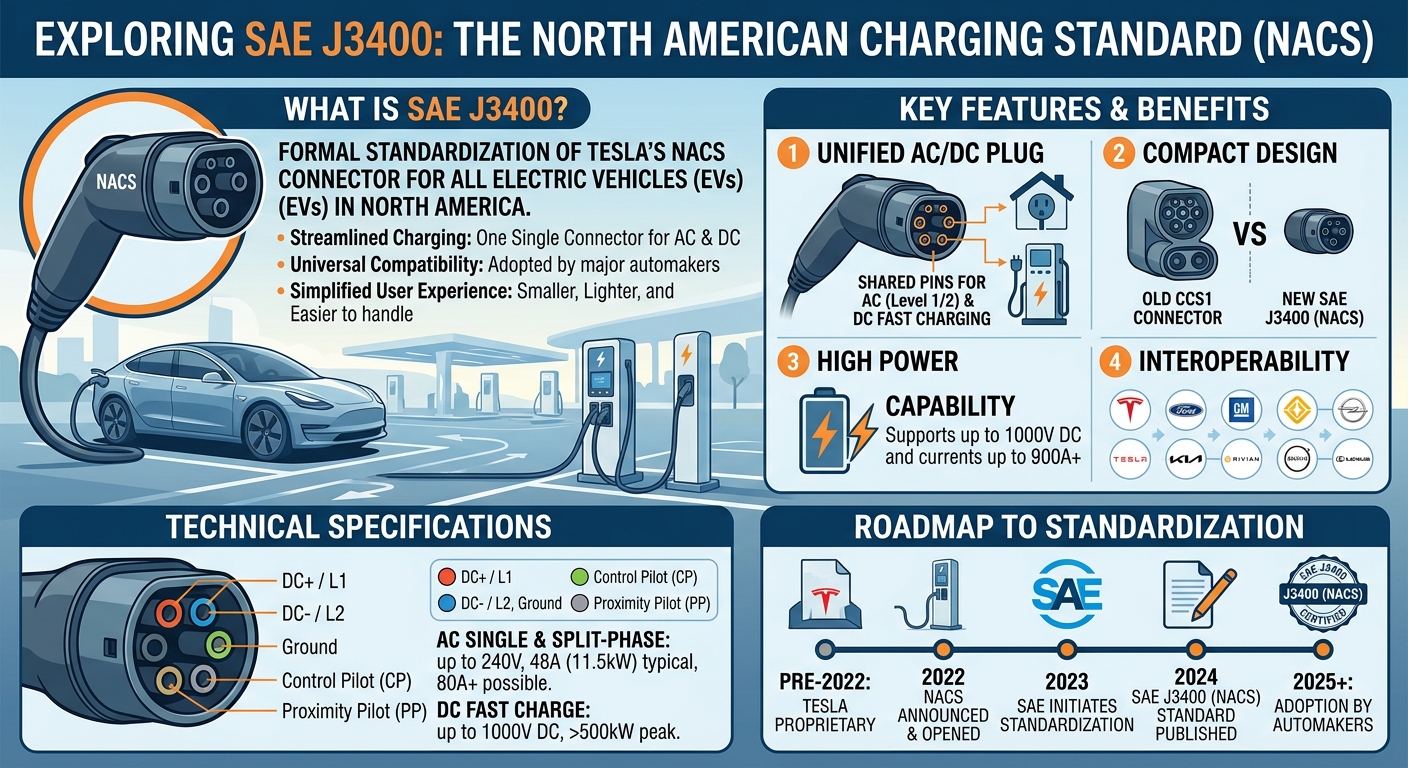
- Wall Connector. A hardwired Level 2 charger with Tesla’s NACS plug. It delivers up to 48 amps (about 11.5 kW) and is the most popular home option.
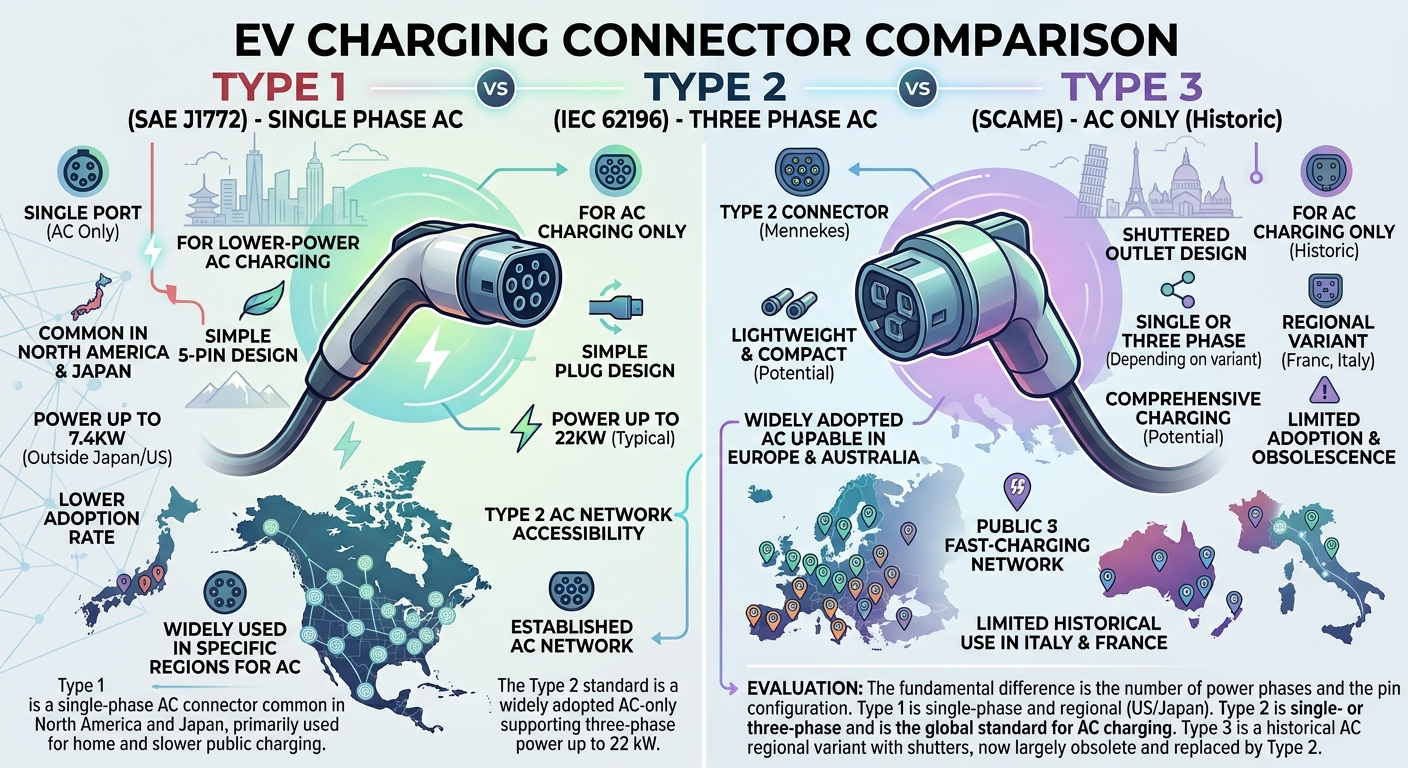
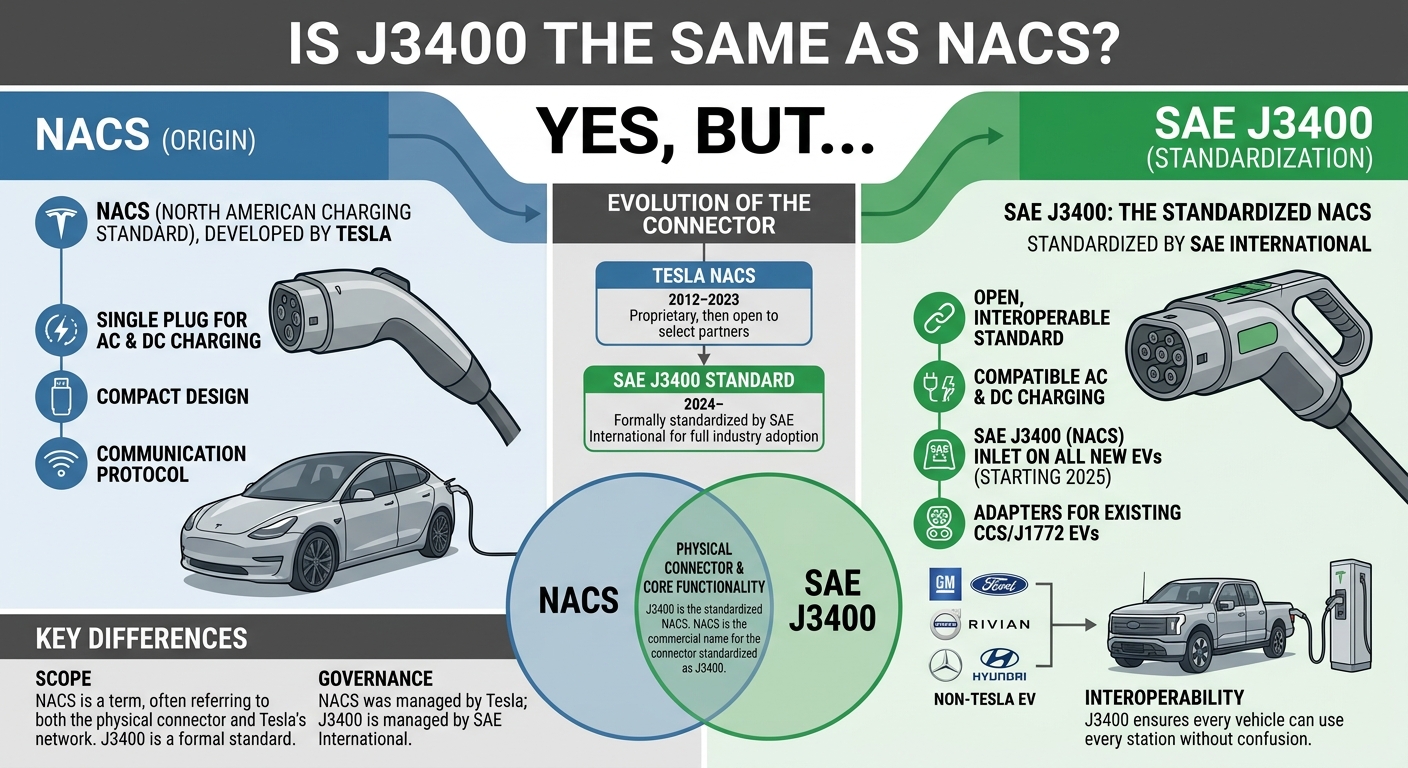
- Universal Wall Connector. The same idea with a built-in adapter, so it can also charge EVs that use the J1772 plug.
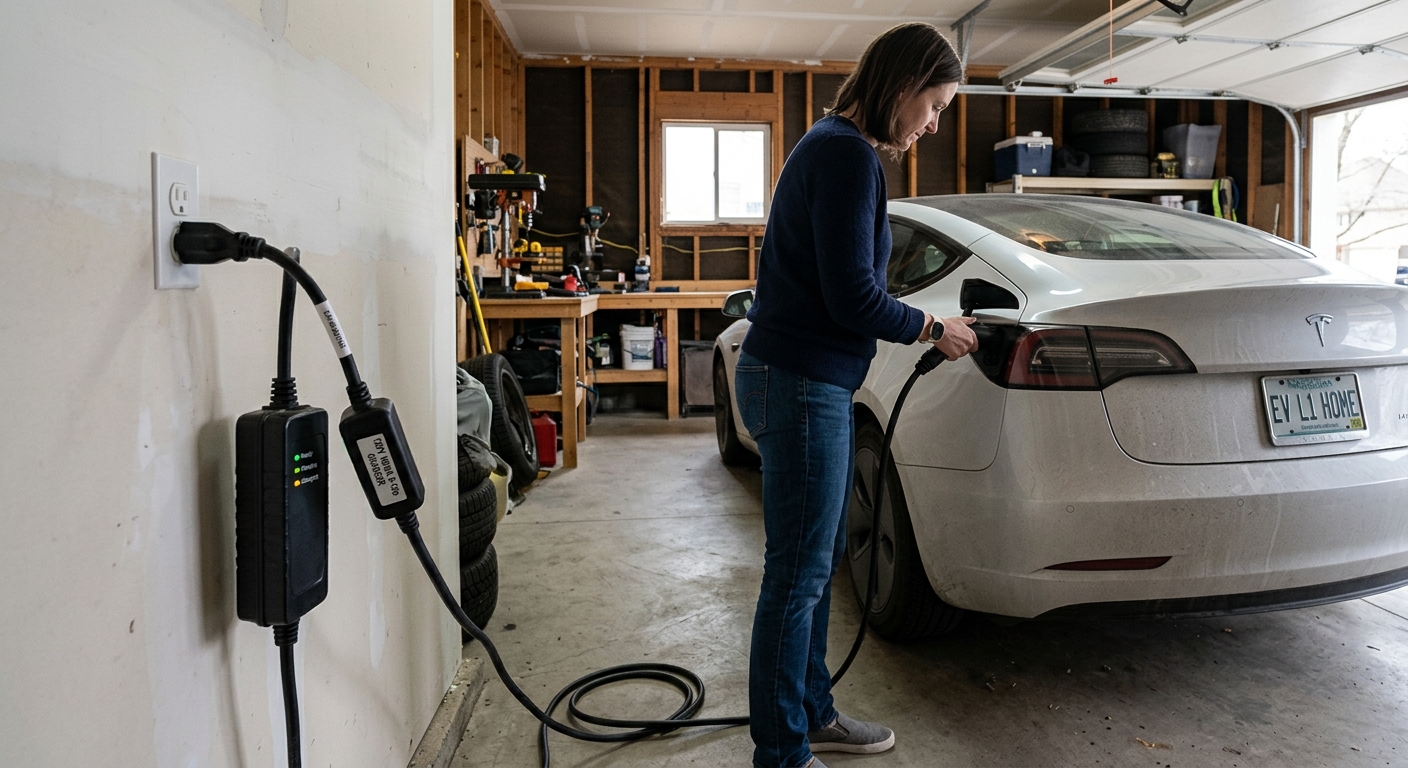
- Mobile Connector. A portable cord that plugs into an outlet. It needs an outlet, not a hardwired install, and charges more slowly.
This guide focuses on the Wall Connector, since that’s where installation cost matters most.
What Affects Your Tesla Charger Installation Cost?
- Distance from your electrical panel. Longer wire runs mean more material and more labor.
- Panel capacity. A 48-amp charger needs a dedicated 60-amp circuit. If your panel has no room, you may need a subpanel or an upgrade. See how many amps you need for a Level 2 EV charger.
- Wiring route. Running cable through finished walls, or outdoors in conduit or a trench, costs more than a short run in an open garage.
- Charger amperage. Higher amperage needs thicker wire and a bigger breaker.
- Permit and inspection. Many areas require both. Fees and rules vary by city.
- Local labor rates. Electrician pricing differs a lot between regions.
- Indoor or outdoor mounting. Outdoor installs need weather-rated conduit and fittings.
Three Realistic Cost Scenarios
These are planning estimates, not quotes.
| Scenario | What it looks like | Estimated total (incl. charger) |
|---|---|---|
| Simple | Panel has space, charger within a few feet, open garage wall | About $1,000 – $1,800 |
| Typical | Moderate wire run, standard permit, no panel work | About $1,800 – $3,000 |
| Complex | Long run, finished walls or trenching, panel or subpanel upgrade | $3,000 and up |
Your own quote will depend on your home. Getting several is the only reliable way to know.
Do You Need a Panel Upgrade?
Not always. Many homes have enough spare capacity for a dedicated circuit. An electrician does a load calculation to check. If your panel is full or too old, upgrading it can add a significant amount to the project.
Before paying for an upgrade, ask whether setting the charger to a lower amperage would work. A 48-amp charger only helps if your car can accept that much power. Match the circuit to your car, not just to the charger’s maximum.
Do You Need a Tesla-Certified Installer?
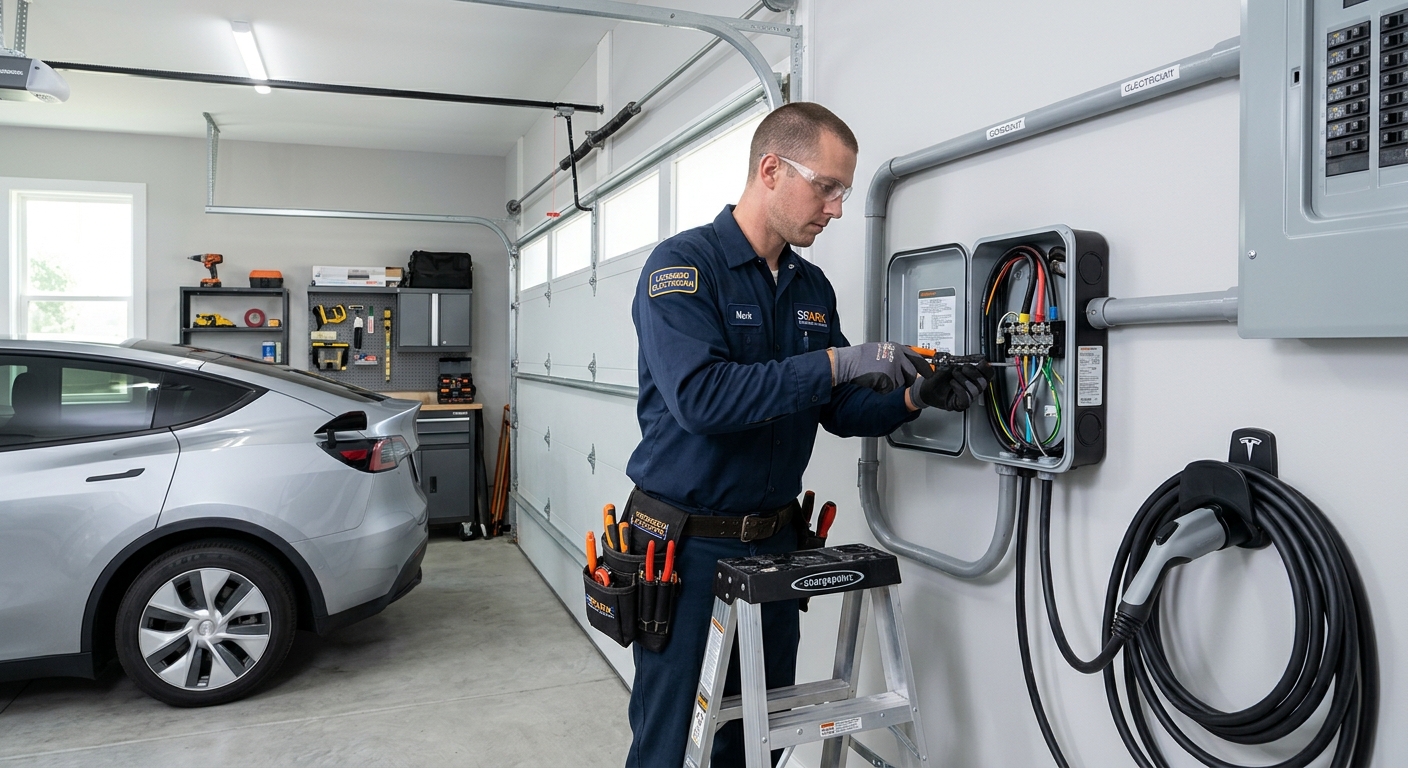
No. Any licensed electrician can legally install a Wall Connector. Tesla-certified installers have extra training on the product and its app setup, which some owners prefer. Compare certified and independent quotes, and check licenses and insurance either way.
Can You Install a Tesla Charger Yourself?
It’s possible to buy the charger yourself, but the installation involves a 240-volt circuit, a large breaker and usually a permit. Mistakes can create fire risk and cause problems with insurance or a future home sale. Read can I buy an EV charger and install it myself? before deciding.
Is There a Tax Credit for Installing a Tesla Charger?
The federal credit has ended. The Section 30C credit, which covered 30% of charger and installation costs up to $1,000, expired for chargers placed in service after June 30, 2026. Some state and utility programs still offer rebates or cheaper off-peak rates, so check with your utility and state energy office. If upfront cost is the issue, see can I get finance for an EV home charger installation?
How to Lower Your Tesla Charger Installation Cost
- Get two or three itemized quotes. Compare labor, materials, permit and any panel work separately.
- Mount the charger close to the panel. Shorter runs cost less.
- Choose the right amperage. Don’t pay for a bigger circuit than your car can use.
- Check rebates first. Utility and state programs vary and can change.
- Bundle electrical work. If you’re already upgrading your panel, doing it together may save on labor.
- Avoid vague quotes. A single lump sum makes it hard to compare bids.
Questions to Ask Before You Hire an Electrician
- Is the permit included in the price?
- How long will the wire run be, and what type of wire will you use?
- Does my panel have enough capacity, or will it need work?
- What happens if the inspection fails?
- Is the work warrantied, and for how long?
For a broader look at electrician pricing, see what it costs for an electrician to fit an EV charger and our general guide to how much it costs to install an EV charger.
Is Installing a Tesla Charger Worth It?
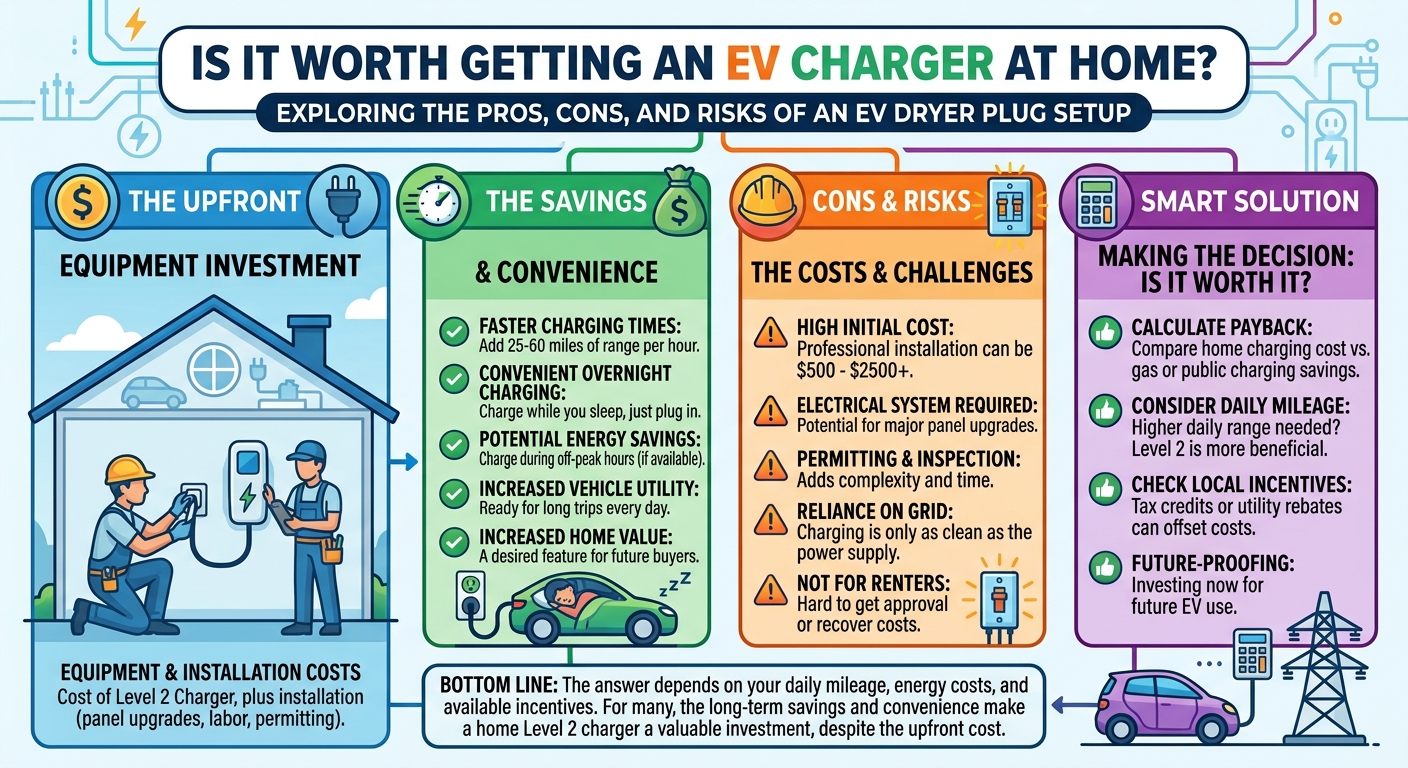
For most Tesla owners who charge at home, yes. Charging overnight on a dedicated Level 2 circuit is faster and more convenient than a standard outlet. See is installing a Level 2 EV charger worth it? for the full breakdown.
Frequently Asked Questions
How much does it cost to install a Tesla Wall Connector?
Most homeowners pay about $1,000 to $3,000 or more including the charger. Simple installs cost less, and complex ones with panel upgrades cost more.
How much does the Tesla Wall Connector itself cost?
Roughly $585 for the standard model and $660 for the Universal model in the US as of late 2026. Tesla changes prices often, so confirm on the Tesla Shop.
How much does an electrician charge to install a Tesla charger?
Labor and materials commonly add $700 to $2,500 or more, depending on distance, wiring route and local rates.
Do I need an electrician to install a Tesla Wall Connector?
Yes, in most places. It needs a dedicated 240-volt circuit and usually a permit.
Do I need a permit to install a Tesla charger?
Often yes. Requirements vary, so ask your local building department. A licensed electrician normally handles this.
Is there a tax credit for installing a Tesla charger in 2026?
The federal 30C credit expired for chargers placed in service after June 30, 2026. Check state and utility rebates.
How long does it take to install a Tesla charger?
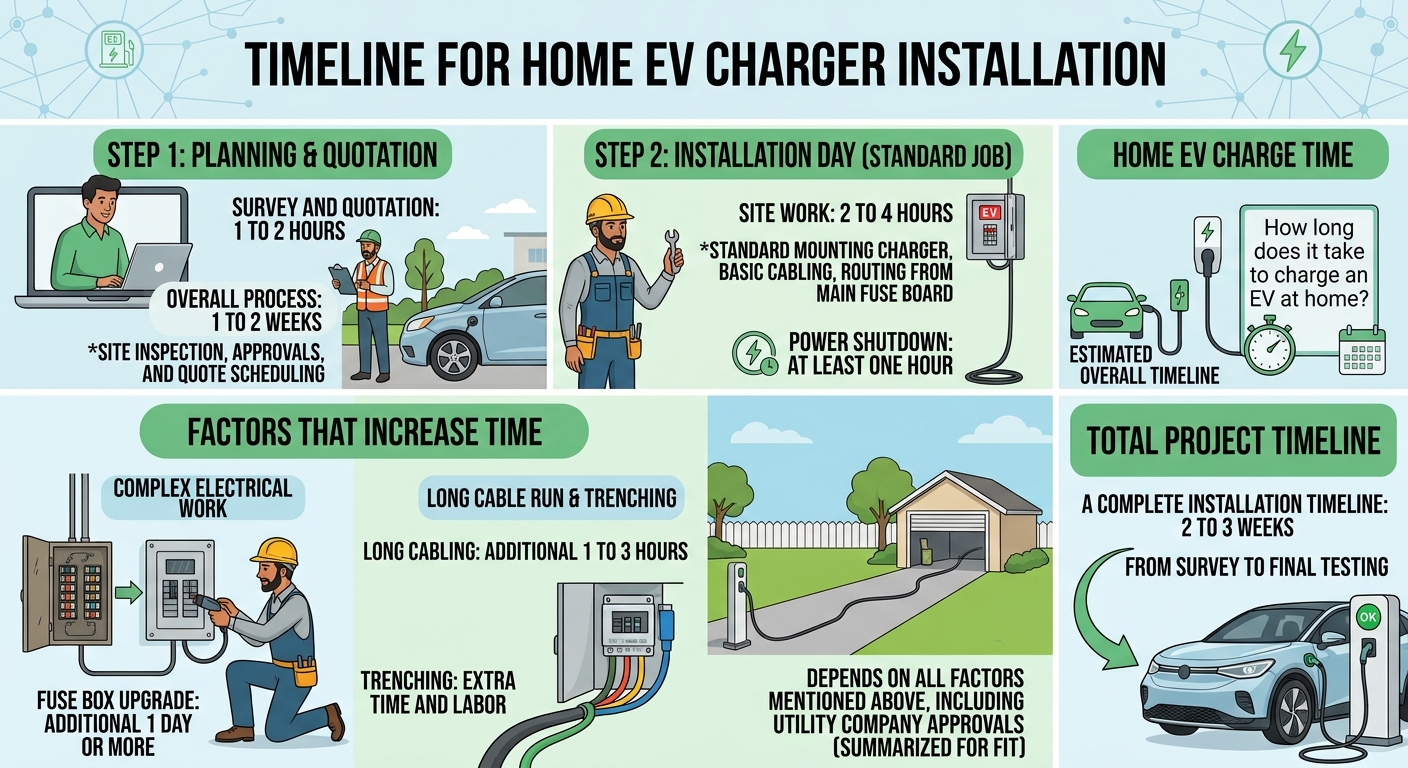
A simple install often takes a few hours. Panel work or long runs can take longer.
Will I need to upgrade my electrical panel?
Only if it lacks capacity for a new dedicated circuit. An electrician can tell you after a load calculation.
Final Takeaway
Plan on roughly $1,000 to $3,000 or more to install a Tesla charger, with panel capacity and wire distance as the main variables. Get itemized quotes, check for state or utility rebates, and hire a licensed electrician.
Planning your install? Contact us with your questions, or browse our EV charger installation guides and Level 2 charging articles.
Disclaimer: Costs are estimates and vary by location, home and electrician. Hire a licensed electrician and follow local permit rules.





Leave a Reply