
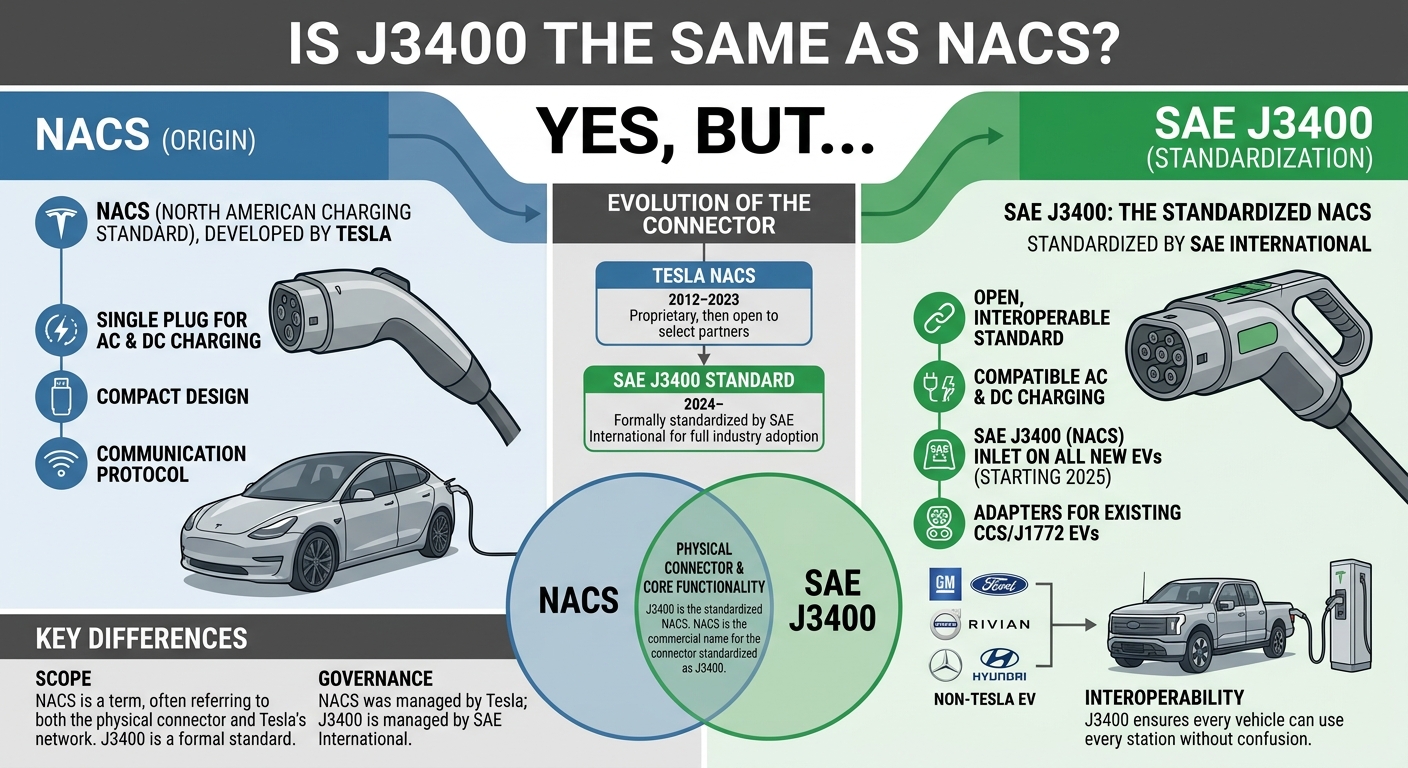
Electric vehicle (EV) charging technology is undergoing its most significant transition in North America. For years, EV drivers dealt with competing plug designs, adapter confusion, and fragmented infrastructure. However, the industry has aligned behind a single physical connector: the North American Charging Standard (NACS), officially standardized by SAE International as SAE J3400.
If you are following EV news or upgrading your charging setup, you might ask: Is J3400 the exact same thing as NACS?
The short answer is yes, fundamentally, but with an important distinction: NACS began as Tesla’s proprietary design, whereas SAE J3400 is the official, open-industry technical standard created so all automakers, charger manufacturers, and grid utilities can use the same technology safely and reliably.
For more technical breakdowns and home charging setup recommendations, visit EV Charger Advisor.
Understanding the Connection: NACS vs. SAE J3400
To understand how NACS evolved into SAE J3400, it helps to look at the history of the design and its standardization path.
+-------------------------------------------------------------------+
|                        EV CONNECTOR EVOLUTION                     |
|                                                                   |
|   [ 2012–2022 ] Tesla Proprietary Plug (Exclusive to Tesla EVs)   |
|         |                                                         |
|         v                                                         |
|   [ Nov 2022  ] Tesla renames design to "NACS" & opens specs      |
|         |                                                         |
|         v                                                         |
|   [ Dec 2023+ ] SAE International standardizes it as "SAE J3400" |
+-------------------------------------------------------------------+
1. What Is NACS?
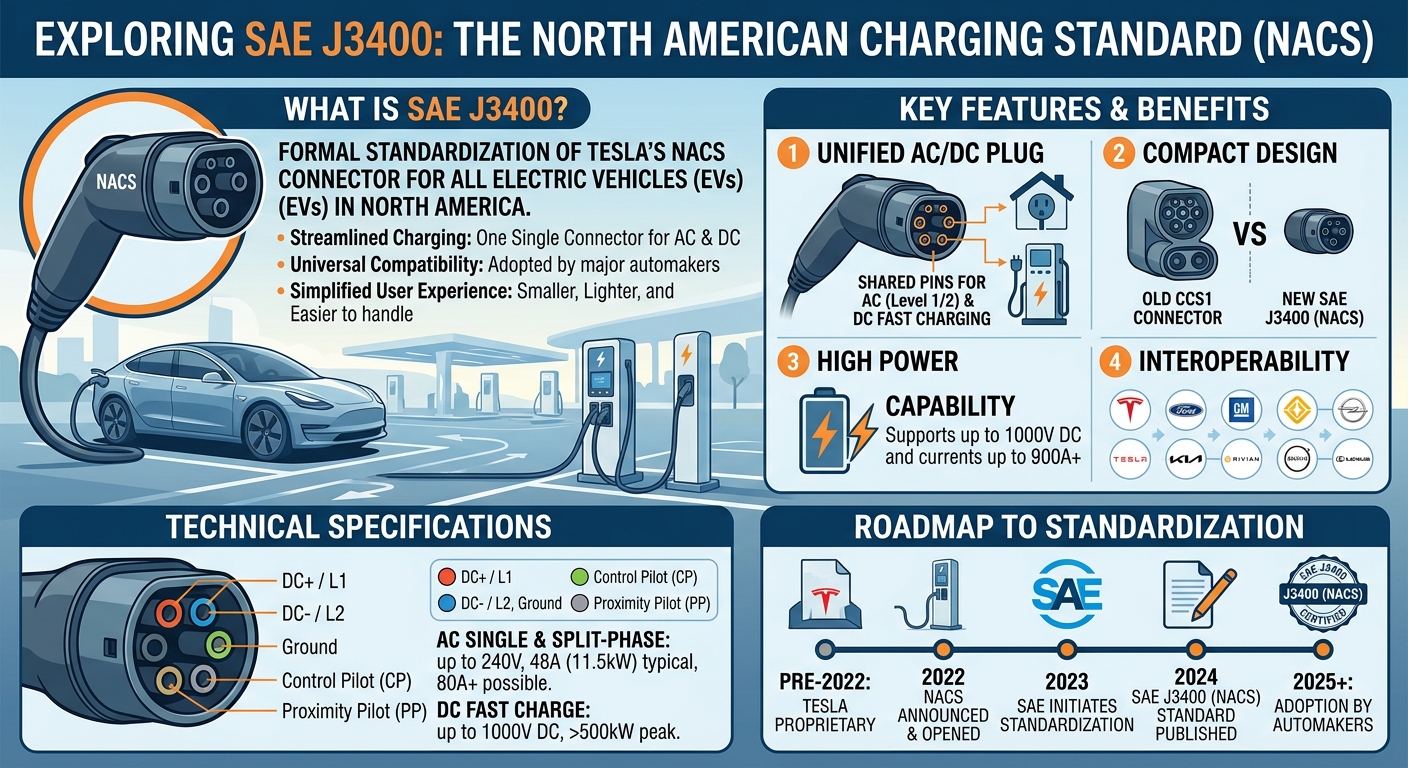
NACS stands for the North American Charging Standard. It is the ultra-compact charging port and plug originally developed by Tesla in 2012 for the Model S. In November 2022, Tesla opened its design specifications to the public and renamed the connector “NACS” to encourage industry-wide adoption.
2. What Is SAE J3400?
SAE J3400 is the formal technical specification published by SAE International (Society of Automotive Engineers). When an automaker or charger company builds a NACS port today, they build it according to SAE J3400 specifications.
Key Takeaway:
Think of NACS as the recognizable name/brand of the physical design, and SAE J3400 as the strict engineering blueprint and safety rulebook that governs it.
Key Technical Innovations of the SAE J3400 Architecture
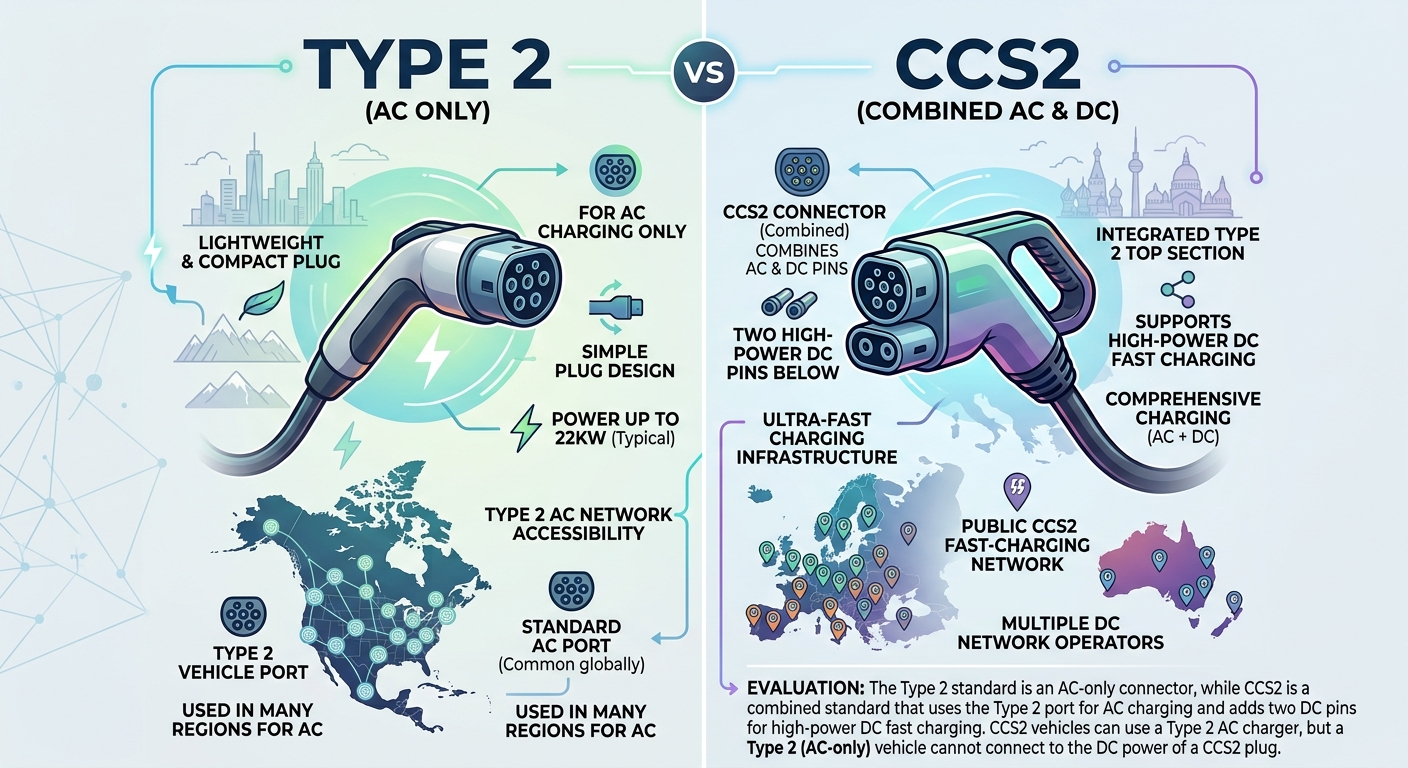
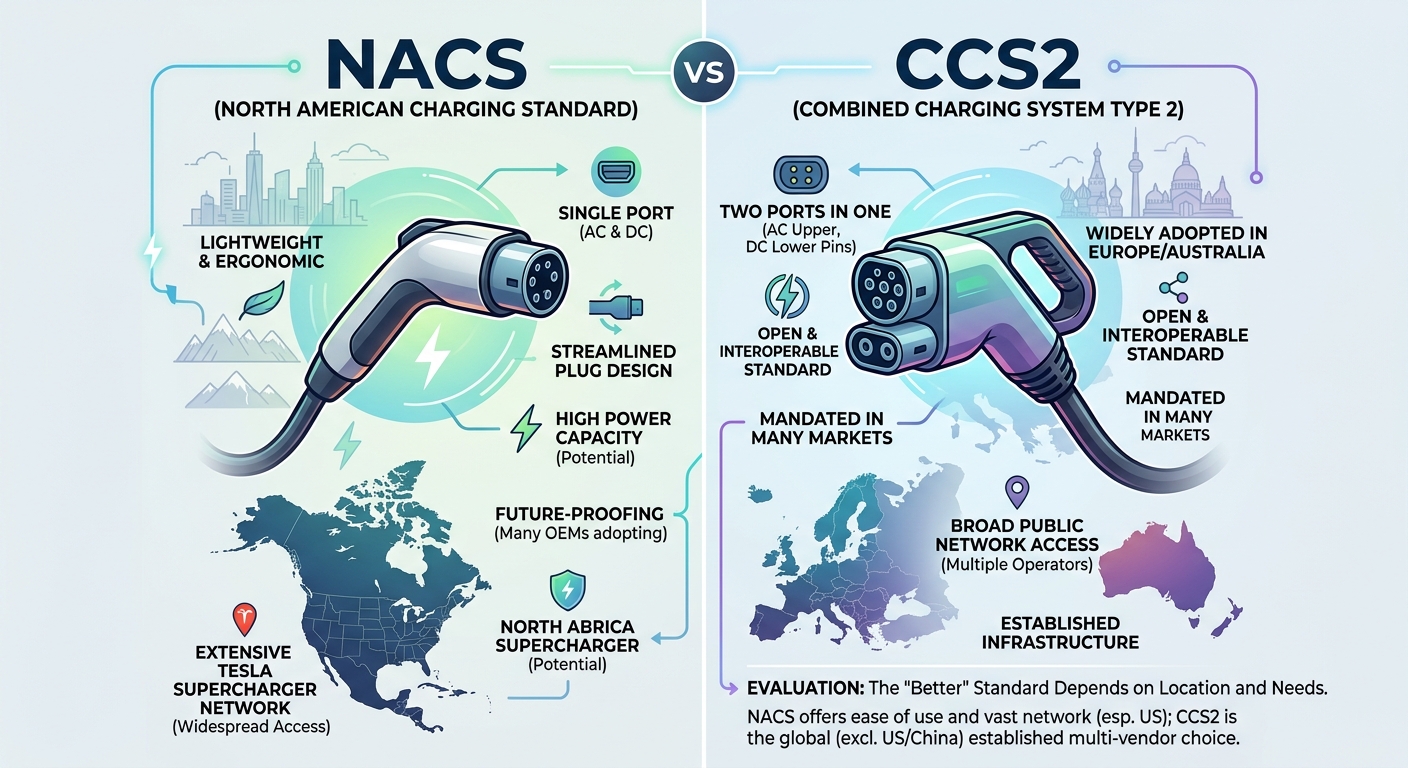
Unlike legacy systems like CCS Type 1—which required separate AC pins on top and bulky DC pins on the bottom—the SAE J3400 standard uses a shared-pin design.
                         [ SAE J3400 / NACS PORT ]

                                /-----------\
                               |  (CP) (PP)  |  <-- Control & Proximity Pilots
                               |             |
                               | (DC+/L1)    |  <-- Dual-Purpose Pin 1
                               |             |
                               | (DC-/L2)    |  <-- Dual-Purpose Pin 2
                               |     (G)     |  <-- Protective Earth Ground
                                \-----------/
1. Dual-Purpose Power Pins (Shared AC/DC)
SAE J3400 features a 5-pin layout where the two main power contacts perform double duty:
-
In AC Mode (Level 1 / Level 2): The pins function as Line 1 ($\text{L1}$) and Line 2 ($\text{L2}$) / Neutral ($\text{N}$).
-
In DC Fast Charging Mode (Level 3): The same two pins dynamically switch to supply high-voltage direct current ($\text{DC+}$ and $\text{DC-}$).
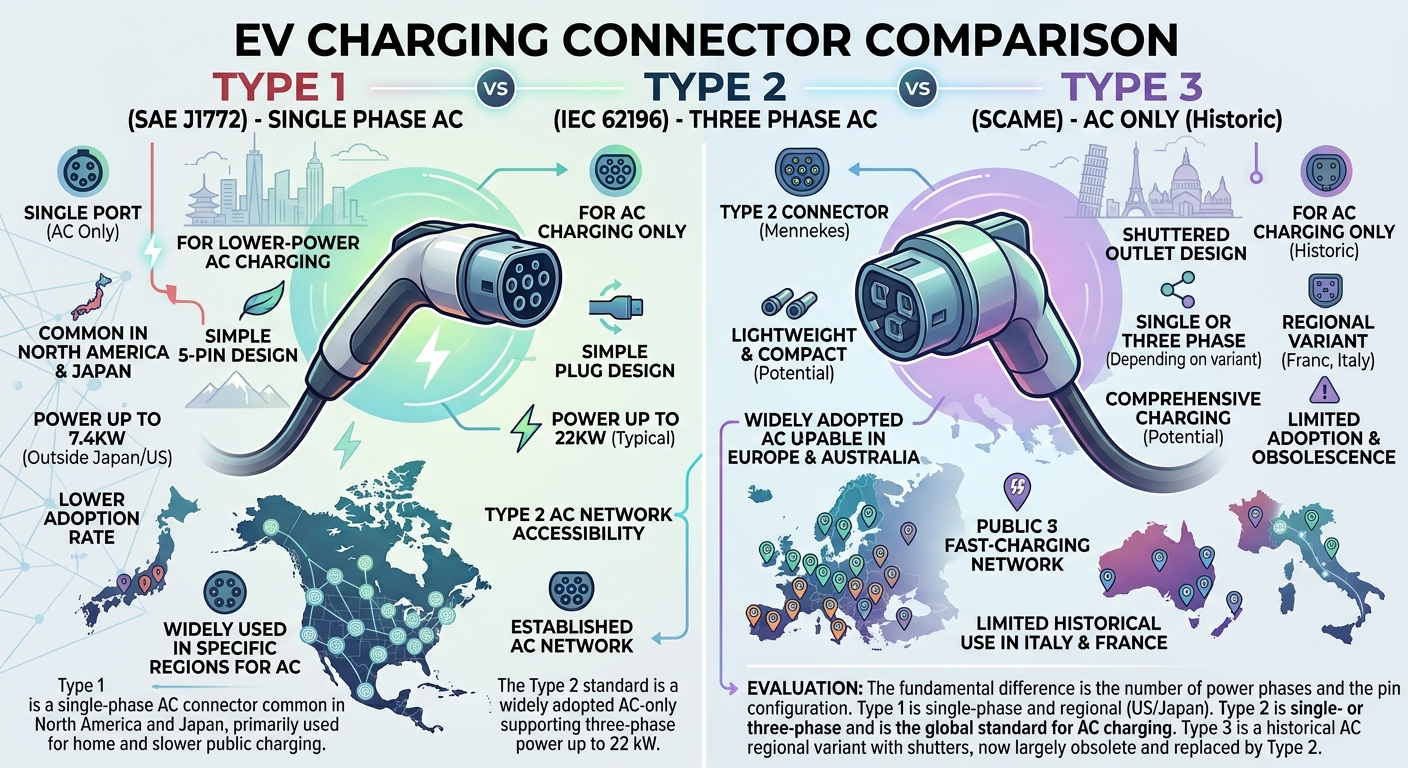
This elimination of redundant pins allows the connector to remain half the size of a standard CCS plug while carrying equal or greater electrical power. To explore how connector formats compare across models, read our guide on EV charging types.
2. Grid Compatibility (277V AC Support)
A critical technical addition introduced in the SAE J3400 standard (which was not part of Tesla’s original setup) is support for 277V single-phase AC charging.
This allows commercial buildings, parking garages, and fleet depots equipped with standard $480\text{V}/\text{277V}$ three-phase commercial electrical systems to power J3400 Level 2 EV chargers directly without installing expensive step-down transformers.
Step-by-Step Mathematical Example: Calculating J3400 Charging Times
To demonstrate how the SAE J3400 standard performs across AC and DC charging modes, let us calculate the charging times for an EV equipped with an 80 kWh battery pack (charging from 15% to 85% state of charge).
Given Parameters:
-
Total Capacity Needed: $80 \text{ kWh} \times (0.85 – 0.15) = 56 \text{ kWh}$
-
Home AC Charger (240V / 48A via J3400): $11.5 \text{ kW}$
-
Commercial AC Charger (277V / 48A via J3400): $13.3 \text{ kW}$
-
DC Fast Charger (J3400 High-Power Station): $250 \text{ kW}$ Peak (Average effective output: $160 \text{ kW}$)
Calculation 1: Residential 240V AC Level 2 Charging
Calculation 2: Commercial 277V AC Level 2 Charging
Calculation 3: High-Power DC Fast Charging (SAE J3400 Station)
Using an effective average charge rate of $160 \text{ kW}$:
Result: The shared-pin SAE J3400 port delivers flexible overnight residential charging as well as rapid 21-minute highway top-ups using a single, unified connector.
Communication Protocols: How J3400 Guarantees Safety
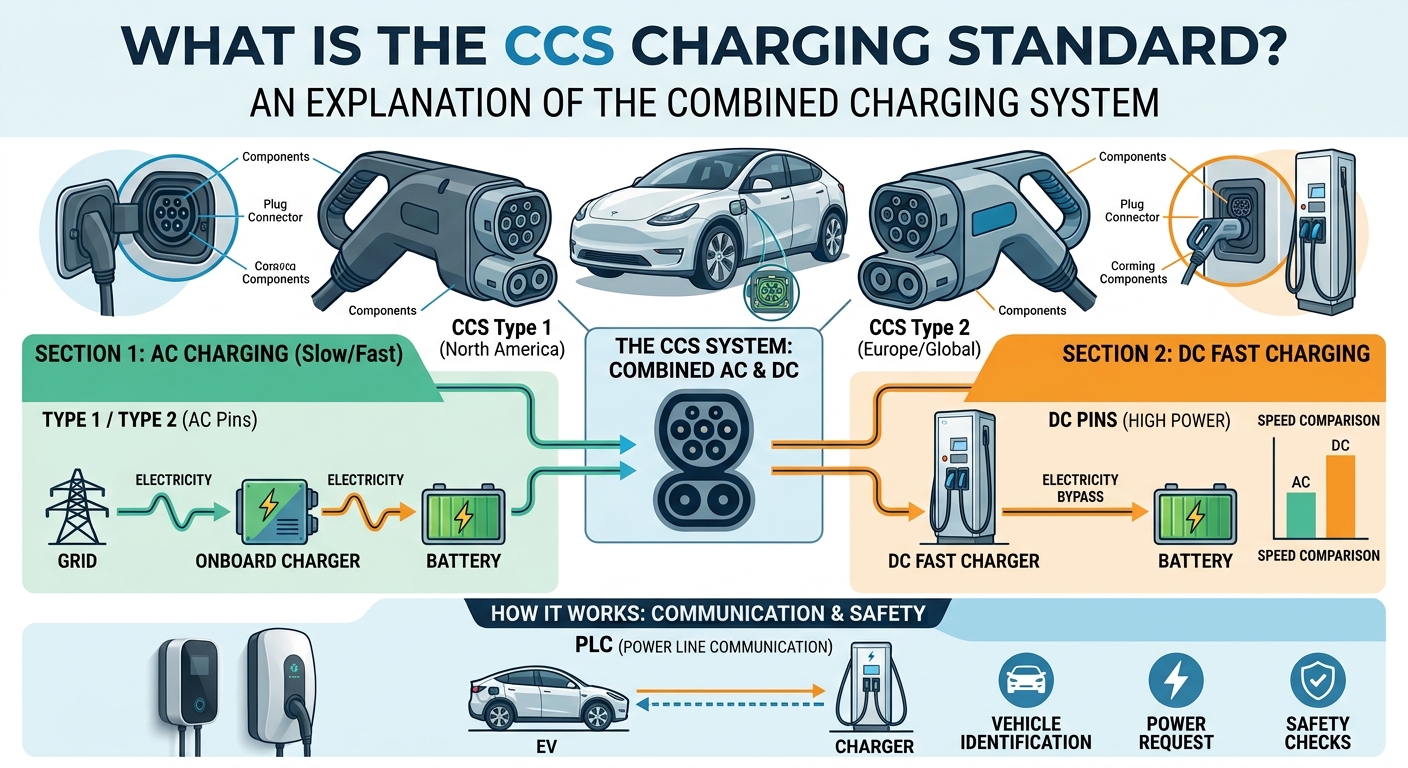
Because SAE J3400 uses the same physical pins for both AC and DC current, electrical safety requires sophisticated digital coordination.
+---------------+                              +---------------------+
|   Electric    |  <--- 1. Plug Connection --->|     SAE J3400       |
|   Vehicle     |  --- 2. Mechanical Interlock-|  Charging Station   |
|     (EV)      |  <-- 3. ISO 15118 Handshake -|       (EVSE)        |
|               |  --- 4. Relay Mode Selection>|                     |
|               |  <-- 5. Safe Power Delivery -|                     |
+---------------+                              +---------------------+
1. High-Level Communication (ISO 15118 & Powerline Communication)
SAE J3400 incorporates the ISO 15118 communication protocol over Powerline Communication (PLC). This enables:
-
Plug & Charge: Automated billing without requiring RFID cards or apps.
-
Bidirectional Power Flow (V2G): Support for Vehicle-to-Grid and Vehicle-to-Home power output.
2. Mechanical and Software Interlocking
Before power flows, software interlocks confirm whether the station is outputting AC or DC power. Contactor relays inside the vehicle switch automatically to route incoming current either to the internal On-Board Charger or directly to the high-voltage battery.
To learn more about automated energy management, read our guide on smart chargers.
Detailed Comparison Table: SAE J3400 vs. Legacy Standards
| Feature | SAE J3400 (NACS) | CCS Type 1 (Combo 1) | J1772 (Standard AC) |
| Primary Region | North America | North America | North America |
| Connector Size | Compact & Lightweight | Large & Heavy | Small |
| Pin Design | Shared AC/DC Pins | Separate AC & DC Pins | AC Only |
| Max AC Voltage | 120V / 240V / 277V | 120V / 240V | 120V / 240V |
| Max DC Power Rate | Up to 350 kW – 500 kW+ | Up to 350 kW | Not Supported |
| Communication | Powerline Comm (PLC) / ISO 15118 | Powerline Comm (PLC) / ISO 15118 | Analog PWM |
Real-World Impact: What J3400 Means for EV Owners
The transition to SAE J3400 benefits non-Tesla and Tesla drivers alike:
-
Access to More Fast Chargers: Non-Tesla EVs equipped with approved J3400 adapters (or native J3400 ports) can seamlessly access thousands of fast-charging stalls across North America.
-
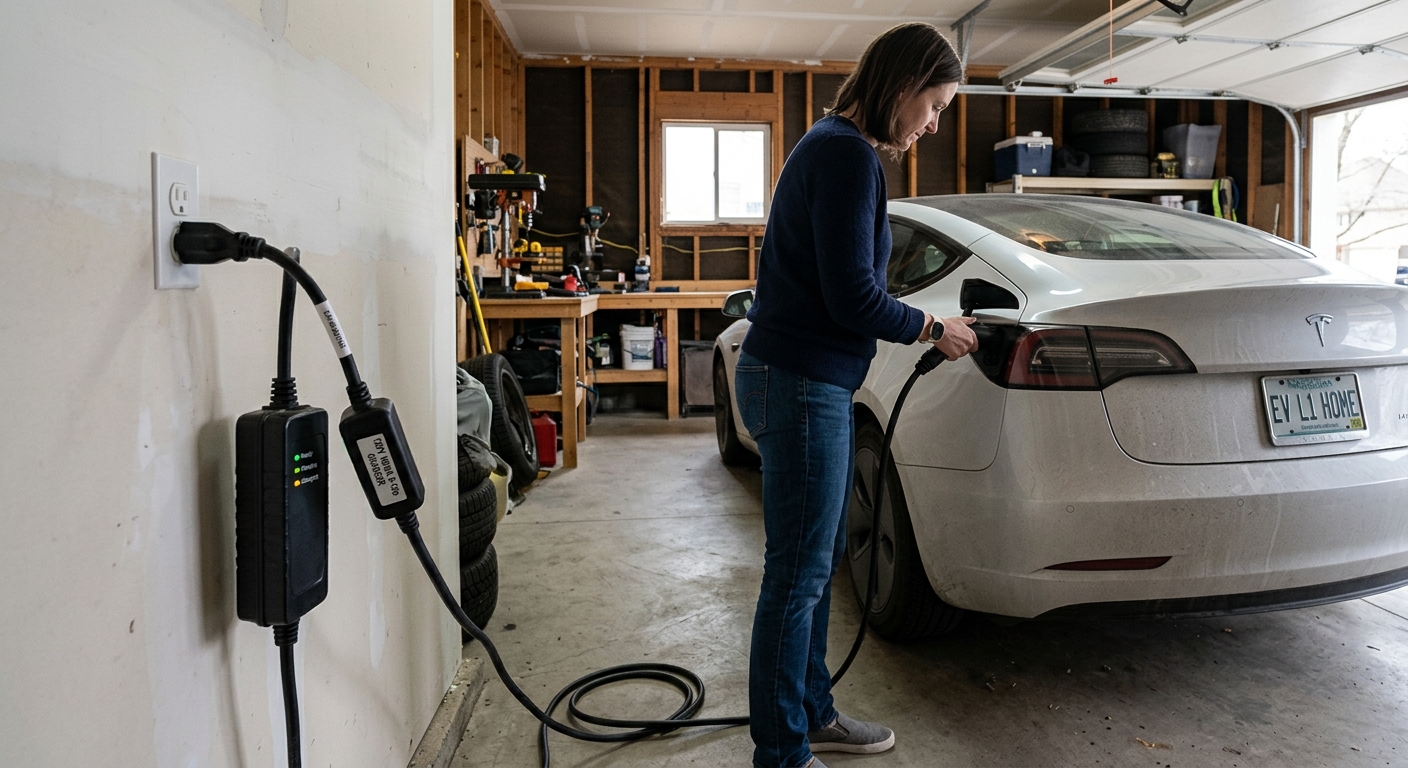
Simplified Home Charging: EV owners no longer need separate cables or adapters when switching between different EV brands.
-
Upgraded Public Infrastructure: Government programs now recognize SAE J3400 alongside CCS1, ensuring funded charging stations offer reliable connectors for all drivers.
Summary & Key Takeaways
-
Same Core Design: SAE J3400 is the official industry standard name for the physical North American Charging Standard (NACS).
-
Shared Pin Architecture: Uses 5 pins total, sharing the main power contacts for both AC and DC fast charging.
-
Enhanced Utility Support: Adds official support for commercial 277V AC power grids.
-
Universal Standard: Adopted by major global automakers to streamline charging infrastructure across North America.





Leave a Reply