
Electric vehicle (EV) adoption across the United Kingdom has accelerated at an unprecedented pace, transforming the automotive landscape from London to the Scottish Highlands. As more British motorists transition from traditional petrol and diesel cars to battery-electric vehicles (BEVs) and plug-in hybrids (PHEVs), understanding the financial dynamics of fueling becomes essential. Whether you are setting up a home charger in a suburban driveway, navigating urban on-street parking, or planning a long motorway journey using ultra-fast public hubs, knowing how energy is priced per kilowatt-hour (kWh) dictates your overall driving budget.
The cost of EV charging in the UK depends entirely on whether you charge at home, utilize public destination chargers, or plug into high-speed motorway networks.
Home charging remains the most cost-effective method—especially when paired with specialized overnight energy tariffs—while public rapid and ultra-fast charging networks carry a higher premium for convenience and high-power output.
Here is an exhaustive, 2000-word comprehensive guide examining every aspect of EV charging costs per kWh in the UK, including energy price caps, regional variations, public network pricing structures, and actionable strategies to minimize your monthly motoring expenses.
1. The UK Home Charging Landscape: The Cheapest kWh Rates
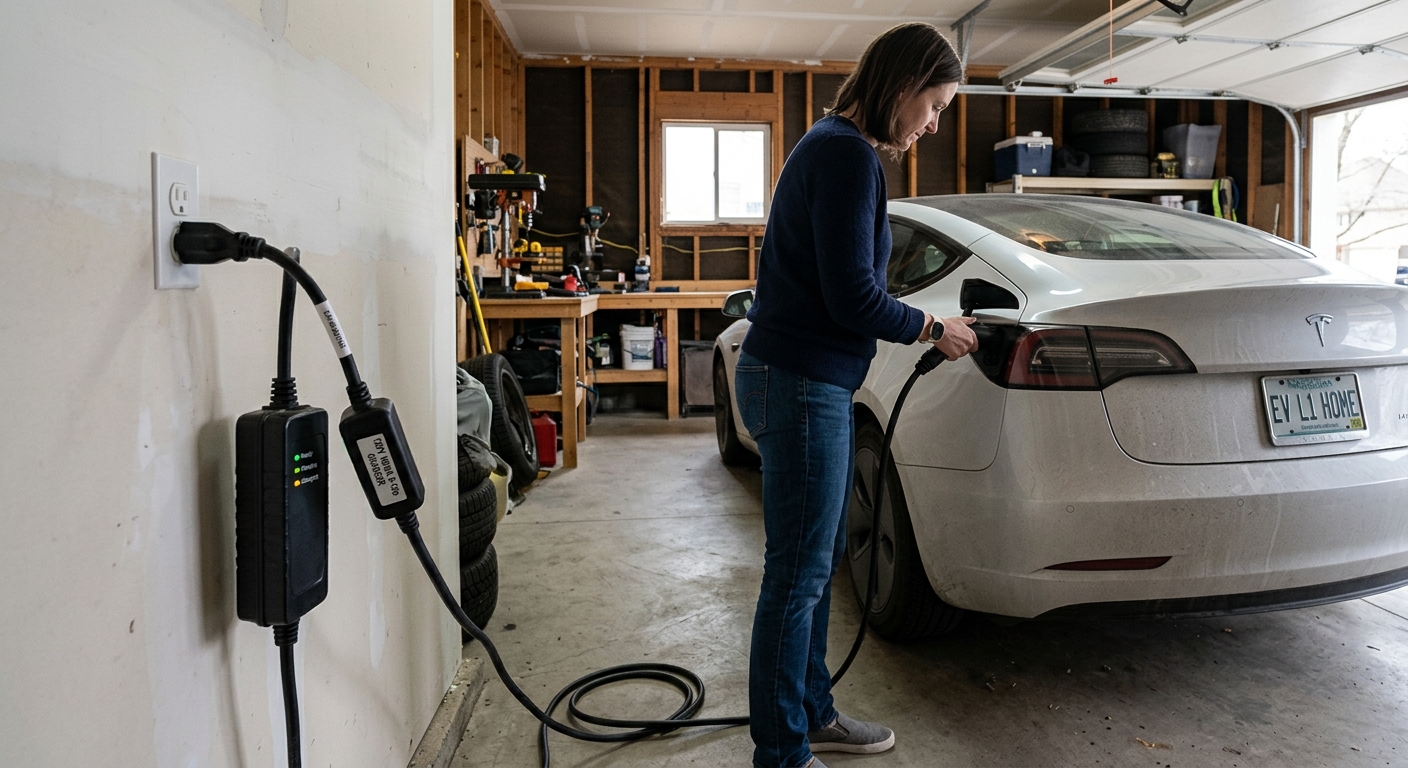
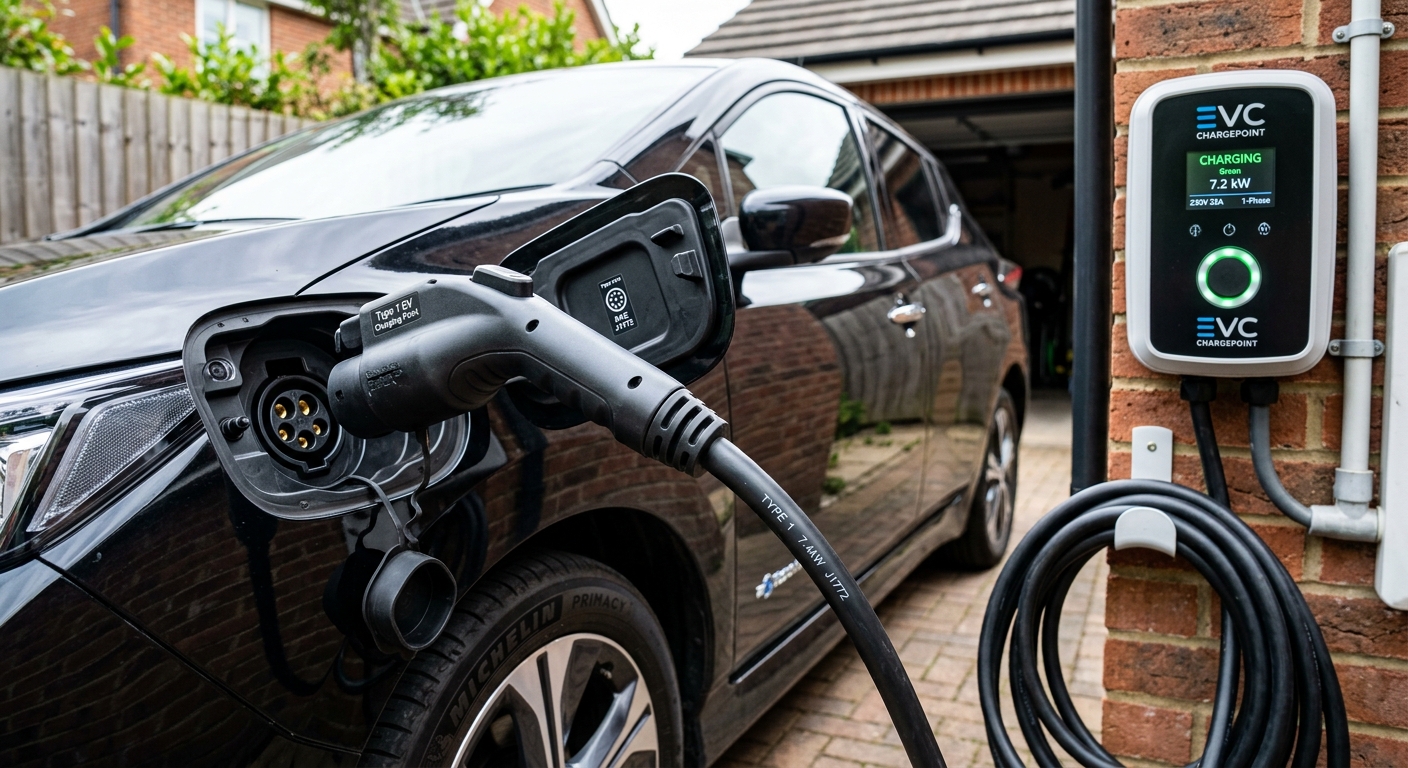
For the vast majority of UK EV owners, home charging is the cornerstone of daily motoring. Charging a car overnight in your own garage or driveway offers unmatched convenience and the lowest possible cost per kWh.
-
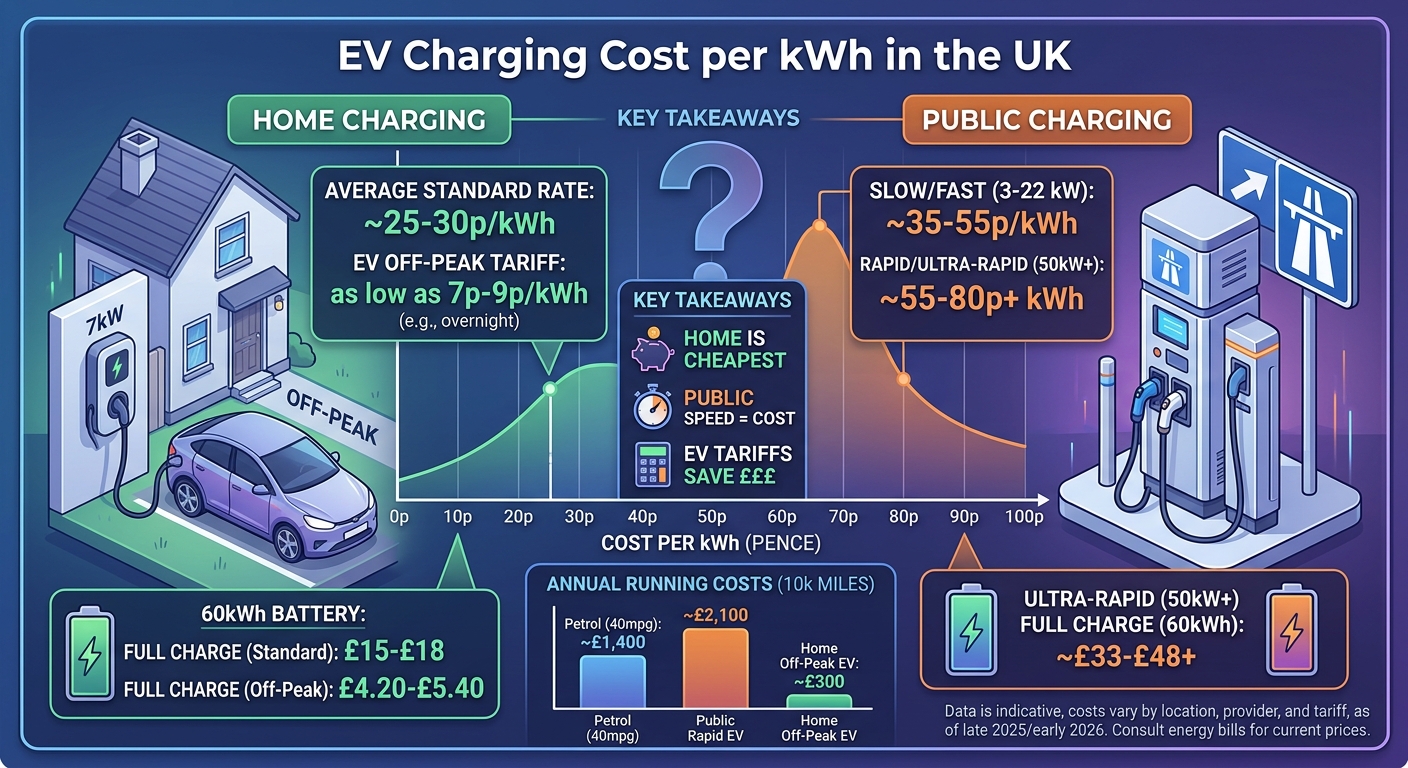
Standard Domestic Electricity Tariffs: Under the UK energy price cap regulated by Ofgem, standard domestic electricity rates fluctuate based on wholesale market conditions. Typically, standard flat-rate household electricity hovers around 25p to 30p per kWh. Even at a flat 28p per kWh, charging an average EV is substantially cheaper than buying petrol. For instance, putting 50 kWh into your car costs roughly £14.00, yielding about 150 to 180 miles of driving range.
-
Specialist EV Tariffs and Economy 7/7: The real financial magic happens when UK motorists switch to specialized EV-friendly energy tariffs (offered by suppliers like Octopus Energy, British Gas, OVO, and EDF). These time-of-use tariffs provide a designated overnight window—typically lasting 4 to 6 hours (e.g., midnight to 5 AM)—where electricity rates drop dramatically. During these off-peak hours, rates can fall as low as 7.5p to 10p per kWh.
-
Calculating Home Savings: If you charge 50 kWh of energy during an off-peak window at 8.5p per kWh, your total cost is just £4.25. This equates to paying the equivalent of less than 15p per litre of petrol, giving electric vehicle drivers an immense economic advantage.
To learn more about residential equipment and safe installation standards, check out our core resources at EV Charger Advisor.
2. Public AC Destination Charging: On-Street and Supermarket Hubs
When you are away from home, you will often encounter public AC destination chargers. These typically range from 7 kW to 22 kW and are installed in supermarket car parks, leisure centers, workplace garages, and residential streets.
-
Pricing Models: Public AC charging is billed in various ways depending on the network operator (such as Pod Point, Connected Kerb, or Char.gy). Some charge a straightforward per-kWh rate (ranging from 35p to 50p per kWh), while others incorporate parking fees, connection fees, or time-based overstay penalties.
-
On-Street Residential Charging: For urban UK residents who lack off-street parking and cannot install a home wallbox, local councils partner with networks to provide on-street lamppost or dedicated bollard chargers. These generally cost between 40p and 55p per kWh, balancing the higher infrastructure installation costs against domestic rates.
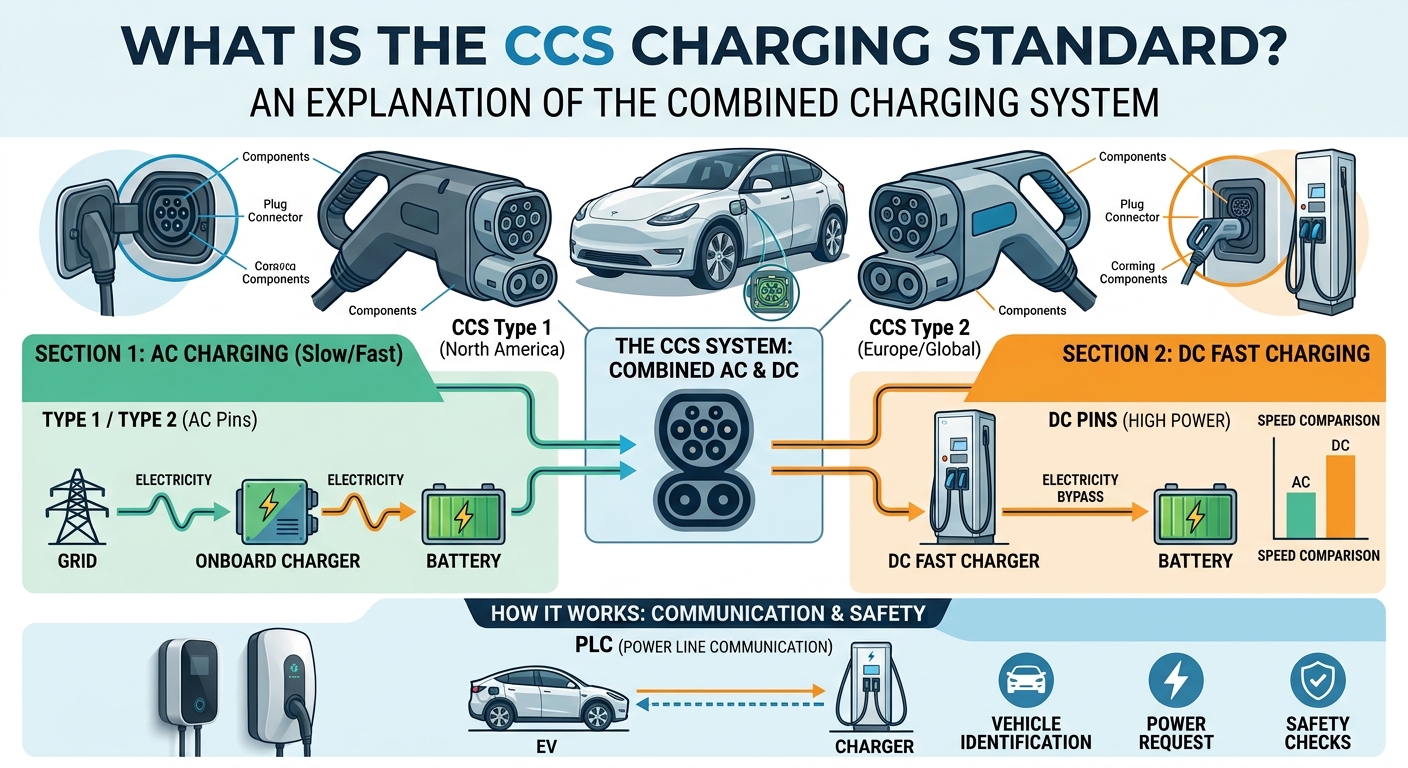
To explore how public infrastructure integrates with your vehicle’s capabilities, read our breakdown of various charging types.
3. Public DC Fast and Ultra-Fast Charging: Motorway Corridors
When undertaking long-distance journeys across the UK motorway network—utilizing hubs managed by providers like Gridserve, Ionity, BP Pulse, Tesla Superchargers, and MFG EV Power—drivers rely on DC fast and ultra-fast chargers (ranging from 50 kW to 350 kW).
-
The High-Power Premium: Because installing multi-megawatt grid connections, heavy liquid-cooled cables, and high-voltage commercial hardware requires massive capital expenditure, public DC rapid charging is significantly more expensive than home charging.
-
Current Market Rates: As of recent years, UK public rapid charging typically ranges from 65p to 85p per kWh (inclusive of VAT). If you pull into a motorway service station and add 50 kWh of energy at 75p per kWh, your session will cost £37.50. While still comparable in cost-per-mile to an efficient diesel car on a long trip, it is noticeably higher than charging at home.
-
Subscription Discounts: Many UK public networks offer monthly subscription models (costing around £4 to £10 per month) that knock 10p to 15p off every kWh. For frequent long-distance drivers, these subscriptions pay for themselves within a single road trip.
To understand how advanced energy distribution and smart home management systems can help balance your overall energy profile, check out our guide on smart home EV solutions.
4. Mathematical Breakdown: Comparing Total Charging Costs
To fully grasp how UK per-kWh rates translate into real-world driving expenses, let’s run through a comparative mathematical scenario for an EV with a usable 75 kWh battery pack requiring a 60% top-up (45 kWh added):
-
Home Off-Peak Tariff (9p per kWh):
-
$45 \text{ kWh} \times £0.09 = \mathbf{£4.05}$ for ~150 miles of range.
-
-
Home Standard Flat Rate (28p per kWh):
-
$45 \text{ kWh} \times £0.28 = \mathbf{£12.60}$ for ~150 miles of range.
-
-
Public Destination AC Charging (45p per kWh):
-
$45 \text{ kWh} \times £0.45 = \mathbf{£20.25}$ for ~150 miles of range.
-
-
Motorway DC Fast Charging (79p per kWh):
-
$45 \text{ kWh} \times £0.79 = \mathbf{£35.55}$ for ~150 miles of range.
-
This clear mathematical progression demonstrates why establishing a reliable home charging routine is the single most important factor in maximizing EV ownership savings in the UK.
5. Summary: Actionable Tips for UK EV Owners
-
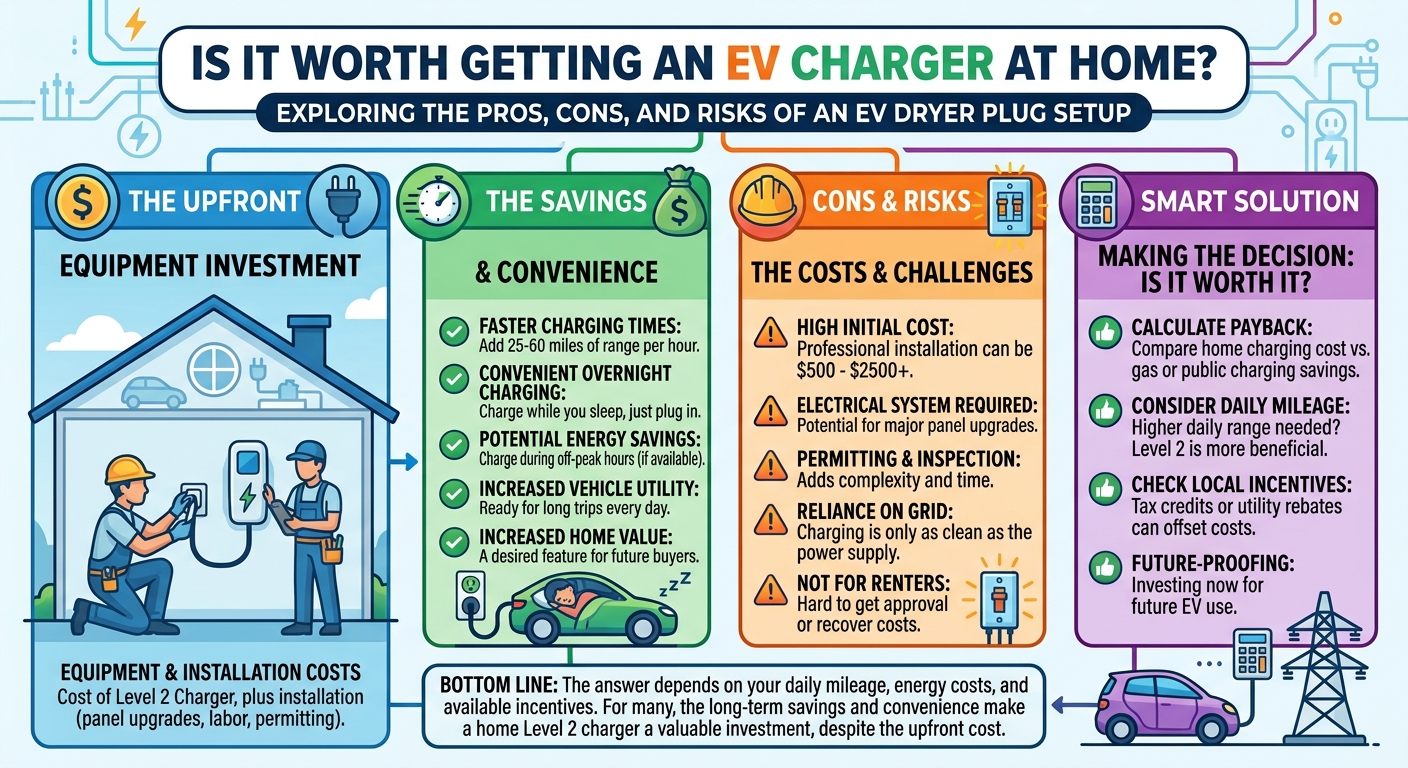
Prioritize Home Charging: Always install a dedicated Level 2 smart home charger and switch to a specialized EV time-of-use energy tariff to secure rates under 10p per kWh.
-
Plan Public Stops: Use apps like Zap-Map to locate cheaper public destination chargers before resorting to expensive motorway ultra-rapid hubs.
-
Utilize Memberships: If you frequently use specific public networks, investigate subscription tiers to reduce per-kWh costs.
For comprehensive insights on EV infrastructure planning, charging safety, and expert advisory services, visit us anytime at EV Charger Advisor.





Leave a Reply