
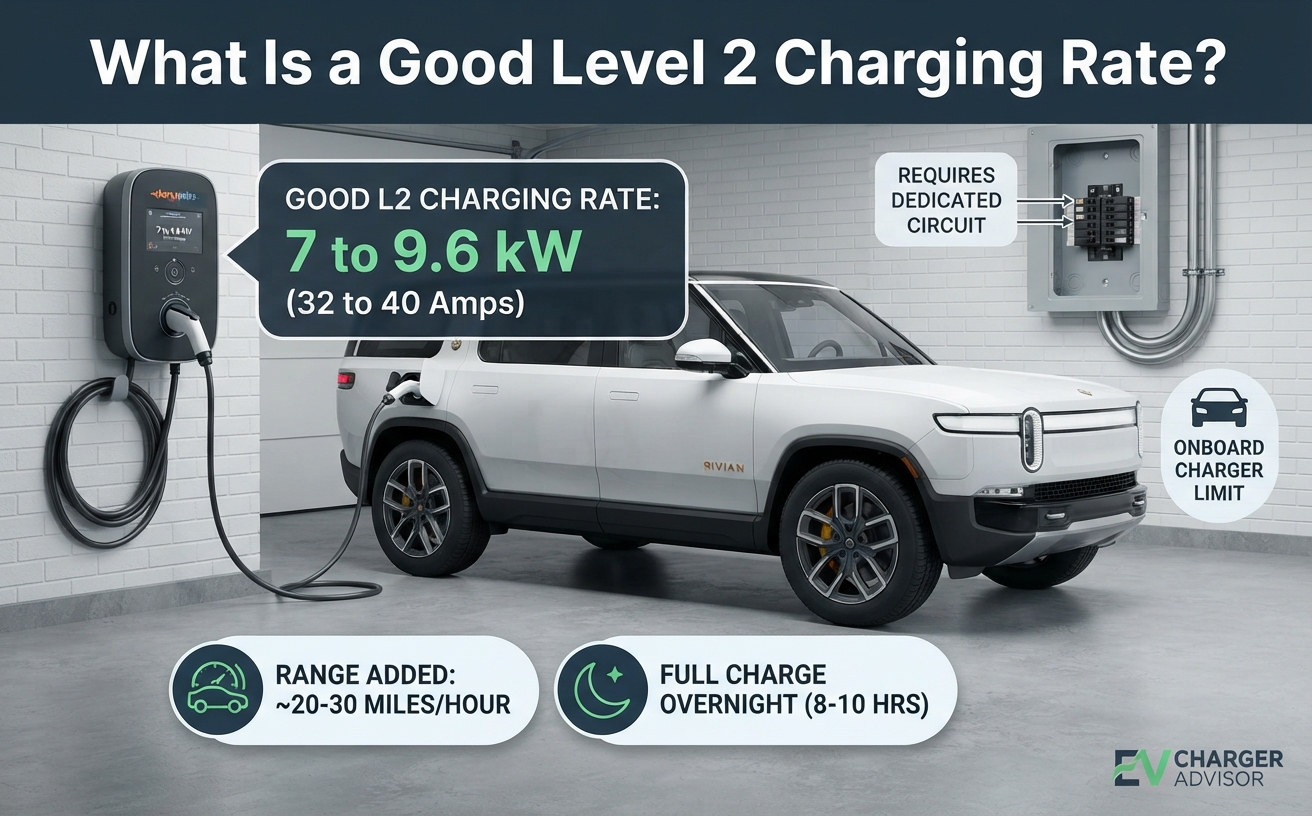
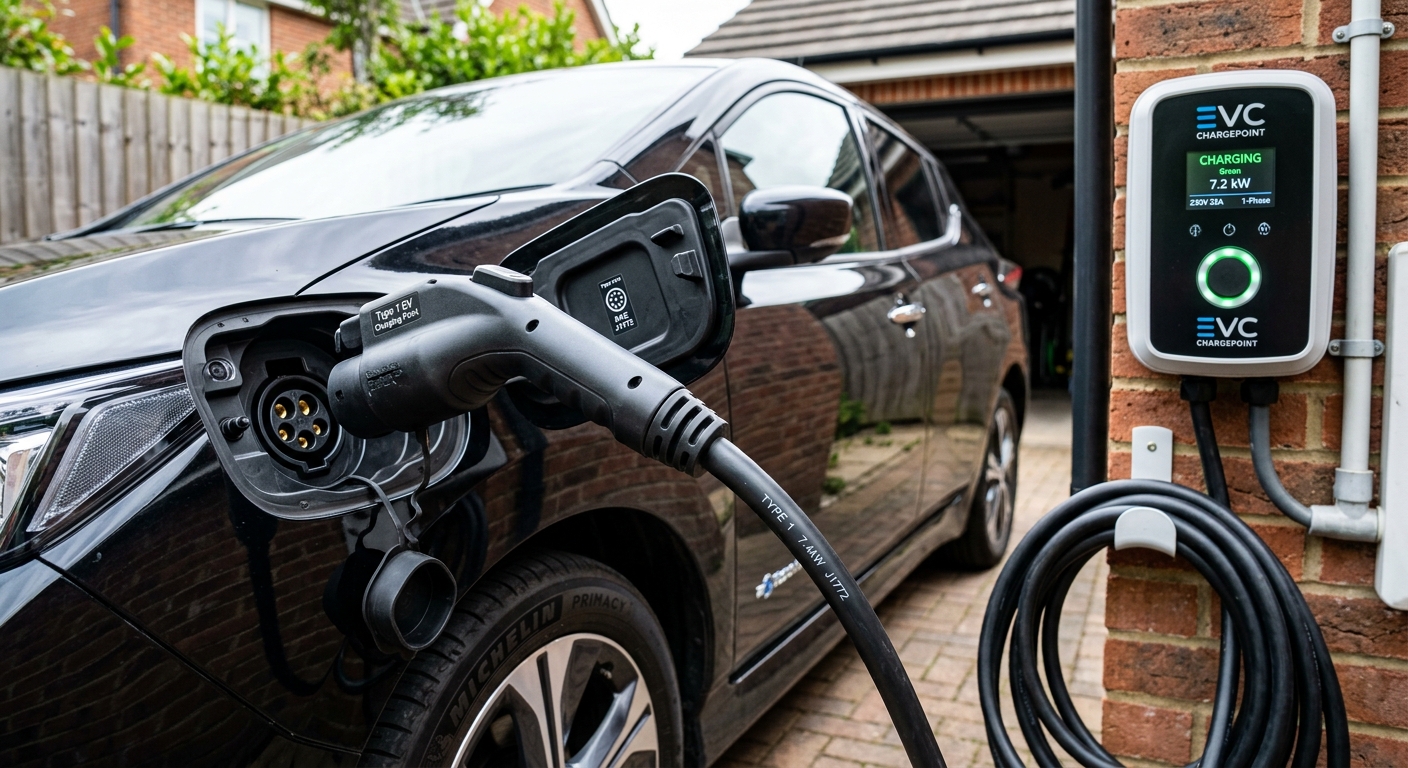
When upgrading your home infrastructure for electric vehicle ownership, selecting the right equipment speed is critical. To answer directly: A good Level 2 charging rate for a home setup is 7 to 9.6 kW (32 to 40 amps), which adds about 20 to 30 miles of range per hour and comfortably recharges most electric vehicles overnight.
While you can purchase higher-output chargers, understanding how power delivery matches your car’s onboard charger and daily driving routines will ensure you get the best value without overspending on unnecessary electrical upgrades.
Here is a detailed breakdown to help you choose the ideal charging speed for your home.
1. The Sweet Spot: 32-Amp to 40-Amp Chargers (7 kW to 9.6 kW)
For the vast majority of EV owners, a 32-amp or 40-amp Level 2 charger represents the perfect balance of speed, installation cost, and electrical load:
-
Charging Speed: Delivers roughly 20 to 30 miles of driving range for every hour plugged in.
-
Overnight Capability: Can completely replenish a depleted 75 kWh battery pack from 0% to 100% in roughly 8 to 10 hours—fitting easily inside standard off-peak utility sleeping hours.
-
Electrical Panel Compatibility: Requires a standard 40-amp or 50-amp dedicated breaker, which most modern residential electrical panels can handle without requiring an expensive total service upgrade.
To understand how these power levels integrate with residential configurations, explore our guide on smart home EV solutions.
2. High-End Options: 48-Amp to 80-Amp Chargers (11.5 kW to 19.2 kW)
Some larger electric vehicles (like heavy-duty electric trucks or models with massive battery packs) can accept faster speeds:
-
The Limitations: To utilize speeds above 48 amps (11.5 kW), your vehicle must feature a dual-charger or high-capacity onboard module, and your home needs a heavy-duty 60-amp+ circuit.
-
Cost vs. Benefit: While it cuts charging time down further, the heavy copper wiring, thicker conduits, and potential panel upgrades often outweigh the time saved for daily commuters.
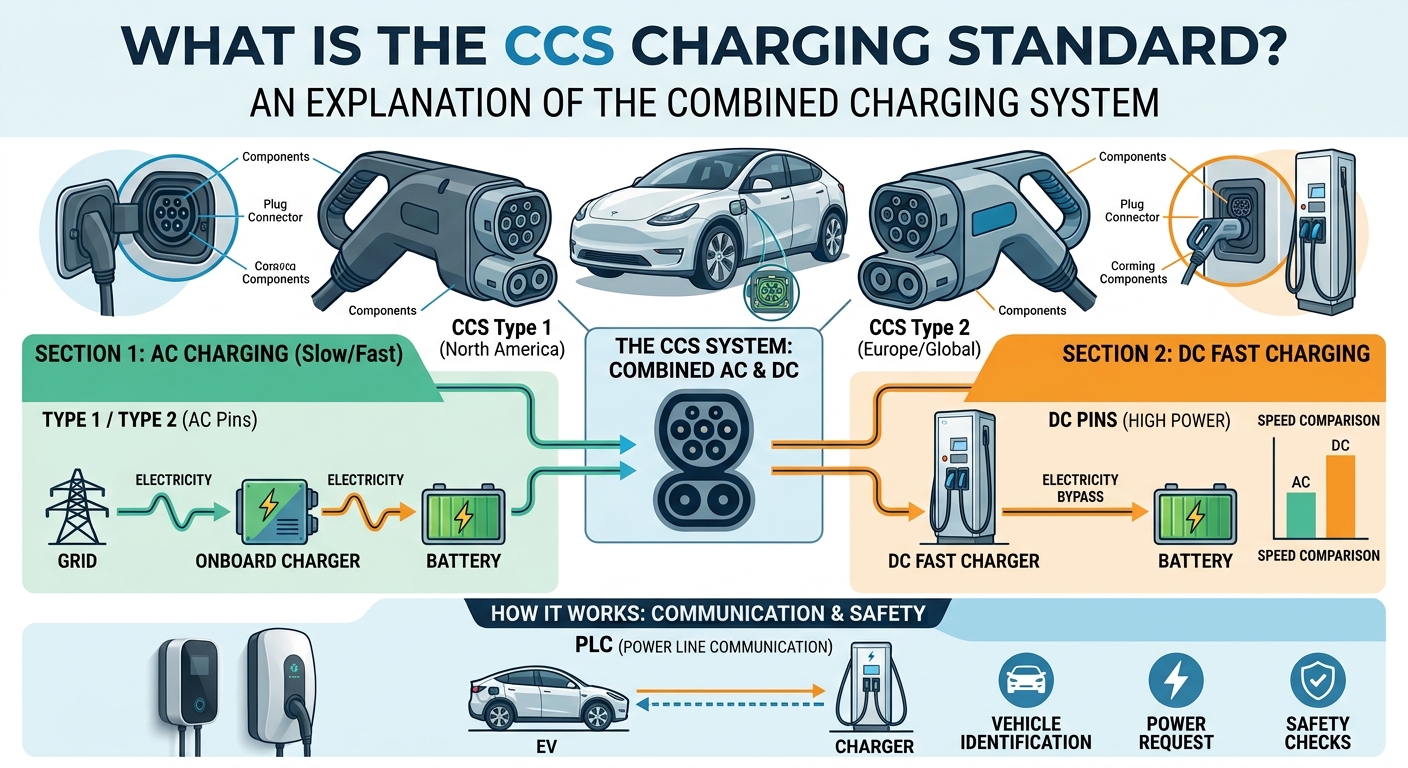
If you are evaluating different hardware specs and equipment capabilities, review our breakdown of various charging types.
3. Key Factors to Consider Before Buying
Before committing to a specific amperage rate, keep these three factors in mind:
-
Your Car’s Onboard Charger (OBC) Limit: An EV can only accept as much power as its internal charger allows. For example, if your car maxes out at 7.7 kW (32 amps), installing a 48-amp charger won’t make your car charge any faster.
-
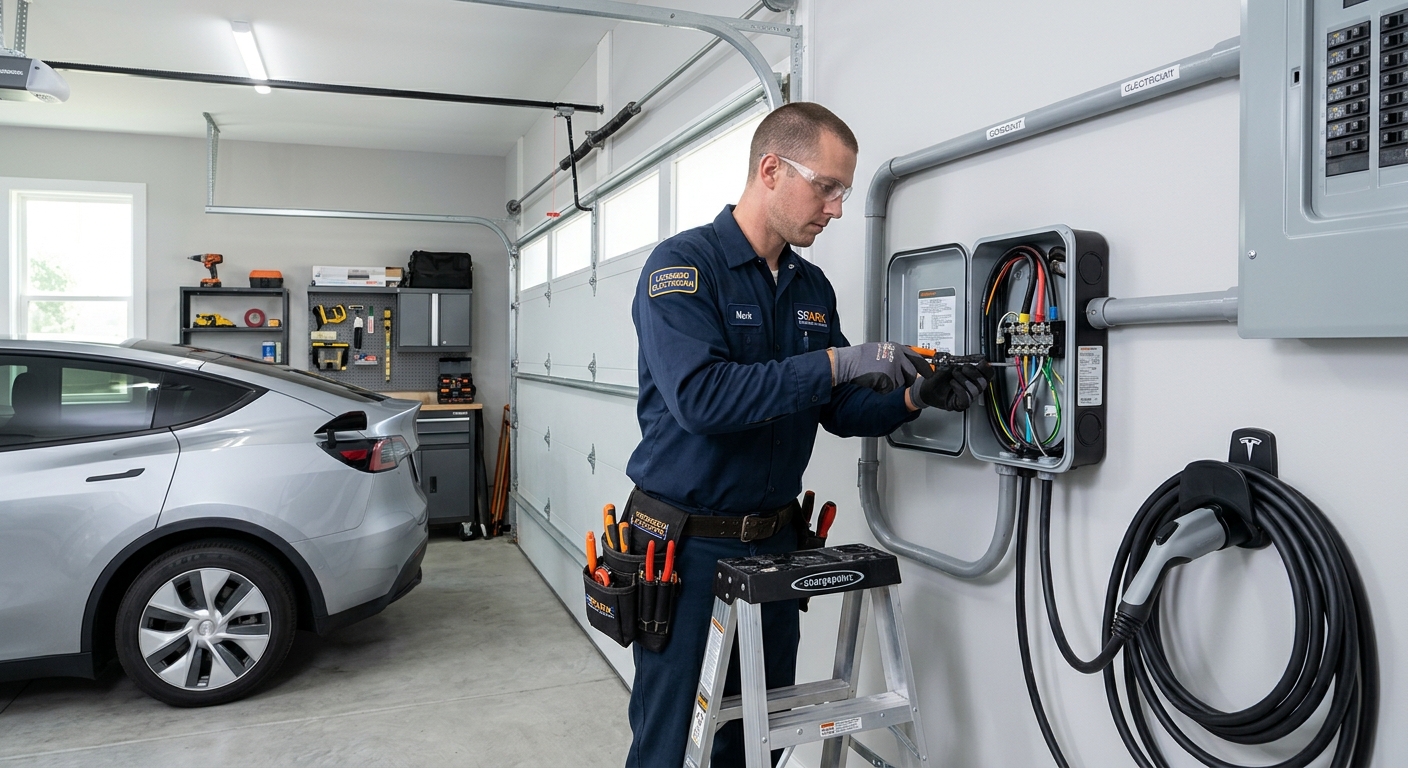
Electrical Panel Capacity: Consult an electrician to check if your home’s main breaker panel (e.g., 100A vs 200A service) can support a continuous heavy load without tripping.
-
Utility Rates: Matching your charging rate with local Time-of-Use (TOU) schedules ensures you make the most of cheap overnight electricity rates.
For more expert advice, cost breakdown evchargeradvisor.onlines, and home installation safety tips, visit us at EV Charger Advisor.
Summary: What Should You Install?
-
Choose a 32-amp to 40-amp (7 kW – 9.6 kW) charger if you want the optimal, cost-effective standard for everyday driving and quick overnight turnarounds.
-
Choose a higher-amperage unit only if your specific vehicle model explicitly supports faster onboard AC charging and your daily schedule demands rapid top-ups.





Leave a Reply