
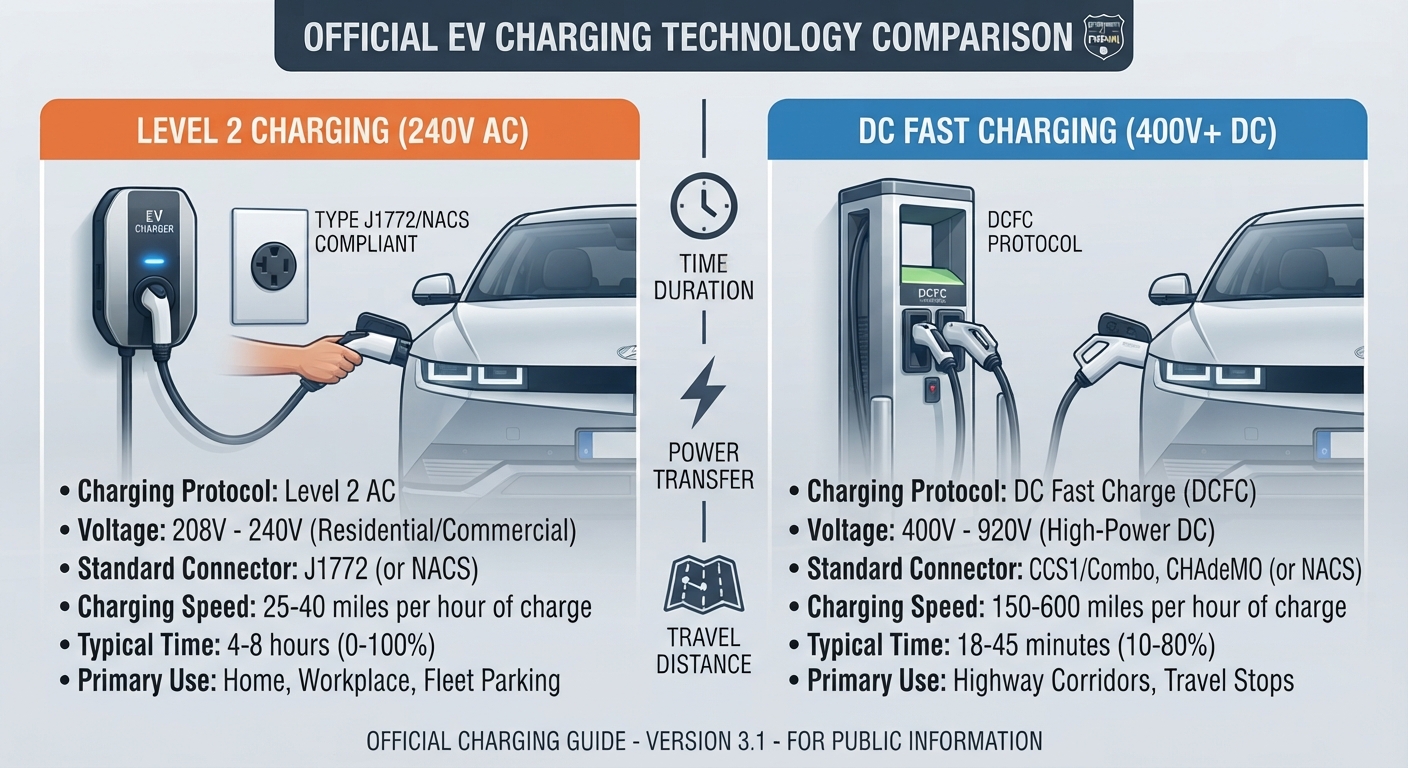
As electric vehicle adoption surges worldwide, understanding how to power your vehicle efficiently is one of the most critical aspects of ownership. When comparing charging solutions, drivers often encounter two main categories of high-speed power delivery: residential or public Level 2 chargers and commercial DC Fast Chargers (often called DCFC or Level 3).
To give you a direct and precise answer: Level 2 charging uses 240-volt AC power and an onboard vehicle converter to add 10 to 40 miles of range per hour, while DC fast charging supplies high-voltage direct current straight to the battery to reach an 80% charge in about 15 to 45 minutes.
While both options vastly outperform standard wall outlets, they serve entirely different purposes, use different electrical pathways, and involve completely separate cost structures. This comprehensive guide breaks down the core technical, financial, and practical differences between Level 2 and DC fast charging to help you optimize your daily driving experience.
1. Core Technical Differences: AC vs. DC Power
The fundamental difference between these two technologies lies in how electricity enters and transforms inside your electric vehicle.
-
How Level 2 Charging Works: Level 2 systems operate on 240-volt alternating current (AC)—the same electrical standard used by heavy household appliances like electric dryers and ovens. Because the power coming from the grid is AC, but an EV battery stores energy as direct current (DC), the electricity must pass through the car’s internal hardware (the onboard charger) to be converted before it enters the battery cells. This conversion process naturally limits the speed at which energy can be safely packed into the vehicle overnight. To evaluate how these units fit into modern residential layouts, explore our guide on smart home EV solutions.
-
How DC Fast Charging Works: DC fast chargers bypass the vehicle’s onboard converter entirely. The heavy-duty charging station itself converts AC grid power into DC before sending it into the car. Because the conversion happens outside the vehicle, high-voltage direct current can be pumped directly into the battery pack at massive scales (ranging from 50 kW to over 350 kW).
To learn more about the broader ecosystem of hardware options, read our detailed breakdown of various charging types.
2. Speed and Charging Times Compared
The disparity in charging speeds is the most noticeable difference for drivers on the go:
-
Level 2 Performance: Typically delivers between 7 kW to 19.2 kW of power. Depending on your vehicle’s onboard charging limit, it adds roughly 10 to 40 miles of range per hour. A completely depleted battery pack usually requires 4 to 10 hours for a full 100% recharge, making it ideal for overnight home refueling.
-
DC Fast Charging Performance: Delivers anywhere from 50 kW to 350+ kW. Instead of measuring recovery in hours, fast charging fills a vehicle from 10% to 80% capacity in just 15 to 45 minutes. (The charging speed slows down significantly after 80% to protect the battery chemistry from overheating).
3. Installation, Infrastructure, and Cost Analysis
Financial implications dictate where and how often drivers use each type of charger:
-
Level 2 (Home and Destination):
-
Upfront Cost: Moderate hardware and installation costs ranging from $500 to $2,000 including a dedicated 240V circuit.
-
Ongoing Cost: Extremely cost-effective, especially when paired with residential utility Time-of-Use (TOU) rates that offer cheap overnight electricity.
-
Accessibility: Installed easily in residential garages, apartment complexes, workplaces, and retail parking lots.
-
-
DC Fast Charging (Public Corridors):
-
Upfront Cost: Requires commercial-grade transformers, massive grid connections, and heavy industrial hardware costing tens or hundreds of thousands of dollars—making it impossible for standard home installation.
-
Ongoing Cost: Significantly more expensive per kilowatt-hour than residential electricity. Public networks pass on high demand charges and utility fees, meaning frequent fast-charging can approach the cost of fueling an internal combustion engine.
-
Accessibility: Found almost exclusively along major highway corridors, commercial plazas, and dedicated public charging stations for long-distance travel.
-
4. Impact on Long-Term Battery Health
Battery longevity is a common concern among EV owners:
-
Level 2: Because power flows at a moderate, steady pace, thermal stress on the battery is minimal. Regular Level 2 charging promotes optimal long-term battery health and maximum lifespan.
-
DC Fast Charging: Pumping high amounts of electricity generates intense heat. While modern EVs feature advanced liquid-cooling thermal management systems to mitigate damage, relying exclusively on DC fast charging daily can accelerate battery degradation over many years. Fast charging is best reserved for road trips and emergency top-ups.
For continuous updates, expert cost evaluations, and safety recommendations for your vehicle setup, visit us at EV Charger Advisor.
Summary: Which One Should You Rely On?
-
Rely on Level 2 Charging for your daily routine. It provides the cheapest, safest, and most convenient way to wake up to a full battery every single morning without wearing down your battery pack.
-
Rely on DC Fast Charging strictly during long-distance road trips or when you are traveling far beyond your vehicle’s daily range and need a quick turnaround on the highway.

















Leave a Reply