
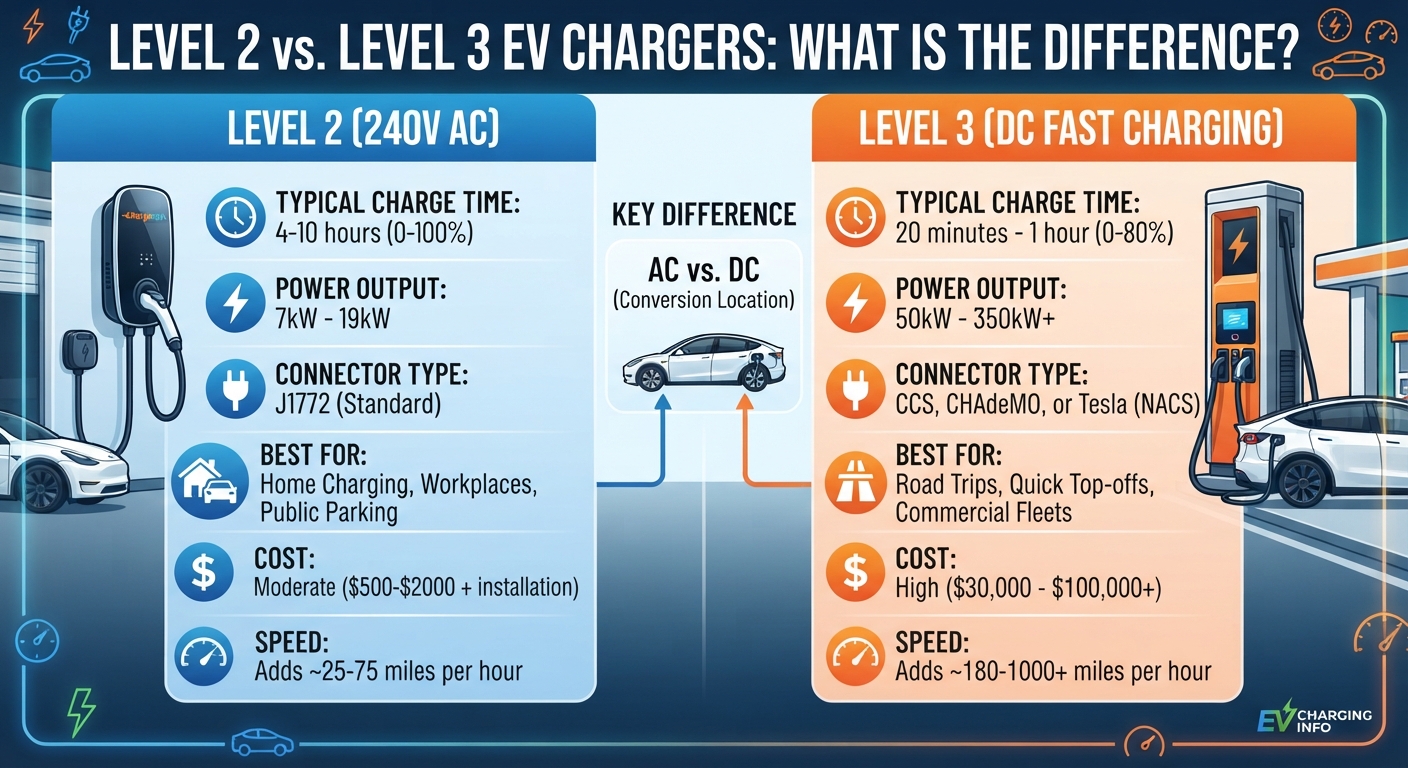
When exploring electric vehicle infrastructure, understanding the gap between mid-speed residential units and commercial powerhouses is essential. To answer directly: Level 2 and Level 3 EV chargers differ primarily in charging speed, electrical power type, and where they are installed, with Level 2 EV Charging Stations using 240-volt AC power for everyday home or workplace use, while Level 3 (DC Fast Chargers) use high-voltage direct current to charge a car in minutes at commercial highway stops.
Navigating these two distinct power tiers helps you understand why you charge overnight at home but rely on rapid highway stations during long-distance road trips.
Here is a detailed breakdown of how Level 2 and Level 3 technologies compare across speed, cost, and technology.
1. Power Source and Current Type (AC vs. DC)
The core technological distinction lies in how electricity enters and transforms inside your vehicle:
-
Level 2 Charging (Alternating Current): Draws 240-volt AC power from your residential or commercial electrical grid. Because car batteries store energy as Direct Current (DC), the vehicle’s internal onboard charger must convert this incoming AC power into DC before storing it.
-
Level 3 Charging (Direct Current Fast Charging – DCFC): Bypasses the vehicle’s onboard converter entirely. These massive commercial units convert AC to DC inside the charging station itself, pumping high-voltage DC electricity directly into the battery pack at blazing speeds.
To learn more about the fundamentals of residential hardware, check out our guide on various charging types.
2. Speed and Charging Time
The performance gap between these two categories is massive:
-
Level 2 Speeds: Typically adds 20 to 40 miles of range per hour, taking roughly 4 to 10 hours to fully replenish an empty battery pack. This makes it ideal for overnight home parking or working shifts.
-
Level 3 Speeds: Delivers lightning-fast power capable of taking most modern EVs from 10% to 80% capacity in just 15 to 30 minutes, adding upwards of 100+ miles of range in a matter of minutes.
3. Installation Locations and Cost Profiles
Where these chargers live dictates their accessibility and financial footprint:
-
Level 2 Setups: Designed for fixed, long-term deployment at homes, apartment complexes, and office fleets. Hardware ranges from $400 to $1,200 with manageable installation fees, aligning with standard smart home EV solutions.
-
Level 3 Stations: Commercial-grade infrastructure costing tens or hundreds of thousands of dollars per stall. They require heavy industrial transformers, grid connections, and utility backing, meaning they are exclusively found at public highway plazas, travel centers, and major transit corridors.
For complete insights on managing your charging budget, explore our core recommendations at EV Charger Advisor.
Summary: When to Use Which?
-
Use Level 2 for your daily routine, routine overnight top-ups, and cost-effective home energy management.
-
Reserve Level 3 strictly for long-distance road trips and emergencies where rapid turnaround is required.

















Leave a Reply