
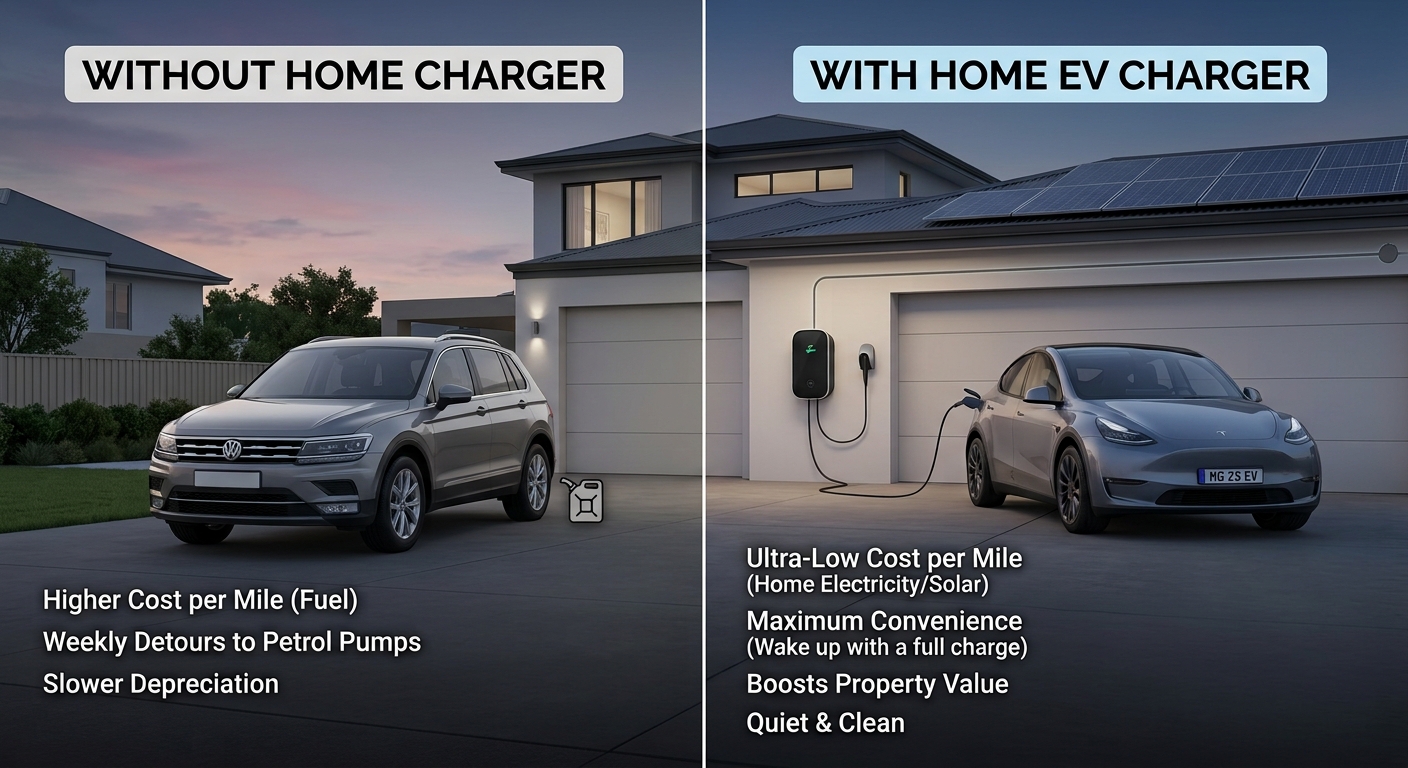
When making the transition to electric vehicle ownership, one of the first and most critical decisions you will face is how and where to refuel your vehicle. While public charging stations have expanded significantly across highways and urban commercial centers, relying exclusively on public infrastructure can quickly become inconvenient, time-consuming, and expensive. To answer directly: Yes, installing a home EV charger is well worth the investment if you own or plan to keep an electric vehicle.
Transitioning from a standard three-pin household socket or sporadic public fast chargers to a dedicated residential Level 2 charging system fundamentally transforms your daily driving experience. It replaces the anxiety of hunting down open public plugs with the absolute convenience of waking up every single morning to a fully “fueled” car—all while slashing your per-kilometer energy expenses to a fraction of traditional petroleum costs.
Here is an extensive, comprehensive, and detailed 2000-word guide examining the true value proposition of home EV charging. We will break down upfront hardware costs, installation complexities, time savings, long-term battery health implications, utility rate optimization, and overall financial return on investment (ROI).
1. The Core Value Proposition: Ultimate Convenience and Time Savings
The most immediate and tangible benefit of installing a dedicated home EV charger is the elimination of routine fueling friction.
-
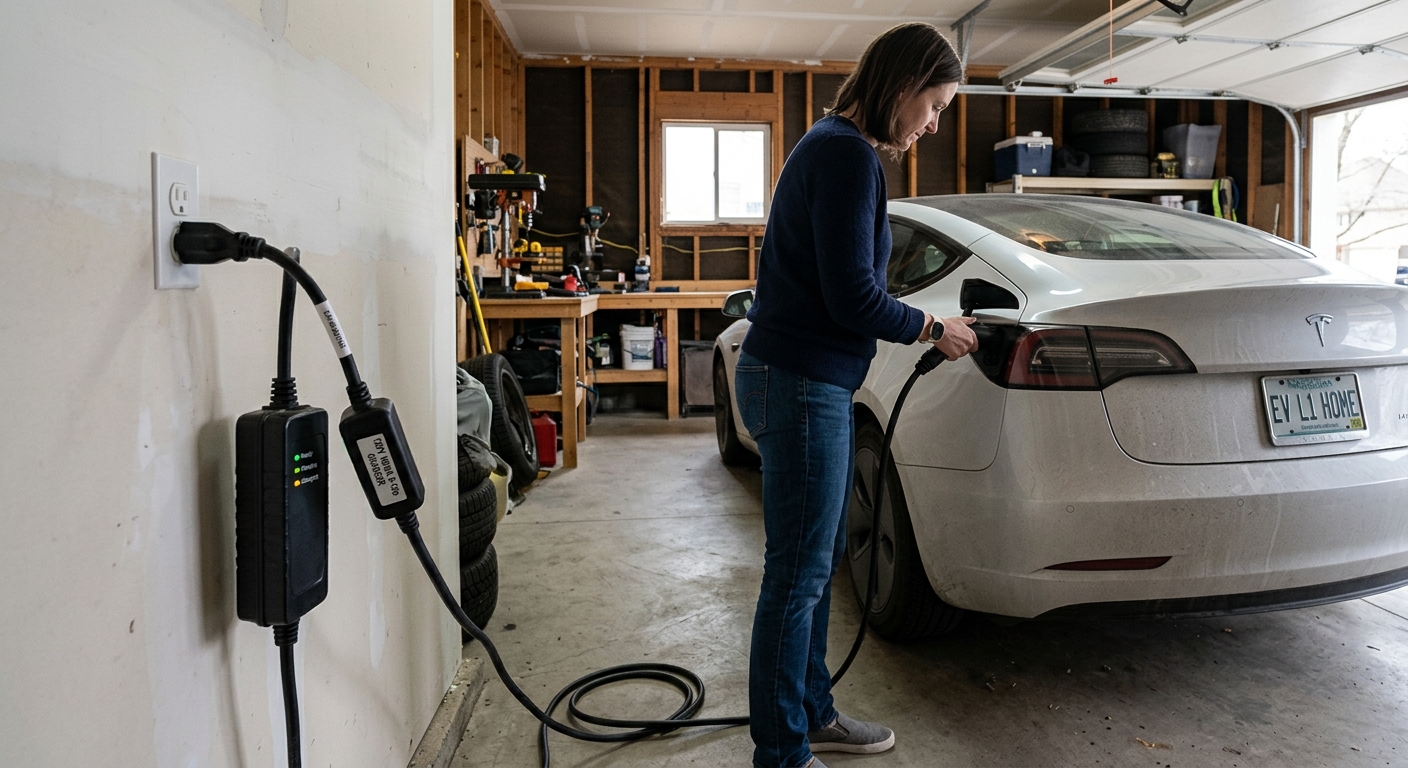
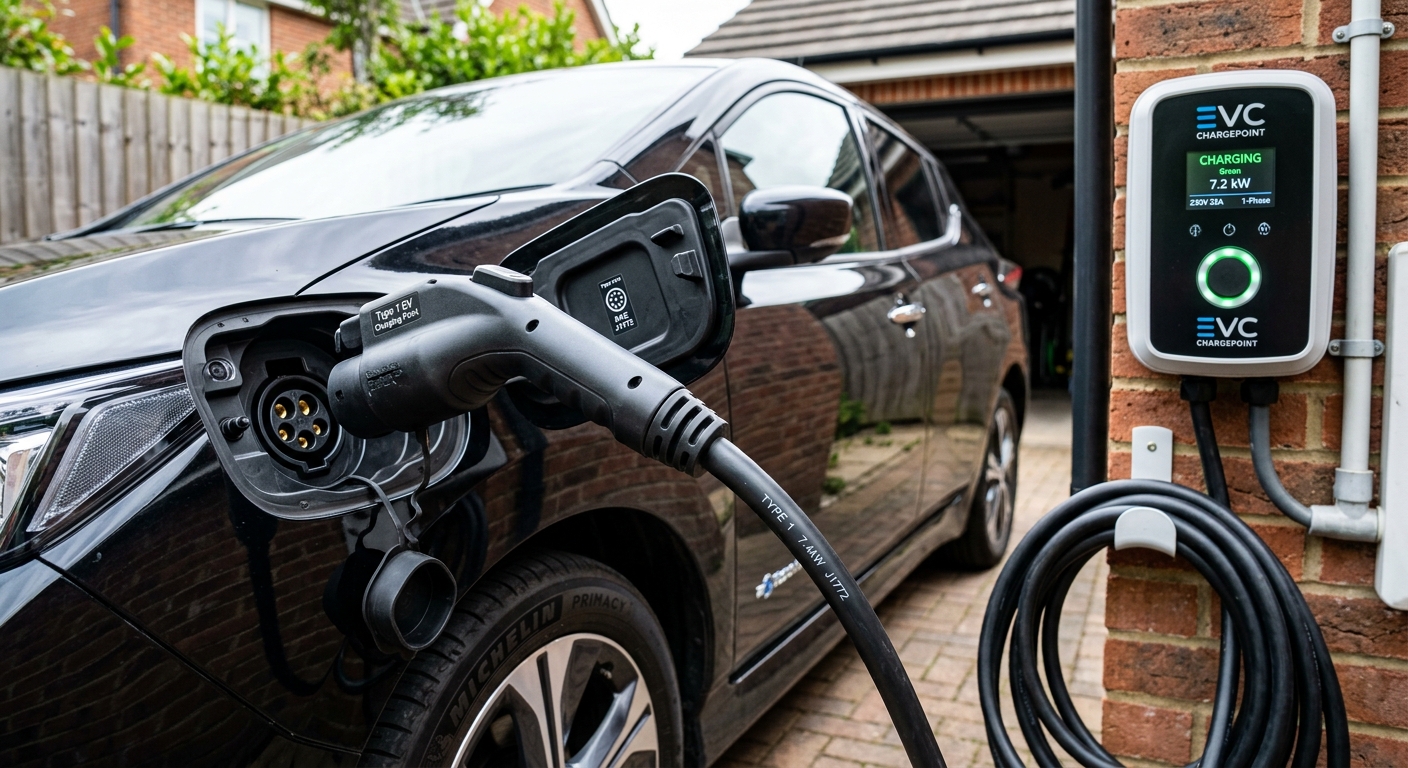
The “Waking Up Full” Paradigm: Think about how you charge your smartphone. You do not drive to a specialized high-speed phone charging terminal once a week; you plug it in beside your bed every night. A dedicated Level 2 home charger brings this exact convenience to your electric vehicle. You plug in when you arrive home from work, and the car silently replenishes its entire battery pack overnight while you sleep.
-
Avoiding Public Charging Hassles: Public charging networks, while improving, are subject to broken screens, out-of-order stalls, long queues during peak travel holidays, and idle fees if you fail to move your car immediately after a session completes. Having a private charger in your garage or driveway removes public charging from your daily routine entirely, reserving rapid public stations strictly for long-distance road trips.
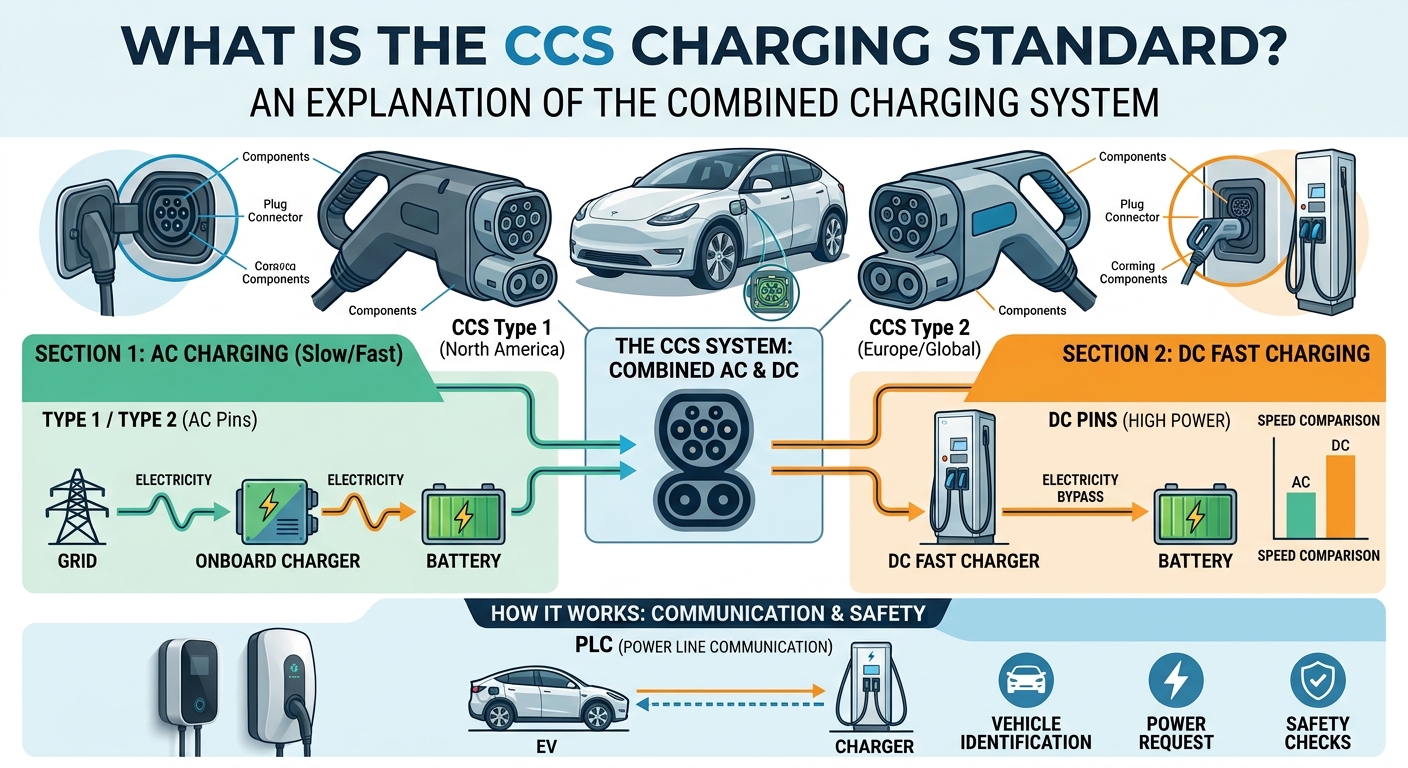
To understand how home charging infrastructure contrasts with public rapid networks, read more about various charging types.
2. Financial Analysis: Upfront Costs vs. Long-Term Fuel Savings
Skeptical buyers often hesitate at the initial capital expenditure of purchasing hardware and hiring a licensed electrician. Let us break down the real numbers to see why home charging yields an incredible return on investment:
-
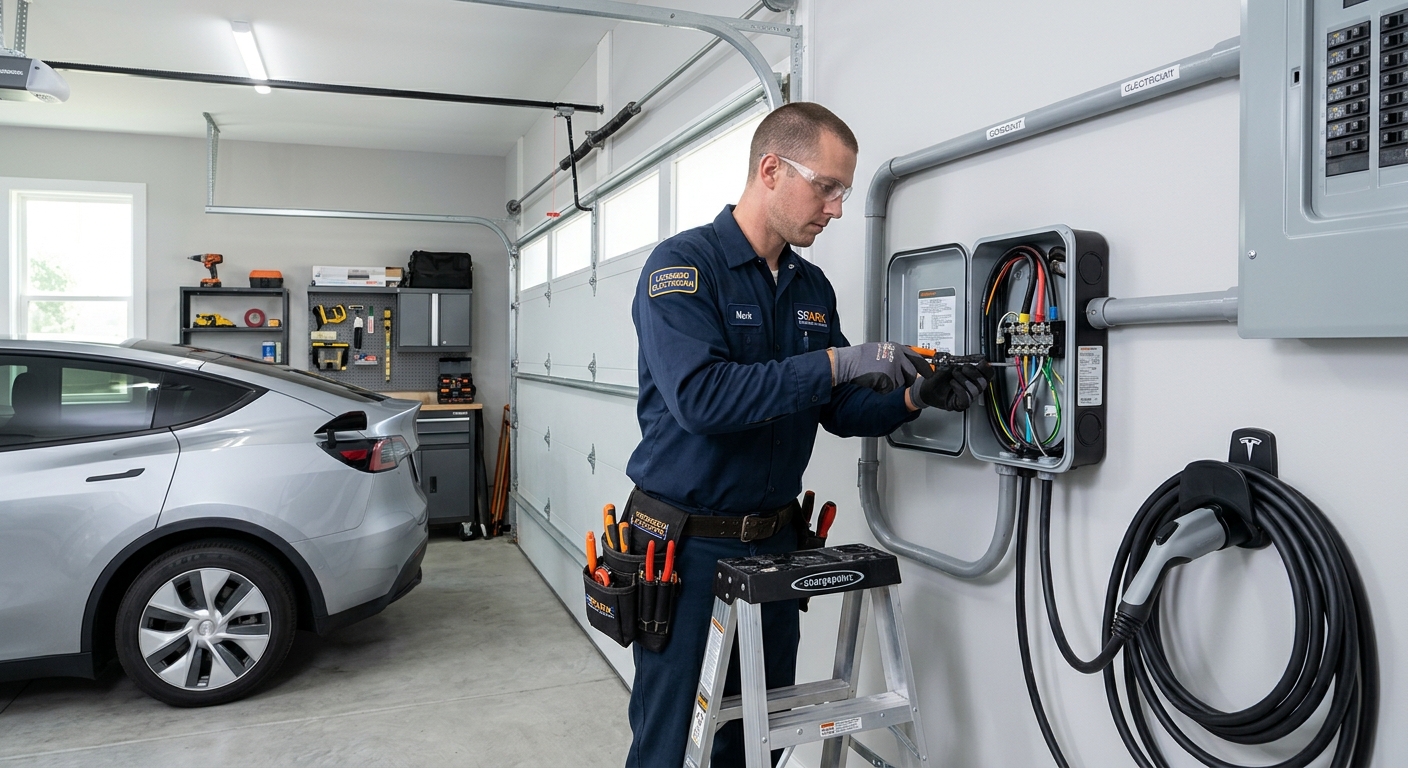
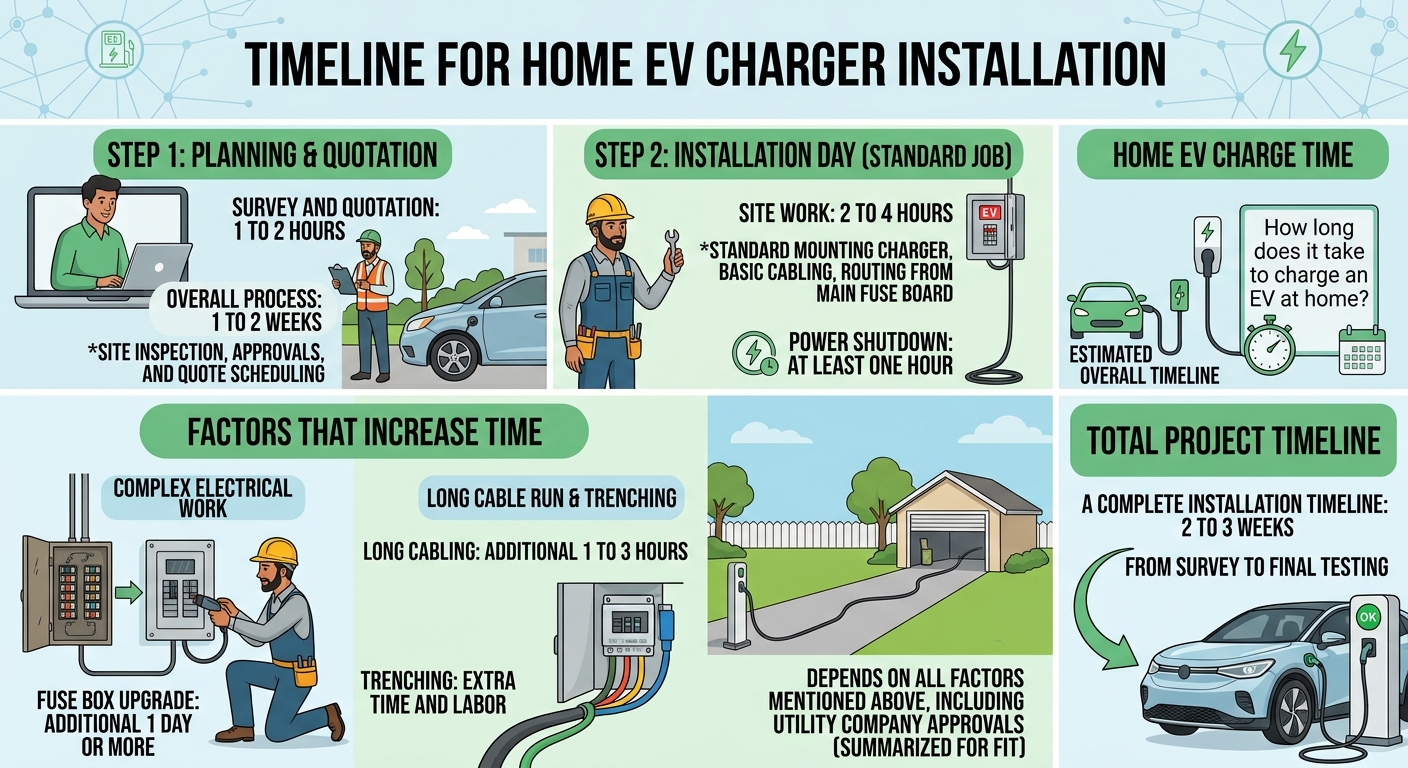
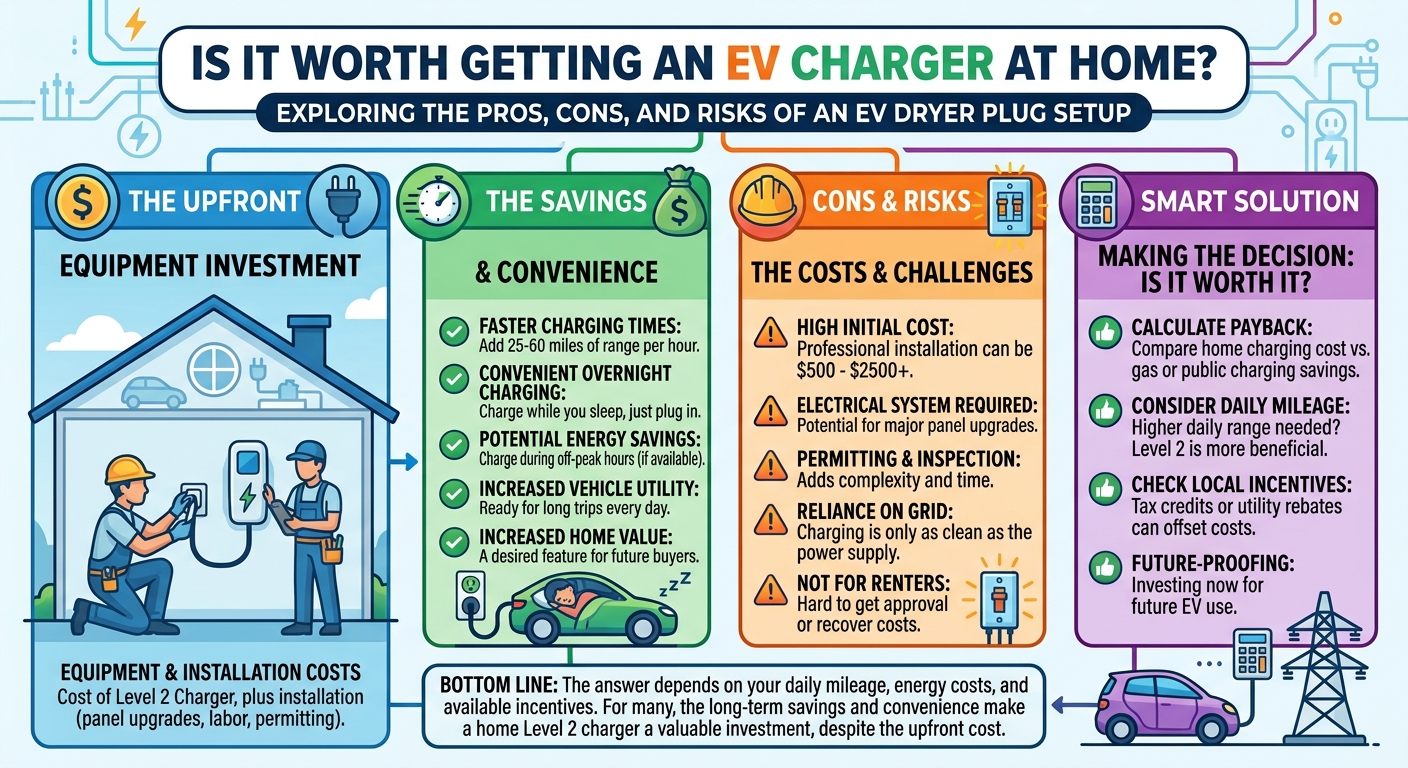
Upfront Installation Expenses: A quality smart Level 2 home charging unit typically costs between $400 and $800, while professional installation by a certified electrician ranges from $500 to $1,500+ depending on your home’s existing electrical panel capacity, distance from the breaker box, and whether local permitting or heavy-duty 240V wiring upgrades are required. This puts total upfront costs anywhere from $1,000 to $2,500.
-
The Cost-per-Kilowatt-Hour Advantage: Public DC fast-charging networks typically charge a steep premium for speed, often ranging from $0.35 to $0.60+ per kWh. In contrast, residential electricity rates are vastly lower—averaging $0.12 to $0.18 per kWh in many regions, and dropping even lower during off-peak hours.
-
Calculating the Payback Period: If an average EV driver travels 12,000 miles a year at an efficiency of 3 miles per kWh, they consume roughly 4,000 kWh annually. Charging publicly at $0.45/kWh costs $1,800 per year. Charging at home during off-peak hours at $0.12/kWh costs just $480 per year. That yields an annual savings of $1,320, meaning a $1,500 home charger installation completely pays for itself in roughly 14 months.
To explore how smart energy tracking, automated scheduling, and load management can optimize these savings even further, check out our guide on smart home EV solutions.
3. Battery Health and Longevity: Gentle AC vs. Aggressive DC
Beyond time and money, the long-term health of your vehicle’s expensive lithium-ion battery pack is a vital consideration:
-
Thermal Stress of DC Fast Charging: Public DC fast chargers force massive amounts of electrical current into a battery pack in a very short window. This creates intense thermal stress and high internal temperatures. Frequent, repeated exposure to high-speed DC charging can accelerate battery degradation over years of ownership.
-
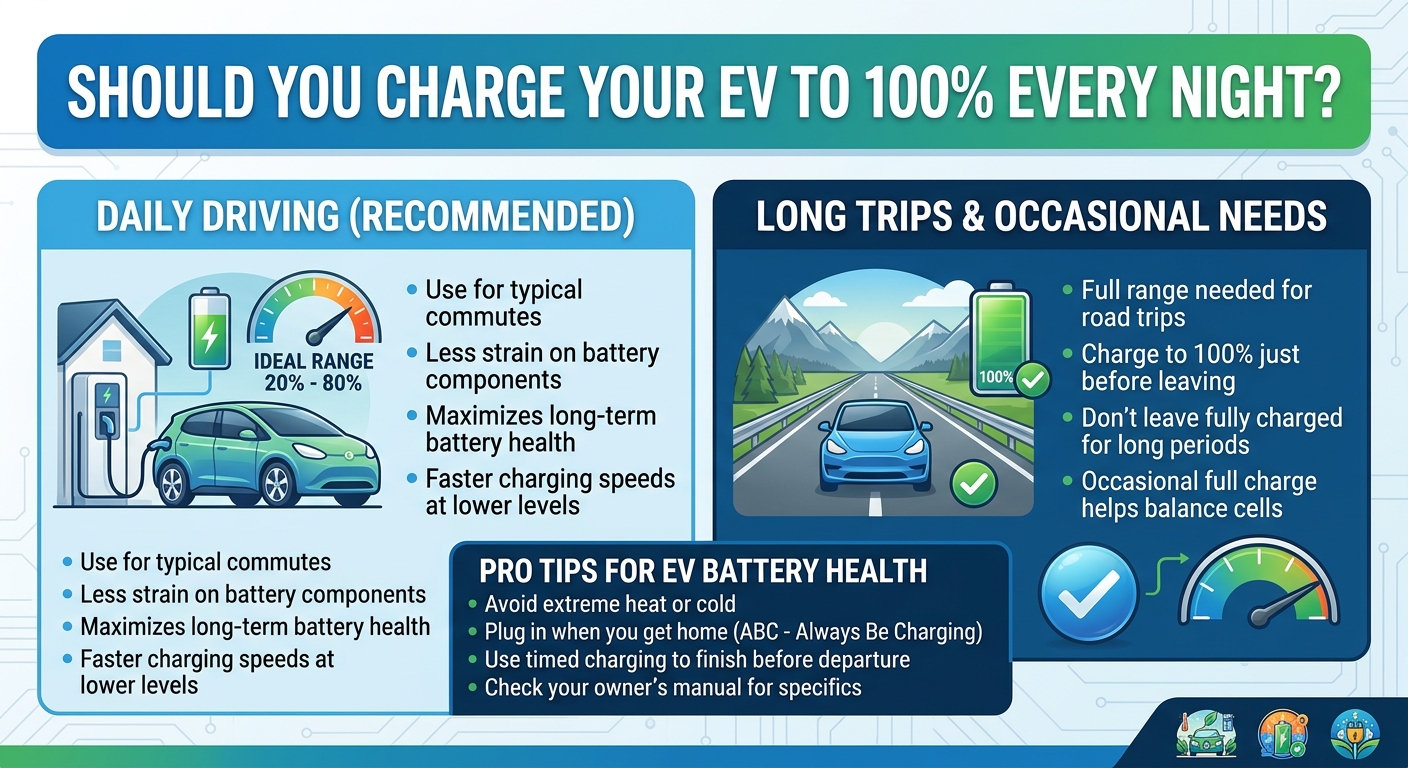
The Gentle Nature of Home AC Charging: Home Level 2 chargers operate on alternating current (AC), delivering a steady, controlled stream of power (typically 7 kW to 11 kW) over several hours. This slow, cool replenishment method is chemically gentle on lithium-ion cells, preserving maximum battery capacity and vehicle resale value over the long haul.
For comprehensive insights on EV infrastructure planning, safety standards, and expert advisory services, visit us at EV Charger Advisor.
4. Utility Rate Optimization and Time-of-Use (TOU) Tariffs
Installing a smart home EV charger allows you to tap into advanced utility pricing structures that are otherwise impossible to leverage:
-
Time-of-Use (TOU) Rates: Many electric utility companies offer specialized EV or residential TOU tariffs. During peak afternoon and evening hours, electricity is expensive. However, during deep off-peak windows—typically between 11 PM and 6 AM—electricity rates plummet.
-
Automated Smart Scheduling: Modern smart home chargers feature Wi-Fi connectivity and companion smartphone apps. You can program your charger to wait until off-peak hours begin before drawing power from the grid. This ensures your car charges exclusively when electricity is at its absolute cheapest.
5. Property Value and Future-Proofing Real Estate
Real estate trends increasingly favor green, electrified infrastructure:
-
Boosting Home Marketability: As electric vehicle adoption accelerates globally, home buyers actively look for properties that are already “EV-ready.” Having a dedicated 240V NEMA 14-50 outlet or a hardwired Level 2 smart charger installed in the garage adds tangible value and appeal to modern home buyers.
-
Future-Proofing Your Household: Many households eventually transition to owning two electric vehicles. Installing robust electrical infrastructure now ensures your home can easily handle multi-vehicle energy demands down the road.
Summary: Is It Worth It?
-
Unmatched Convenience: Waking up every morning with a full battery completely eliminates daily fueling stress.
-
Massive Financial Savings: Drastically lower residential electricity rates pay off the initial installation cost in a very short timeframe compared to public charging.
-
Preserved Battery Life: Gentle overnight AC charging protects your vehicle’s high-voltage battery pack from premature degradation.





Leave a Reply