
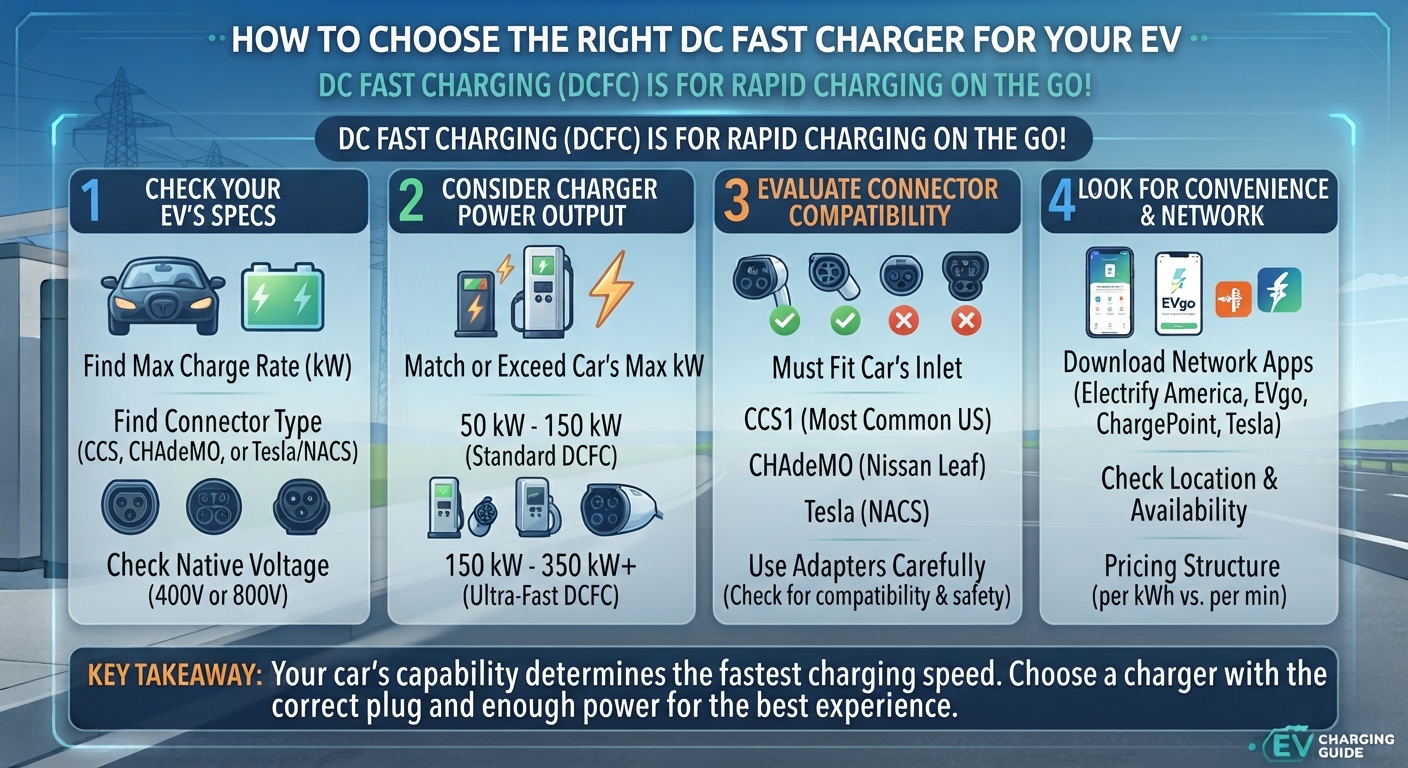
When transitioning from home charging to long-distance highway travel, understanding public rapid infrastructure is vital for seamless road trips. To answer directly: Choosing the right DC fast charger (Level 3 public charger) depends on matching your vehicle’s maximum charge rate, connector type, and charging curve to the station’s capabilities.
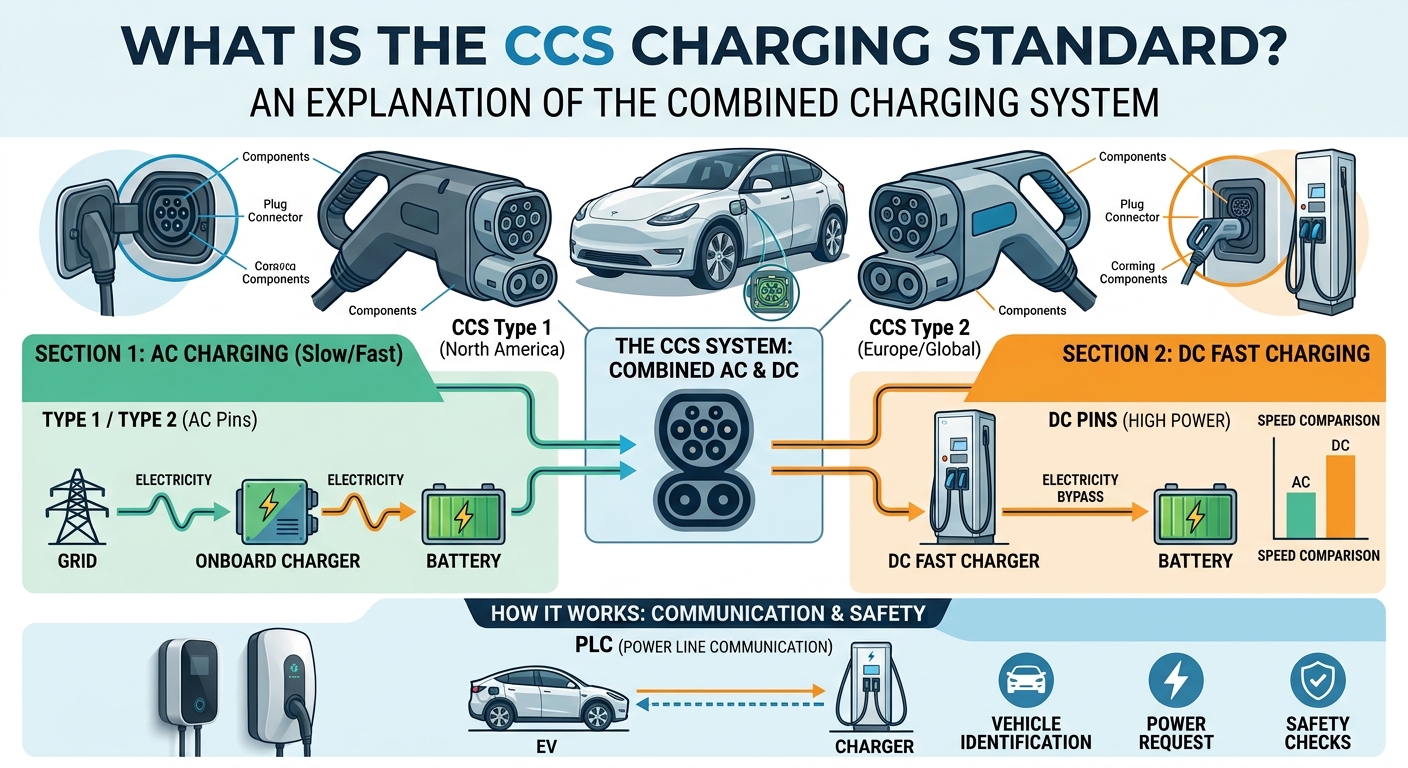
Unlike slow overnight home outlets, direct current (DC) fast charging bypasses your vehicle’s onboard alternating current (AC) converter, pushing massive amounts of high-voltage direct electricity straight into your battery pack. However, picking the wrong station or misunderstanding your vehicle’s technical limits can lead to frustratingly slow charging speeds and wasted time.
Here is an extensive, 1500-word comprehensive guide detailing how to evaluate, select, and utilize the right DC fast charger for your electric vehicle.
1. Match Your Vehicle’s Maximum Charge Rate (kW Limits)
The single most important factor when selecting a DC fast charger is understanding your specific electric vehicle’s peak intake threshold.
-
The Power Mismatch: Public stations are advertised by their maximum kilowatt (kW) output—ranging from 50 kW legacy stalls up to ultra-fast 150 kW, 250 kW, or 350 kW chargers. However, your car can only accept as much power as its internal battery management system permits.
-
Real-World Impact: If your EV is capped at a peak intake of 150 kW, plugging into a 350 kW ultra-fast stall will not damage your car, but it will charge at a maximum rate of 150 kW. Conversely, plugging a high-end 800V vehicle (like a Hyundai Ioniq 5 or Porsche Taycan) into an older 50 kW charger will artificially bottleneck your charging speed, turning a 20-minute stop into an hour-long wait.
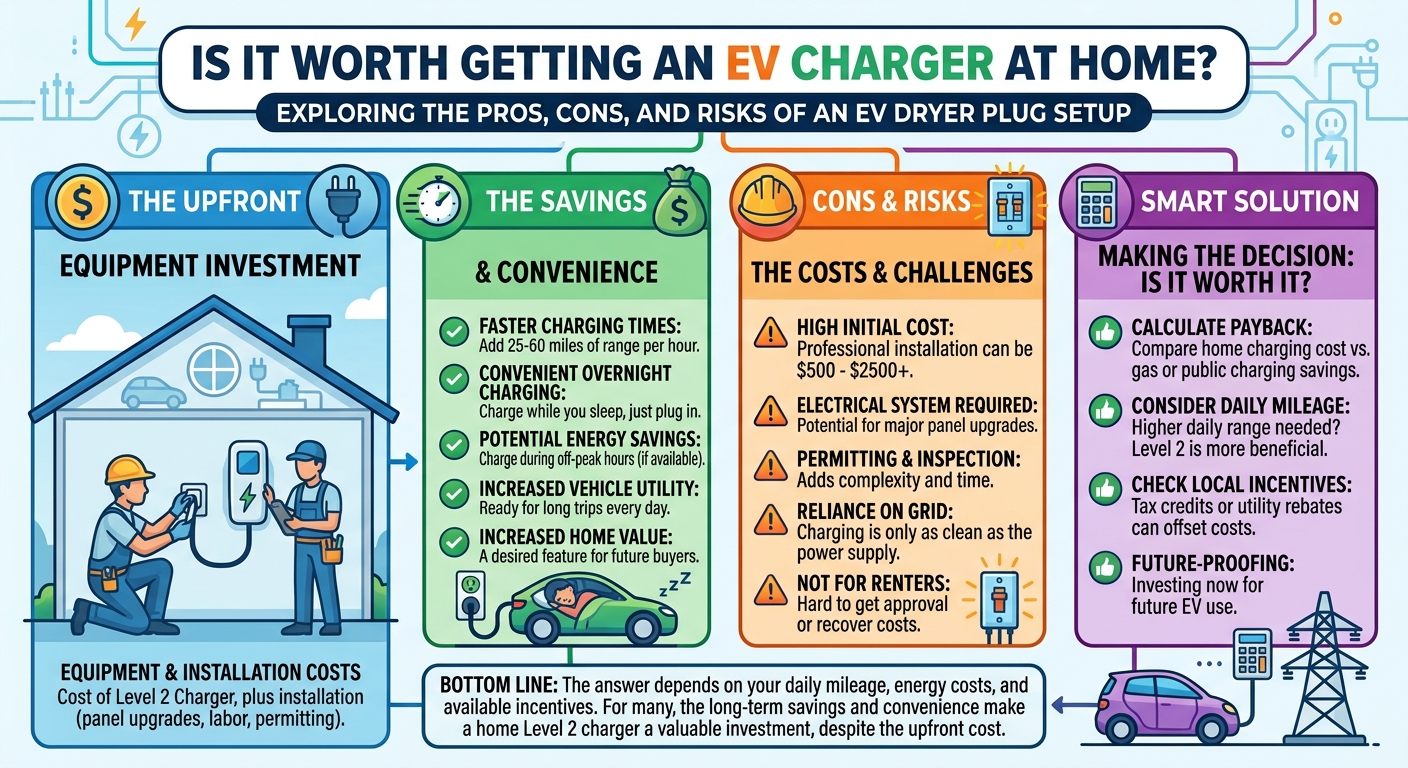
To understand how high-power public infrastructure differs from residential setups, read more about various charging types.
2. Verify Connector Compatibility (CCS, NACS, and CHAdeMO)
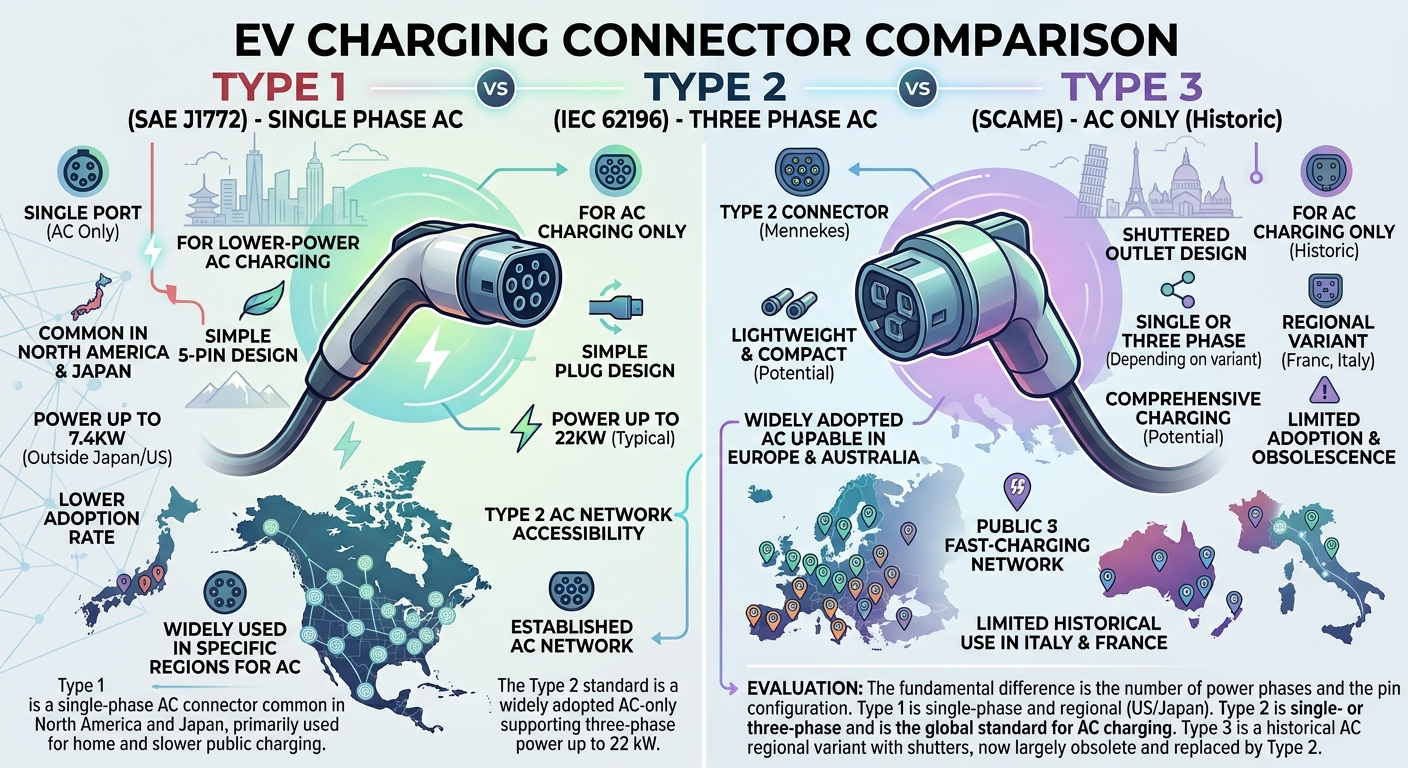
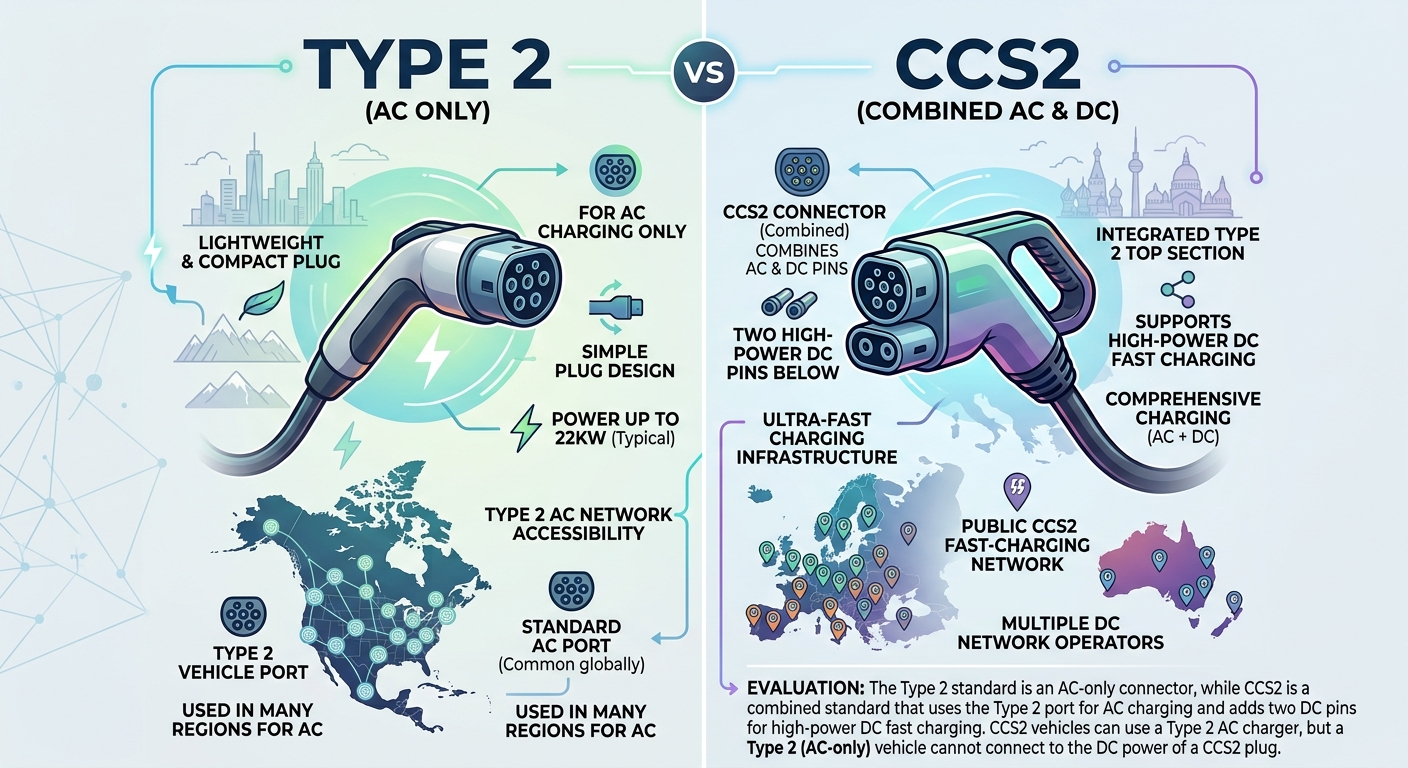
Before plugging in, you must ensure the physical cable matches your car’s charging port. Choosing the wrong connector type means you won’t even be able to initiate a session:
-
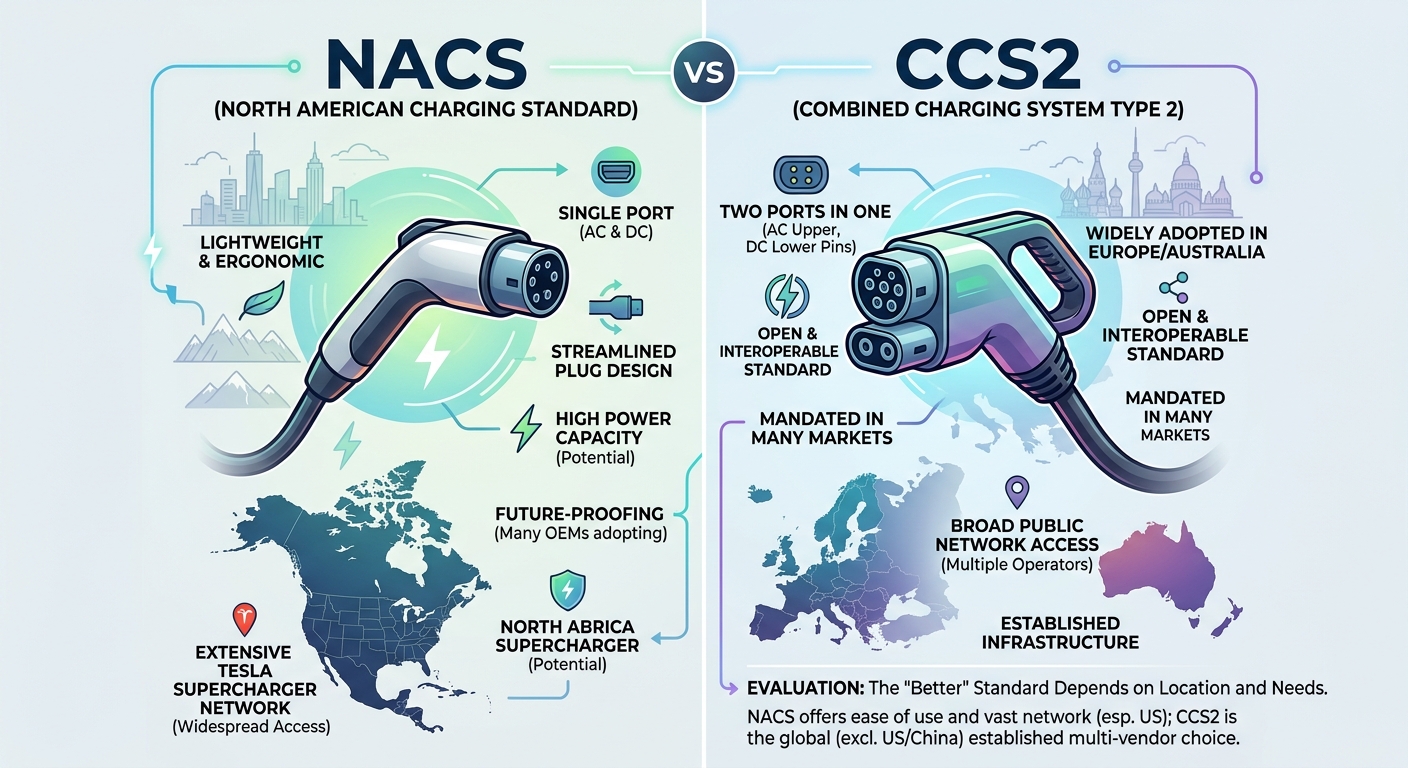
CCS (Combined Charging System): The legacy standard across most non-Tesla modern EVs, featuring a combined AC and DC pin layout.
-
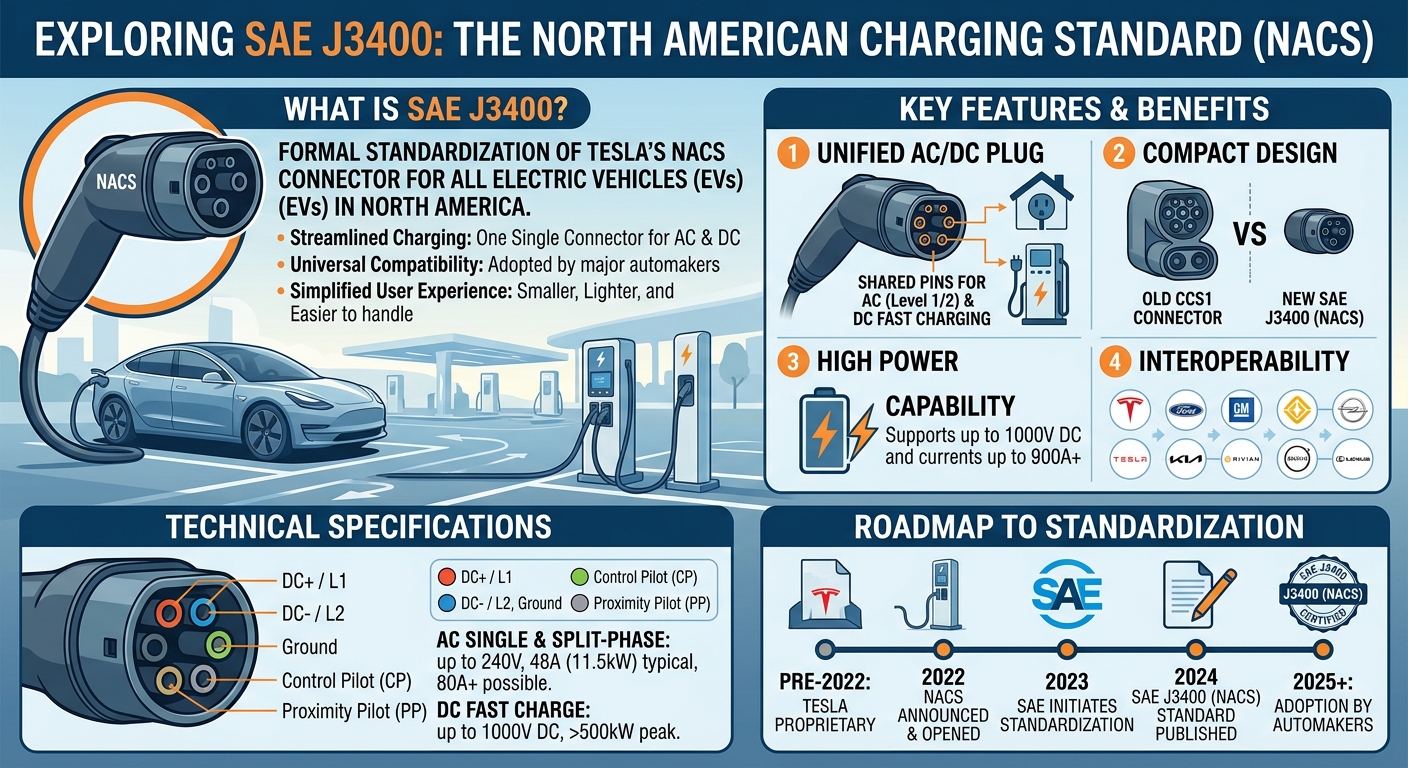
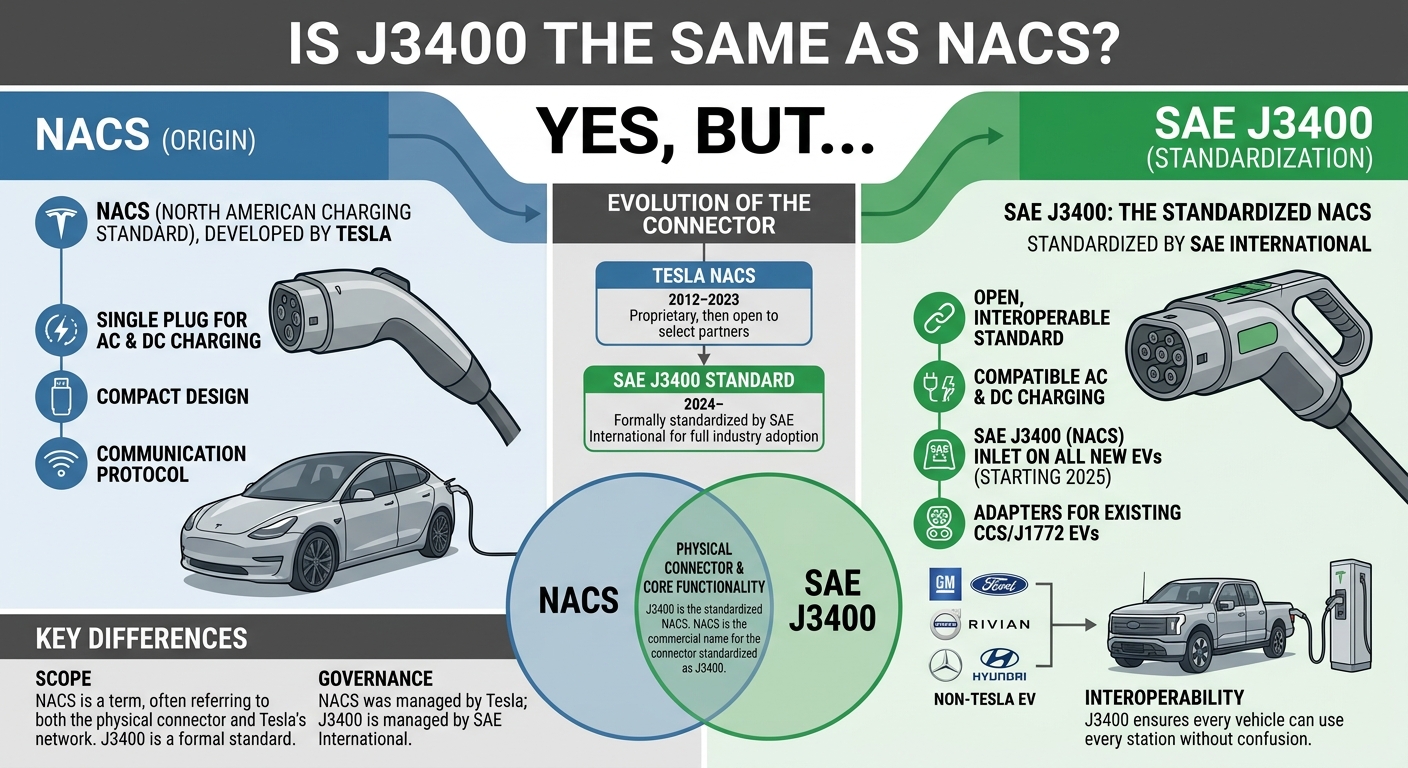
NACS (North American Charging Standard): Originally developed by Tesla and now widely adopted across major automotive brands, offering a streamlined, lightweight plug design.
-
CHAdeMO: A fading Japanese fast-charging standard found primarily on older Nissan LEAF models and early Mitsubishi vehicles.
Always check network apps (like PlugShare or specific network maps) to verify that a charging location features operational plugs compatible with your vehicle’s port configuration.
3. Understanding the Charging Curve and Battery Preconditioning
Choosing the right charger also requires understanding how chemical reactions inside lithium-ion battery cells affect your fueling speed:
-
The 10% to 80% Rule: DC fast chargers are designed for rapid top-ups, typically completing a session from 10% to 80% capacity in 20 to 40 minutes. Beyond 80%, automated safety protocols aggressively throttle power to prevent thermal degradation.
-
Battery Preconditioning: Modern EVs feature software that warms or cools the battery pack when navigating to a DC fast charger. Initiating preconditioning before you arrive ensures the battery is at its optimal thermal state to accept high-power current immediately upon plugging in.
To optimize energy tracking and manage home versus public charging schedules, explore our insights on smart home EV solutions.
4. Evaluating Network Reliability and Pricing Structures
Not all public charging networks offer the same user experience or billing models:
-
Pricing Transparency: Some networks bill strictly by the kilowatt-hour (kWh) consumed, while others (due to regional regulations) must bill by the minute. Per-minute billing can penalize cars that charge slowly or vehicles experiencing power throttling at high states of charge.
-
Network Reliability: Choosing a well-maintained network with high uptime ensures you avoid broken screens, unresponsive credit card readers, or derated stalls delivering reduced power outputs.
For a comprehensive review of EV ownership tips, equipment safety standards, and travel planning, visit EV Charger Advisor.
Summary: Your Quick Selection Checklist
-
Check your car’s peak kW limit before selecting a public stall to avoid paying a premium for speeds your vehicle cannot utilize.
-
Confirm connector compatibility (CCS vs. NACS) and use routing apps to target reliable, high-output highway corridors.





Leave a Reply