
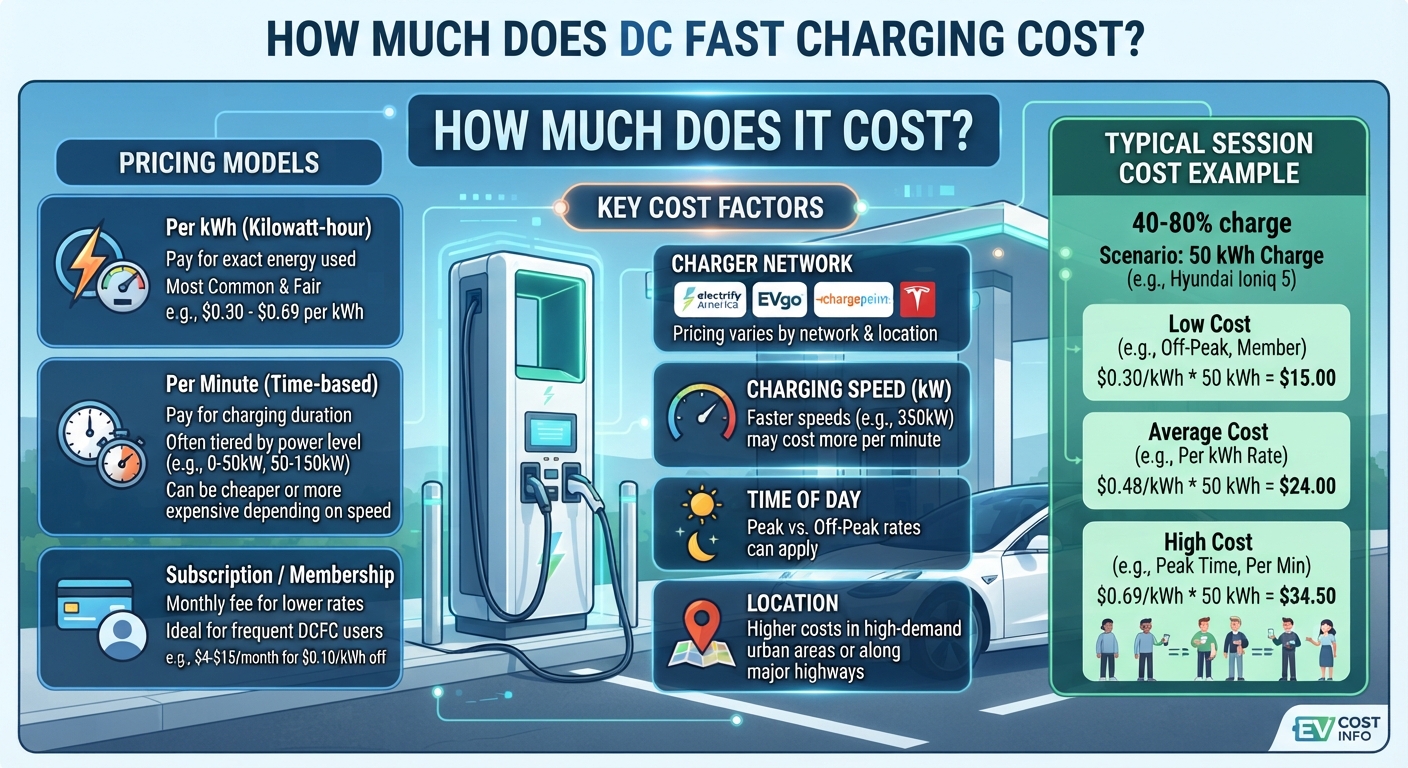
When transitioning from home charging to public highway infrastructure, one of the most pressing financial questions for electric vehicle owners is how public pricing models operate. To answer directly: Public DC Fast Charging (Level 3) typically costs between $0.30 and $0.60 per kWh globally, averaging around $0.53 per kWh across major networks.
Unlike home utility electricity—which is billed at straightforward residential flat or time-of-use rates—public rapid charging involves commercial demand charges, network subscription fees, infrastructure maintenance costs, and various regional utility regulations. Understanding these pricing tiers is essential for calculating your true cost of road-tripping compared to traditional gas vehicles.
Here is an in-depth breakdown of everything you need to know about DC fast charging economics, network pricing structures, and how to minimize your public refueling expenses.
1. The Core Pricing Model: Per-kWh vs. Per-Minute Billing
Public charging providers typically bill customers using one of two primary methods, depending heavily on local state and regional laws:
-
Per-kWh (Kilowatt-Hour) Billing: This is the most transparent and common pricing mechanism. You pay strictly for the exact amount of energy transferred into your vehicle’s battery pack. For instance, if your car takes on 50 kWh of electricity at an average rate of $0.50 per kWh, your total session cost will be $25.00.
-
Per-Minute (Time-Based) Billing: In certain states or jurisdictions where laws restrict selling electricity directly by the kilowatt-hour to non-utility entities, charging networks must bill by time (divided into speed tiers). While this can be straightforward, it introduces inefficiencies because your vehicle’s charging speed fluctuates naturally (slowing down as the battery fills up), meaning you might pay the same per-minute rate while receiving significantly less power toward the end of the session.
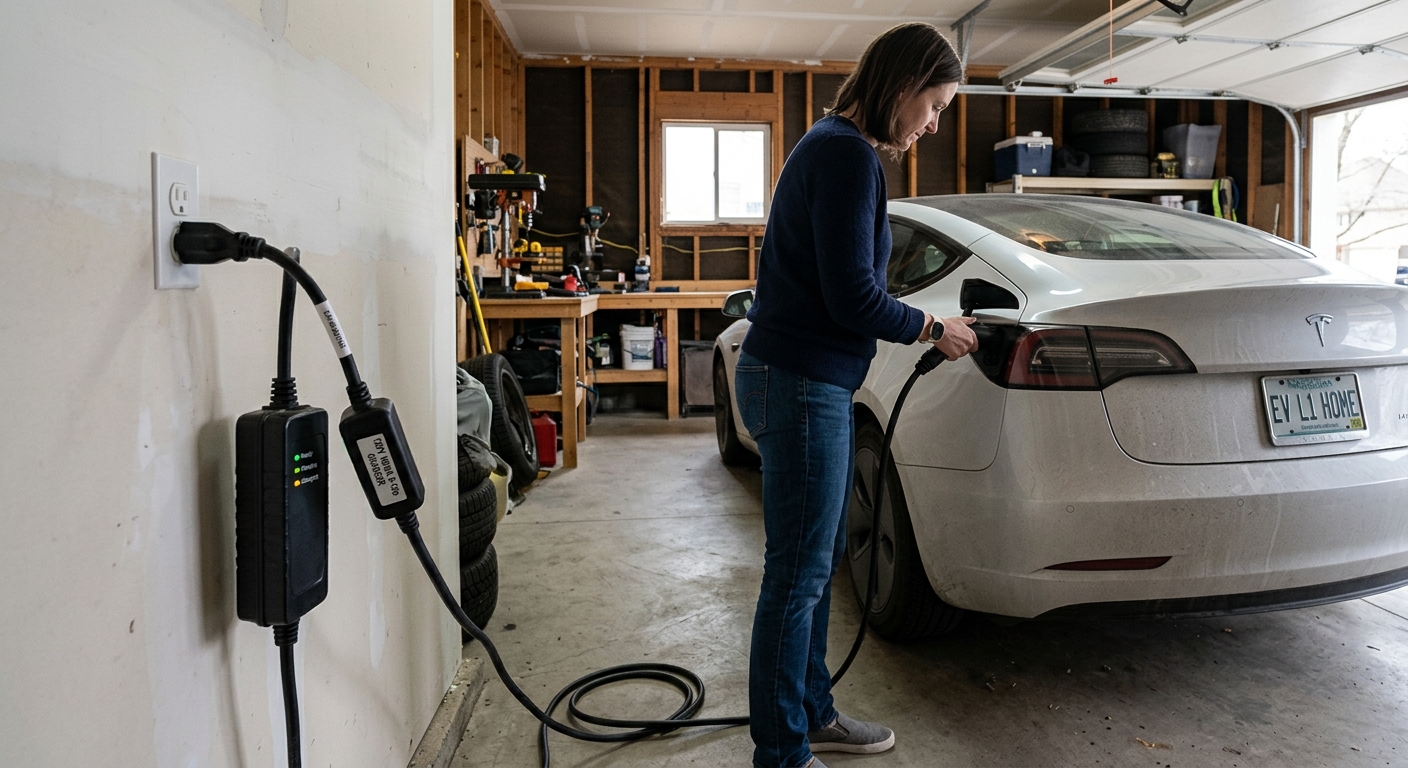
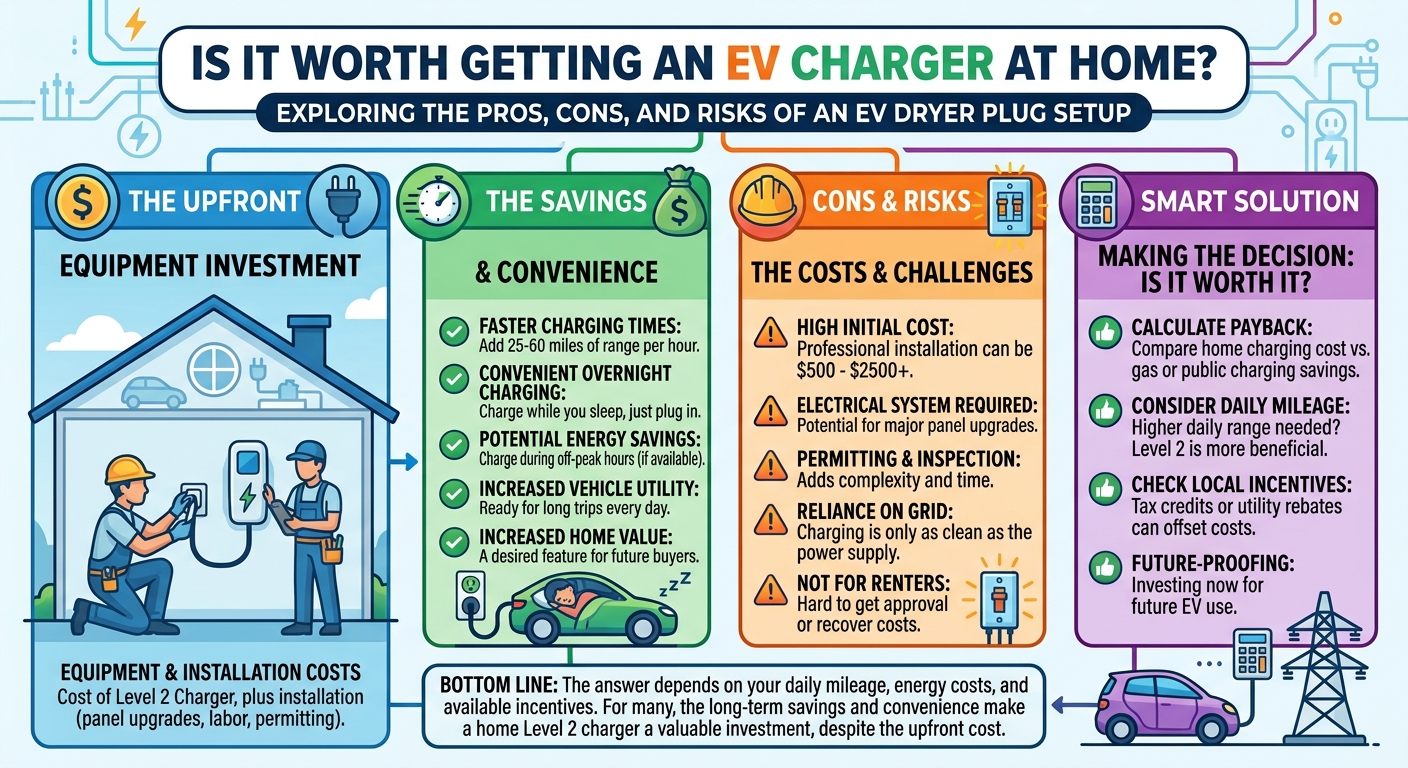
To understand how public fueling rates compare to residential equipment costs, read more about various charging types.
2. Breaking Down the Costs: Why Is Public Charging Expensive?
Drivers are often surprised to find that public DC fast charging is considerably more expensive than charging at home. Several compounding economic factors drive up the price per kWh:
-
Commercial Demand Charges: Public utility companies charge commercial businesses heavy fees based on their peak power demand (the maximum amount of electricity drawn at any single moment). Because multiple EVs pulling 150 kW to 350 kW simultaneously create massive spikes on the local grid, networks pass these high overhead costs down to consumers.
-
Infrastructure and Maintenance Costs: Installing, cooling, and maintaining heavy-duty liquid-cooled cables, high-voltage transformers, and high-speed hardware requires massive capital investments.
-
Real Estate and Network Operations: Prime highway locations involve expensive commercial leases, cloud software billing systems, payment processing fees, and 24/7 customer support networks.
To explore how advanced energy management can optimize home energy profiles versus public options, check out our guide on smart home EV solutions.
3. Membership Plans and Subscription Discounts
Just like cellular data plans or toll passes, many major DC fast-charging networks (such as Electrify America, EVgo, and regional providers) offer monthly subscription tiers to reduce costs for frequent travelers:
-
The Free Tier: Standard pay-as-you-go pricing with no monthly commitment, but subject to standard retail per-kWh rates.
-
The Subscription Tier (e.g., $4 to $15 per month): Lowers the per-kWh rate significantly (often saving $0.10 to $0.15 per kWh). If you regularly take long road trips or rely on public stalls for weekly top-ups, these membership fees usually pay for themselves within a single charging session.
For a comprehensive overview of financial planning, installation budgets, and safety tips for EV owners, visit EV Charger Advisor.
Summary: Managing Your Public Charging Budget
-
Expect to pay an average of $0.30 to $0.60 per kWh (averaging around $0.53/kWh) when using public DC fast chargers.
-
Consider signing up for network membership programs if you frequently travel long distances to secure lower per-kWh rates and keep your road-trip budget under control.





Leave a Reply