
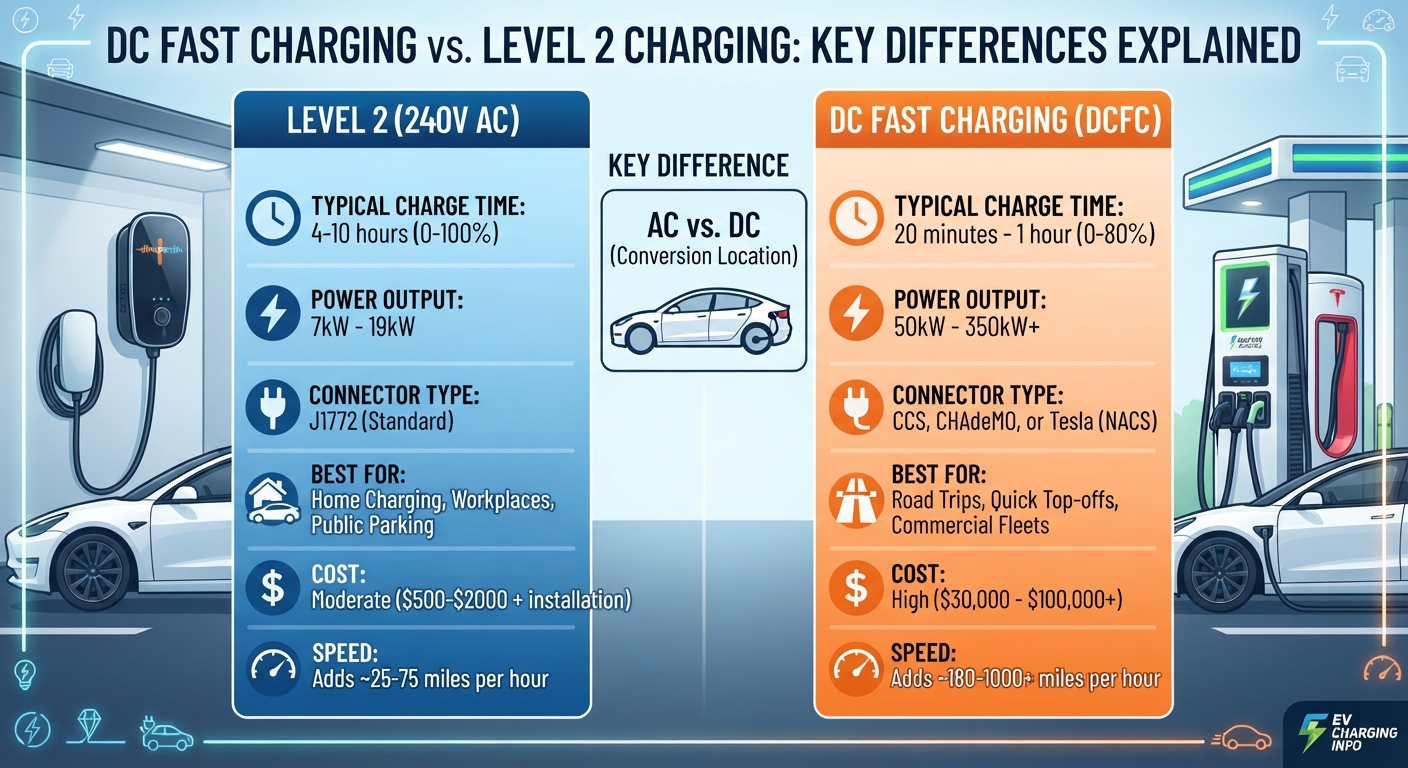
When diving into the world of electric vehicles, understanding how electricity flows into your car’s battery pack is one of the most practical skills you can learn. To answer directly: The choice between Level 2 charging and DC Fast Charging (DCFC) comes down to where the electrical current is converted and how quickly you need to get back on the road. While Level 2 acts as the steady, reliable “teammate” for daily use, DC Fast Charging is the high-powered premium solution designed for travel.
Navigating the nuances of home versus public charging infrastructure can feel overwhelming at first glance. However, once you understand the technical distinctions, pricing models, and speed variants, choosing the right method becomes second nature.
1. Fundamental Engineering: AC vs. DC Power Conversion
The most profound difference between Level 2 charging and DC fast charging lies hidden inside how electricity is handled before it ever hits your lithium-ion battery cells:
-
The Nature of Batteries: All electric vehicle battery packs store energy exclusively as Direct Current (DC).
-
Level 2 Charging (AC Power): Level 2 equipment supplies standard Alternating Current (AC) power from your home or commercial utility grid. Because the battery requires DC, your car utilizes an internal component called the onboard charger (OBC) to convert that AC power into DC. This conversion process is bound by the physical limits of the onboard inverter, usually running at speeds between 7 kW and 19.2 kW.
-
DC Fast Charging (DCFC): DC fast chargers skip the car’s onboard conversion system entirely. The charging station itself contains a massive industrial inverter that converts AC power from the grid into DC before it enters the vehicle, pumping high-voltage electricity straight into the battery pack at speeds ranging from 50 kW to 350 kW+.
To explore the deeper technical specifications of various residential plugs and equipment, read more about different charging types.
2. Speed and Real-World Convenience
Time is often the ultimate deciding factor when drivers compare these two technologies:
-
Level 2 Speed Benchmark: Operating primarily at home or the workplace, Level 2 units typically replenish roughly 20 to 40 miles of driving range per hour. A completely depleted standard battery pack takes anywhere from 4 to 10 hours to reach full capacity, making it ideal for overnight sleeping hours.
-
DC Fast Charging Speed Benchmark: Designed for rapid roadside turnarounds, DC fast chargers bypass normal waiting periods entirely. They typically restore 10% to 80% capacity in just 20 to 40 minutes, making highway road trips practical and efficient.
To manage smart energy tracking, home grid integration, and daily efficiency schedules, check out our insights on smart home EV solutions.
3. Installation, Infrastructure, and Cost Dynamics
The financial commitment required to access these two charging methods differs drastically:
-
Level 2 Setup (Home-Centric): While purchasing a Level 2 unit and hiring an electrician for professional wiring requires an upfront investment of $500 to $2,000, it provides ultra-cheap “fueling” over its lifespan by leveraging flat or low off-peak residential utility rates.
-
DC Fast Charging (Public-Centric): You cannot install a true DC fast charger in a standard residential garage due to grid limitations and massive equipment costs (often running tens of thousands of dollars). Instead, DC fast charging is found at public highway corridors, commercial plazas, and travel stations, where electricity is billed at higher per-kWh rates to offset commercial demand charges and infrastructure maintenance.
For a comprehensive overview of safety protocols, home vs. public charging budgets, and infrastructure advice, visit EV Charger Advisor.
Summary: When to Use Which?
-
Use Level 2 Charging as your daily foundation for affordable, convenient overnight home refueling.
-
Reserve DC Fast Charging for long-distance highway travel and rapid public top-ups when time is of the essence.

















Leave a Reply