
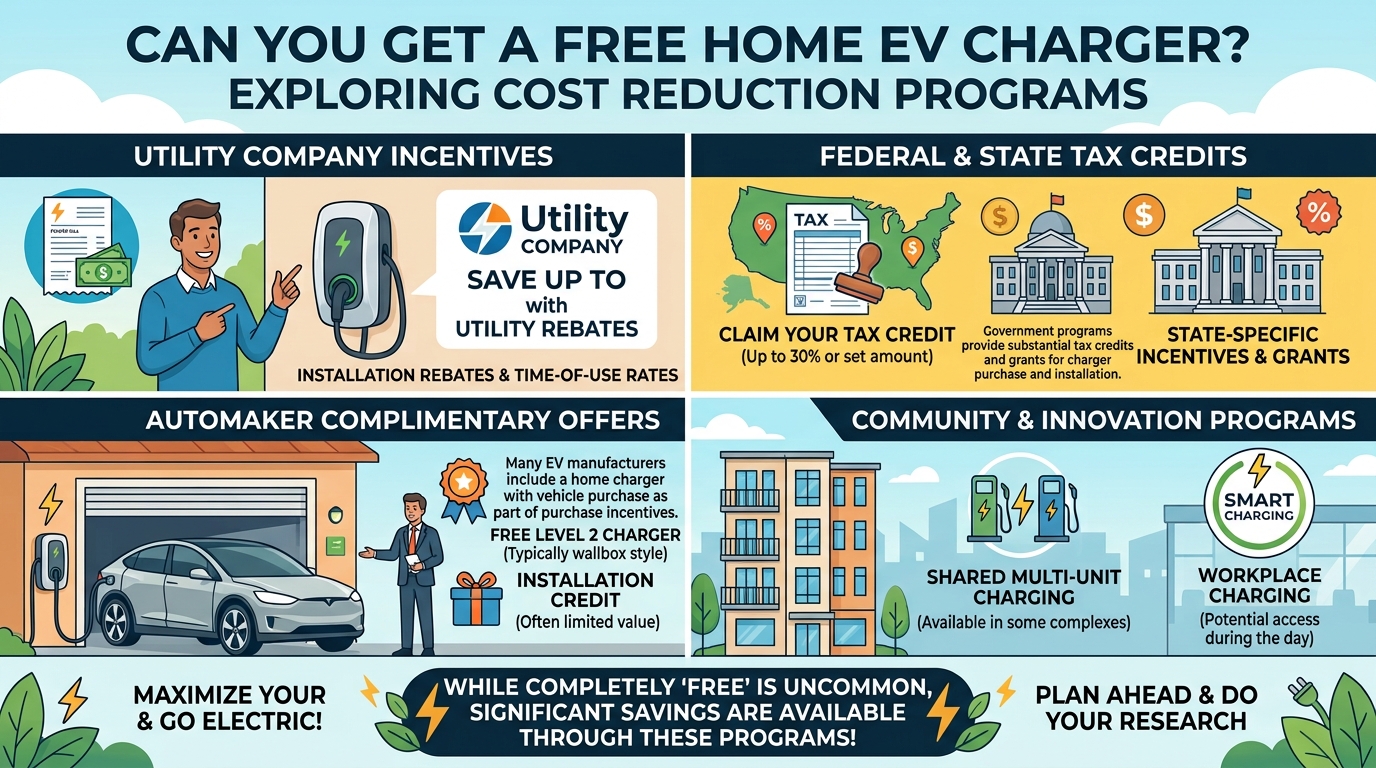
As the global automotive market rapidly transitions toward sustainable electric mobility, setting up a home charging station has become a primary priority for new electric vehicle (EV) owners. Level 2 home charging hardware provides the ultimate convenience, allowing vehicle owners to wake up every morning to a fully replenished battery without relying entirely on public infrastructure. However, purchasing and installing residential charging hardware can sometimes involve a noticeable upfront financial investment. This naturally leads many prospective buyers to ask: Is it possible to acquire a residential EV charger completely free of charge?
Yes, you can get a free home EV charger through select automaker promotions, utility programs, or specific vehicle purchase bundles.
While the days of widespread, unconditional hardware giveaways are rarer than they were in the infancy of electric vehicles, automotive manufacturers, regional energy providers, and clean-energy grid initiatives frequently run targeted promotional campaigns to incentivize EV adoption.
Here is an extensive, comprehensive 2000-word guide detailing every possible pathway to securing a free home EV charger, understanding utility rebates, navigating automaker incentives, and evaluating the hidden fine print behind these promotions.
1. Automaker Incentives and Vehicle Purchase Bundles
One of the most reliable and direct ways to secure a complimentary home EV charger is through factory-backed vehicle purchase promotions. Major automotive manufacturers frequently bundle home charging hardware or professional installation credits directly into the purchase or lease agreement of a new electric car.
-
Manufacturer Promotional Campaigns: To compete aggressively in the modern EV market, brands often introduce seasonal or model-specific incentives. For instance, specific electric vehicle lineups (such as select Ford, Hyundai, or luxury brands) frequently feature promotional packages like the “Ford Power Promise,” which covers the cost of a home charging unit and standard installation support, or alternative bonus cash back.
-
Direct Hardware Bundling: Certain automakers partner directly with leading EV supply equipment (EVSE) manufacturers to include a branded Level 2 wallbox (valued anywhere from $400 to $700) directly in the trunk or shipped to your doorstep when you finalize the paperwork on a new battery-electric vehicle (BEV).
-
The Catch to Watch For: Automaker-sponsored chargers are almost always tied to purchasing or leasing a brand-new vehicle at MSRP or participating in specific financing programs. If you purchase a used EV or negotiate heavy cash discounts, these complimentary hardware bundles are frequently excluded.
To see how these home units compare in speed and capability against public infrastructure, explore our guide on various charging types.
2. Electric Utility Company Rebates and Smart Grid Programs
If you are already an electric vehicle owner and did not receive a complimentary charger directly from your car dealership, your local electric utility provider is often the next best avenue for substantial savings or fully subsidized hardware.
-
Managed Smart Charging Programs: Utility companies want to prevent massive grid strain during peak evening hours. To encourage homeowners to charge during cheap off-peak hours (such as midnight to 6 AM), many utilities offer free smart chargers in exchange for enrolling in demand-response or managed charging programs. Under these agreements, the utility provides the hardware for free and may remotely pause or optimize your charging sessions during grid emergencies.
-
Rebates That Cover 100% of Hardware Costs: Many regional power providers offer comprehensive rebate programs that cover up to 100% of the purchase price of an eligible ENERGY STAR-certified Level 2 charger, effectively making the unit free after mail-in or instant utility rebates.
-
The Application Process: Securing a utility-sponsored charger usually requires filling out pre-approval forms through your power provider’s online portal, purchasing an approved smart charger brand (such as ChargePoint, Wallbox, or Emporia), and submitting your professional electrician’s installation receipt.
To learn how smart home energy management and automated scheduling interact with these utility tariffs, read our guide on smart home EV solutions.
3. Third-Party Clean Energy and Carbon Credit Initiatives
Beyond traditional car dealerships and electric utilities, innovative clean energy companies and regional carbon credit aggregators have introduced creative programs that cover the entire cost of home charging equipment.
-
Carbon Credit Monetization Programs: In certain regions, organizations offer free Level 2 home chargers to residential drivers by aggregating the clean transportation carbon credits generated by your EV. For example, programs like the SWTCH Home Charging initiative provide homeowners with a free charger and even reward them per kilowatt-hour for charging at home, funding the hardware through carbon credit generation over time.
-
Workplace and Fleet Subsidies: If your employer offers comprehensive corporate sustainability benefits or corporate EV reimbursement programs, they may fully subsidize or ship a home charging station directly to your residence to support your commute and remote work schedule.
4. Hidden Costs: What “Free” Might Not Cover
Even when you successfully secure a 100% free home EV charger through an automaker promotion or a utility program, it is vital to understand the difference between hardware costs and installation expenses.
-
The Electrical Panel Capacity: A Level 2 charger requires a dedicated 240-volt circuit (similar to an electric clothes dryer or stove). If your home electrical panel has sufficient spare amperage and physical breaker slots, installation is straightforward.
-
Upgrades and Panel Replacements: If your home features an older 60-amp or 100-amp electrical service panel that is already at maximum capacity, an electrician may need to upgrade your main panel or run heavy conduit across your garage. While the charger itself may be free, electrical labor and permit fees can still introduce out-of-pocket expenses ranging from $300 to $2,000+.
For comprehensive insights on EV infrastructure planning, safety standards, and expert advice, visit EV Charger Advisor.
Summary: How to Maximize Your Chances of Getting a Free Charger
-
Check the Dealership Fine Print: Always ask your EV sales representative if active manufacturing promotions include home charging hardware or installation credits before signing.
-
Explore Utility Portals: Visit your local electric provider’s website to look for specialized EV tariffs, managed charging incentives, and equipment rebates.
-
Factor in Installation: Remember that even if the physical wallbox is completely free, budgeting for a licensed electrician’s labor ensures your home remains safe and code-compliant.

















Leave a Reply