
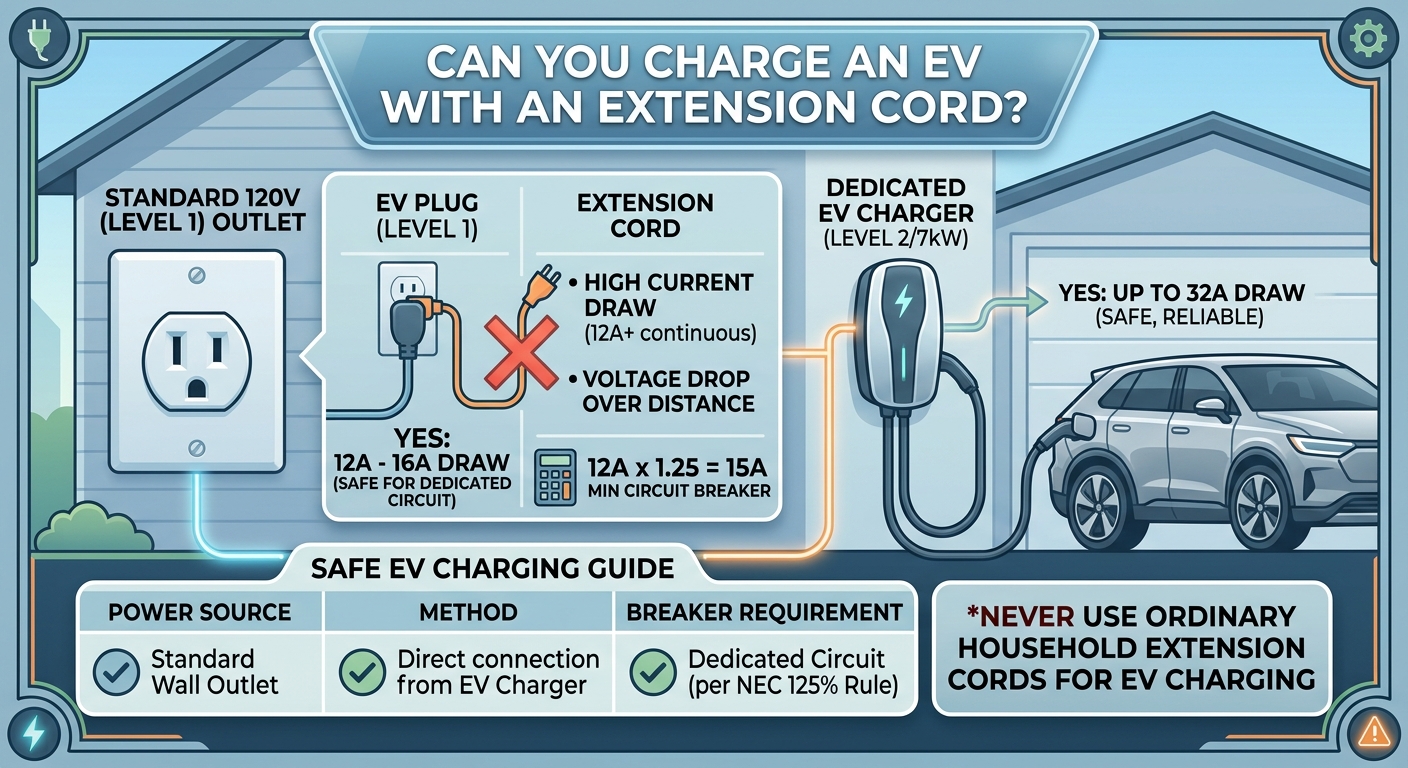
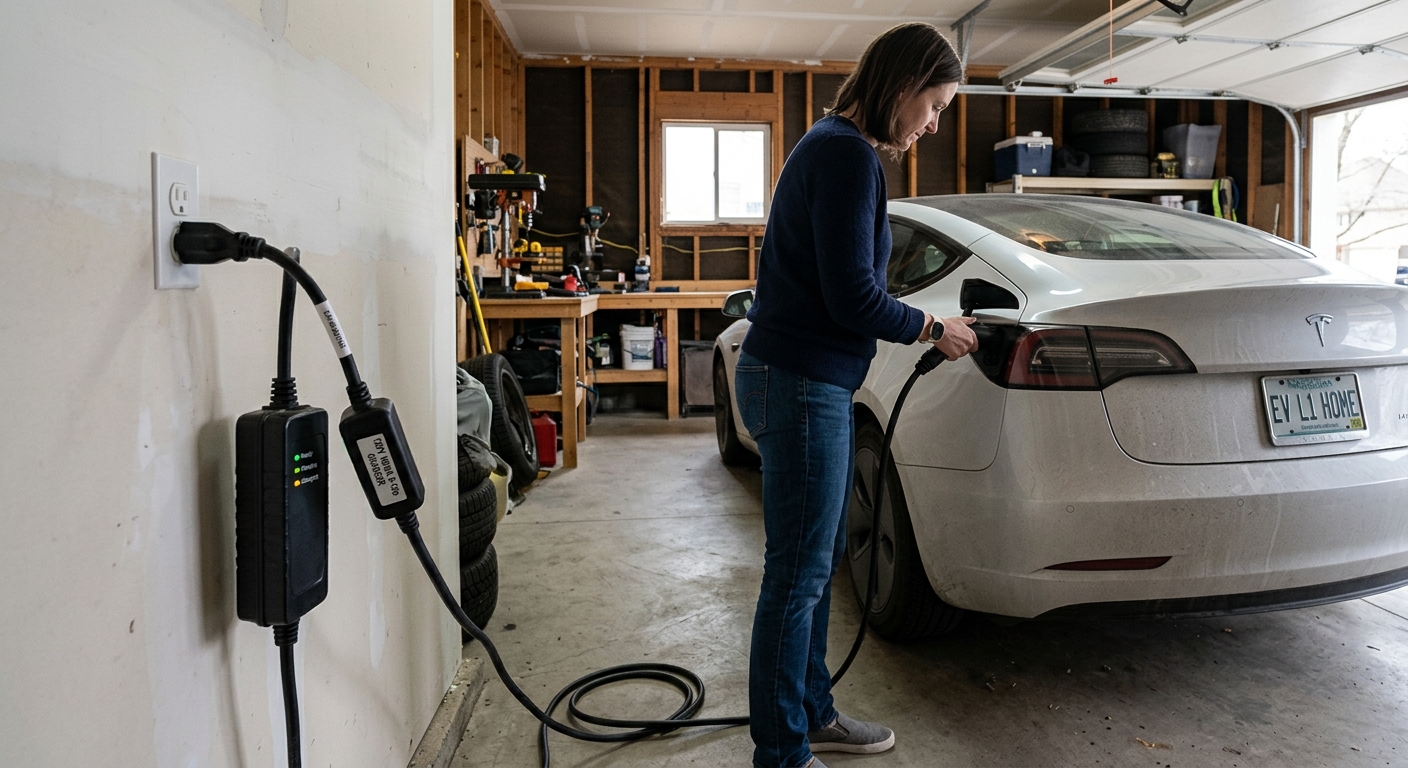
It’s not recommended. A heavy-duty, 12 gauge extension cord can technically bridge a Level 1 charger in limited, temporary situations, but many automakers and utilities advise against using any extension cord at all. And you should never use one with a Level 2 charger.
Quick answer by charger type
| Charger | Extension cord? |
|---|---|
| Level 1 (120V, ~12 amps) | Possible in limited cases, but not recommended |
| Level 2 (240V, 32-48+ amps) | No |
| Directly into your car’s charge port | No. A cord only ever goes between the wall outlet and the charger |
Why extension cords are risky
EV charging is a continuous load that runs for hours. Even a Level 1 charger draws about 12 amps for 8 hours or more, which can create heat at marginal connections. An extension cord adds extra plugs and a thinner wire, so it becomes the weak link.
The risks include:
- Overheating: Heat can melt the cord’s insulation, degrade the plug and damage the receptacle.
- Fire: The danger is greater when the car charges overnight or while you’re out.
- Arc faults and shock: Damaged or overloaded connections raise the risk of both.
What manufacturers and utilities say
The guidance isn’t consistent across the industry, so check your own manual first.
- Automakers: Chevrolet’s charge cord supplement warns against using its cord with an extension cord.
- Utilities: At least one electric cooperative tells owners not to lengthen the charger’s cord with an extension cord, whatever its rating.
- Retailers and installers: Some say a 12-gauge outdoor cord is acceptable for Level 1, while others say it can only be done with great care.
Our advice: if your manual says no, the answer is no.
Need a safer way to charge at your parking spot? Get a quote from a licensed installer https://evchargeradvisor.online/
If you must use one (Level 1 only)
If your manual allows it, and the situation is temporary, follow these minimums:
- Wire gauge: 12 AWG or thicker. Don’t use 14 AWG, even for short runs.
- Rating: Rated for at least 15 amps, heavy-duty and outdoor-rated.
- Certification: UL or ETL listed.
- Length: As short as possible, ideally under 25 feet.
- Condition: Undamaged and fully uncoiled, never bundled.
- No daisy-chaining: One cord only.
- Check the heat: If the cord, plug or outlet feels warm, stop charging.
Extension cord gauge guide
| Charger | Minimum gauge | Verdict |
|---|---|---|
| Level 1 (up to 12A) | 12 AWG | Acceptable only in limited, temporary cases |
| Level 1, longer distances | 10 AWG | Safer, but still not recommended by many automakers |
| Level 2 (32-48A+) | N/A | Don’t use an extension cord |
What about “EV-rated” extension cords?
Be cautious. There’s no widely recognised “EV-rated” standard for extension cords, and electrical safety organisations and vehicle makers consistently advise against extension cords regardless of marketing claims.
Better alternatives
These fix the underlying problem, which is that the outlet is too far from where you park:
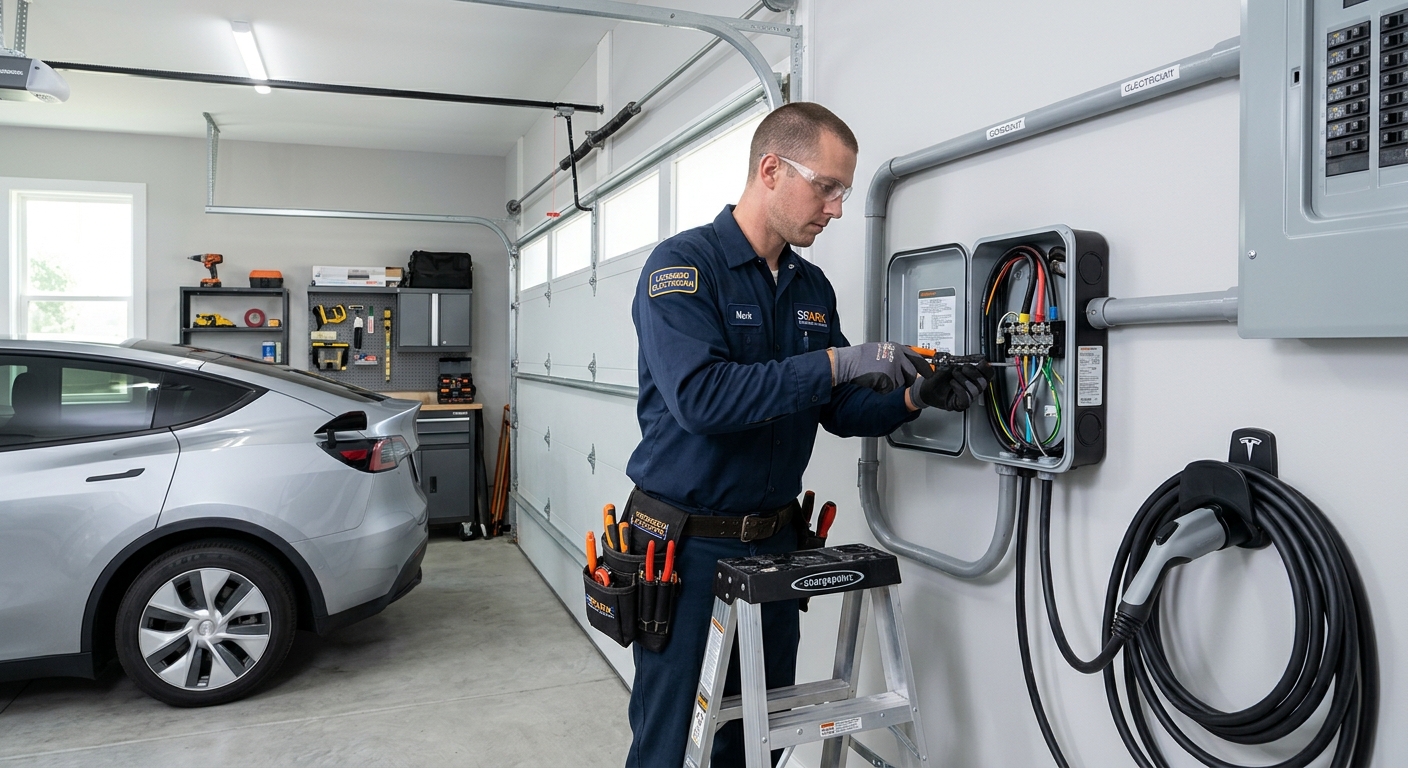
- Install an outlet closer to your parking spot. A licensed electrician can add a properly protected outdoor or garage outlet.
- Add a dedicated circuit. This is the right setup for regular Level 1 charging.
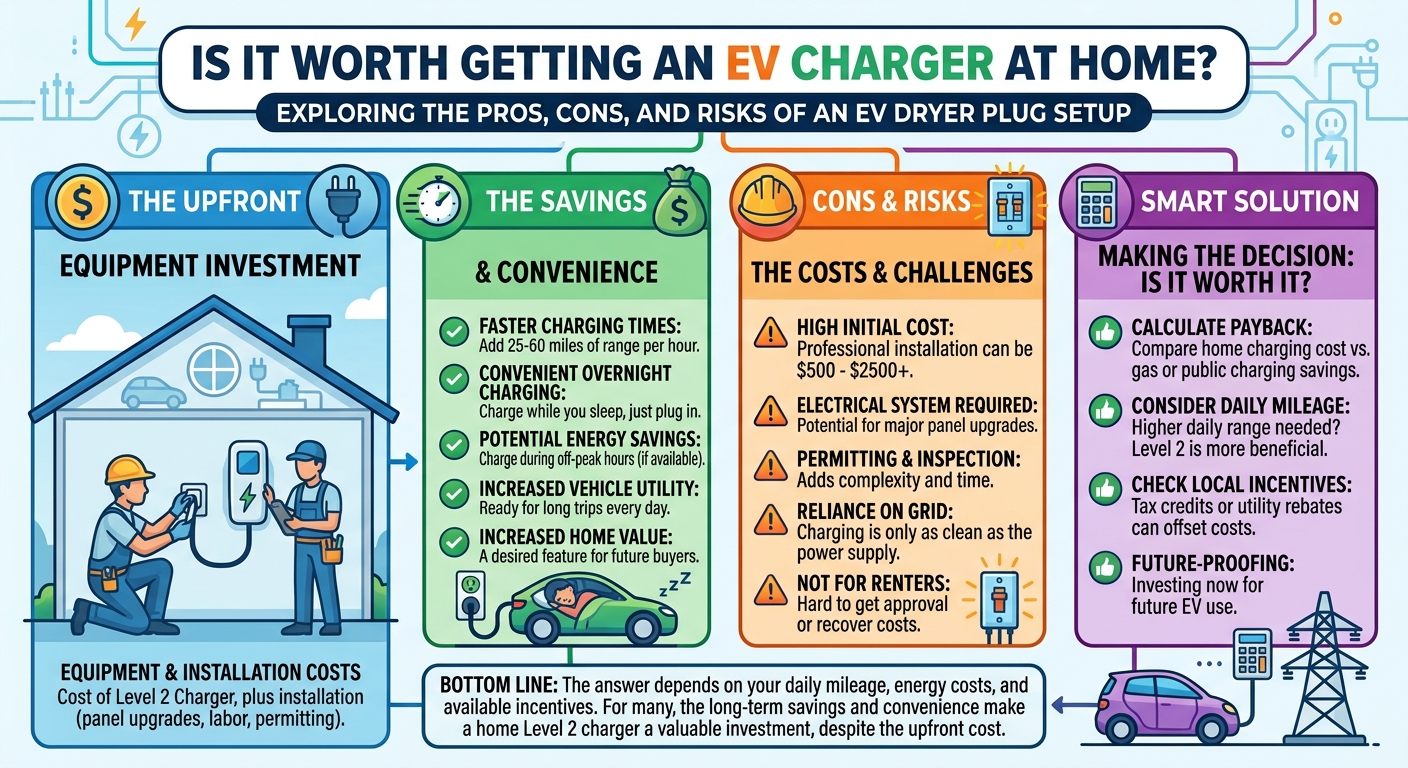
- Install a Level 2 charger at the parking location. It’s far faster, and it’s the permanent solution.
Remember how slow Level 1 is
Level 1 adds only about 3-5 miles of range per hour, or roughly 11 kWh overnight. That’s enough for a short commute, but not much more. If you rely on it daily, a proper outlet or Level 2 installation is worth a quote.
Quick checklist
- Read your owner’s manual and your charger’s instructions.
- Don’t use an extension cord with Level 2.
- For Level 1, if you must, follow the minimum specs above.
- Check for heat during charging.
- Plan a permanent fix: an outlet closer to your parking spot.
Next step: Compare Level 2 home chargers https://evchargeradvisor.online/
FAQs
Can you charge an EV with an extension cord?
Technically yes with Level 1 in limited cases, but it isn’t recommended, and some automakers say not to.
What gauge extension cord do I need for EV charging?
12 AWG is the minimum for Level 1. Don’t use 14 AWG.
Can I use an extension cord with a Level 2 charger?
No. Level 2 chargers draw too much current for an extension cord.
Is it safe to charge overnight with an extension cord?
It’s a risk. Heat builds up over long sessions, and the danger is greater when unattended.
Are EV extension cords safe?
No widely recognised “EV-rated” extension cord standard exists, so be cautious about marketing claims.
How long can an extension cord be for EV charging?
As short as possible, ideally under 25 feet.
What should I do instead of using an extension cord?
Have an electrician install an outlet closer to your parking spot, or add a Level 2 charger there.
Final thoughts
An extension cord can look like a quick fix, but the cord is often the weakest link in your charging setup. A proper outlet or Level 2 charger is safer, faster and a one-time fix.
Ready to upgrade? Get a licensed installer quote https://evchargeradvisor.online/
General information only. Always follow your vehicle and charger manufacturer’s instructions, and consult a licensed electrician.





Leave a Reply