
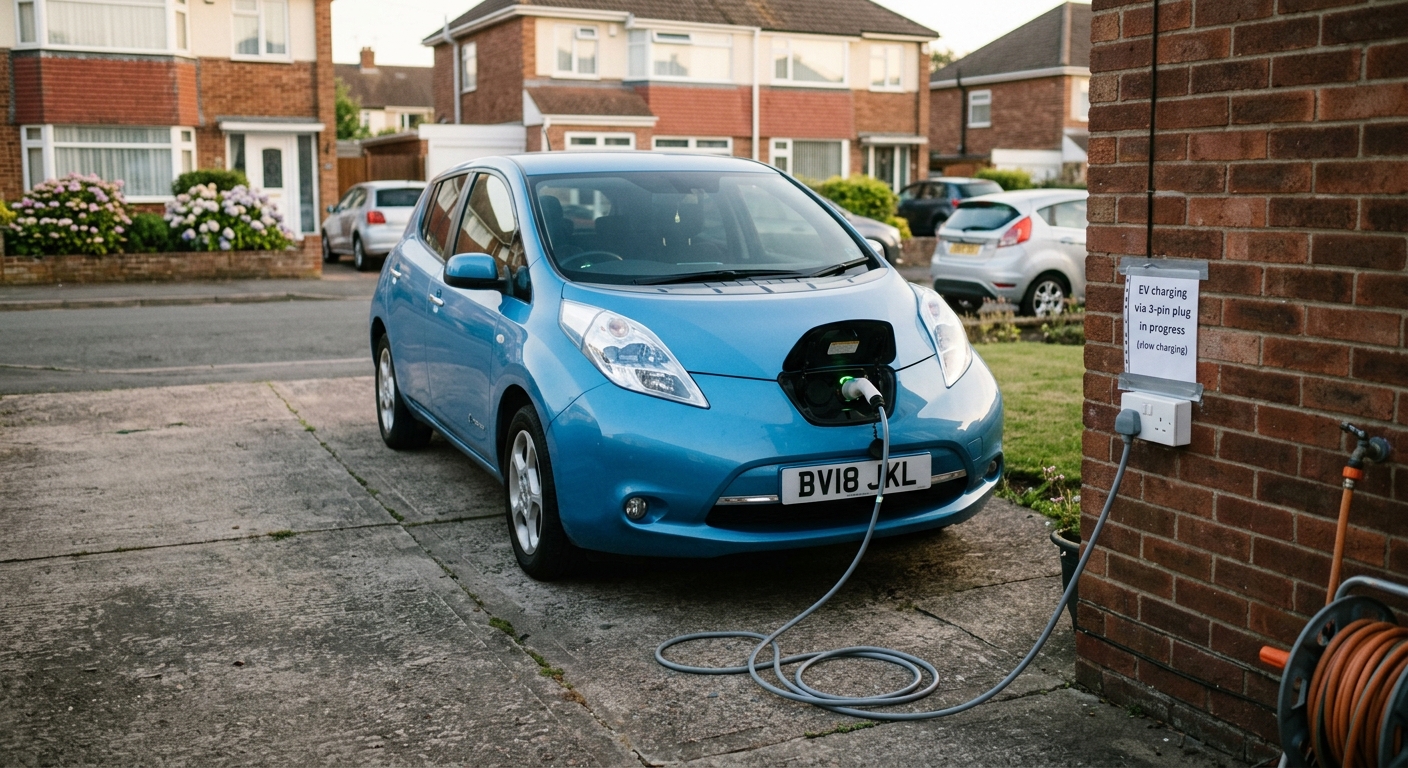
When transitioning to electric vehicle ownership in the United Kingdom, one of the very first practical questions new drivers ask involves residential infrastructure. Homeowners and renters frequently wonder if they can bypass the expensive installation of a dedicated wallbox and simply plug their brand-new electric vehicle directly into a standard household wall socket.
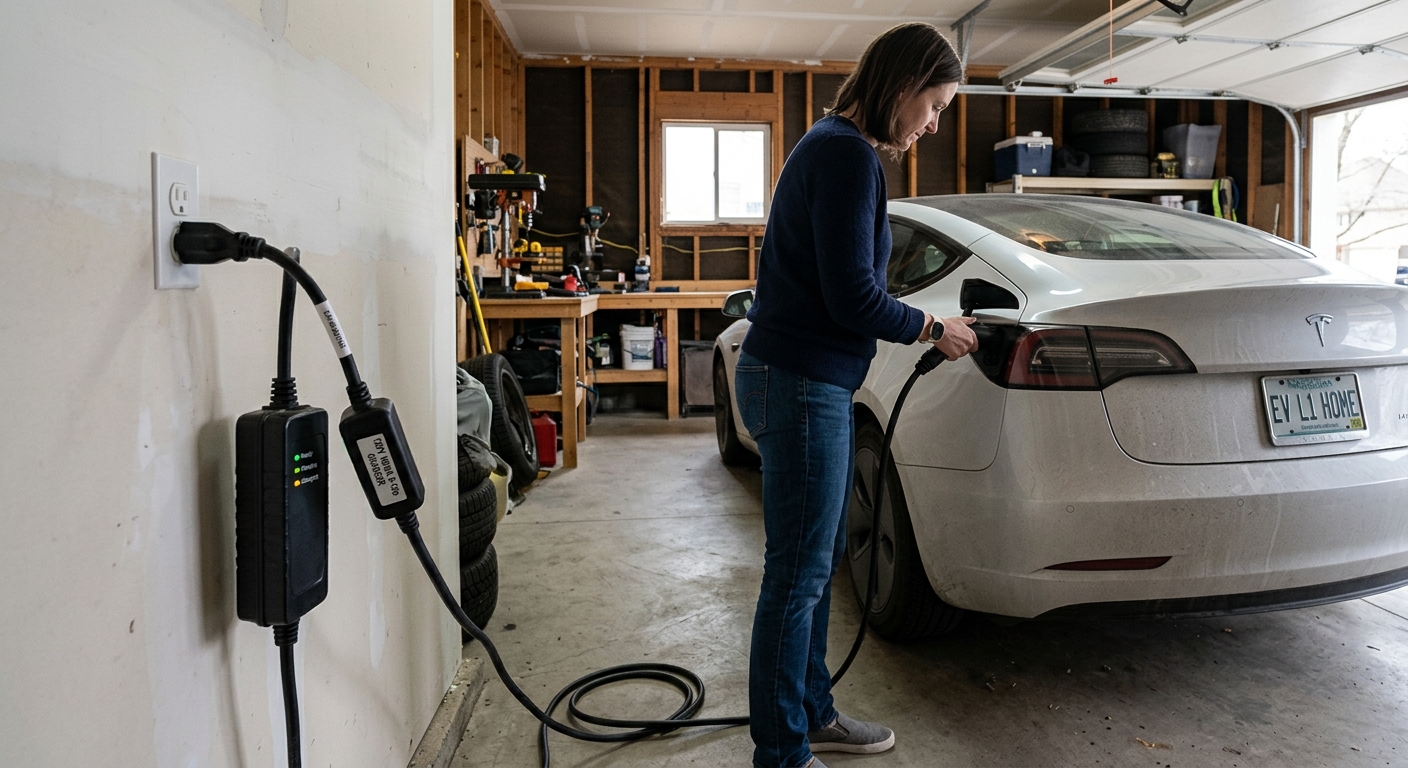
Yes, you can charge an electric car at home using a normal 3-pin UK plug socket (often called a “granny charger” or Mode 2 cable), though it is generally recommended only as a temporary or emergency backup.
While plugging your EV into a standard BS 1363 three-pin domestic socket is entirely possible, it comes with strict speed limitations, prolonged charging times, and important electrical safety considerations that every UK driver must understand.
Here is an extensive, comprehensive guide detailing how standard UK plug charging works, the exact speeds and timeframes you can expect, safety risks, and why upgrading to a dedicated system is often necessary for long-term ownership.
1. What Is a “Granny Charger” and How Does It Work?
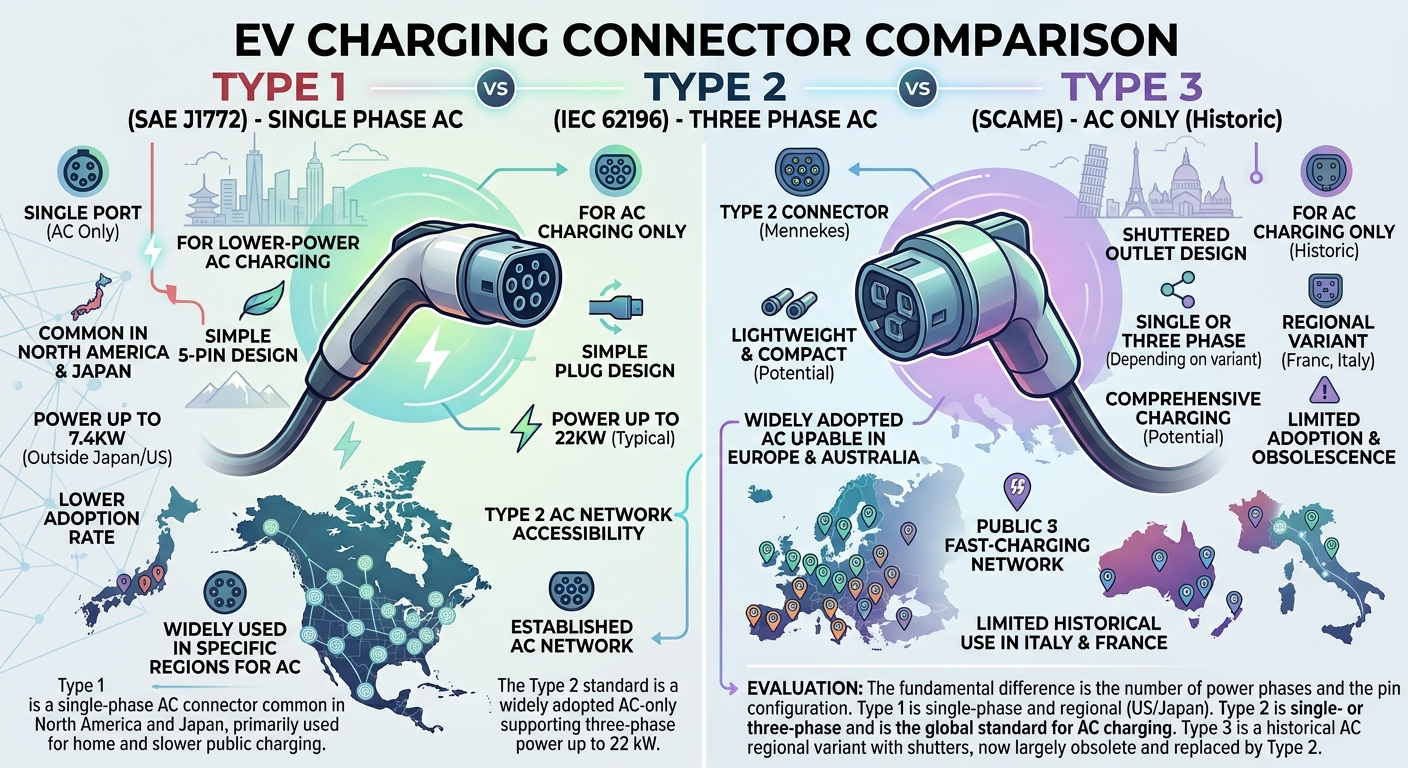
In the UK automotive lexicon, a portable charging cable equipped with a standard 3-pin domestic plug on one end and a Type 1 or Type 2 connector on the other is affectionately known as a “granny charger.”
-
The Engineering Concept: These cables feature an in-box control and protection device (IC-CPD)—a bulky plastic brick integrated into the cord—which monitors temperature, earth continuity, and current draw to ensure basic safety before passing electricity to the vehicle.
-
Compatibility: Because almost every property in the UK features standard 230V three-pin wall sockets, a granny charger allows you to plug your EV into virtually any garage, kitchen, or exterior waterproof socket without specialized electrical modifications.
To compare how portable emergency cables differ from permanent residential hardware, read more about various charging types.
2. Charging Speeds and Real-World Timeframes (The 2.3 kW Reality)
The single biggest drawback of using a normal UK wall socket is the crawling pace at which energy is delivered:
-
The 2.3 kW Output Limit: Standard UK domestic sockets are fused at 13 amps. Under UK electrical regulations (BS 7671), continuous high-draw loads on a standard ring main are typically throttled or restricted to protect household wiring. Consequently, a standard granny charger delivers roughly 2.3 kW of power (sometimes regulated down to 8A or 10A, yielding around 1.8 kW to 2 kW).
-
Range Added Per Hour: At 2.3 kW, you can expect to add roughly 8 to 10 miles of driving range per hour plugged in.
-
Full Battery Recharges: If you are charging a modern mid-size electric vehicle with a 60 kWh to 75 kWh battery pack (such as a Volkswagen ID.4, Tesla Model Y, or MG4) from nearly empty to 100%, a standard 3-pin UK plug will take 24 to 30+ hours of continuous charging.
To explore how advanced energy distribution and smart household management interact with your home electrical load, check out our guide on smart home EV solutions.
3. Electrical Safety Risks: Why 3-Pin Plugs Are for Emergency Use Only
While millions of UK drivers successfully use granny chargers as occasional backup solutions during weekend visits to family or holiday cottages, relying on them for daily everyday commuting introduces serious safety hazards:
-
Socket Overheating and Ring Main Stress: Standard household plug sockets were originally designed for kettles, irons, and hair dryers—appliances that draw heavy current for only a few minutes. Drawing 10 to 13 continuous amps for 15 to 25 hours straight puts immense thermal stress on older home wiring, loose faceplate terminals, and spur connections.
-
The Fire Hazard of Extension Leads: Using a standard coiled household extension cord with an EV granny charger is exceptionally dangerous. The high resistance of a coiled or under-rated extension lead under a continuous multi-hour electrical load can cause severe overheating, melting plastic insulation, and potentially triggering electrical fires.
-
Weather Exposure: If you are running a portable cable out through a door or window to an exterior driveway without a dedicated IP-rated weatherproof enclosure, you risk moisture ingress and tripping your home residual current device (RCD).
For comprehensive insights on EV infrastructure planning, safe home wiring standards, and expert advisory services, visit us at EV Charger Advisor.
4. Financial Considerations: Granny Chargers vs. Dedicated Wallboxes
Cost is another critical factor when evaluating whether to stick with a standard 3-pin plug or install proper home equipment:
-
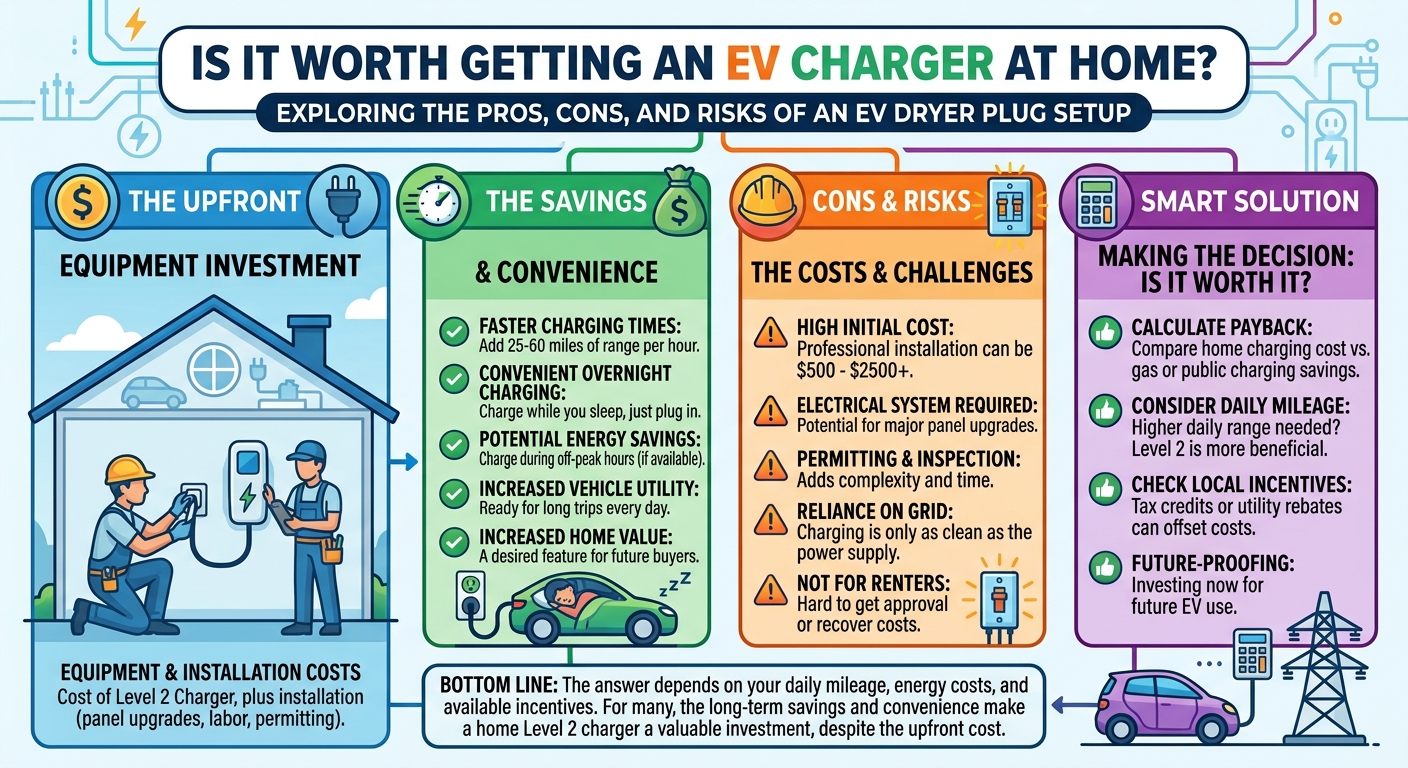
Upfront Hardware Costs: A granny charger is often either supplied with the vehicle for free or can be purchased online for relatively little money, sparing you the £800 to £1,500 installation cost of a professional 7 kW smart wallbox.
-
Energy Inefficiency: Because low-amp charging takes significantly longer, your car’s onboard computers, cooling pumps, and control modules must remain awake and active for over a day. This parasitic energy draw reduces overall charging efficiency, meaning you pay slightly more for the electricity actually stored in the battery compared to a fast, efficient 32-amp wallbox session.
Summary: Can You Rely on a Normal UK Plug?
-
Yes for Emergencies: A normal 3-pin plug is a fantastic emergency backup tool to keep in your boot for road trips, rural getaways, or ultra-low mileage drivers who only need to top up a few miles overnight.
-
No for Daily Commuters: If you drive more than 20 to 30 miles a day, relying on a 2.3 kW granny charger is impractical, painfully slow, and hazardous over long periods. Upgrading to a dedicated 7.2 kW home wallbox remains the ultimate gold standard for UK EV owners.





Leave a Reply