
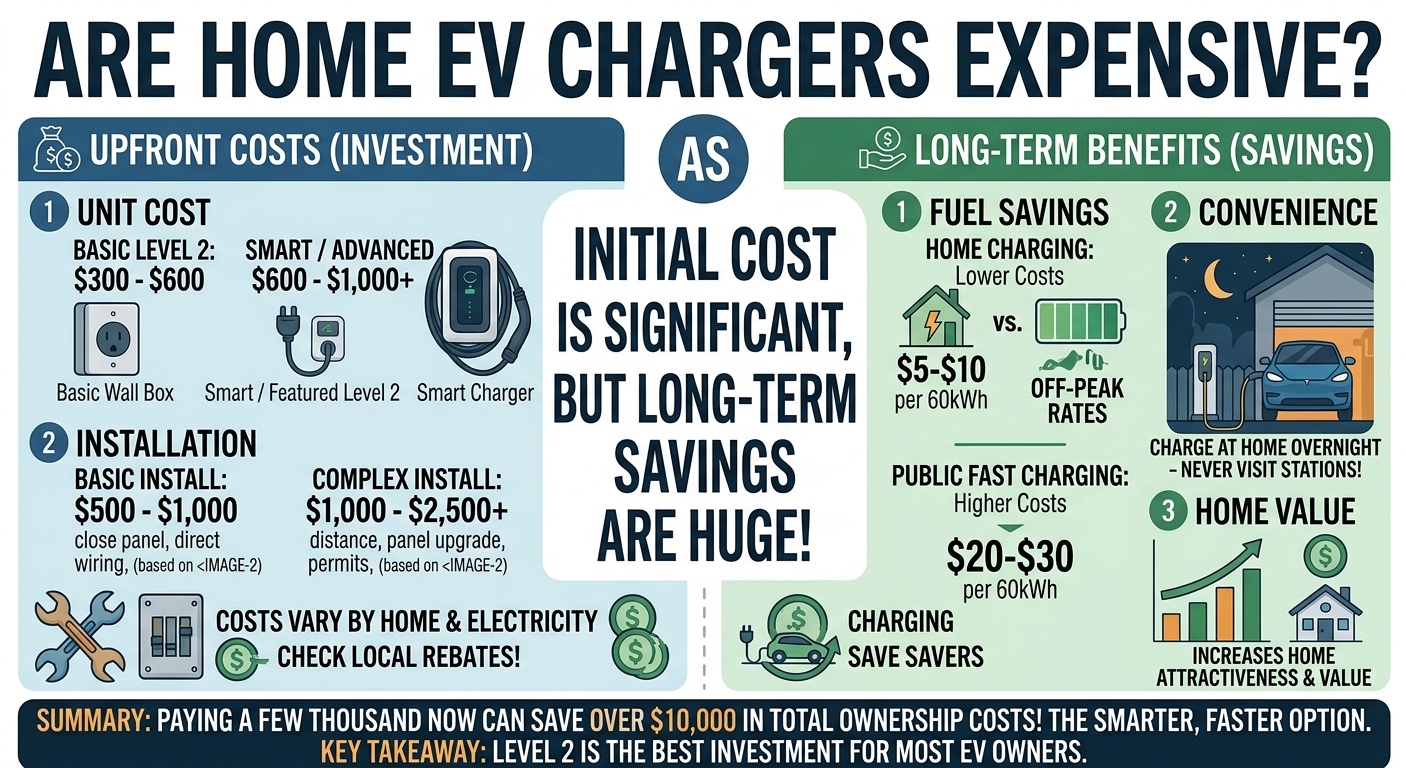
When transitioning to electric vehicle (EV) ownership, one of the most pressing financial questions homeowners ask revolves around home infrastructure. With so much chatter about public charging fees and complex garage upgrades, prospective buyers often worry that setting up a private fueling station will drain their savings.
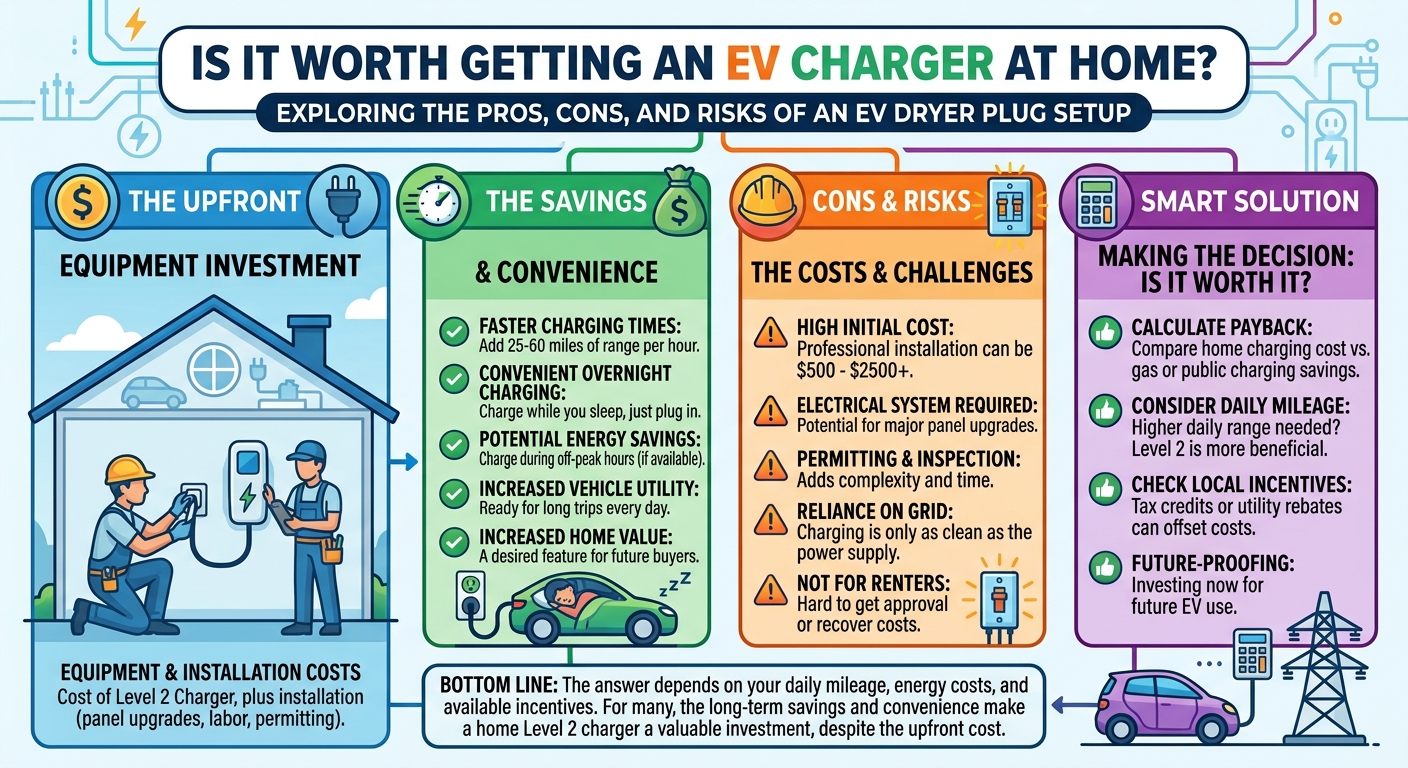
Home EV chargers are not overly expensive compared to long-term fuel savings, though upfront hardware and installation costs vary depending on the power rating and your home’s electrical setup.
While the initial cash outlay for purchasing high-end wallbox hardware and hiring a certified electrician for panel upgrades can feel substantial, breaking down the numbers reveals that home charging is remarkably economical over time. When compared to the ongoing costs of purchasing fossil fuels or relying exclusively on commercial public charging networks, a residential EV charger pays for itself rapidly.
Here is an extensive, comprehensive guide examining every financial aspect of home EV charging equipment, hardware price tiers, electrical installation variables, and long-term return on investment (ROI).
1. The Real Cost Breakdown: Hardware vs. Installation
When evaluating whether home EV chargers are expensive, it is essential to split the total budget into two distinct components: the physical charger unit and the electrical installation labor.
A. Hardware Pricing Tiers
The cost of the physical wallbox unit depends entirely on its amperage, power output, and smart features:
-
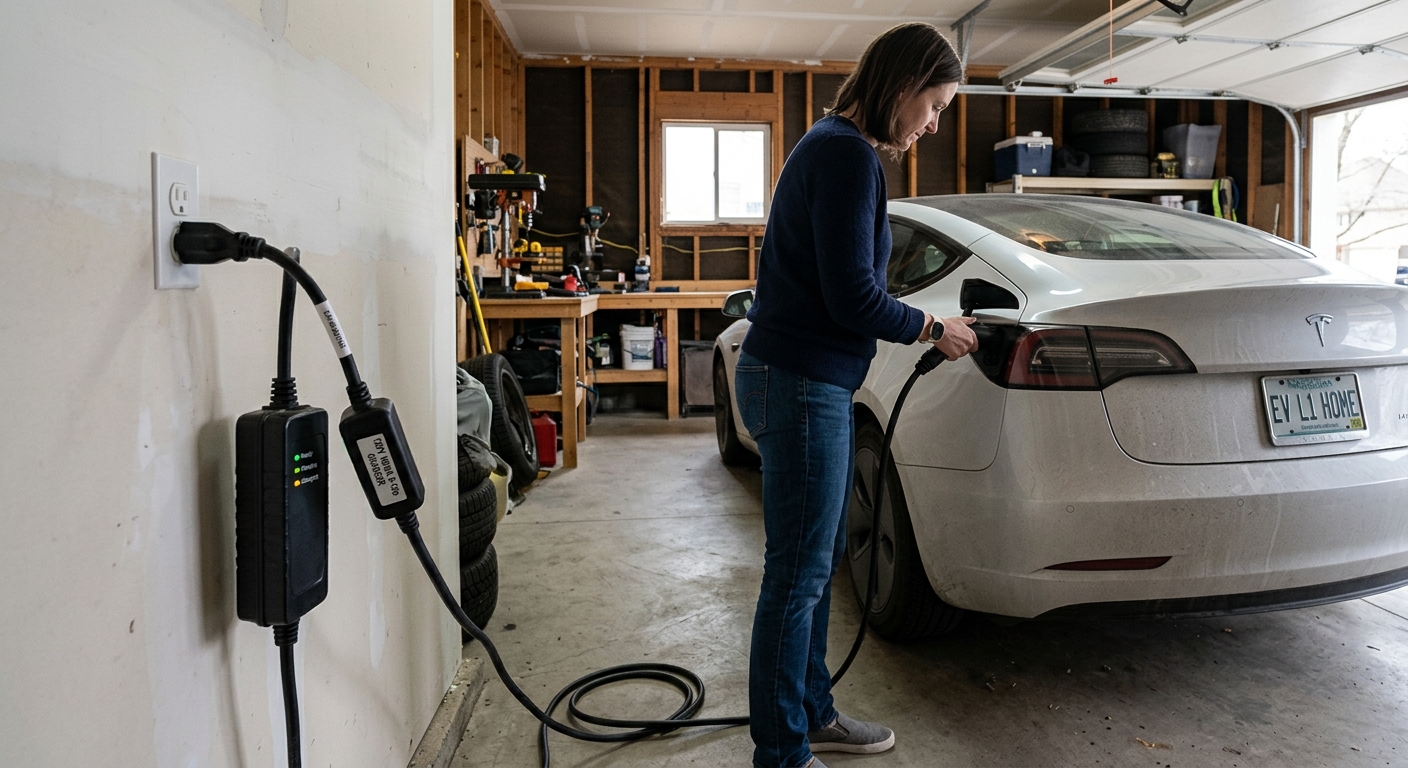
Basic Level 1 Portable Cords (1.4 kW to 2 kW): These usually come included for free with your electric vehicle purchase. They plug into standard household wall outlets and require zero installation costs, making them the cheapest entry point, though their slow charging speeds (3 to 4 miles of range per hour) limit their daily practicality.
-
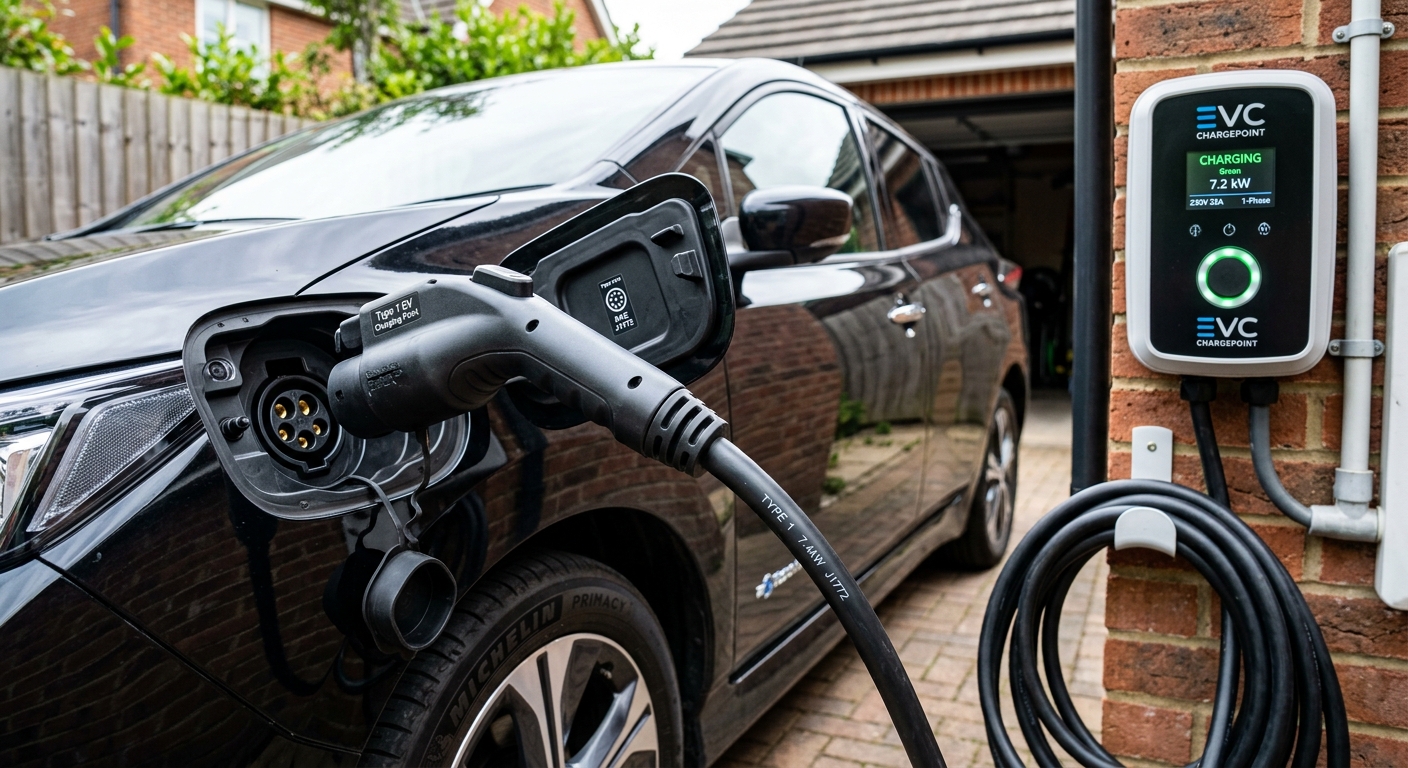
Standard Level 2 Home Wallboxes (7 kW to 7.4 kW Single-Phase): The most popular residential choice. These units provide rapid overnight charging, adding 20 to 30 miles of range per hour. Quality single-phase units generally range from moderate market prices up to premium brand brackets depending on whether they include basic plugs or hardwired smart features.
-
High-Power Smart Chargers (11 kW to 22 kW Three-Phase): Designed for larger residential properties or homes equipped with three-phase power supply, these heavy-duty units offer lightning-fast residential charging. Because they require advanced internal components and Wi-Fi/Bluetooth smart software, they sit at the higher end of the hardware spectrum.
To explore how residential hardware specifications compare to commercial setups, read our overview on various charging types.
B. Professional Installation and Electrical Labor Costs
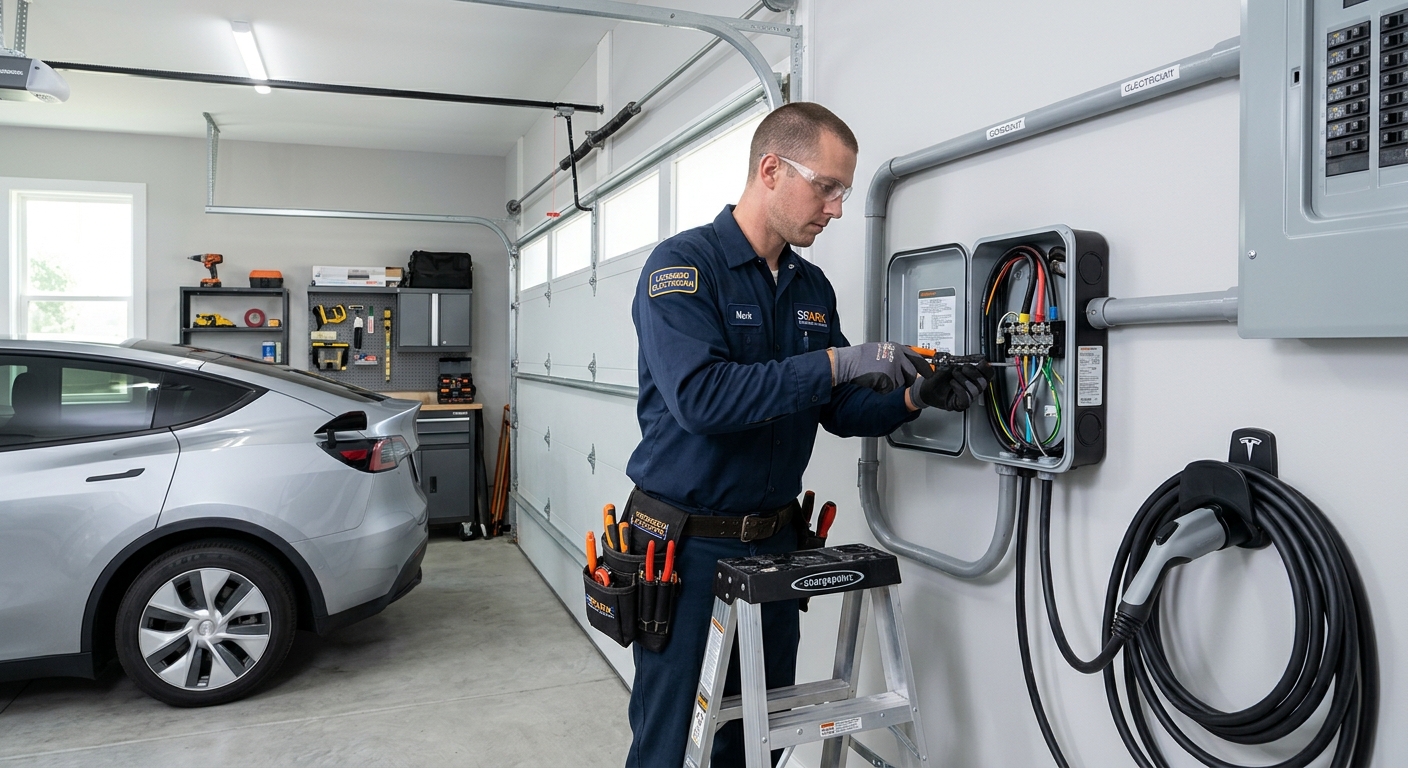
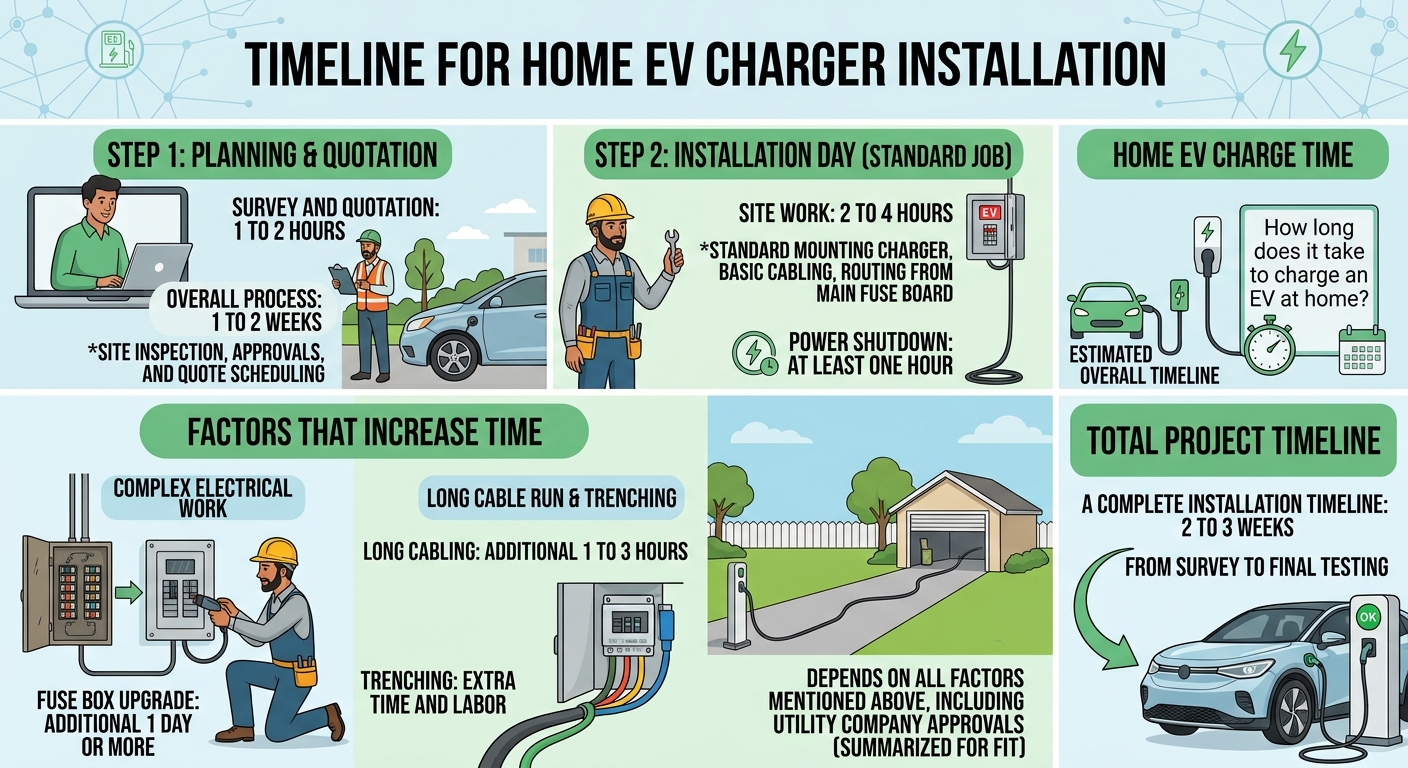
Buying the hardware unit is only half the equation. Professional installation costs depend on several structural variables within your home:
-
Distance from Electrical Panel: The further your parking spot or garage is from your main electrical breaker panel, the more copper cabling and protective conduit piping are required, which increases labor and material expenses.
-
Circuit Breaker Capacity: If your home’s electrical panel is already at full capacity, an electrician may need to install a dedicated sub-panel, a heavy-duty Type B RCD, or upgrade your main circuit breaker to safely handle continuous high-amperage loads.
-
Permits and Inspections: Local municipal electrical codes often require safety permits and final inspections to ensure compliance, adding minor administrative fees to the project.
To understand how energy tracking, load management, and smart scheduling can optimize your home electrical system, check out our guide on smart home EV solutions.
2. Home Charging vs. Public Fast Charging: The Long-Term Economics
Many vehicle owners wonder if the upfront investment in a home charger is truly justified when public charging stations are available. From a financial standpoint, relying on public infrastructure quickly becomes expensive:
-
The Public Charging Markup: Commercial DC fast-charging networks and public destination chargers carry high per-kilowatt-hour pricing because operators must recover massive equipment, land lease, and grid demand-charge costs. Charging exclusively in public can cost double or triple standard residential electricity rates.
-
The Residential Savings Advantage: Charging your EV overnight at home allows you to take advantage of standard residential utility rates—and especially off-peak Time-of-Use (TOU) tariffs. Over the span of a single year, the difference between public charging fees and home electricity costs easily covers the initial price of purchasing and installing a quality wallbox.
Furthermore, combining a home EV charger with a residential solar power system eliminates fuel expenses almost entirely, providing free, clean energy straight from the sun.
3. Hidden Value: Protecting Your Battery and Enhancing Property Value
When considering whether home chargers are expensive, it helps to look beyond immediate cash flow and evaluate long-term asset value:
-
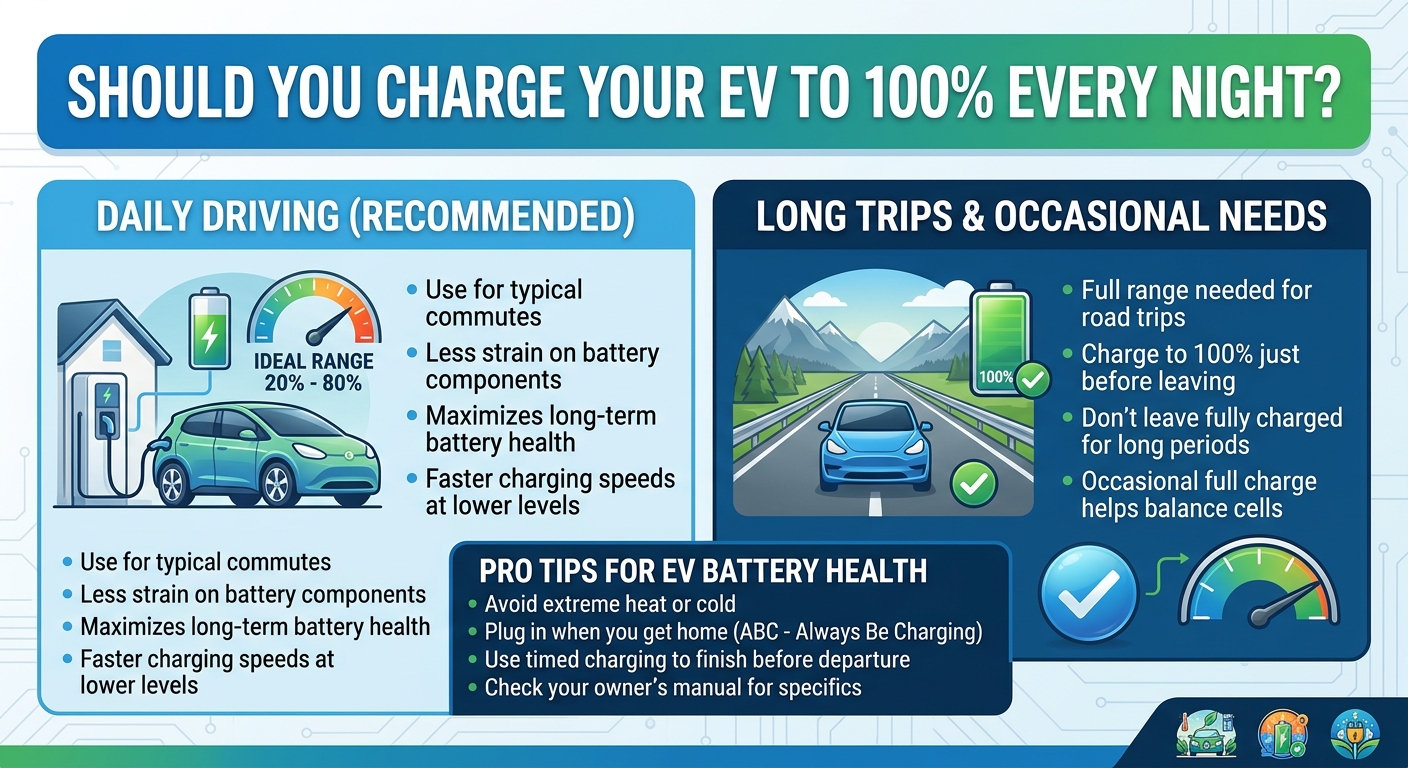
Preserving Battery Health: Slow, steady Level 2 home charging is inherently gentle on lithium-ion battery chemistry. By avoiding the intense thermal stress and high heat generated by constant public DC fast charging, you protect your vehicle’s battery capacity from premature degradation.
-
Increasing Real Estate Appeal: As electric vehicle adoption accelerates, having a dedicated Level 2 EV charging station pre-installed in a garage or driveway adds tangible value and modern appeal to a residential property.
For comprehensive insights on EV infrastructure planning, safety standards, and expert advisory services, visit us at EV Charger Advisor.
Summary: Are Home EV Chargers Worth the Investment?
-
While initial hardware and professional installation require a moderate upfront investment, home EV chargers are not expensive when measured against long-term fuel and public charging savings.
-
Installing a dedicated residential Level 2 wallbox guarantees unmatched daily convenience, protects your vehicle’s battery longevity, and slashes your monthly commuting costs.





Leave a Reply