
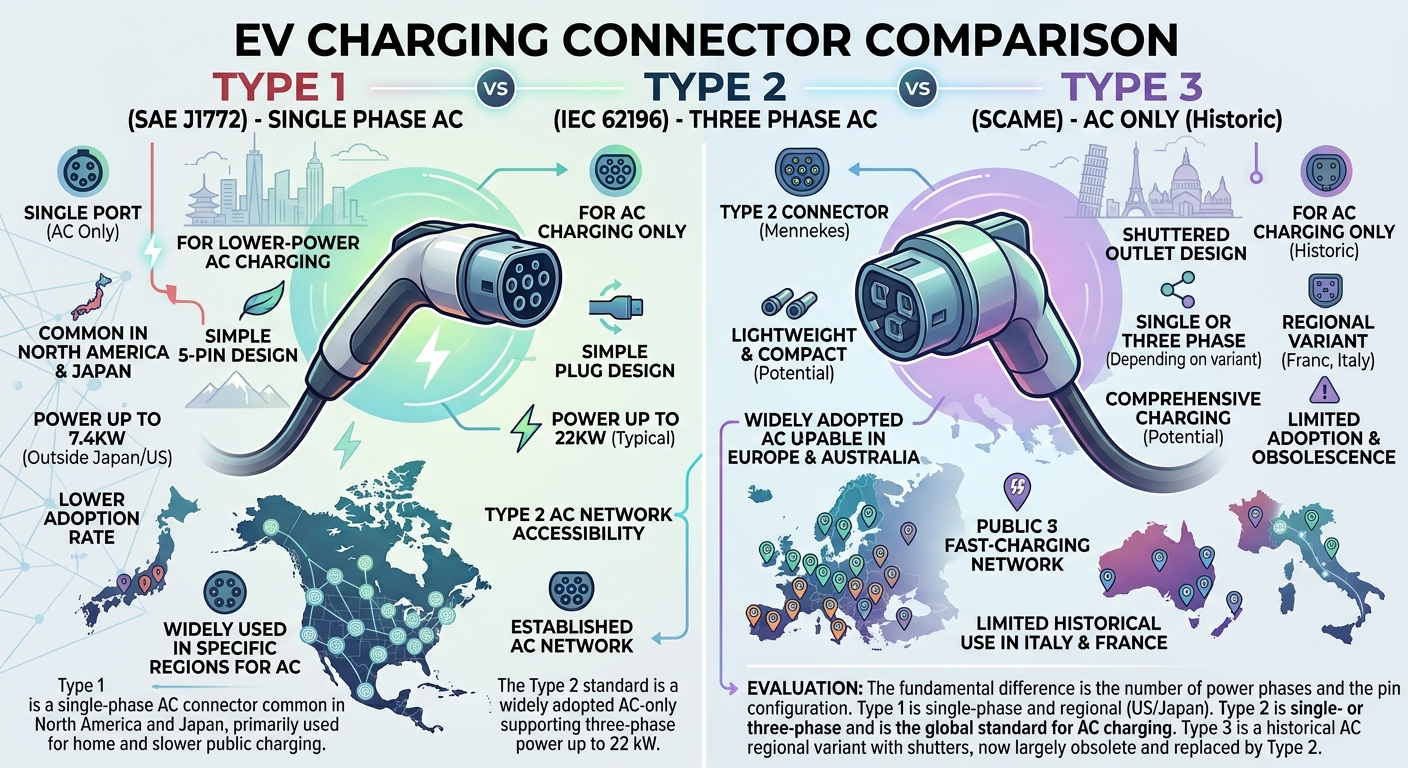
Navigating the world of electric vehicle (EV) charging can initially feel overwhelming with terms like Level 1, Level 2, Level 3, Type 1, Type 2, AC, and DC being used interchangeably. Understanding the differences between charger types—specifically regarding voltage, power output in kilowatts (kW), electrical current type, and charging speeds—is essential for every EV driver and home charger buyer.
Broadly speaking, EV charging is categorized into three primary levels: Type 1 (Level 1 AC), Type 2 (Level 2 AC), and Type 3 (Level 3 / DC Fast Charging). Each type serves a distinct purpose, ranging from overnight trickle charging at home to rapid highway top-ups.
For comprehensive hardware reviews and home installation guidance, visit EV Charger Advisor.
Understanding the Three EV Charger Types
To grasp how EV chargers differ, we must examine their electrical power supply, output capabilities, and typical use cases.
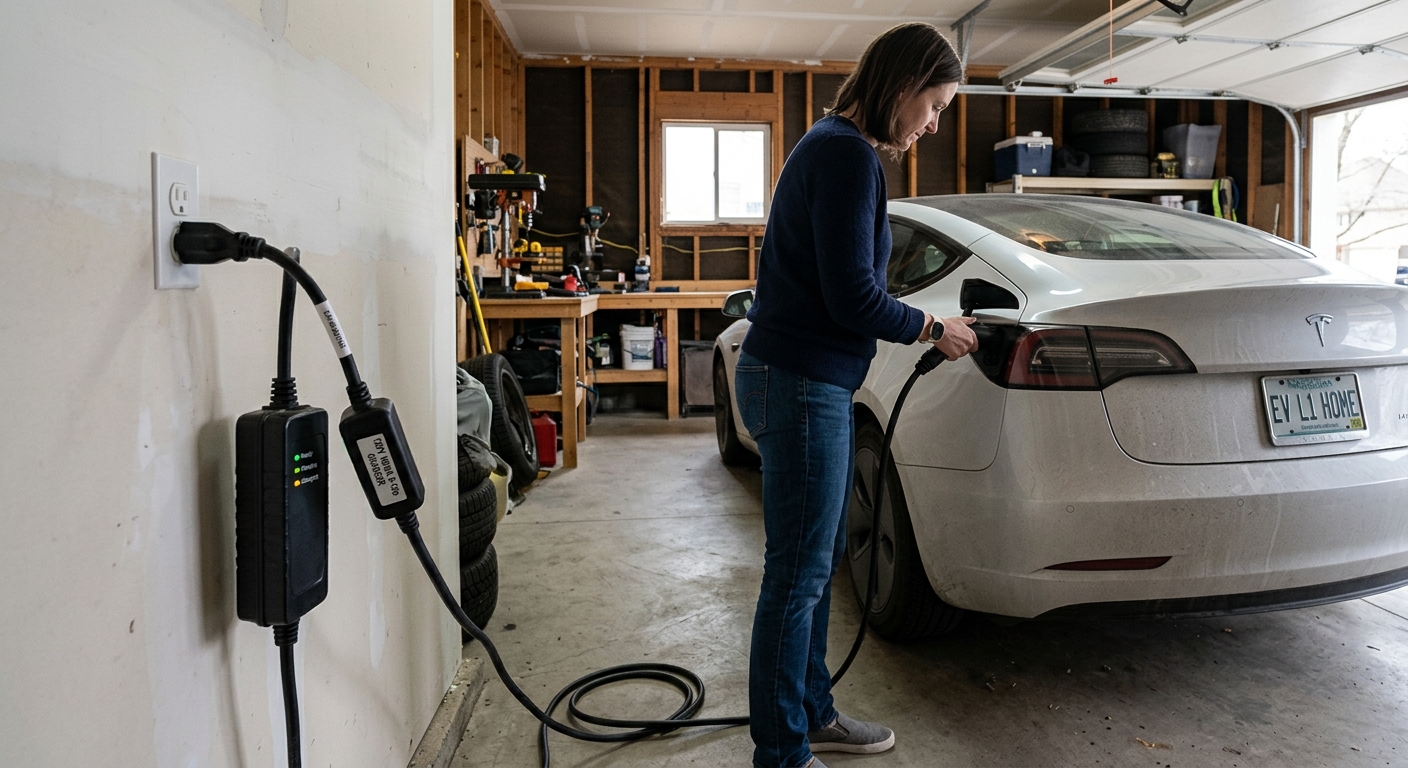
1. Type 1 (Level 1 AC Charging)
-
Power Current: Alternating Current (AC)
-
Voltage: $120\text{V}$ (Standard residential wall outlet in North America)
-
Power Output: $1.2 \text{ kW}$ to $1.9 \text{ kW}$
-
Charging Speed: Adds approximately $3 \text{ to } 5 \text{ miles}$ ($5 \text{ to } 8 \text{ km}$) of range per hour.
-
Primary Use Case: Emergency backup, plug-in hybrid electric vehicles (PHEVs), or low-mileage daily drivers charging overnight using standard household outlets.
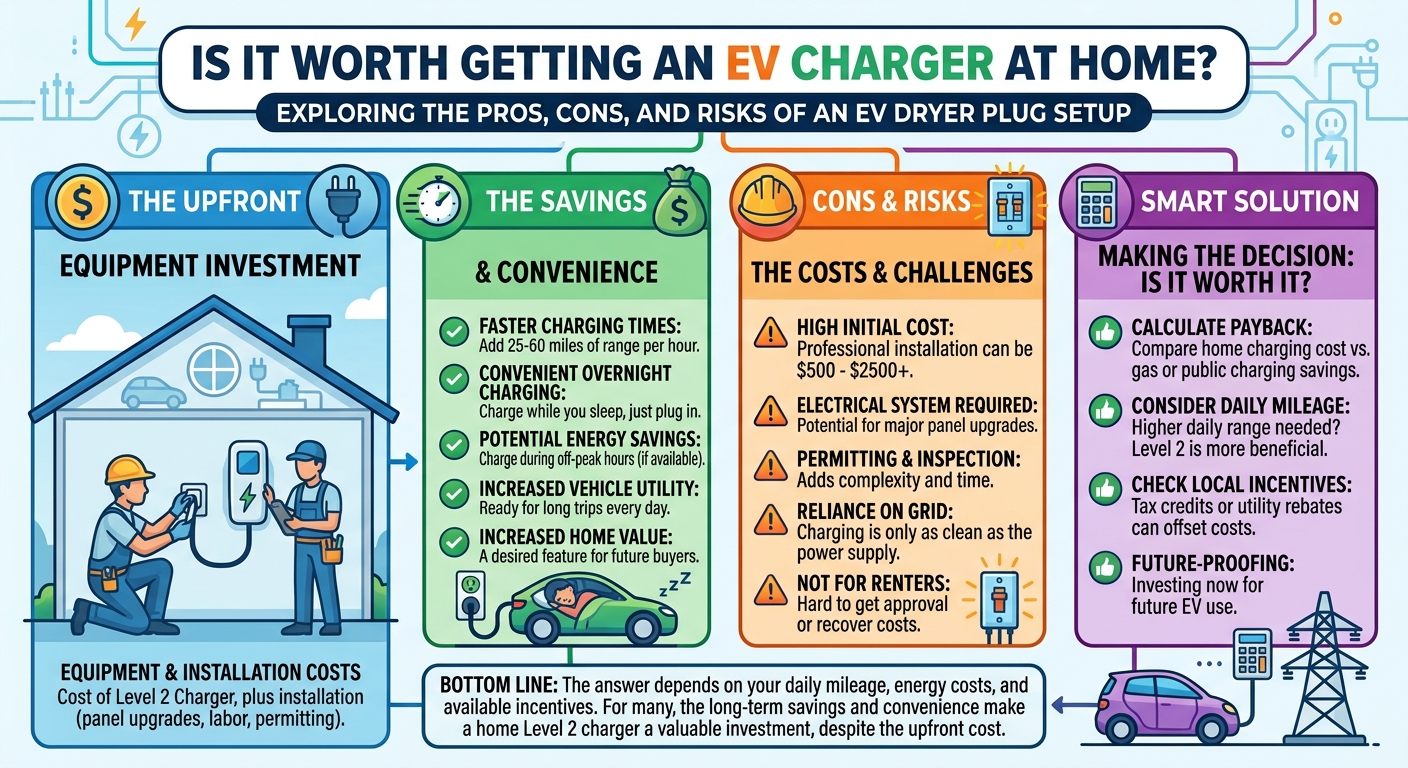
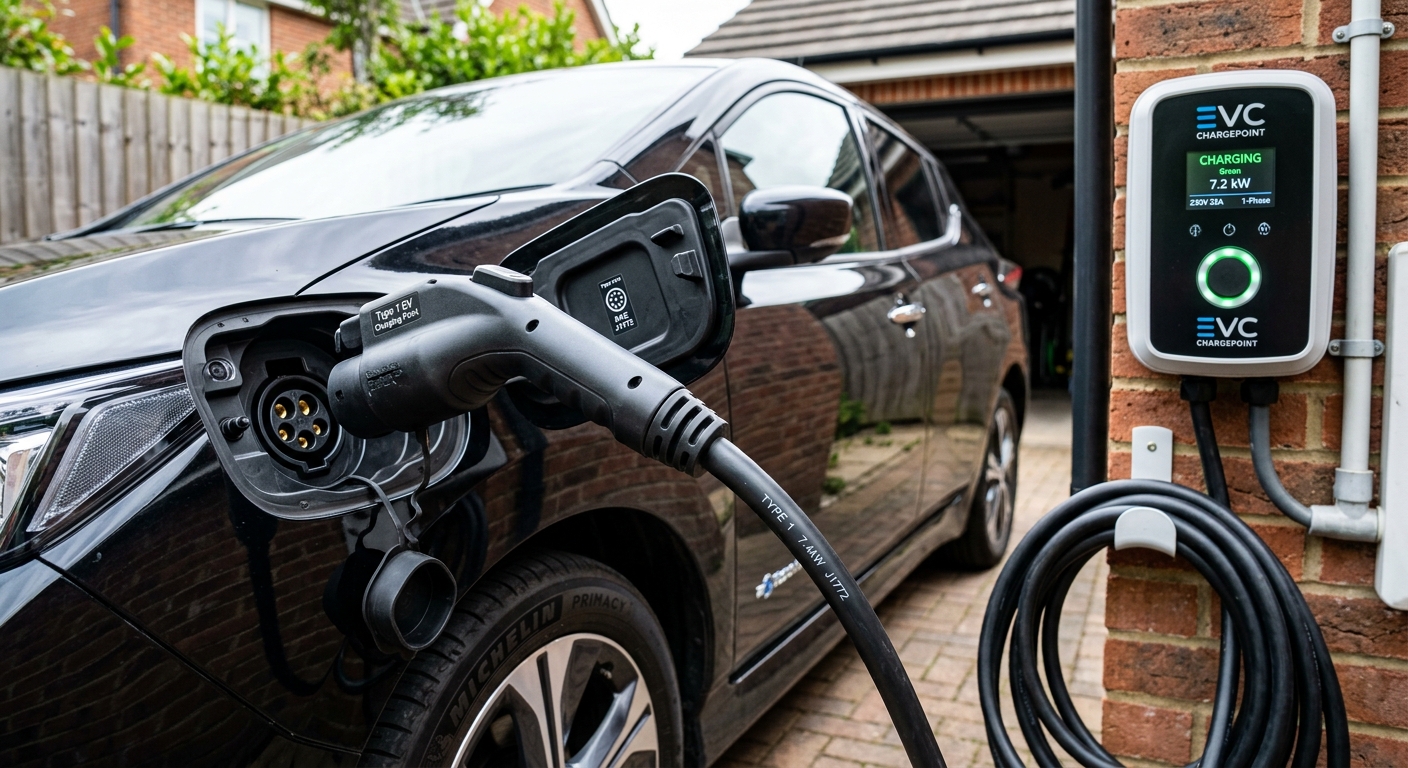
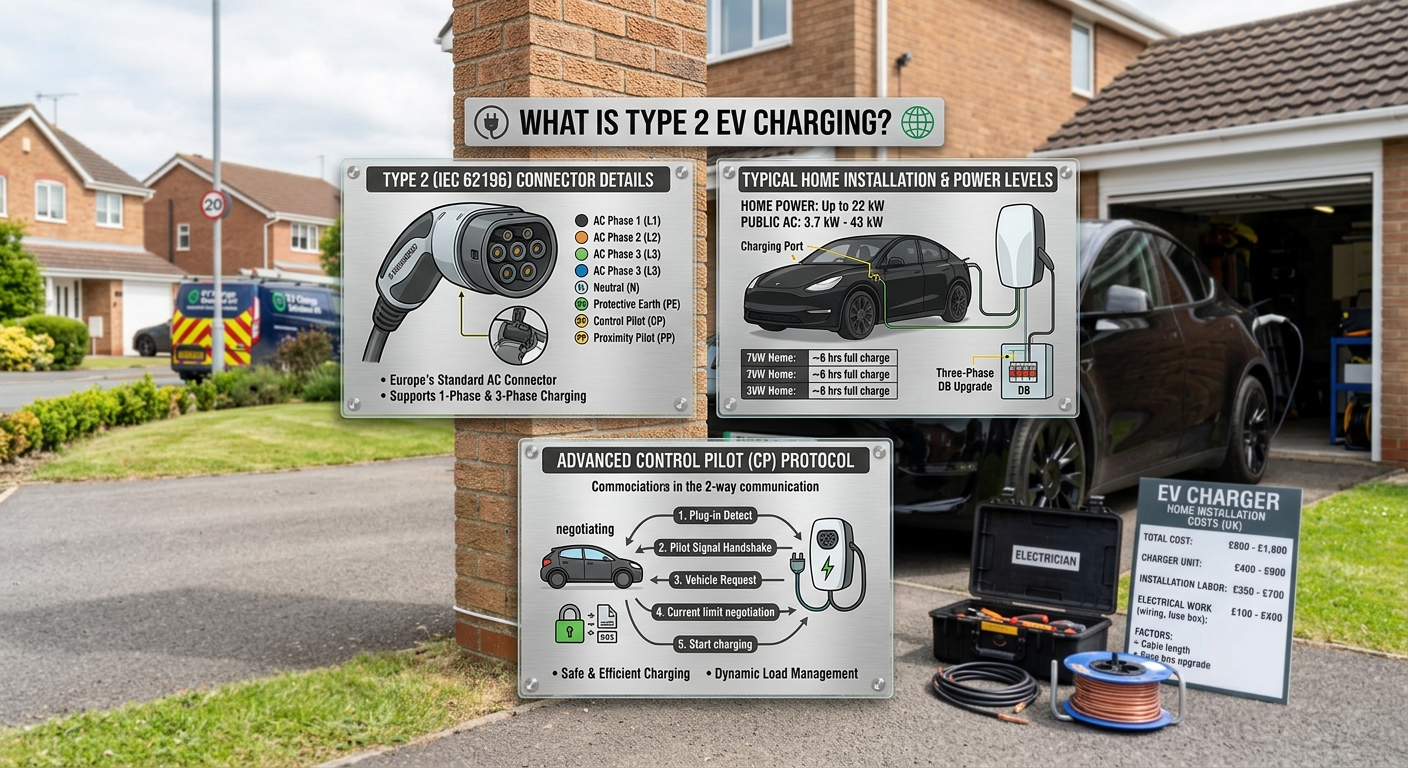
2. Type 2 (Level 2 AC Charging)
-
Power Current: Alternating Current (AC)
-
Voltage: $208\text{V} \text{ to } 240\text{V}$ (Single-phase residential) or $400\text{V}$ (Three-phase commercial in Europe/Asia)
-
Power Output: $3.7 \text{ kW}$ to $22 \text{ kW}$
-
Charging Speed: Adds approximately $15 \text{ to } 60 \text{ miles}$ ($25 \text{ to } 95 \text{ km}$) of range per hour.
-
Primary Use Case: Primary home charging wallboxes, workplace parking garages, and public destination chargers.
3. Type 3 (Level 3 / DC Fast Charging)
-
Power Current: Direct Current (DC)
-
Voltage: $400\text{V} \text{ to } 1,000\text{V}$
-
Power Output: $50 \text{ kW}$ to $350 \text{ kW}+$
-
Charging Speed: Adds $100 \text{ to } 250+ \text{ miles}$ ($160 \text{ to } 400+ \text{ km}$) of range in just $15 \text{ to } 30 \text{ minutes}$.
-
Primary Use Case: Highway service plazas, commercial fast-charging corridors, and fleet depots.
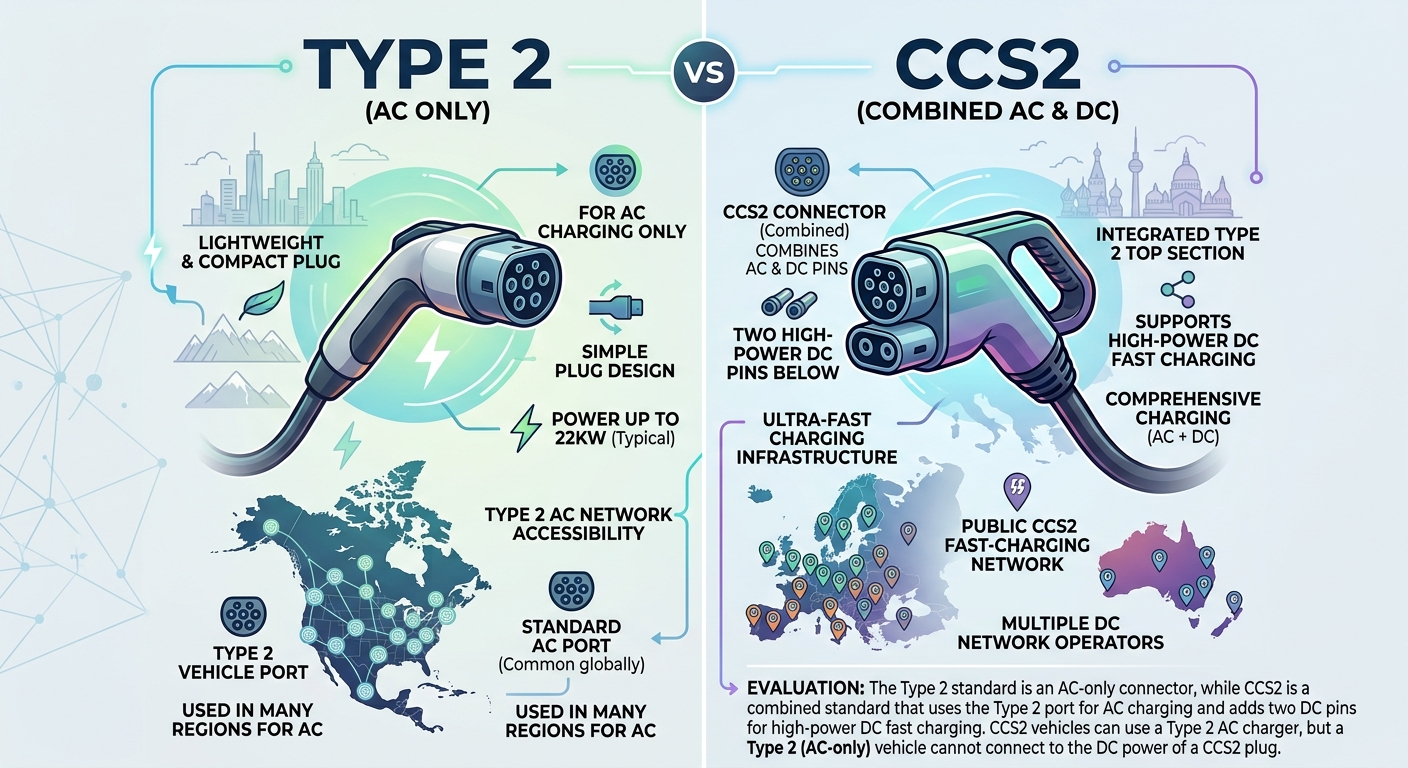
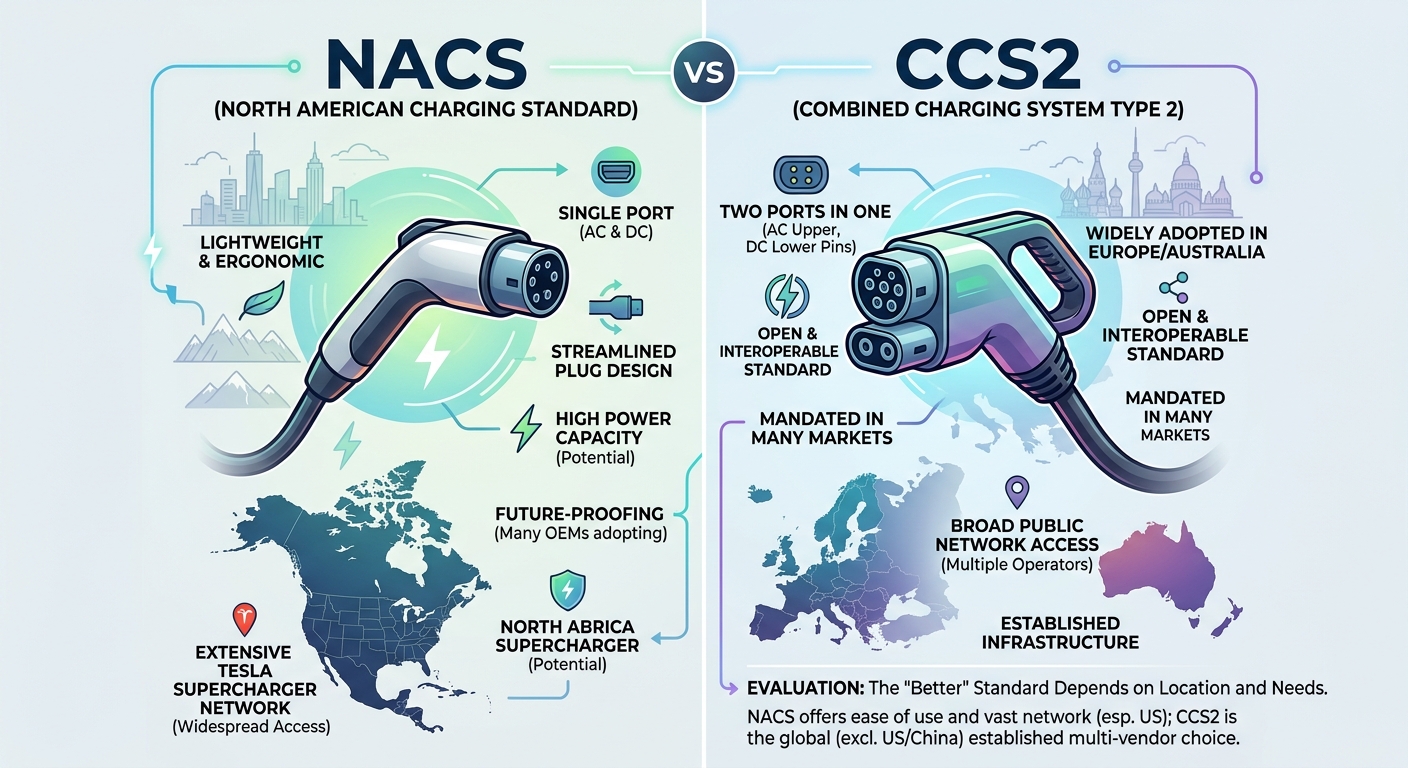
To explore how connector formats differ across regions, read our detailed guide on EV charging types.
Technical Comparison: How Power Delivery Works
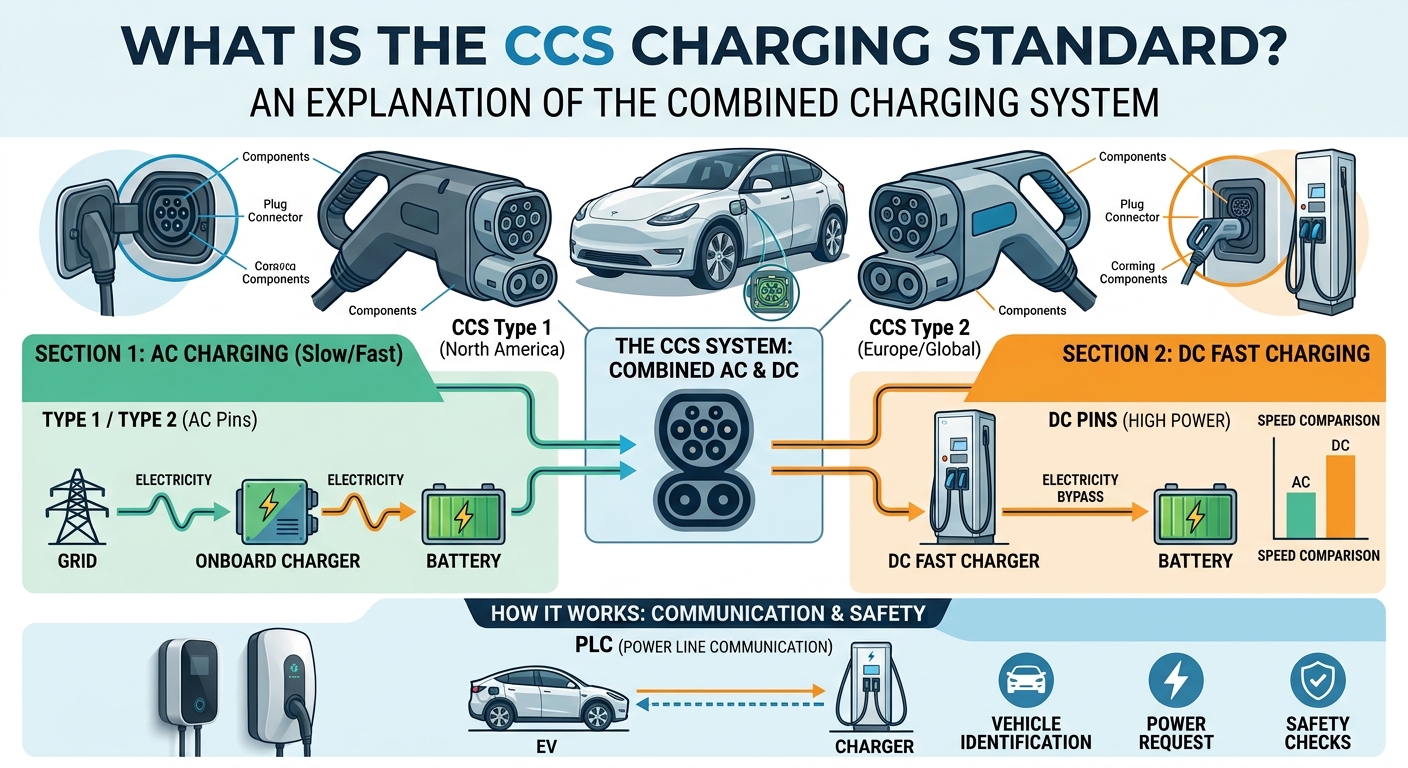
The fundamental difference between AC charging (Type 1 & Type 2) and DC charging (Type 3) lies in where the electrical current is converted.
+-----------------------------------------------------------------------------------+
|                            AC CHARGING (TYPE 1 & TYPE 2)                          |
|  [Grid AC Power] ---> [EV Charging Cable] ---> [On-Board Charger] ---> [Battery]  |
+-----------------------------------------------------------------------------------+

+-----------------------------------------------------------------------------------+
|                                DC CHARGING (TYPE 3)                               |
|  [Grid AC Power] ---> [Station Rectifier] ---> [Direct Battery Connection]       |
+-----------------------------------------------------------------------------------+
AC Charging (Type 1 and Type 2):
Electric grid power is supplied as Alternating Current (AC). Batteries can only store Direct Current (DC). When plugged into a Type 1 or Type 2 charger, AC electricity enters the vehicle and is converted into DC power by the car’s built-in On-Board Charger (OBC) before entering the battery. The speed of Type 1 and Type 2 charging is limited by the power rating of the vehicle’s internal OBC.
DC Charging (Type 3):
Type 3 chargers house heavy-duty industrial converters inside the charger cabinet itself. They bypass the vehicle’s internal On-Board Charger completely, feeding high-voltage DC electricity directly into the traction battery pack for ultra-fast charging.
Step-by-Step Mathematical Example: Charging Speed Calculations
To see how Type 1, Type 2, and Type 3 speeds perform in real life, let us calculate the time needed to charge an electric car with a 75 kWh battery pack from 10% to 80% state of charge.
Given Parameters:
-
Total Energy Needed: $75 \text{ kWh} \times (0.80 – 0.10) = 52.5 \text{ kWh}$
-
Type 1 AC Charger Output (120V / 12A): $1.44 \text{ kW}$
-
Type 2 AC Wallbox Output (240V / 32A): $7.68 \text{ kW}$
-
Type 3 DC Fast Charger Output (Average effective rate): $150 \text{ kW}$ (Effective rate: $120 \text{ kW}$)
Calculation 1: Type 1 AC Charging (1.44 kW Output)
Calculation 2: Type 2 AC Charging (7.68 kW Output)
Calculation 3: Type 3 DC Fast Charging (120 kW Average Output)
Result Breakdown: Moving from a Type 1 trickle charger to a Type 2 home wallbox reduces full charging from 36.5 hours to under 7 hours. Upgrading to a Type 3 DC fast charger cuts that time down to just 26 minutes.
Comprehensive Comparison Table: Type 1 vs. Type 2 vs. Type 3
| Feature | Type 1 (Level 1 AC) | Type 2 (Level 2 AC) | Type 3 (DC Fast Charging) |
| Current Type | Alternating Current (AC) | Alternating Current (AC) | Direct Current (DC) |
| Input Voltage | $120\text{V}$ Single-Phase | $208\text{V} – 240\text{V} / 400\text{V}$ | $400\text{V} – 1,000\text{V}$ |
| Power Output Range | $1.2 \text{ kW} – 1.9 \text{ kW}$ | $3.7 \text{ kW} – 22 \text{ kW}$ | $50 \text{ kW} – 350 \text{ kW}+$ |
| Added Range per Hour | $3 – 5 \text{ miles}$ | $15 – 60 \text{ miles}$ | $100 – 250+ \text{ miles (in 15-30 min)}$ |
| Installation Cost | Zero (Standard Outlet) | Moderate ($500 – $1,500) | High ($30,000 – $150,000+) |
| Best Location | Home Emergency / Overnight | Home Wallbox, Workplaces | Highway Corridors, Fleets |
To learn more about intelligent energy management for home Level 2 units, check out our guide on smart chargers.
Summary & Key Takeaways
-
Type 1 (Level 1): Best for light usage or emergency charging using standard household wall outlets.
-
Type 2 (Level 2): The ideal everyday solution for residential home charging and workplace destination stops.
-
Type 3 (DC Fast Charging): Engineered for rapid long-distance road trips and fleet operations where quick turnaround times are essential.





Leave a Reply