
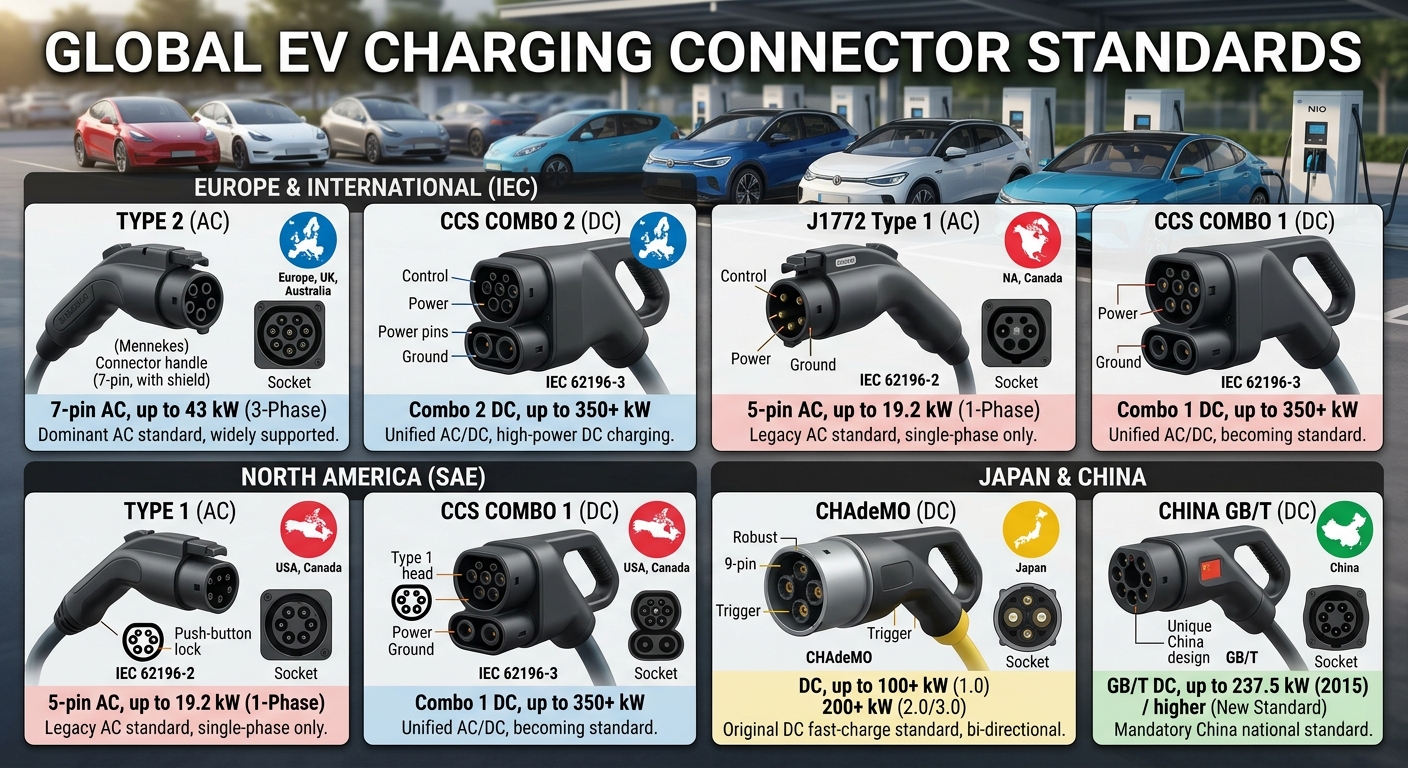
The rapid global transition toward e-mobility has fundamentally transformed transportation, yet one of the most persistent hurdles for automotive manufacturers, fleet operators, and globetrotting drivers remains the fragmentation of EV charging infrastructure. If you plug an electric vehicle into a charging pile in Berlin, Shanghai, or Los Angeles, you are likely interacting with an entirely different physical plug geometry, communication protocol, and electrical voltage architecture.
Why aren’t all EV connectors universal? The answer lies in historical regional agreements, local electrical grid topologies (such as single-phase versus robust three-phase residential and commercial power distribution), and legacy automotive manufacturing alliances. Understanding these differences is essential whether you are managing an international commercial fleet, analyzing infrastructure investments, or simply trying to understand how global EV standards intersect.
For a deeper foundational look at how electricity is delivered to vehicles, you can explore our comprehensive guides on charging types and discover how modern infrastructure utilizes smart charging technology to optimize grid loads. To navigate the broader landscape of electric vehicle technology, visit our main portal at EV Charger Advisor.
1. The Root Cause: Grid Architecture and Phase Power
To understand why EV connectors differ across countries, we must first look upstream at how electricity is generated, transmitted, and delivered to homes and commercial businesses. The physical shape of a charging plug is rarely arbitrary; it is constrained by the electrical voltage and current limits dictated by regional grid infrastructure.
Single-Phase vs. Three-Phase Power
-
North America (Residential): The standard residential electrical service in the United States and Canada utilizes a split-phase 120V/240V system. Because typical homes lack widespread three-phase commercial power, residential Level 2 charging is generally capped by amperage limits on single-phase 240V lines (commonly 32A to 48A, yielding roughly 7.6 kW to 11.5 kW).
-
Europe and Parts of Asia: European residential and commercial grids are built around a robust three-phase 400V system (230V phase-to-neutral). This allows European Type 2 AC chargers to deliver up to 22 kW (or even 43 kW in older public setups) using alternating current directly into the vehicle’s onboard charger, bypassing the need for heavy external DC conversion equipment for routine home charging.
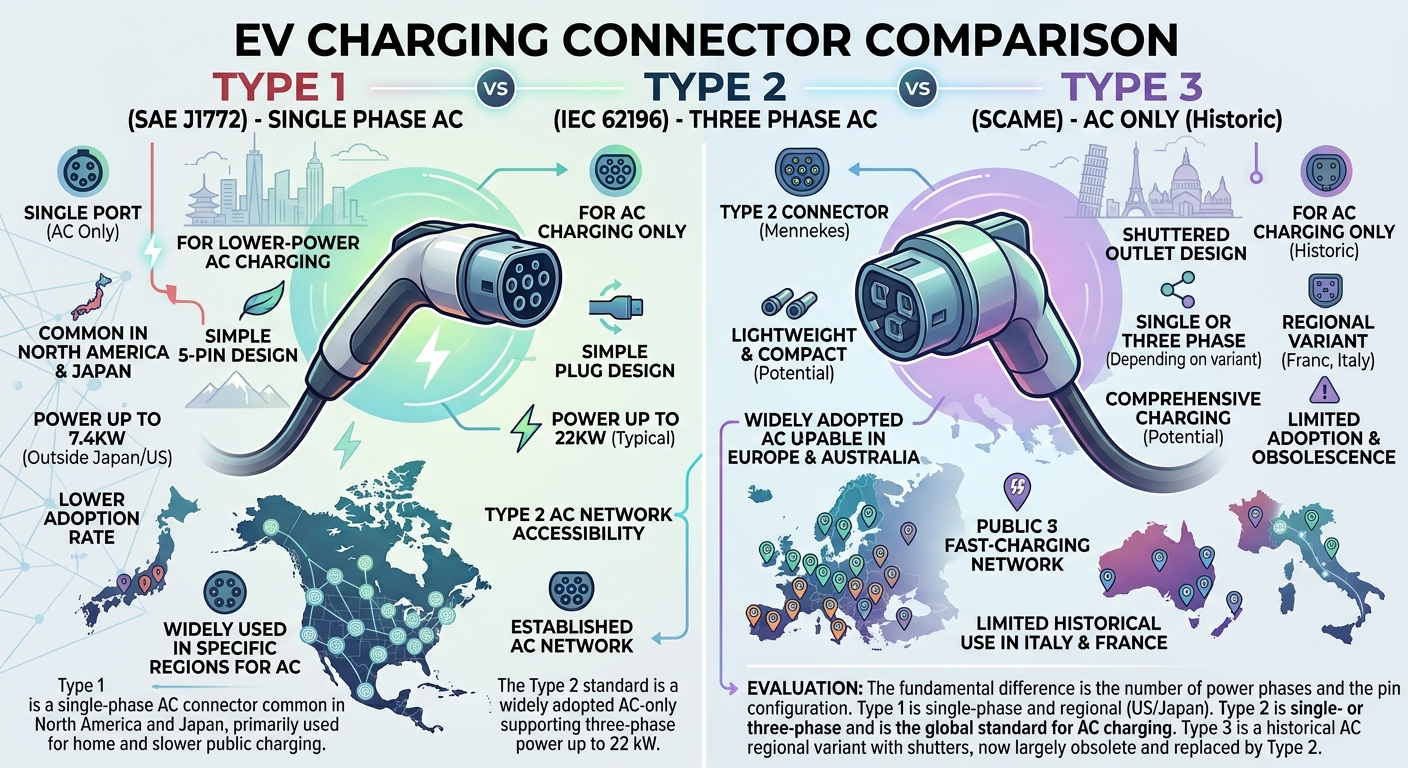
These underlying grid capabilities directly influenced the design of regional plugs. Europe engineered the Type 2 connector to natively support multi-phase AC power, whereas North America historically relied on the simpler single-phase SAE J1772 standard before consolidating around NACS.
2. Regional Breakdown of Global Charging Standards
The global charging ecosystem is broadly categorized into four primary regional families, each dominating its respective sphere of influence.
A. North America: The NACS and CCS1 Evolution
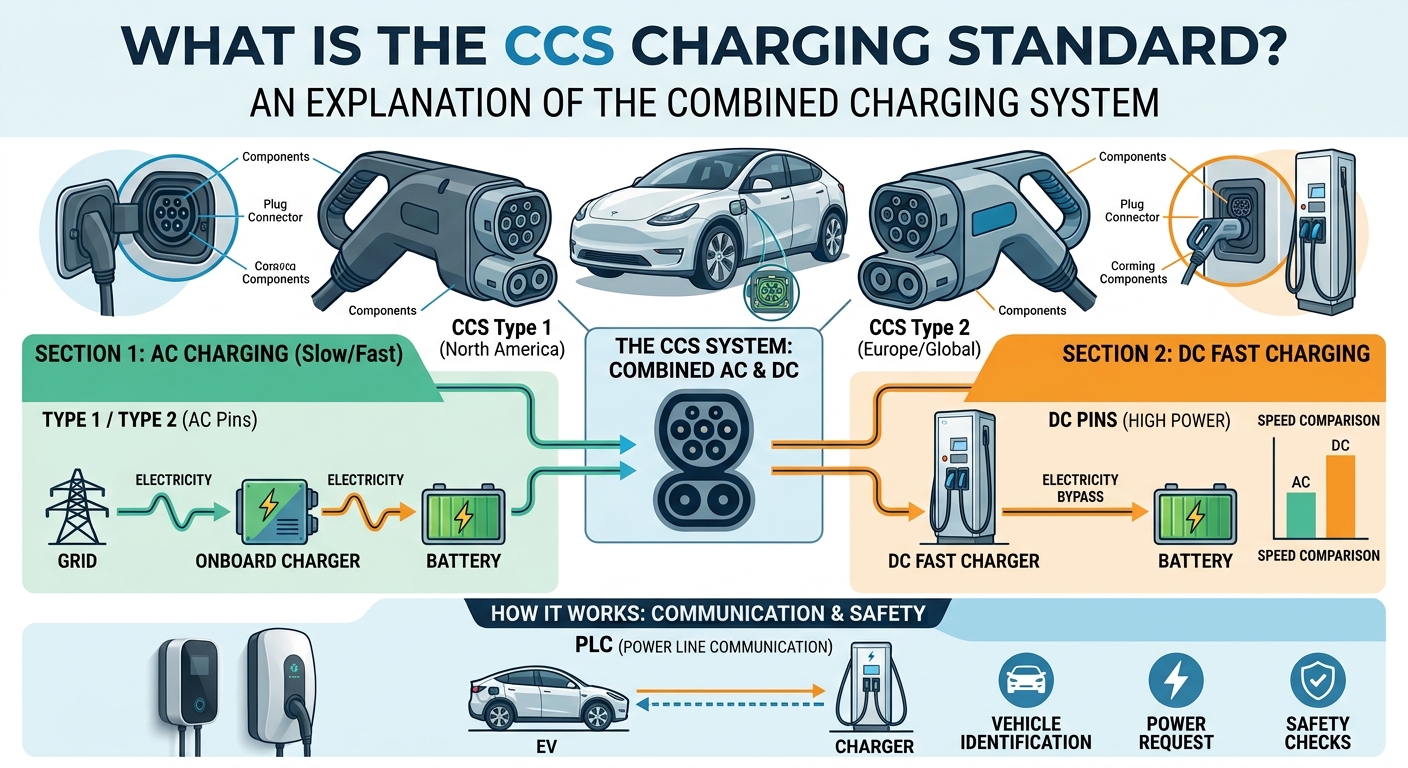
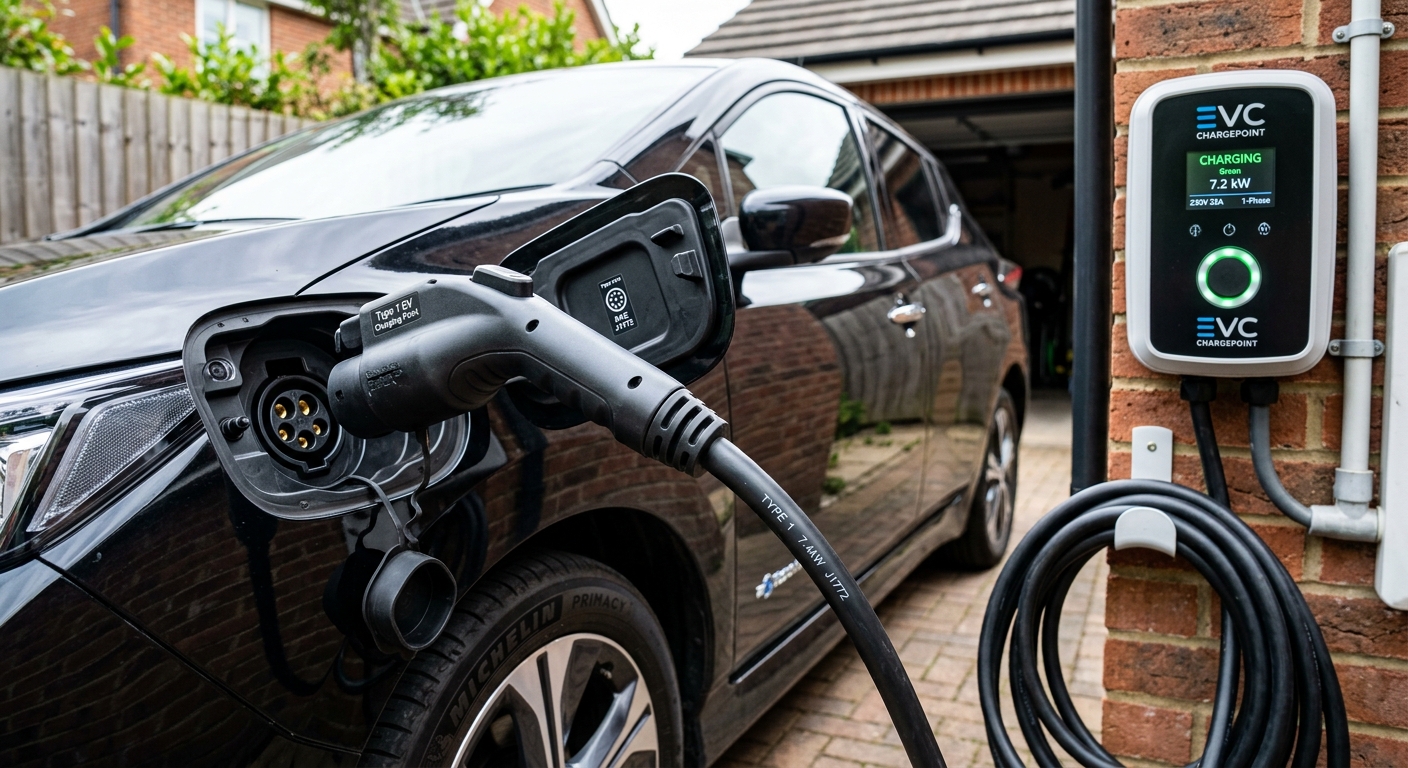
For years, North America utilized the SAE J1772 (Type 1) connector for AC Level 2 charging and the CCS1 (Combined Charging System) for DC fast charging. However, the landscape has experienced a historic consolidation.
-
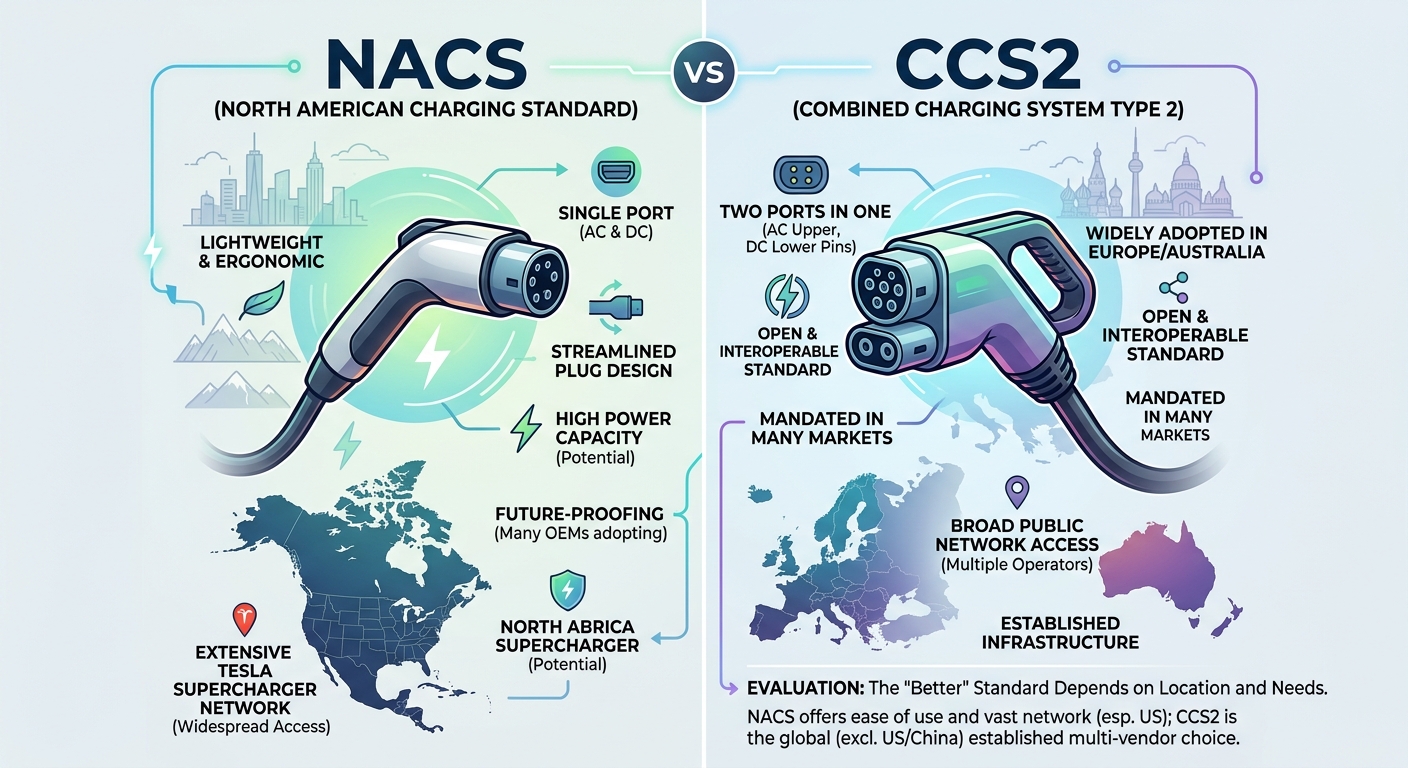
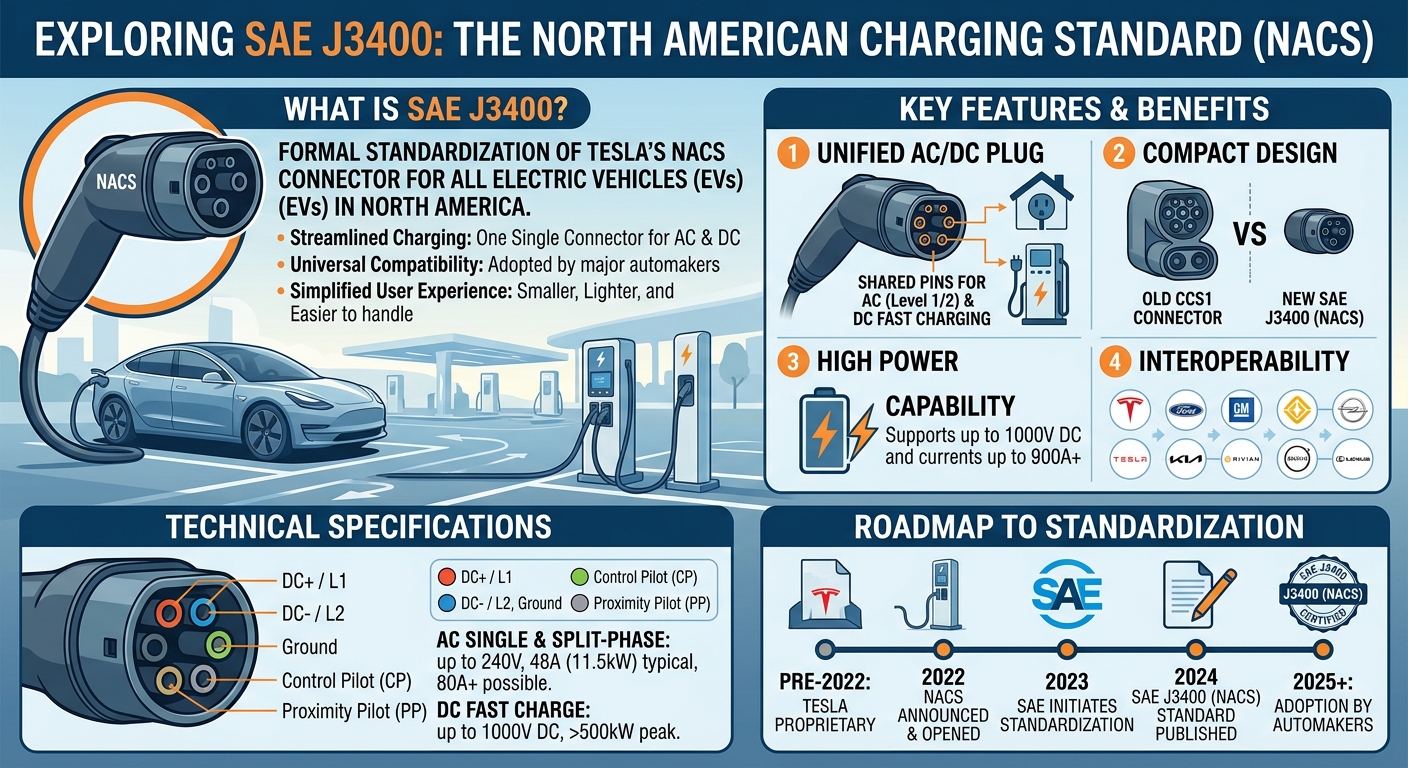
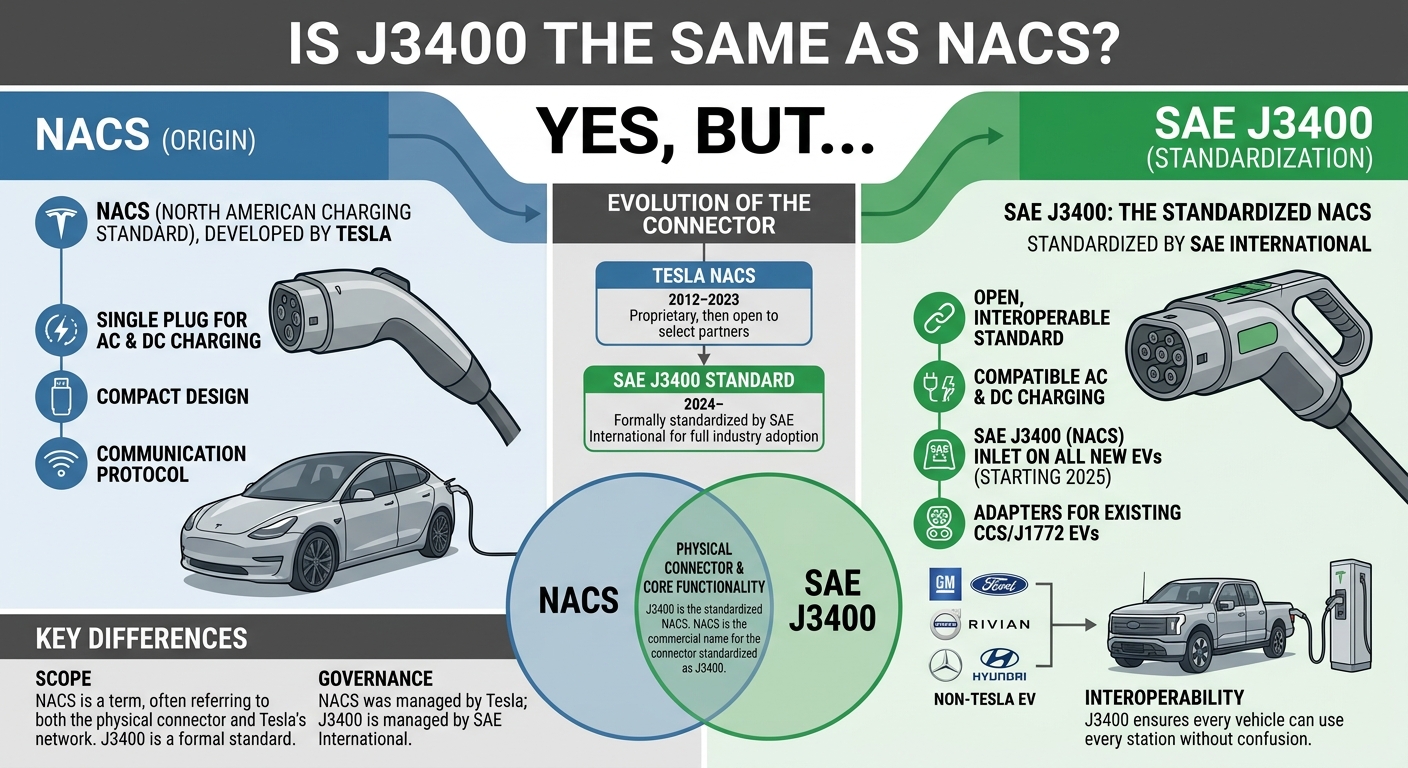
The Standard: NACS (North American Charging Standard / SAE J3400). Originally pioneered by Tesla, NACS has become the unified standard across North America.
-
Design Philosophy: Unlike the bulky CCS1 plug—which stacked a separate DC pin block underneath a Type 1 AC circle—NACS combines AC and DC charging pins into a single, sleek, lightweight connector that handles both low-power home AC and ultra-fast DC charging seamlessly.
-
Current Adoption: Nearly every major automotive manufacturer selling vehicles in North America has adopted NACS ports natively or provides certified adapters for legacy CCS1 infrastructure.
B. Europe, the UK, and Global Export Markets: The CCS2 Standard
Europe took a decisive regulatory stance early on, mandating standardized plugs to prevent proprietary lock-in and ensure interoperability across member states.
-
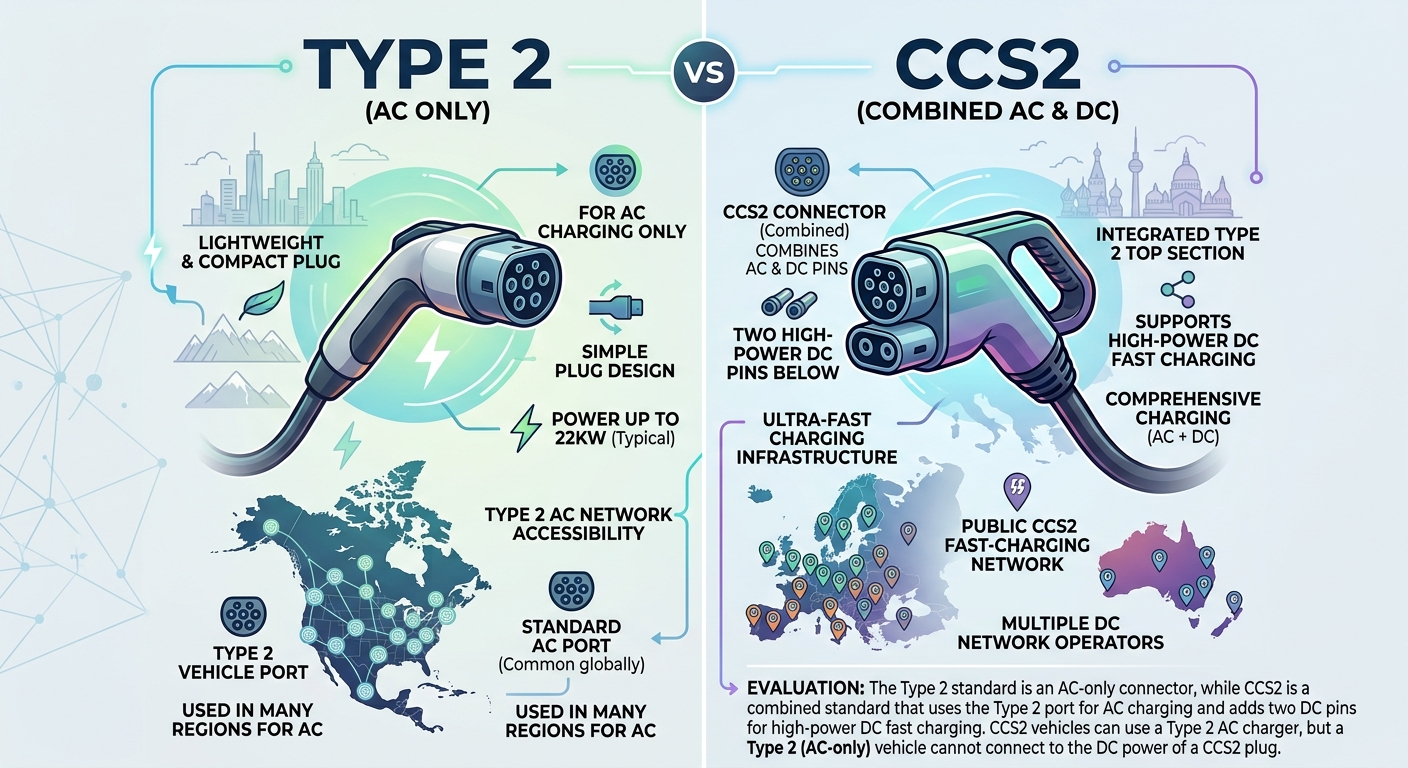
The Standard: Type 2 (Mennekes) for AC charging and CCS2 for DC fast charging.
-
Design Philosophy: The Type 2 connector features a circular design with a flattened top edge, housing multi-phase AC pins that allow vehicles to ingest high-power AC electricity from three-phase grid connections. When combined with two massive DC pins underneath, the CCS2 plug handles power ratings scaling well past 350 kW to 400 kW.
-
Global Footprint: Beyond the European Union and the UK, CCS2 has been adopted widely across Australia, New Zealand, South Africa, parts of the Middle East, and South Asia.
C. China: The GB/T Separate Port System
China represents the world’s largest electric vehicle market and operates under strict national mandates enforced by the Standardization Administration of China (SAC).
-
The Standard: GB/T 20234.
-
Design Philosophy: Unlike Western standards that bundle AC and DC into a single combo plug, China utilizes two physically separate inlets on the vehicle: one for GB/T AC slow charging and a larger, distinct port for GB/T DC fast charging.
-
The Next Frontier (ChaoJi / GB/T 2.0): To support ultra-fast charging for heavy commercial trucks and high-end passenger vehicles, China has spearheaded the development of ChaoJi (GB/T 2.0). ChaoJi introduces a pin layout capable of delivering up to 900 kW of power while maintaining backward compatibility with legacy GB/T vehicles via adapters.
D. Japan: CHAdeMO and Its Gradual Transition
Japan’s automotive sector was an early pioneer in high-voltage DC fast charging, resulting in the creation of the CHAdeMO standard.
-
The Standard: CHAdeMO.
-
Design Philosophy: Developed in partnership with Tokyo Electric Power Company (TEPCO), CHAdeMO was designed to handle high-power DC charging via a dedicated, bulky connector while AC charging was handled separately via standard Type 1 (J1772) inlets.
-
Current Status: While legendary vehicles like the Nissan Leaf relied heavily on CHAdeMO, the standard is currently being phased out in North America and Europe in favor of NACS and CCS2. However, localized versions and adaptations remain relevant in specific Japanese domestic applications and select global niches.
3. Global Connector Comparison Matrix
To quickly compare how these regional standards stack up against each other in terms of power delivery, pin configuration, and geographic spread, review the matrix below:
| Standard | Primary Region | AC / DC Configuration | Typical Max DC Power | Key Characteristics |
| NACS (SAE J3400) | North America | Unified AC & DC in one plug | Up to 500+ kW | Extremely compact, lightweight, dominant across US/Canada. |
| CCS2 | Europe, UK, Australia, Middle East | Combined Type 2 AC + dual DC pins | Up to 400 kW | Supports robust 3-phase AC home charging and liquid-cooled DC fast charging. |
| GB/T | China | Separate AC and DC physical ports | 185–250 kW (ChaoJi up to 900 kW) | Mandatory national standard in China; transitioning to ChaoJi for heavy transport. |
| CHAdeMO | Japan | Dedicated DC-only fast charging plug | 50–100 kW+ | Pioneer of high-voltage DC charging; gradually phasing out globally. |
4. Technical and Mathematical Deep Dive: Power Calculations
When engineering or utilizing charging infrastructure across different regional connectors, understanding the mathematical relationship between voltage ($V$), current ($I$), and power ($P$) is critical.
The fundamental equation governing electrical power delivery in DC charging is:
Where:
-
$P$ = Total Charging Power (in Watts or Kilowatts)
-
$V$ = Operating Voltage of the EV Battery Pack (in Volts)
-
$I$ = Electrical Current flowing through the connector (in Amperes)
Mathematical Example: Comparing CCS2 vs. NACS High-Power Delivery
Consider an 800V architecture electric vehicle charging at a modern DC fast-charging station equipped with liquid-cooled cables capable of delivering 500 Amperes of current.
-
Calculate Power Output:
$$P = 800\,V \times 500\,A = 400,000\,W$$$$P = 400\,\text{kW}$$ -
Thermal and Cable Constraints:
To deliver 400 kW without melting copper conductors, connectors like CCS2 and NACS rely on active liquid cooling inside the cable assembly. Without liquid cooling, copper resistance ($R$) generates thermal energy according to Joule’s law:
$$P_{\text{loss}} = I^2 \times R$$If current $I$ is pushed to 500A through an uncooled standard cable, internal resistance rapidly causes overheating. This is why regional connector standards specify strict thermal management guidelines and communication protocols (such as ISO 15118) to modulate current dynamically based on real-time temperature telemetry from the vehicle’s battery management system (BMS).
5. Summary & Future Outlook
The fragmentation of EV charging connectors by country is a direct reflection of historical electrical grid variations, regulatory policies, and industrial priorities. While North America has successfully aligned around NACS and Europe remains anchored to CCS2, emerging markets and specialized commercial sectors continue to navigate multi-standard environments.
As global trade and vehicle imports increase, understanding these regional nuances ensures that infrastructure planners, fleet operators, and drivers can deploy compatible, future-proof charging solutions.





Leave a Reply