
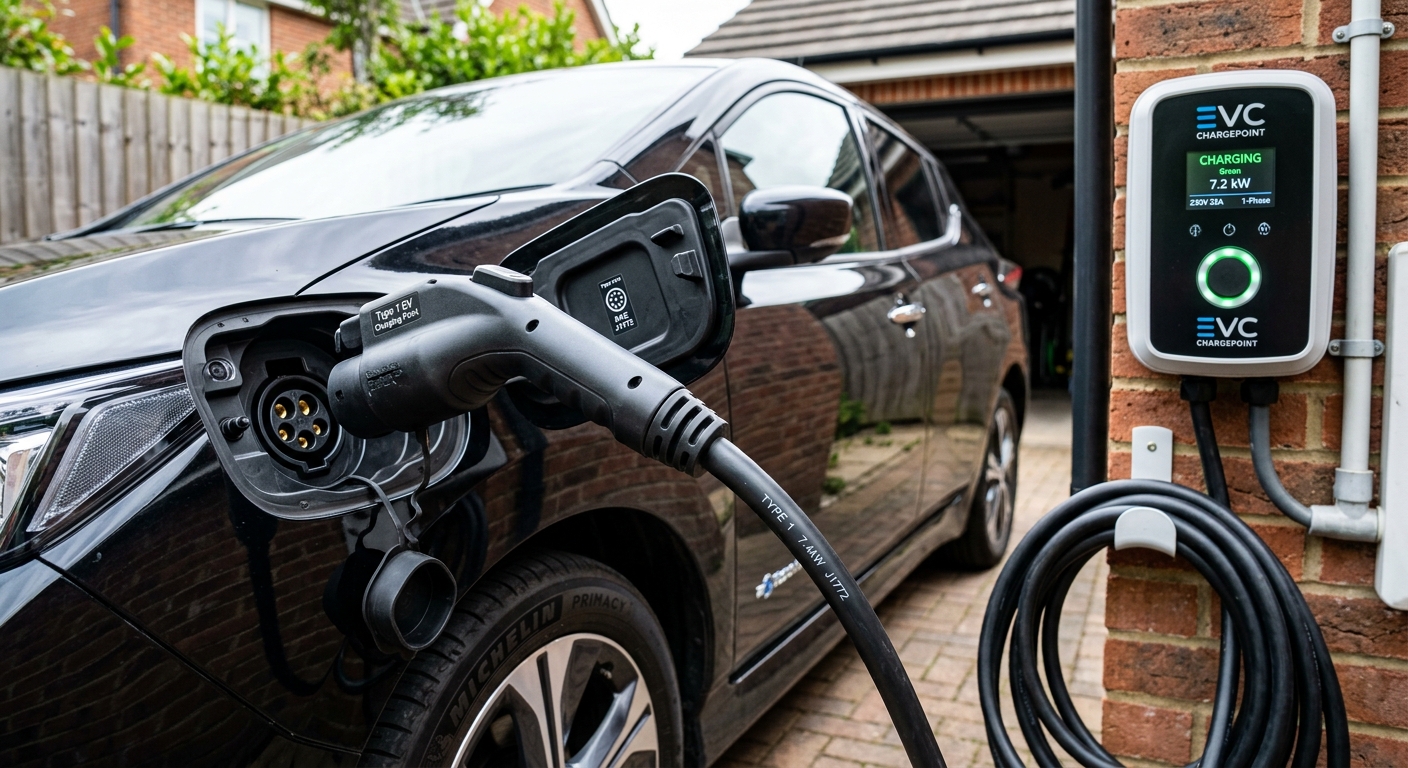
Transitioning to an electric vehicle (EV) is one of the most effective ways to lower your long-term motoring costs, reduce carbon emissions, and enjoy a seamless driving experience. However, one of the most critical initial hurdles for new EV drivers is setting up home charging infrastructure.
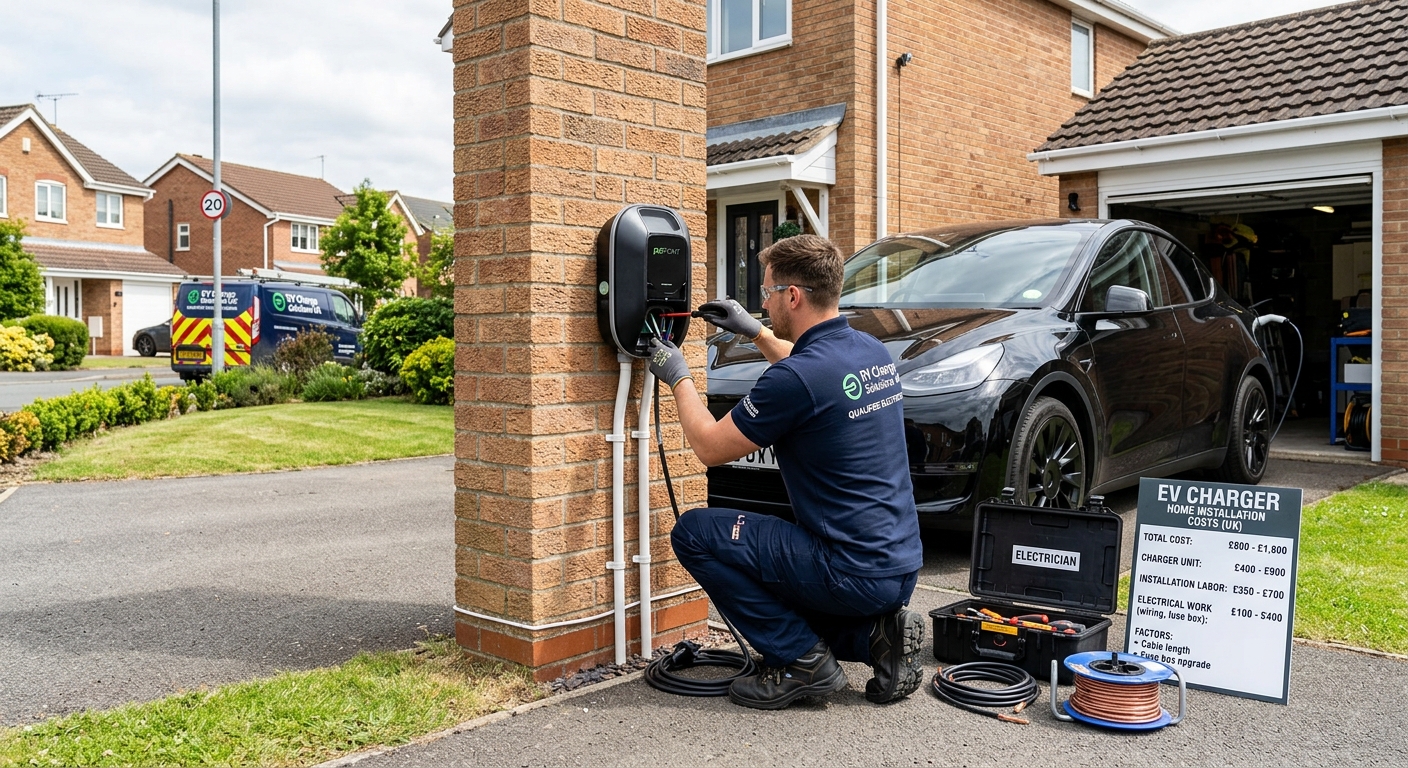
If you have asked yourself, “How expensive is it to install an EV charger at home?”, the short answer for UK homeowners is that a standard installation typically ranges between £800 and £1,200 total. This turnkey figure includes both the hardware unit itself and professional installation by a certified, Part P-compliant electrician.
However, the final invoice can fluctuate based on cable routing distance, electrical panel upgrades, solar integration, and grant eligibility. In this comprehensive guide, we unpack every element of EV home charger installation pricing, provide realistic mathematical models, examine technical variables, and reveal how home charging saves you thousands over time.
Complete Price Breakdown: What Are You Paying For?
Understanding where your money goes helps you evaluate quotes from installers and avoid unexpected extras. A standard EV home charger installation combines physical equipment, auxiliary electrical equipment, and expert labor.
                     ┌─────────────────────────────────────────┐
                     │   Total Installation Cost: £800-£1,200  │
                     └────────────────────┬────────────────────┘
                                          │
         ┌────────────────────────────────┼────────────────────────────────┐
         ▼                                ▼                                ▼
┌─────────────────┐              ┌─────────────────┐              ┌─────────────────┐
│ Charger Unit    │              │ Electrical Parts│              │ Electrician     │
│ Hardware        │              │ & Cabling       │              │ Labor & Testing │
│ (£450 - £800)   │              │ (£100 - £250)   │              │ (£250 - £450)   │
└─────────────────┘              └─────────────────┘              └─────────────────┘
1. Hardware Unit Cost (£450 – £800)
The hardware wallbox represents roughly 50% to 60% of your total project outlay. Prices vary depending on brand, smart functionality, build quality, and aesthetic finish:
-
Budget Wallboxes (£350 – £500): Entry-level 7kW untethered units with basic Bluetooth or simple Wi-Fi app controls.
-
Mid-Range Smart Chargers (£500 – £750): Features robust Wi-Fi/4G connectivity, custom charging schedules, dynamic load balancing, and sleek weather-proof enclosures (e.g., Hypervolt Home 3.0, Pod Point Solo 3, Wallbox Pulsar Plus).
-
Premium & Solar-Integrated Units (£700 – £1,000+): High-end architectural chargers (such as the Andersen A3) or solar-optimised systems like the Myenergi Zappi that direct surplus solar PV generation directly into your car battery.
To explore different hardware tiers and dynamic software features, check out our EV Charger Advisor Smart Charging Hub.
2. Standard Electrical Components & Cabling (£100 – £250)
A dedicated EV charger cannot simply be wired into standard lighting or socket circuits. It demands high-grade components:
-
High-grade cabling: Heavy-duty 6mm² or 10mm² Steel Wire Armoured (SWA) cable designed for exterior surface routing or burial.
-
Protective Devices: A dedicated Type A or Type B RCD (Residual Current Device), Miniature Circuit Breakers (MCB / RCBO), or integrated PEN Fault Detection modules to meet UK wiring regulations (BS 7671) without requiring expensive earth rods.
3. Professional Labor & Certification (£250 – £450)
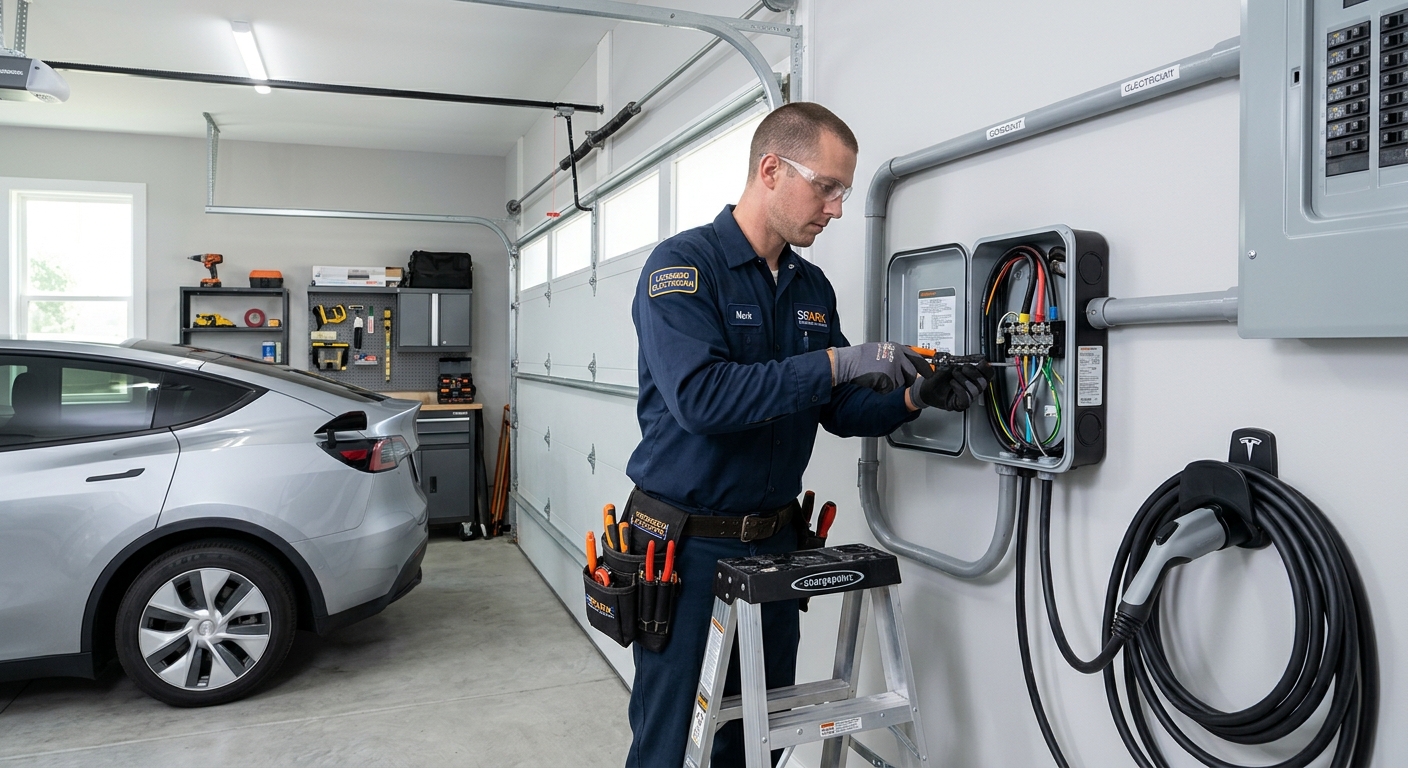
Installing a 32-Amp continuous load requires a certified electrician (Part P registered in England and Wales). Standard labor takes 3 to 5 hours and encompasses:
-
Drilling wall penetrations and securely mounting the wallbox.
-
Surface-mounting cable runs up to 10 metres from your main consumer unit.
-
Main distribution board connections and safety testing.
-
Issuing an Electrical Installation Certificate (EIC) and notifying local Building Control.
Cost Comparison by Charger Type & Specifications
Choosing the right equipment depends on your home’s electrical supply and daily driving requirements. Learn more about charging speeds and connector types across our EV Charger Types & Speeds Guide.
| Charger Category | Power Output | Electrical Supply Needed | Typical Added Range / Hour | Total Cost Range (Inc. Install) |
| 3-Pin Plug (Level 1) | 2.3 kW | Standard 230V Socket | 8 – 10 miles | £0 – £150 (Emergency Use Only) |
| Standard Smart Wallbox | 7.4 kW | Single-Phase (32A) | 25 – 30 miles | £800 – £1,200 |
| Solar-Integrated Charger | 7.4 kW | Single-Phase + Solar PV | 25 – 30 miles (Free Solar) | £1,100 – £1,550 |
| Commercial / Fast Home | 11 kW – 22 kW | Three-Phase Supply | 45 – 90 miles | £1,500 – £3,500+ |
Crucial Note on 22kW Chargers: Over 90% of UK residential homes operate on single-phase electricity, which caps maximum domestic charging power at 7.4 kW (32 Amps). Upgrading a house to a three-phase supply requires works by your Distribution Network Operator (DNO) costing between £2,000 and £5,000+, making 22kW chargers impractical and unnecessary for normal domestic use.
Technical Factors That Increase Installation Costs
While a “standard installation” covers a baseline setup (up to 10m cable, existing space on the fuse board), non-standard site requirements increase the final invoice.
┌─────────────────────────────────────────────────────────────────┐
│               POTENTIAL INSTALLATION EXTRA COSTS                │
├──────────────────────────────────┬──────────────────────────────┤
│ Extended Cable Runs (>10m)       │ +£10 to £20 per metre        │
│ Consumer Unit (Fuse Box) Upgrade │ +£500 to £950                │
│ Trenching / Groundwork           │ +£200 to £800                │
│ Un-severed Neutral / PME Works   │ +£150 to £350                │
└──────────────────────────────────┴──────────────────────────────┘
1. Distance & Extended Cable Runs
Standard quotes include up to 10 metres of cabling surface-mounted along walls. If your consumer unit is situated at the back of the property while your car is parked on a front driveway, extra cable routing typically adds £10 to £20 per additional metre.
2. Consumer Unit (Fuse Box) Upgrades
Your home’s electrical panel must have a spare “way” (switch slot) capable of handling a dedicated 32A breaker. Older consumer units without RCD protection, space, or sufficient main fuse capacity will require replacement or an additional sub-board, costing an extra £500 to £950.
3. Trenching & Groundwork
If cabling must cross a garden, lawn, or paved driveway to reach a standalone garage or mounting post, electricians must excavate a trench deep enough (typically 450mm to 600mm) to bury armoured cable. Civil works can add £200 to £800+ depending on surface materials (tarmac, block paving, or soil).
UK Government Grants & Incentive Schemes
Depending on your tenure and property type, government subsidies can substantially lower installation expenses:
-
EV Chargepoint Grant for Flat Owners & Renters: Tenants and flat owners with off-street parking can claim up to 75% off the total cost, capped at £500.
-
EV Chargepoint Grant for Cross-Pavement Solutions: Residents without driveways using council-approved cross-pavement cable channels can also receive up to £500 towards charger setup.
-
Landlord Grants: Property owners can claim £350 per socket (up to 200 properties per year) to install charging ports across rental portfolios.
-
Salary Sacrifice Schemes: Leasing an EV via salary sacrifice often allows bundled home charger setups using pre-tax income, saving high-rate taxpayers 30% to 40% off hardware and fitting.
Step-by-Step Mathematical Example: Payback Period & Financial ROI
To demonstrate why an upfront investment of £1,000 for a home EV charger is financially advantageous, let us run a comparative mathematical breakdown against public rapid charging and petrol motoring.
Case Study Parameters:
-
Annual Mileage: 10,000 miles
-
Vehicle Efficiency: 3.5 miles per kWh
-
Total Annual Energy Needed: $10,000 \text{ miles} \div 3.5 \text{ miles/kWh} = 2,857.14 \text{ kWh}$
Scenario A: Standard Home Charging via Smart Tariff
Using a dedicated smart charger with an off-peak EV tariff (e.g., 7p / kWh overnight):
Scenario B: Public Charging Network Reliance
Relying entirely on public DC rapid chargers (averaging ~75p / kWh):
Scenario C: Equivalent Petrol Car (40 MPG)
Petrol at £1.45 per litre (£6.59 per gallon):
Financial Payback Summary
┌─────────────────────────────────────────────────────────────────┐
│               ANNUAL RUNNING COSTS (10,000 MILES)              │
├──────────────────────────────────┬──────────────────────────────┤
│ Smart Home EV Charging           │ £200.00                      │
│ Petrol Vehicle (40 MPG)          │ £1,647.50                    │
│ Public Rapid Charging            │ £2,142.86                    │
├──────────────────────────────────┼──────────────────────────────┤
│ ANNUAL SAVINGS (Home vs Petrol)  │ £1,447.50 per year           │
└──────────────────────────────────┴──────────────────────────────┘
Payback Calculation:
Dividing your initial £1,000 charger installation cost by annual fuel savings against petrol (£1,447.50):
Result: Your home EV charger pays for itself in less than 9 months. Over a standard 5-year vehicle ownership cycle, you net over £6,200 in direct fuel savings.
Step-by-Step DIY vs Professional Installation Checklist
Can you fit a charger yourself? No. Under UK Building Regulations Part P and Electricity at Work Regulations, high-current EV charging equipment must be installed, tested, and certified by a qualified professional.
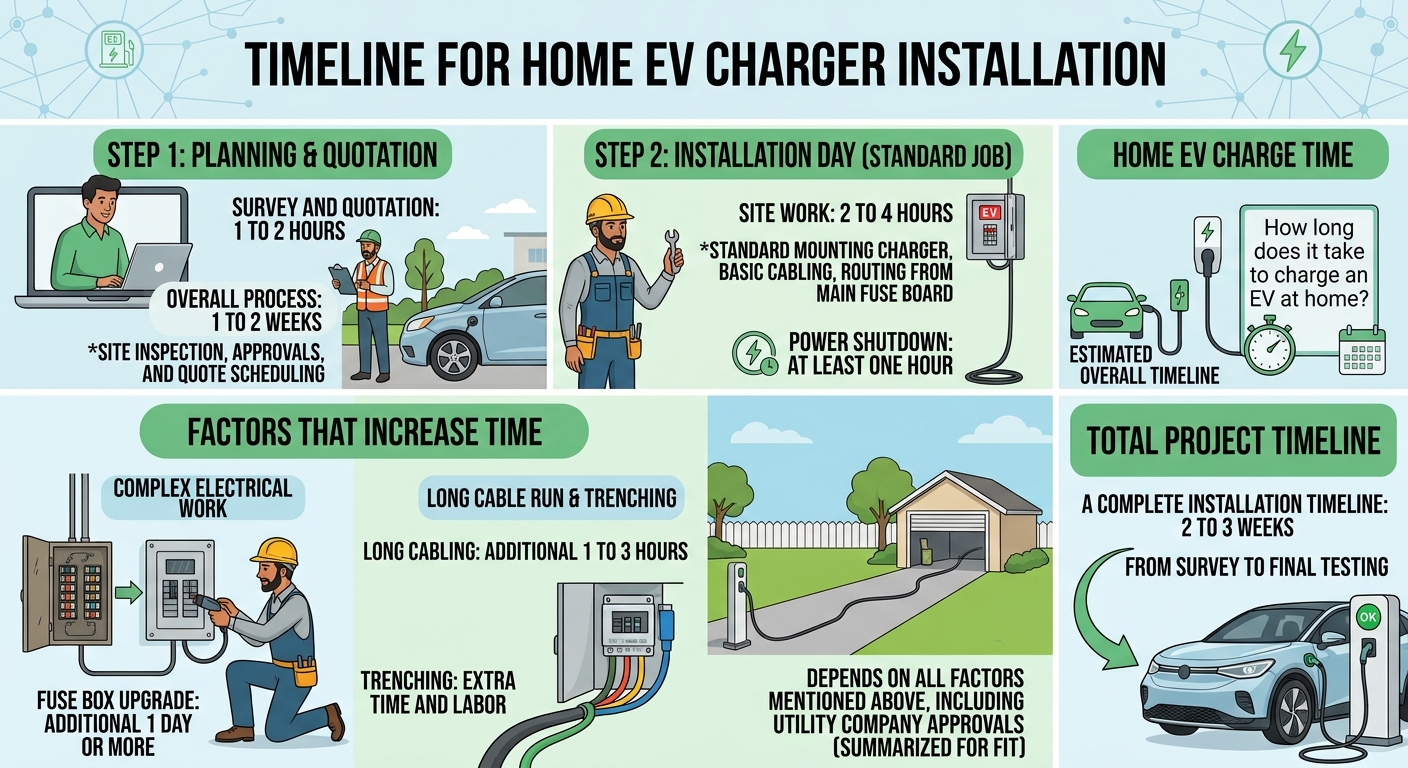
The Standard Installation Process
Expert Recommendations for EV Owners
To ensure you get the best value from your installation investment:
-
Always Choose a Smart Charger: Non-smart wallboxes are obsolete. Smart capability lets you link directly to EV tariffs to charge automatically when prices plummet overnight.
-
Opt for Tethered Cables for Convenience: If you exclusively park one EV on your driveway, a tethered charger eliminates the daily hassle of pulling loose cables out of your car boot.
-
Verify Your Main Fuse Capacity: Check whether your electrical cutout fuse is 60A, 80A, or 100A. If it is 60A, ask your energy network provider for a free un-metered fuse upgrade to prevent tripping when running heavy appliances alongside your charger.
For expert reviews on top-rated chargers, installer comparisons, and energy management guides, visit EV Charger Advisor Home Page.





Leave a Reply