
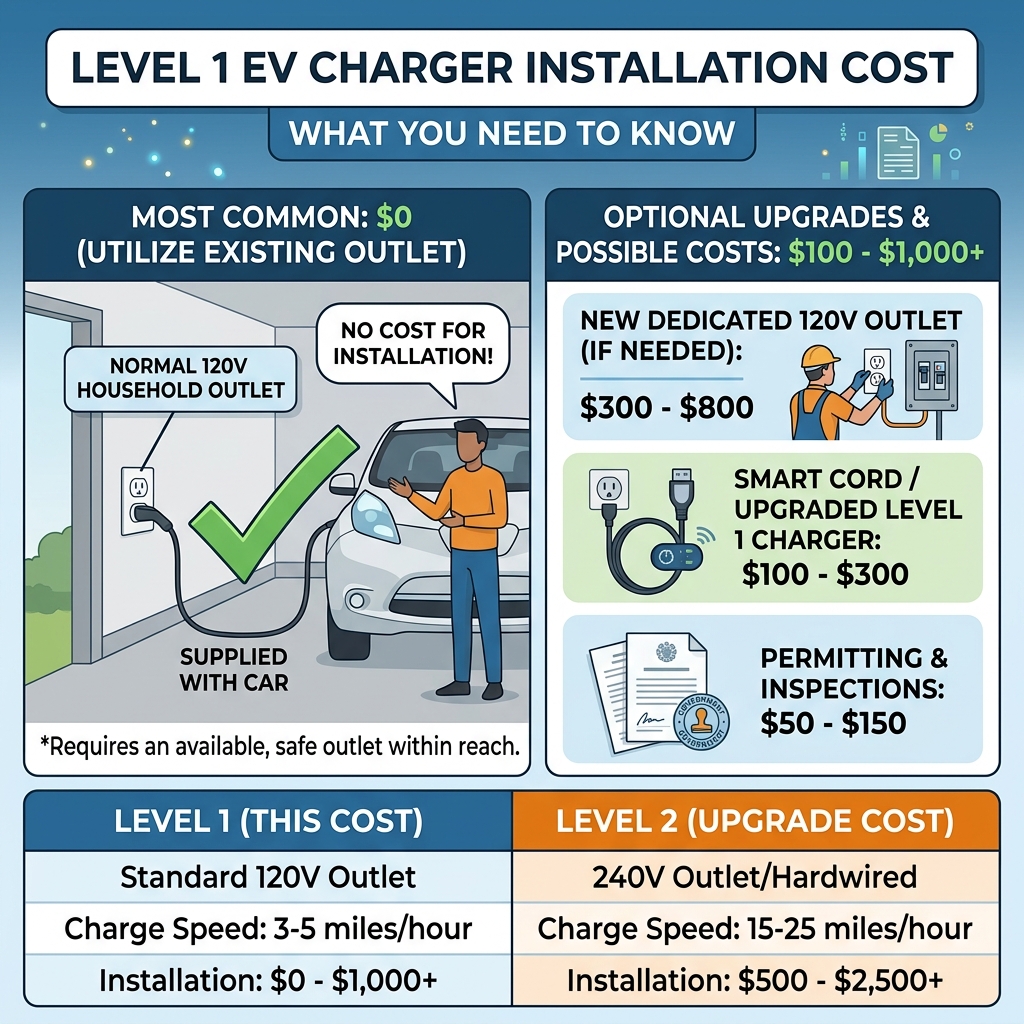
When making the transition to electric vehicle ownership, one of the first questions every new driver asks centers around home charging setup expenses. While high-powered wall units often dominate headlines, millions of EV owners rely on standard equipment that comes included with their vehicle. To answer directly: Installing a Level 1 EV charger typically costs $0 to $500, depending entirely on your home’s current setup.
Because Level 1 chargers utilize standard 120-volt household AC outlets, they require no specialized electrical infrastructure, making them the most affordable and accessible way to power an electric vehicle right out of the box.
Here is an extensive, thorough 2000-word comprehensive guide examining everything you need to know about Level 1 charging installation costs, electrical requirements, hardware components, speed trade-offs, and when you should upgrade to faster equipment.
1. The Core Breakdown: Why Level 1 Installation Costs Are Minimal
The primary reason Level 1 charging is financially attractive is that the core infrastructure is already built into almost every residential property across North America and standard global households:
-
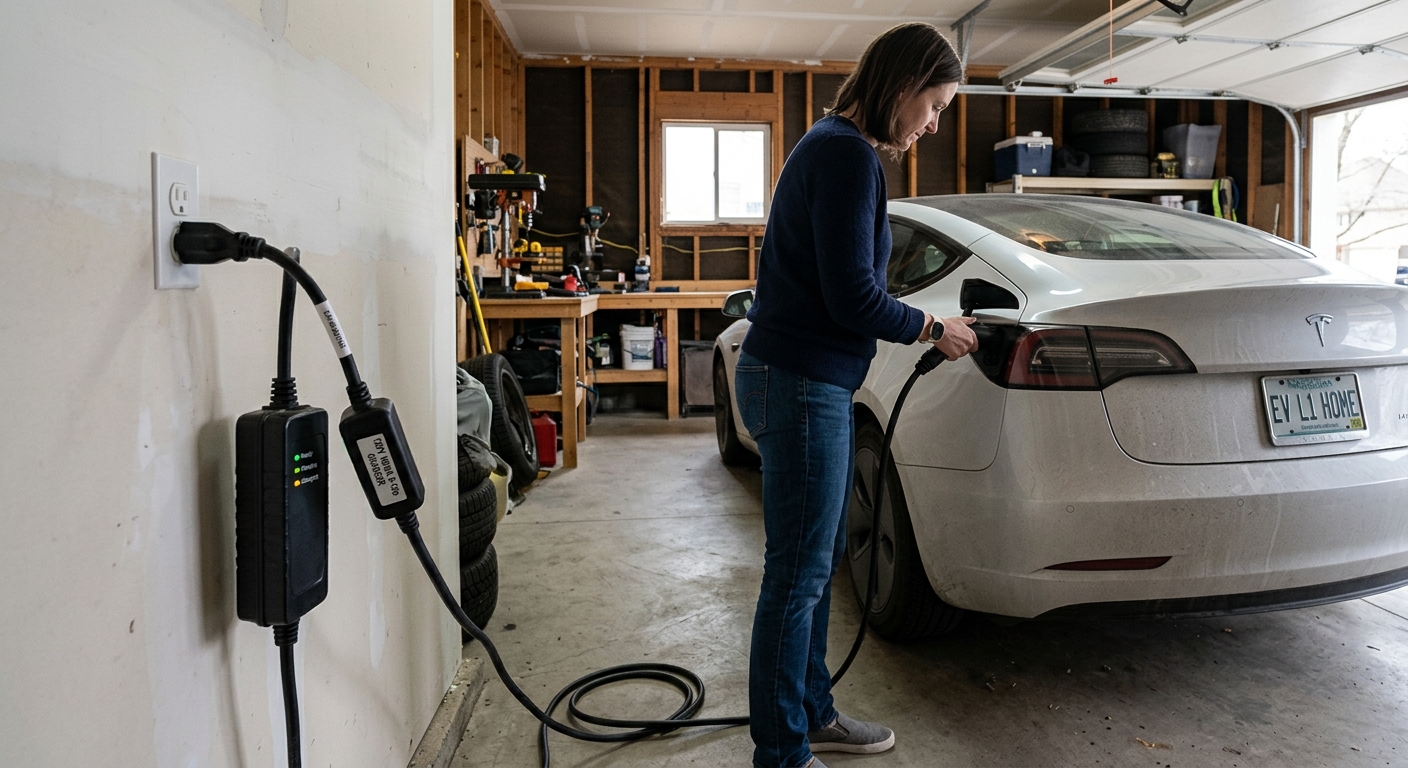
The $0 Baseline: If you already have a standard, grounded 120-volt NEMA 5-15 wall outlet located near your parking space (such as inside a garage, carport, or exterior porch), your installation cost is literally zero dollars. You simply plug the portable cord set that came with your electric vehicle directly into the wall, connect the other end to your car, and begin charging.
-
Included Hardware: Unlike Level 2 chargers that often require purchasing a dedicated wallbox unit separately (ranging from $400 to $700+), Level 1 EVSE (Electric Vehicle Supply Equipment) cables are almost always bundled with the purchase of a new or certified pre-owned electric vehicle.
To compare how basic residential plugs differ from heavy-duty residential setups, read more about various charging types.
2. When and Why Level 1 Installation Can Cost Up to $500
While the basic setup is free for many homeowners, certain property layouts or older electrical conditions require minor work from a licensed electrician. Here is where potential expenses can arise:
-
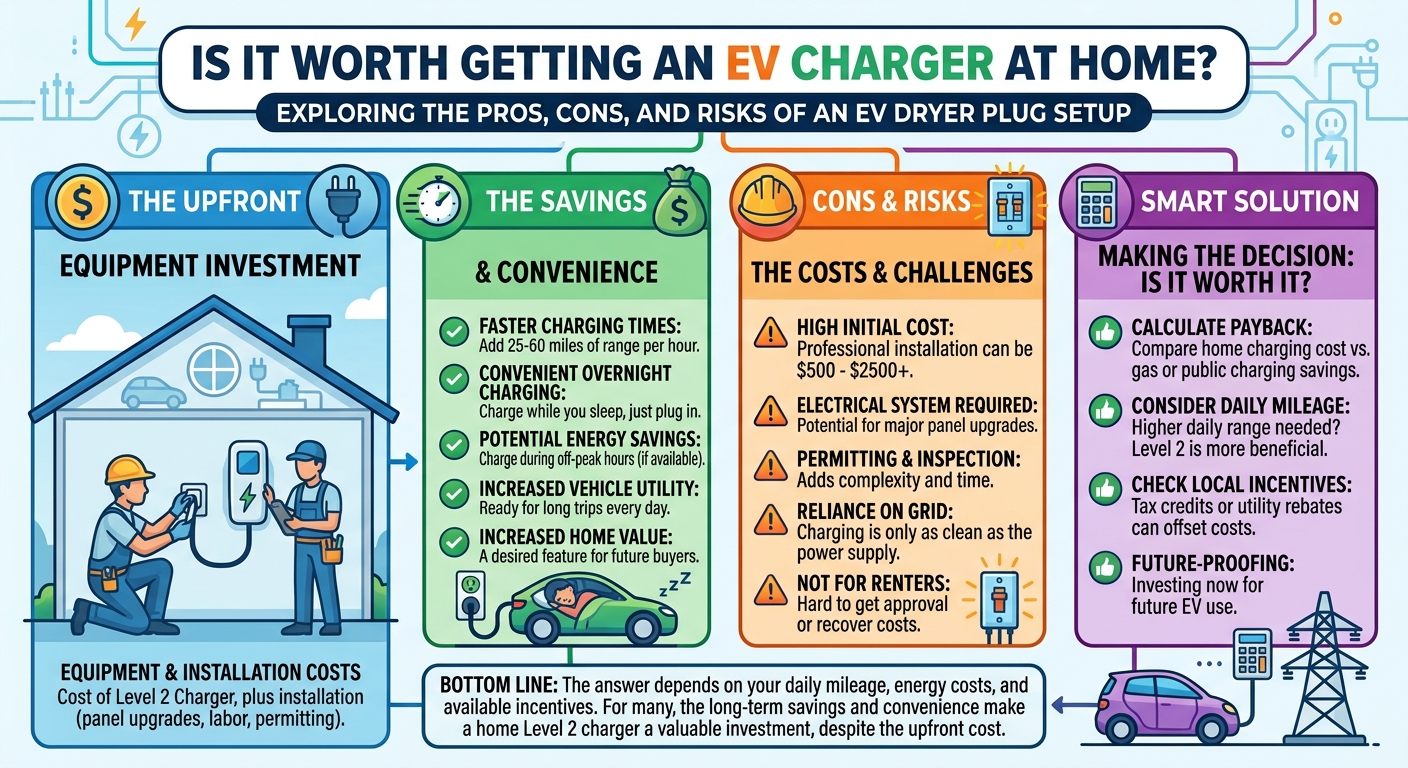
Installing a New Dedicated Outlet ($150 to $300): If your garage or parking spot lacks a convenient power outlet, hiring a professional electrician to run new wiring from your main electrical panel to a fresh weatherproof outlet box typically ranges between $150 and $300 in labor and materials.
-
Upgrading to a Heavy-Duty Weatherproof Enclosure ($50 to $150): If you park outdoors in regions prone to heavy rain, snow, or extreme temperatures, installing a tamper-resistant, weather-proof receptacle cover with a lockable heavy-duty box ensures safe outdoor charging.
-
Addressing Older Wiring or Grounding Issues ($200 to $500): Older homes built decades ago may feature ungrounded two-prong outlets or deteriorated aluminum wiring. Plugging a continuous 12-amp EV load into compromised wiring is a serious fire hazard. An electrician may need to run a dedicated, grounded copper circuit to bring the outlet up to modern electrical codes.
To explore how advanced energy distribution, smart household management, and circuit load monitoring interact with home electrical upgrades, check out our guide on smart home EV solutions.
3. Understanding Level 1 Speed and Technical Specifications
Before committing to a Level 1 charging routine, it is vital to understand the technical performance limitations of a standard 120V connection:
-
Power Output (1.3 kW to 1.4 kW): Level 1 chargers operate on standard household current (typically drawing 12 amps on a 15-amp breaker). This delivers roughly 1.3 to 1.4 kilowatts of power to your vehicle.
-
Range Replenishment Rate: At this power intake, a Level 1 charger adds approximately 2 to 4 miles of driving range per hour.
-
Full Recharge Times: Recharging a fully depleted standard battery pack (60 kWh to 75 kWh) from 0% to 100% on a Level 1 charger can take anywhere from 40 to 50+ hours. For plug-in hybrid electric vehicles (PHEVs) with smaller 10–15 kWh batteries, an overnight 8-to-10-hour session is usually more than enough for a full charge.
4. Who Benefits Most From Level 1 Charging?
Despite its slow speeds, Level 1 charging remains an ideal solution for specific driving profiles and lifestyles:
-
Low-Mileage Daily Commuters: If your daily round-trip commute is under 30 miles (requiring roughly 10 kWh of energy), an overnight 10-hour Level 1 charge will completely replenish your daily usage while you sleep.
-
Plug-in Hybrid (PHEV) Owners: Vehicles like the Toyota RAV4 Prime, Chrysler Pacifica Hybrid, or BMW X5 xDrive have smaller battery packs that thrive on standard 120V outlets without ever needing expensive home electrical overhauls.
-
Apartment Renters and Temporary Setups: For renters who cannot alter property wiring or homeowners waiting for a scheduled Level 1-to-Level 2 hardware upgrade, standard wall outlets provide a reliable backup method.
For comprehensive insights on EV infrastructure planning, electrical safety standards, and expert advisory services, visit us at EV Charger Advisor.
Summary: Is Level 1 Installation Worth It?
-
If your parking space features an existing grounded 120V outlet, your installation cost is $0, utilizing the portable cord included with your vehicle.
-
If you need a new outdoor outlet or minor circuit remediation, expect to invest $150 to $500 for safe, professional electrical work.





Leave a Reply