
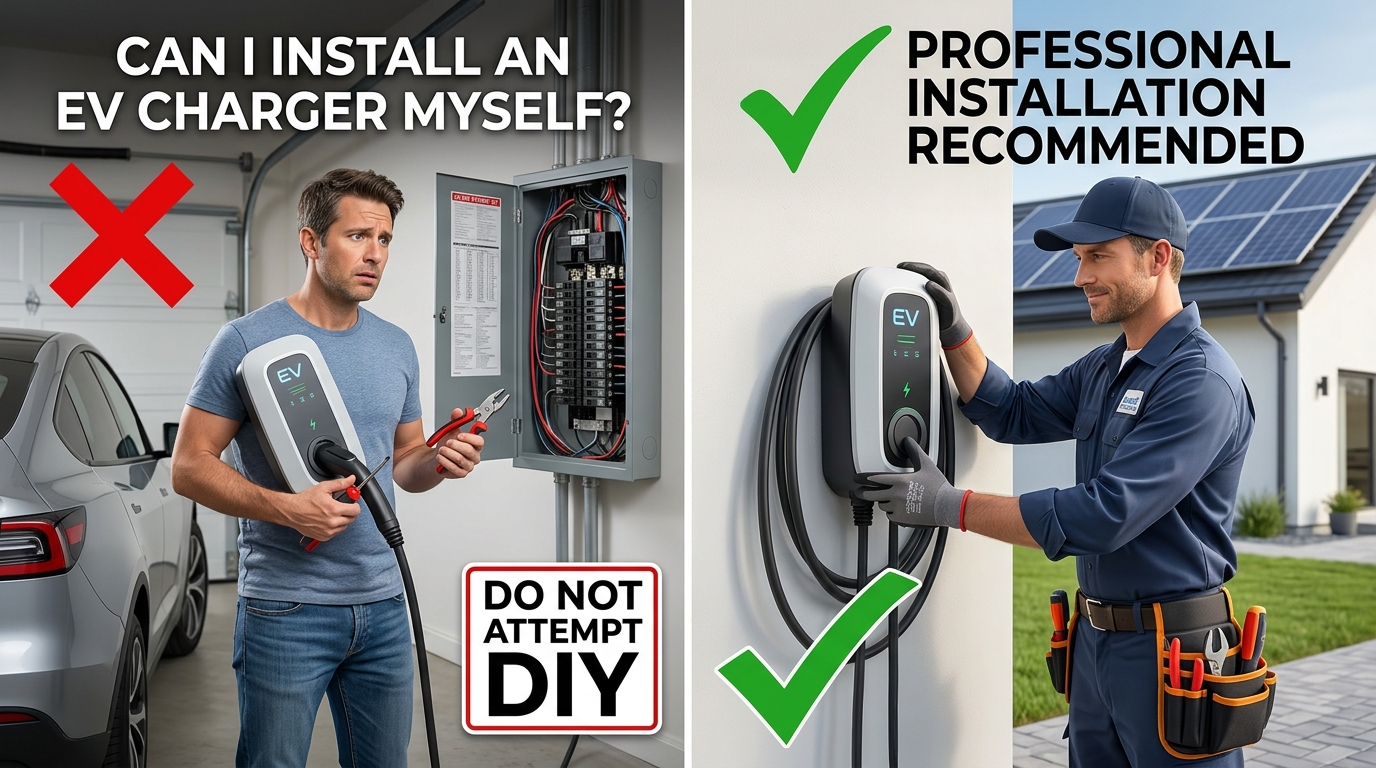
Transitioning to electric vehicle ownership is an exciting milestone, but it quickly brings practical household logistics into focus. One of the most common questions new EV owners ask is whether they can skip contractor fees and handle the setup independently. To answer directly: Yes, you can physically install a plug-in Level 2 EV charger yourself if you plug it into an existing, properly rated 240-volt outlet. However, attempting to run new high-voltage wiring, install a double-pole breaker inside your main electrical panel, or hardwire a high-amperage charging station without professional credentials crosses a major safety line.
While plugging a portable Level 2 unit into an existing NEMA outlet (such as a dryer plug) is as simple as plugging in a household appliance, installing a dedicated residential EV supply equipment (EVSE) circuit involves heavy electrical loads that demand strict adherence to building codes, electrical safety standards, and manufacturer specifications.
Here is an extensive, comprehensive guide exploring the exact boundaries of DIY EV charger installation, electrical capacity assessments, wiring requirements, safety codes, and when hiring a licensed electrician is mandatory.
1. The Core Distinction: Plug-In vs. Hardwired Installations
When evaluating whether you can manage an EV charger installation yourself, you must first understand the two distinct types of residential Level 2 hardware available on the market:
-
Plug-In (Portable) Level 2 Chargers: These units feature a heavy-duty power cord terminating in a standard 240-volt plug (such as a NEMA 14-50 or NEMA 6-50). If your garage or carport already features a properly rated, dedicated 240V outlet, installing the charger requires nothing more than mounting the wall holster with standard screws and plugging the unit into the wall. No electrical work is required.
-
Hardwired Level 2 Chargers: These units do not use a wall plug. Instead, electrical conduit and heavy-gauge wire run directly from your home’s main service panel into the internal terminals of the charging unit. Hardwired installations support higher continuous amperages (such as 48 amps or 80 amps) and are permanently fixed. You cannot legally or safely perform a hardwired installation without deep electrical knowledge and, in most jurisdictions, a licensed professional.
To understand how different charger power outputs and hardware specifications integrate with your home infrastructure, read more about various charging types.
2. Assessing Your Home’s Electrical Capacity
Before attempting any DIY mounting or plugging in high-draw equipment, you must evaluate whether your home’s electrical service can handle the extra load. An EV charger is considered a continuous continuous-duty load, meaning it pulls maximum current for hours at a time.
-
The Main Panel Limit: Most modern homes feature a 200-amp electrical service panel. While a 200-amp panel can usually accommodate a standard 40-amp or 50-amp EV circuit, older homes with 100-amp or 150-amp panels may be operating near their maximum capacity—especially if running central air conditioning, electric water heaters, or electric ranges.
-
Load Calculations: Overloading a service panel creates severe risks of tripped breakers, melted wires, and electrical fires. Professional electricians perform formal load calculations to determine if a sub-panel or service upgrade is required before adding high-draw equipment.
To explore how smart energy management systems and automated load-balancing devices can protect your home’s electrical grid, check out our guide on smart home EV solutions.
3. Electrical Codes, Permits, and Insurance Implications
Many DIY enthusiasts assume that working inside their own home exempts them from municipal oversight. When dealing with 240-volt high-amperage circuits, however, local laws and insurance policies dictate strict rules:
-
Mandatory Electrical Permits: In almost all municipalities, installing a new 240V outlet or hardwired EV charging circuit requires pulling an official electrical permit and passing a city inspection. Skipping permits violates local building codes.
-
Homeowner Insurance Risks: If an unpermitted or improperly executed DIY electrical installation causes a short circuit or an electrical fire, your homeowner’s insurance provider has legal grounds to deny coverage or payout claims. Having a licensed professional handle the work ensures code compliance and protects your property.
For comprehensive insights on EV infrastructure planning, safety compliance, and expert advisory services, visit us at EV Charger Advisor.
4. Step-by-Step Safety Guidelines for Safe Setup
If you are strictly mounting a plug-in unit to an existing, verified 240V circuit, you can follow these basic safety best practices:
-
Inspect the Receptacle: Ensure your 240V outlet shows no signs of discoloration, melting, corrosion, or loose fitting. EV charging places heavy thermal stress on cheap appliance outlets.
-
Mount Securely: Use heavy-duty wall anchors to secure the charging unit’s backplate firmly to studs or masonry, ensuring the unit hangs at least 18 inches off the ground to avoid moisture.
-
Use Cable Management: Never leave heavy charging cables tangled on the floor where they can be run over by vehicle tires or create tripping hazards. Utilize built-in holsters and cable hooks.
Summary: Can You DIY Your EV Charger?
-
Yes: You can mount the unit and plug it in only if you are using a portable plug-in charger connected to an existing, pre-approved, dedicated 240V outlet.
-
No: You should never attempt to run new high-voltage wiring, install circuit breakers, or hardwire equipment yourself unless you are a licensed electrician.

















Leave a Reply