
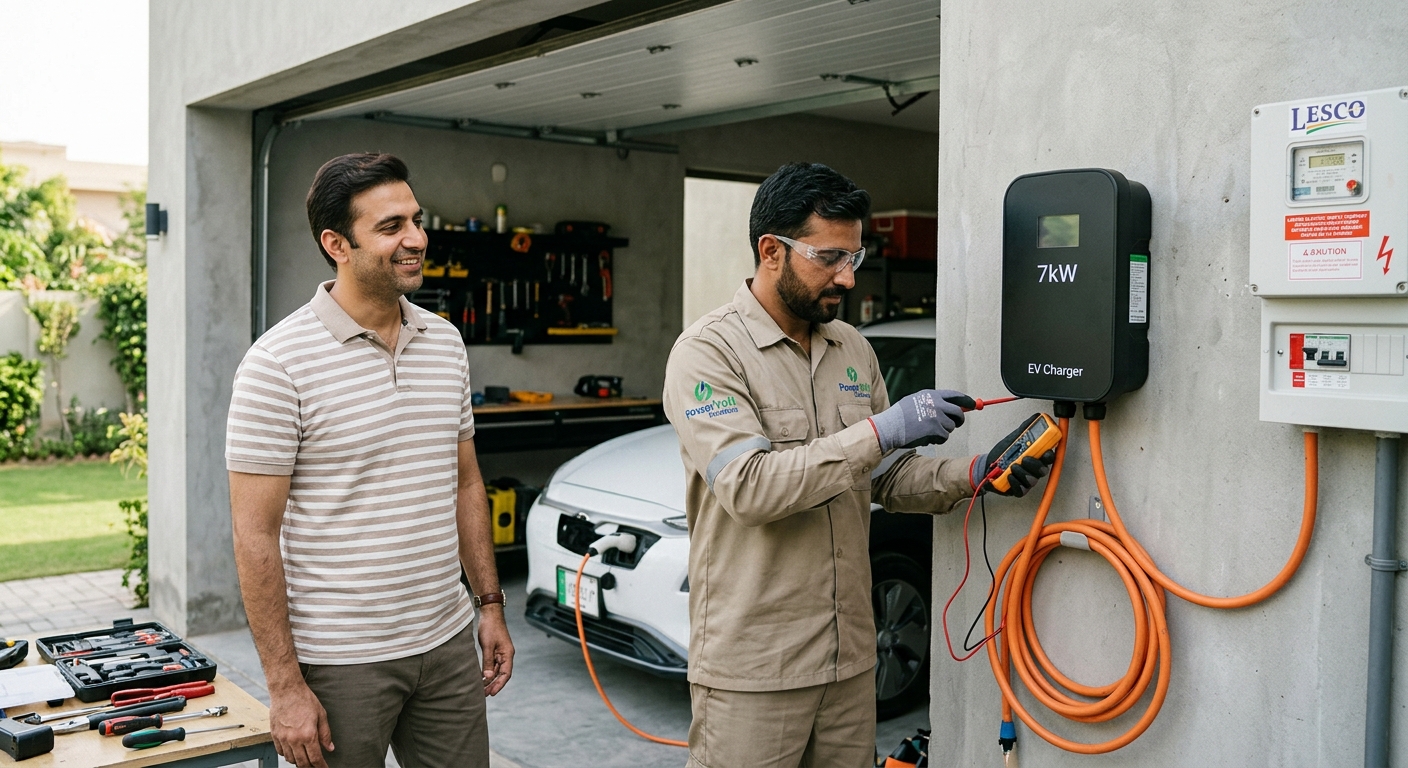
Transitioning to electric vehicle (EV) ownership brings a shift in how you fuel your vehicle, moving away from public gas stations toward the convenience of residential refueling. For many new EV owners, a 7kW charger represents the sweet spot of residential charging technology. To answer directly: Yes, you can install a 7kW EV charger at home in Lahore, Pakistan, provided your property has off-street parking (like a garage, carport, or private driveway) and sufficient electrical capacity.
A 7kW Level 2 home charger transforms your residential parking space into a private fueling hub, capable of replenishing a standard electric car overnight while you sleep. However, installing such a high-draw electrical appliance requires careful planning, understanding of local utility grids, coordination with certified electricians, and compliance with residential safety standards.
Here is an extensive, 2000-word comprehensive guide detailing everything you need to know about installing a 7kW EV charger at your home, including electrical requirements, cost considerations, structural prerequisites, and long-term efficiency benefits.
1. Understanding 7kW Charging: What It Means for Your EV
Before diving into installation logistics, it helps to understand what a 7kW (kilowatt) charging unit actually delivers in daily practice:
-
The Power Output: A standard single-phase 7kW charger operates on 230V to 240V AC power, drawing approximately 32 amps of continuous current.
-
Charging Speeds: Compared to a standard 3-pin domestic socket (which trickles power at roughly 2.3kW and adds only 6 to 8 miles of range per hour), a 7kW charger pumps out roughly 20 to 30 miles of range per hour.
-
Overnight Turnaround: A typical battery-electric vehicle (BEV) with a 60 kWh to 75 kWh battery pack can be charged from empty to 100% in roughly 7 to 10 hours, fitting comfortably within a standard overnight window.
To explore how residential equipment compares to public infrastructure, read more about various charging types.
2. Property Prerequisites: Off-Street Parking & Space
Physical location is the first major hurdle when planning a home EV charger installation:
-
Dedicated Off-Street Parking: You must have a secure, private area to park your vehicle where the charging cable can reach without crossing public walkways or creating tripping hazards. This includes enclosed garages, private carports, or dedicated open-air driveways.
-
Weatherproofing and Durability: If your charger is mounted outdoors on an exterior wall or open carport, it must carry a high Ingress Protection (IP) rating (typically IP55 or higher) to withstand dust, heavy monsoon rains, and temperature fluctuations.
To evaluate how smart scheduling and energy management can protect your home circuit during peak hours, check out our guide on smart home EV solutions.
3. Electrical Infrastructure and Home Capacity
Drawing 32 amps of continuous electrical current for hours on end puts a heavy load on a domestic distribution board. You must evaluate your home’s electrical capacity before purchasing hardware:
-
Dedicated Circuit Breaker: A 7kW charger cannot be plugged into an existing wall outlet. It requires a dedicated circuit running directly from your main electrical panel, protected by a dedicated circuit breaker (typically rated at 40 amps to account for continuous load safety factors).
-
Wiring and Gauge Thickness: Electricians must run heavy-gauge copper wiring (such as 6 AWG or equivalent metric sizing) from your distribution board to the charger location to prevent voltage drop and excessive heat buildup.
-
Main Breaker Load Calculation: In many urban residential properties, total household load (running air conditioners, water heaters, and kitchen appliances simultaneously) can approach the limit of the incoming utility meter. An electrician must perform a load calculation to ensure your home can handle the additional 32-amp draw without tripping the main breaker.
4. Local Utility Considerations and Metering in Lahore
Installing high-draw appliances in regions with complex power grids requires navigating local utility frameworks:
-
Sanctioned Load and Meter Limits: Local power distribution companies monitor sanctioned electrical loads. If your home’s sanctioned load is too low, operating a 7kW charger alongside heavy household appliances may require applying for a load enhancement with your utility provider.
-
Time-of-Use (TOU) and Solar Integration: Many homeowners leverage residential solar panel systems (PV arrays) paired with hybrid inverters to offset EV charging costs. Charging your vehicle during peak daytime solar production or during off-peak night hours drastically reduces monthly electricity bills.
For comprehensive insights on EV infrastructure planning, charging safety standards, and advisory services, visit us at EV Charger Advisor.
5. Professional Installation vs. DIY: Safety First
Never attempt to install a 7kW EV charger yourself. Electrical work at this scale involves high voltage and continuous thermal loads:
-
Certified Electricians: Hire a licensed professional who understands local electrical codes, proper grounding techniques, and surge protection device (SPD) installation to protect your vehicle’s sensitive onboard electronics from power surges.
-
Safety Protections: A professional installation will include proper Residual Current Device (RCD) protection to prevent electric shocks and ground faults, ensuring maximum safety for your family and home.
Summary: Is a 7kW Charger Right for You?
-
A 7kW home charger is the gold standard for full EV owners, offering fast, convenient overnight charging.
-
Always verify your home’s electrical capacity and hire a certified professional to handle the dedicated circuit installation.

















Leave a Reply