
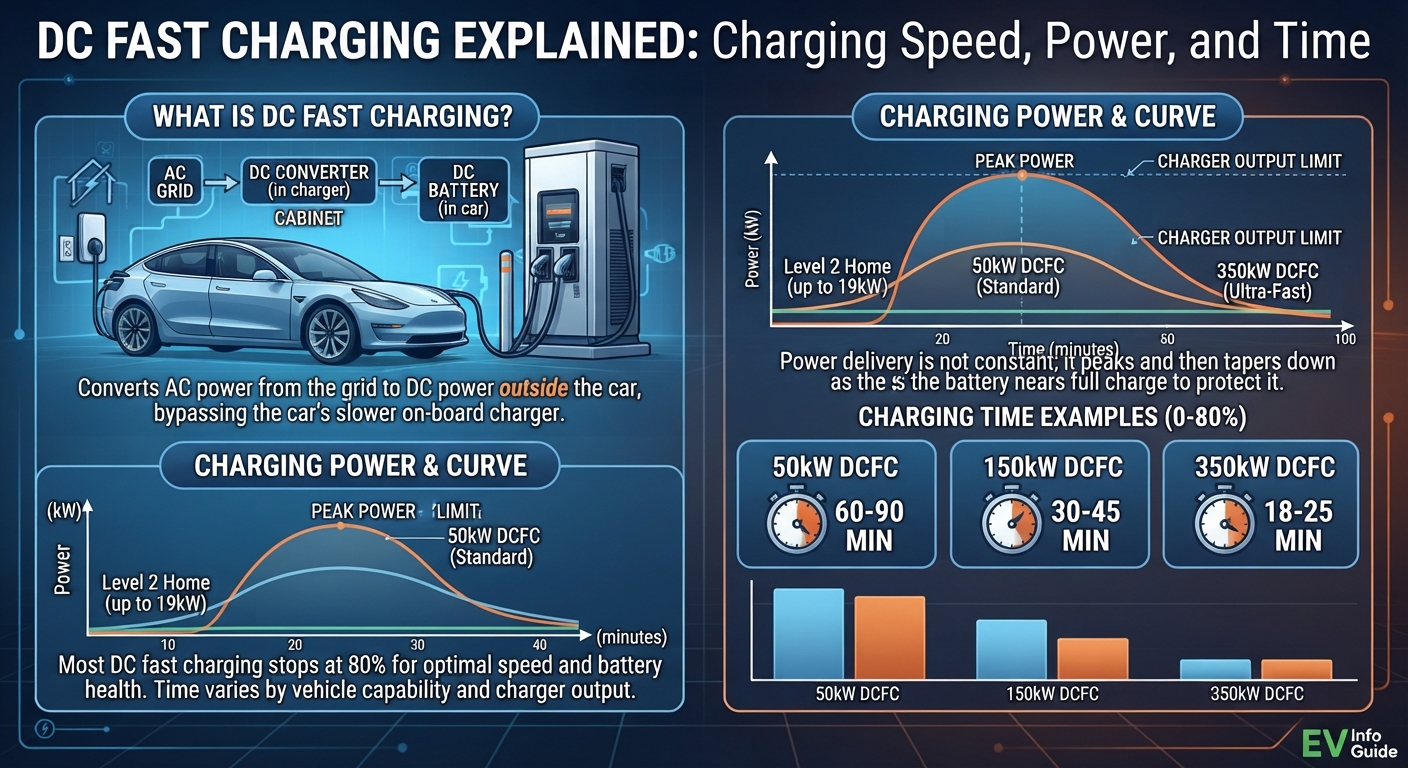
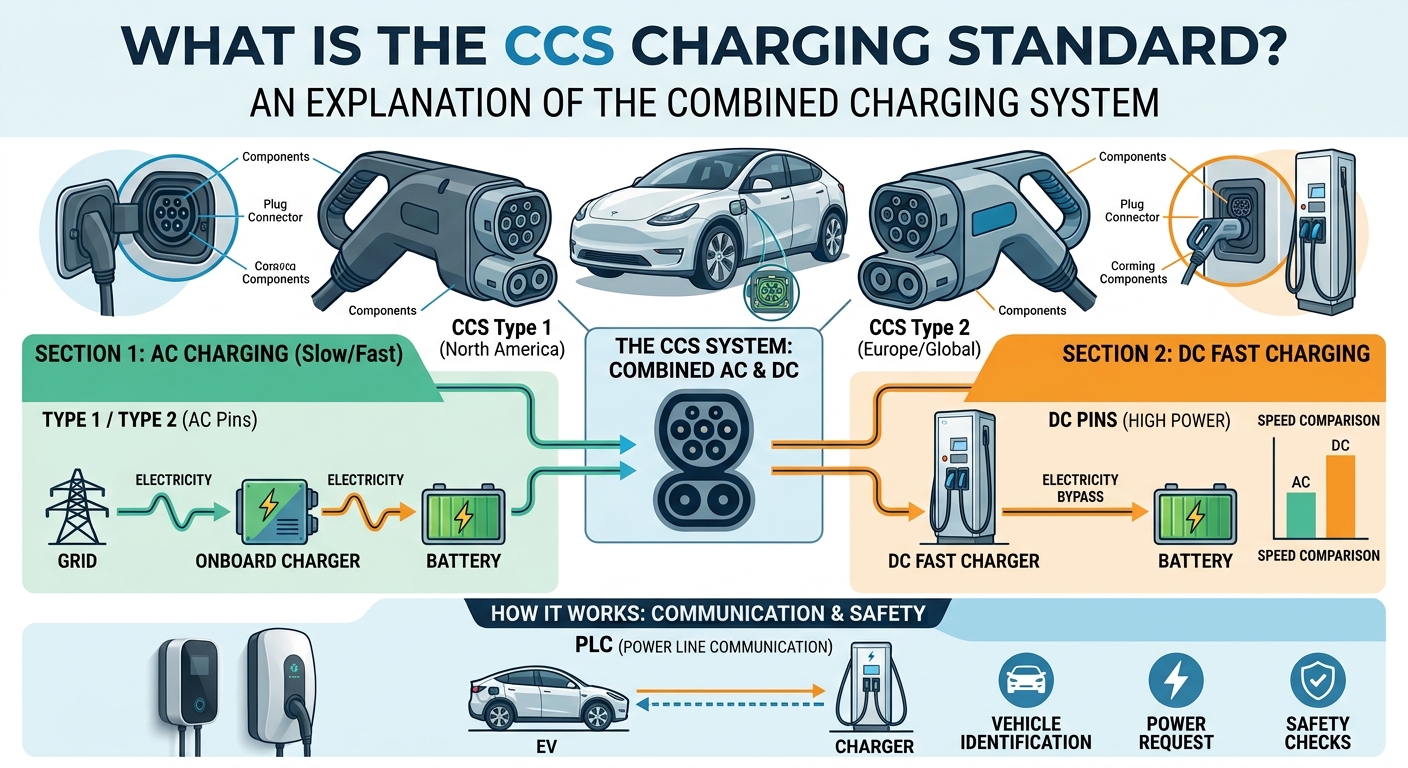
When transitioning to an electric vehicle, understanding how public infrastructure delivers energy is essential for seamless travel. To answer directly: DC fast charging delivers direct current (DC) electricity straight to an electric vehicle’s battery, bypassing the car’s slower onboard AC-to-DC converter.
Unlike residential garage plugs that require hours of slow trickle-charging, direct current (DC) fast charging stations act as industrial powerhouses, pumping high-voltage electricity directly into the battery pack to drastically reduce downtime.
how DC fast charging works, why its speed is unmatched, and what you need to know about power outputs and charging times.
1. The Core Mechanism: How DC Fast Charging Works
To understand why public rapid chargers are so efficient, you have to look at how electricity enters a vehicle:
-
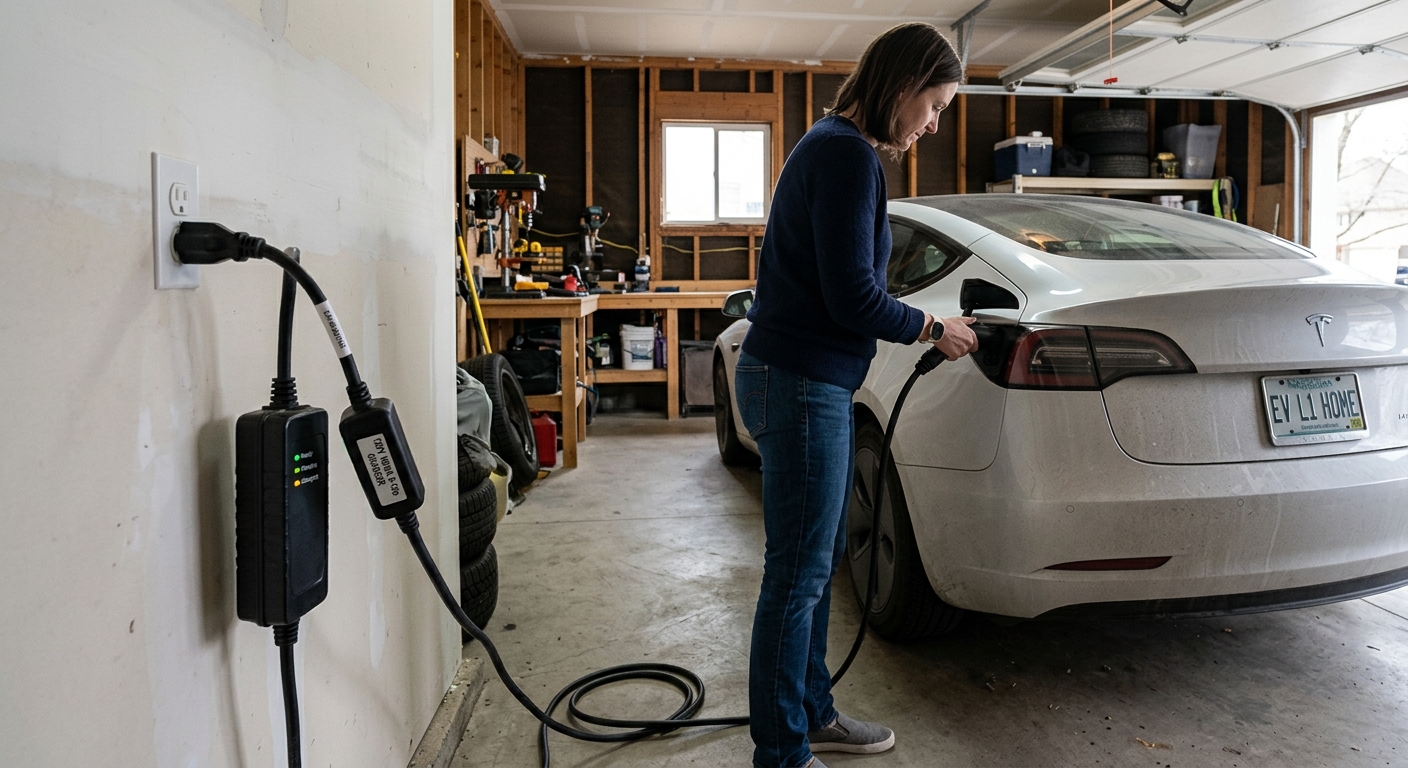
The AC Limitation: The standard electrical grid and residential outlets supply alternating current (AC) power. However, an EV’s lithium-ion battery pack can only store direct current (DC) power. When using slow home equipment, electricity must pass through the vehicle’s internal onboard charger (OBC) to convert AC to DC. This internal component is physically limited in size, restricting power intake.
-
The DC Fast Charging Solution: Public DC fast chargers house massive, heavy-duty power conversion hardware right inside the standalone cabinet. By converting AC to DC externally before the electricity even touches your car, the station pushes massive currents straight past your vehicle’s onboard limitations.
To compare how public infrastructure differs from residential setups, read more about various charging types.
2. Power Outputs: From 50 kW to 350 kW and Beyond
The speed and efficiency of a DC fast-charging session depend heavily on the kilowatt (kW) rating of the station:
-
Standard 50 kW Chargers: Representing the earlier generation of highway and urban fast chargers, these stalls typically replenish a standard battery pack from 10% to 80% in about 50 to 60 minutes.
-
Ultra-Fast 150 kW to 350 kW Stalls: The modern standard for highway corridors. These high-power systems utilize advanced liquid-cooled cables to deliver hundreds of miles of range in roughly 20 to 30 minutes, provided the vehicle’s electrical architecture supports high-voltage charging.
To explore how advanced energy management and household smart systems coordinate power loads, check out our guide on smart home EV solutions.
3. Understanding Charging Time and the 80% Rule
Even with ultra-powerful hardware, charging times are governed by battery chemistry and thermal physics:
-
The 10% to 80% Window: Most modern EVs can rapidly absorb power during the initial stages of a charging session. However, once the battery hits roughly 80% capacity, the vehicle’s management system automatically throttles incoming current to prevent overheating and protect cell longevity. Pushing from 80% to 100% can often take as long as the first 80%.
-
Environmental Factors: Extreme cold or hot weather can temporarily impact charging speeds as the car’s thermal management system works to protect the battery pack before ramping up power intake.
For comprehensive insights on EV infrastructure planning, battery safety, and expert advice, visit EV Charger Advisor.
Summary: Mastering DC Fast Charging
-
Bypass the Bottleneck: DC fast charging bypasses your car’s internal inverter to send high-voltage energy straight to the cells.
-
Plan for Efficiency: Utilize DC fast charging primarily for long-distance road trips, aiming to unplug around the 80% mark to maximize travel time.





Leave a Reply