
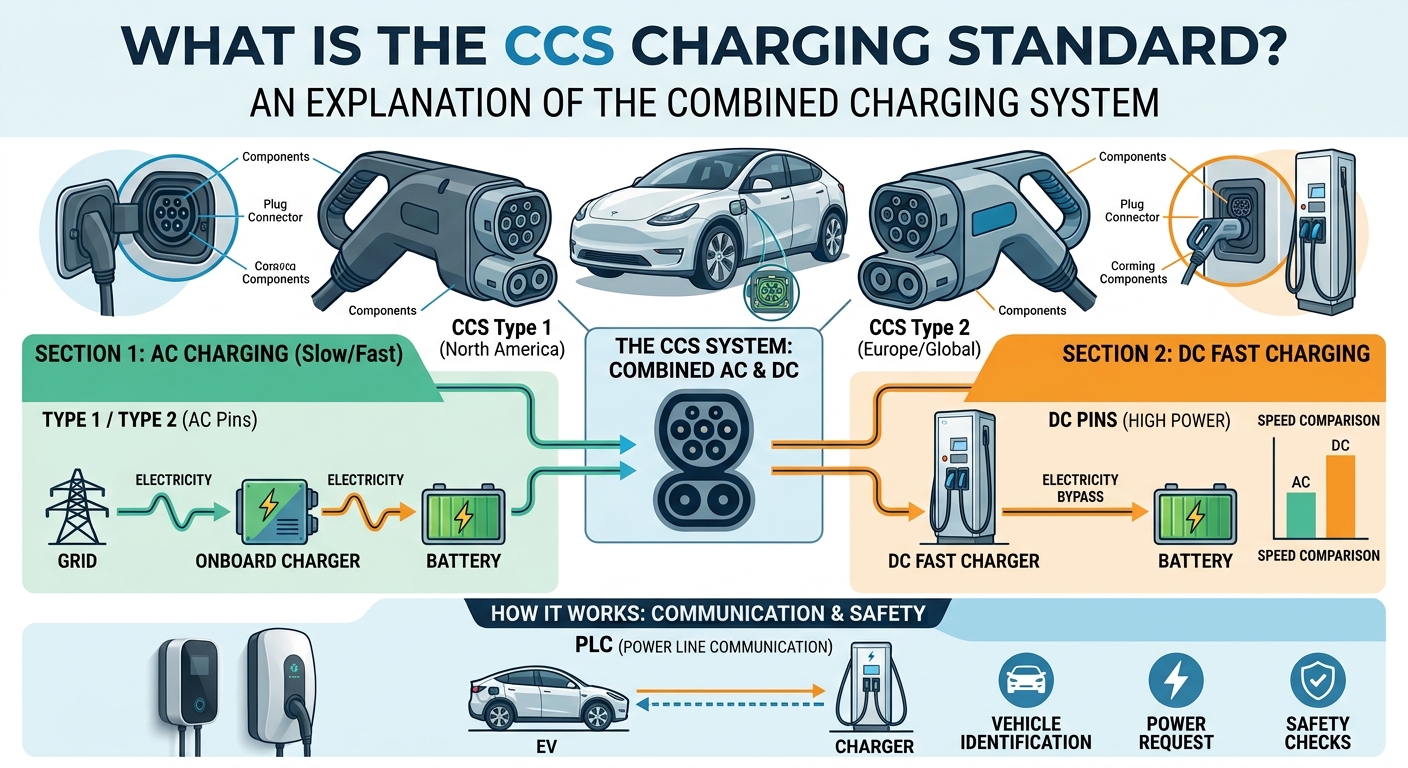
Unlike residential AC Level 1 or Level 2 chargers that output alternating current (AC) at 120V to 240V, Direct Current Fast Chargers (DCFC) bypass a vehicle’s onboard converter to deliver high-voltage direct current (DC) directly into the traction battery pack. Operating across variable high-voltage ranges, DC fast chargers supply anywhere from 50 kW to 350 kW+ of power, enabling electric vehicles (EVs) to recover up to 80% state of charge in 15 to 30 minutes.
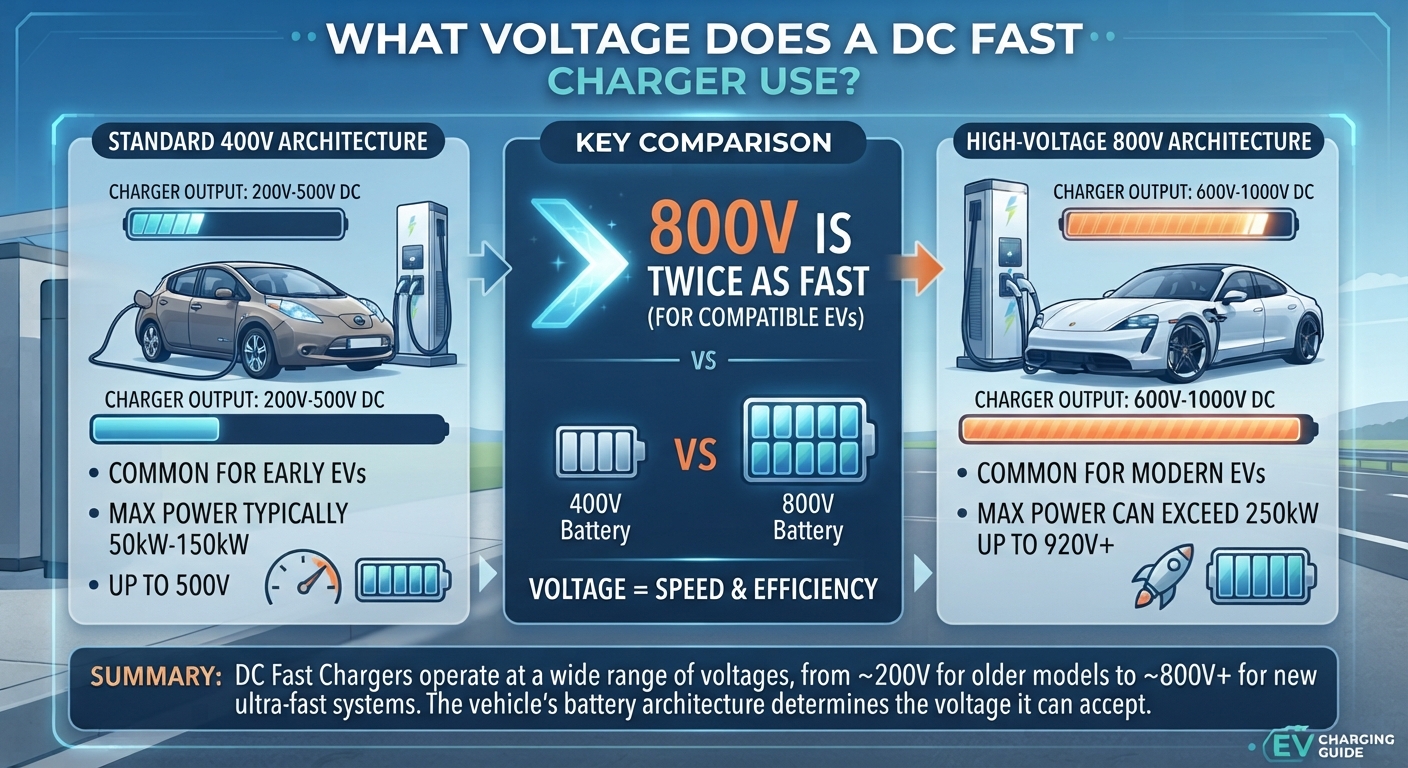
A standard DC fast charger operates across an output voltage range between 200 Volts DC and 1,000 Volts DC. Modern commercial hardware aligns with two primary vehicle voltage platforms: standard 400V-class architectures (operating between 250V and 500V DC) and advanced 800V-to-900V-class architectures (operating between 600V and 1,000V DC).
Under National Electrical Code (NEC Article 625) and IEC 61851 / ISO 15118 standards, understanding DC fast charger supply requirements, dynamic voltage handshake protocols, and utility step-down transformers is essential for commercial fleet operators and infrastructure planners.
For complete hardware reviews, installer guides, and panel load calculators, visit EV Charger Advisor.
1. Voltage Categories Across EV Architectures
DC fast charging stations do not supply a static, fixed voltage. Instead, the charger dynamically adjusts its DC output voltage to match the real-time battery pack voltage requested by the vehicle’s Battery Management System (BMS):
A. 400V Battery Architecture (Standard EVs)
-
Operational Voltage Range: 250V to 500V DC
-
Vehicle Examples: Tesla Model 3 / Model Y, Nissan LEAF, Chevrolet Bolt EV, Ford Mustang Mach-E.
-
Charging Performance: Typically accepts maximum power outputs between 50 kW and 250 kW depending on peak amperage caps (typically capped at 500 Amps continuous with liquid-cooled cables).
B. 800V to 900V Battery Architecture (High-Speed & Premium EVs)
-
Operational Voltage Range: 600V to 1,000V DC
-
Vehicle Examples: Porsche Taycan, Hyundai IONIQ 5 / IONIQ 6, Kia EV6 / EV9, Audi e-tron GT, Lucid Air (900V-class).
-
Charging Performance: Enables ultra-fast charging up to 320 kW–350 kW. Doubling the operating voltage reduces current (amperage) draw by 50% for the same power transfer, reducing thermal heat losses in cables and allowing 10% to 80% charging in under 18 minutes.
C. Heavy-Duty Megawatt Systems (MCS Standard)
-
Operational Voltage Range: Up to 1,200V to 1,500V DC
-
Commercial Applications: Next-generation heavy-duty commercial trucks, electric buses, and depot fleets using Megawatt Charging Systems (MCS) capable of delivering over 1.2 MW to 3.75 MW.
To learn more about how charger power levels and wire sizes compare, check out our guide on EV charging types.
2. Grid Supply Input vs. Charger DC Output
A common point of confusion is the distinction between a commercial station’s grid input voltage and its vehicle DC output voltage:
DC FAST CHARGER VOLTAGE TRANSFORMATION:
[Utility Power Grid] ──► [3-Phase AC Input Supply] ──► [Rectifier & Power Modules] ──► [Dynamic DC Output to EV]
(11kV / 400V-480V Grid)    (480V AC in US / 400V AC Europe/PK)   (Converts AC to DC Voltage)   (200V – 1000V DC Variable)
-
Grid AC Input (Supply Side): DC fast chargers do not run on single-phase household power. Commercial DCFC cabinets connect to three-phase AC utility supplies, operating at 480V AC (in North America) or 400V AC (in Europe, Pakistan, and Asia), often requiring dedicated step-down utility transformers.
-
Internal Power Conversion: Heavy-duty internal AC-to-DC rectifiers transform three-phase AC utility voltage into smooth, regulated high-voltage DC power.
-
Variable DC Output (Vehicle Side): The station’s control unit communicates with the vehicle using ISO 15118 or DIN 70121 PLC protocols, locking onto the exact battery pack voltage before closing contactors and delivering power.
To explore Wi-Fi-enabled smart wallboxes engineered with integrated load management features, read our guide on smart chargers.
3. Connector Standards & Maximum Voltage Ratings
All major commercial fast-charging plug standards support up to 1,000V DC operation:
-
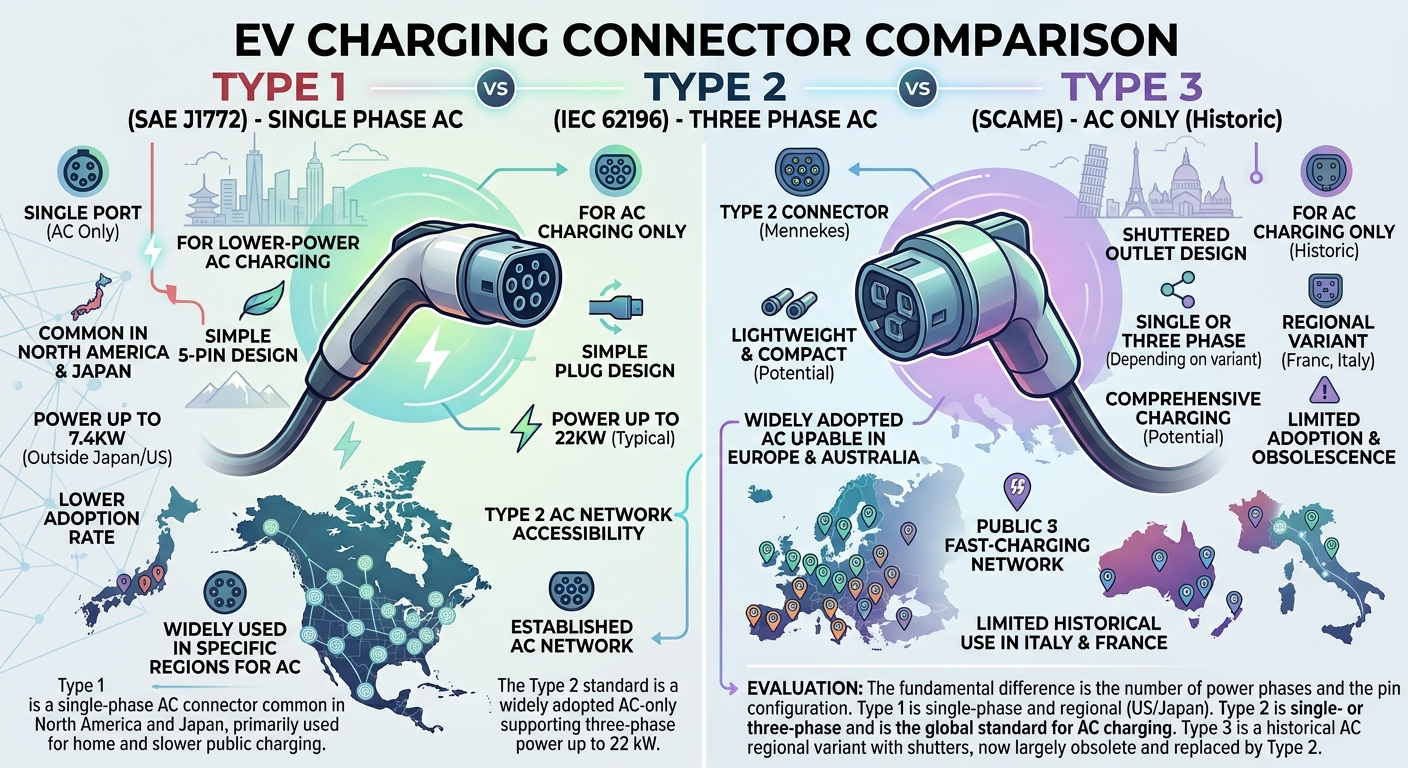
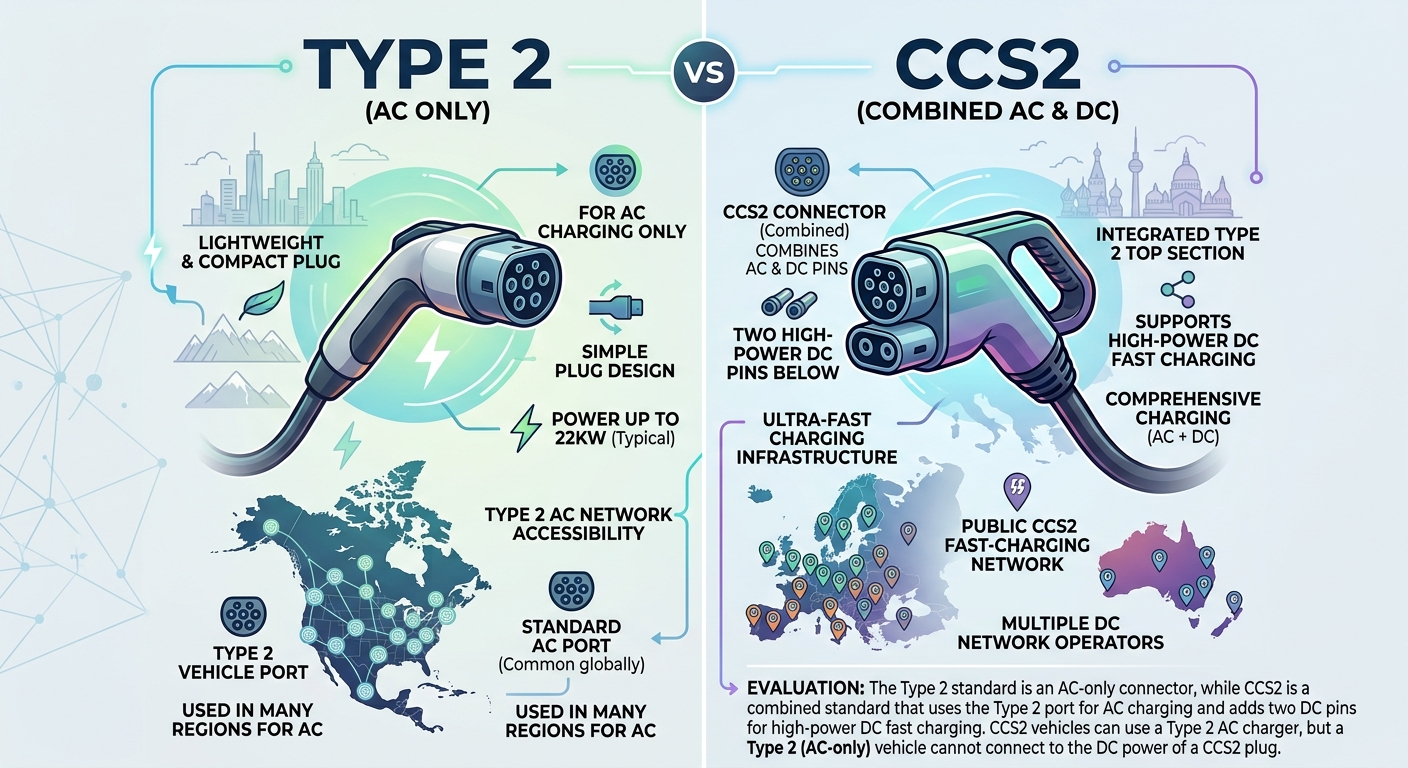
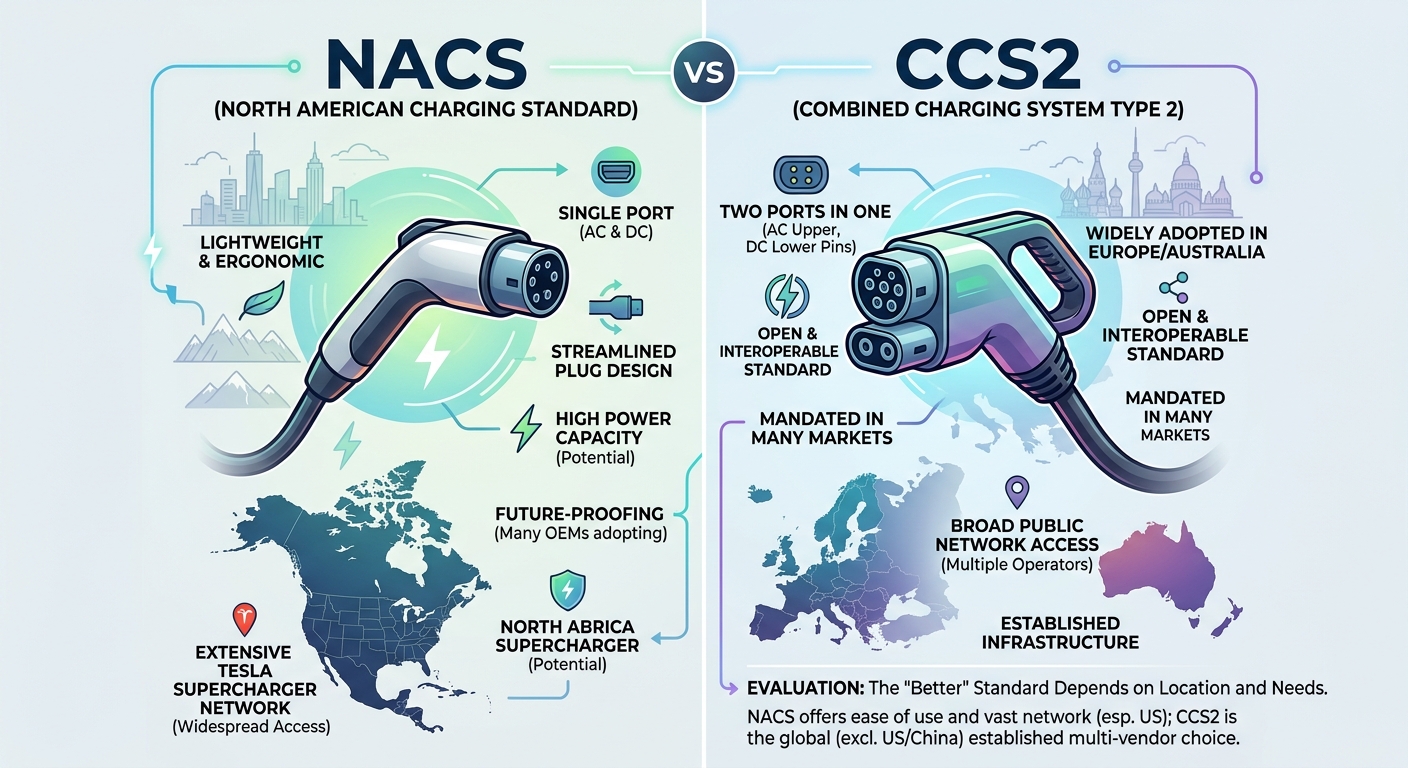
CCS (Combined Charging System – CCS1 / CCS2): Rated for up to 1,000V DC at up to 500A (with liquid-cooled cabling).
-
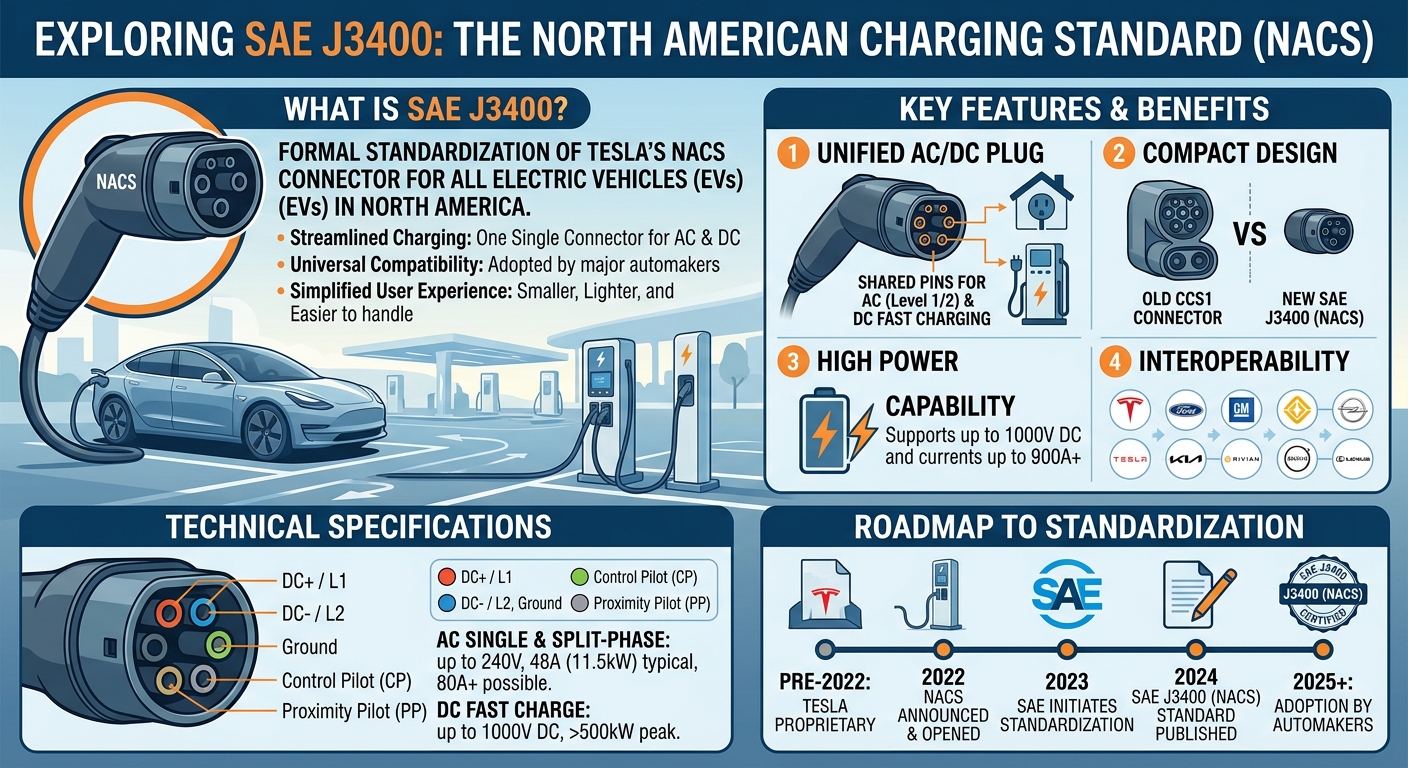
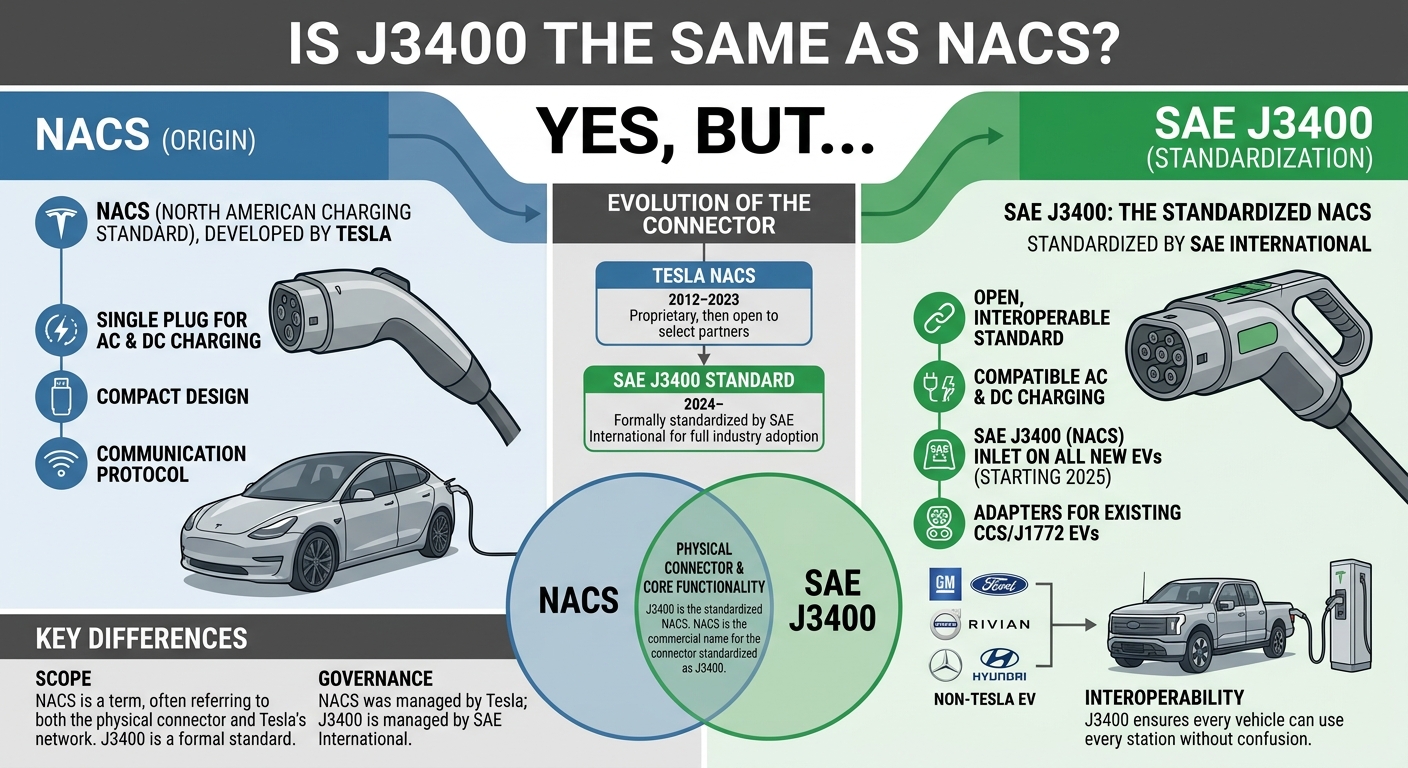
NACS (North American Charging Standard / SAE J3400): Standardized for up to 1,000V DC at up to 650A continuous.
-
CHAdeMO (CHAdeMO 2.0 / 3.0 ChaoJi): Legacy systems ran at 500V DC (125A–400A), while updated CHAdeMO 3.0 / ChaoJi standards support up to 1,000V to 1,500V DC.
Comparison Table: DC Fast Charger Voltage Overview
| Fast Charger Class | Max Output Power | DC Output Voltage Range | Input Grid Requirement | Typical Charge Time (10–80%) |
| Standard Commercial DC | 50 kW – 100 kW | 200V – 500V DC | 400V / 480V 3-Phase AC | 45 – 60 Minutes |
| High-Power Fast Charger | 150 kW – 250 kW | 250V – 920V DC | 400V / 480V 3-Phase AC | 20 – 30 Minutes |
| Ultra-Fast 800V Charger | 320 kW – 350 kW+ | 200V – 1,000V DC | 400V / 480V 3-Phase AC | 12 – 18 Minutes |
| Megawatt Charging (MCS) | 1,000 kW – 3,750 kW | Up to 1,200V – 1,500V DC | Medium-Voltage Utility Grid | Under 30 Mins (Trucks) |
Summary & Key Takeaways
-
Dynamic Voltage Output: DC fast chargers operate within a 200V to 1,000V DC range, dynamically adjusting output voltage to match the EV battery’s real-time state of charge.
-
400V vs. 800V Platforms: Standard EVs run on ~400V systems, whereas high-performance EVs operate on ~800V architectures to accept higher charging speeds with lower thermal resistance.
-
Three-Phase Utility AC Input: Commercial stations require high-capacity 400V or 480V three-phase AC grid connections to power internal AC-to-DC rectifiers.
-
Universal Connector Compatibility: Modern CCS1/CCS2 and NACS (SAE J3400) connectors support up to 1,000V DC delivery.





Leave a Reply