
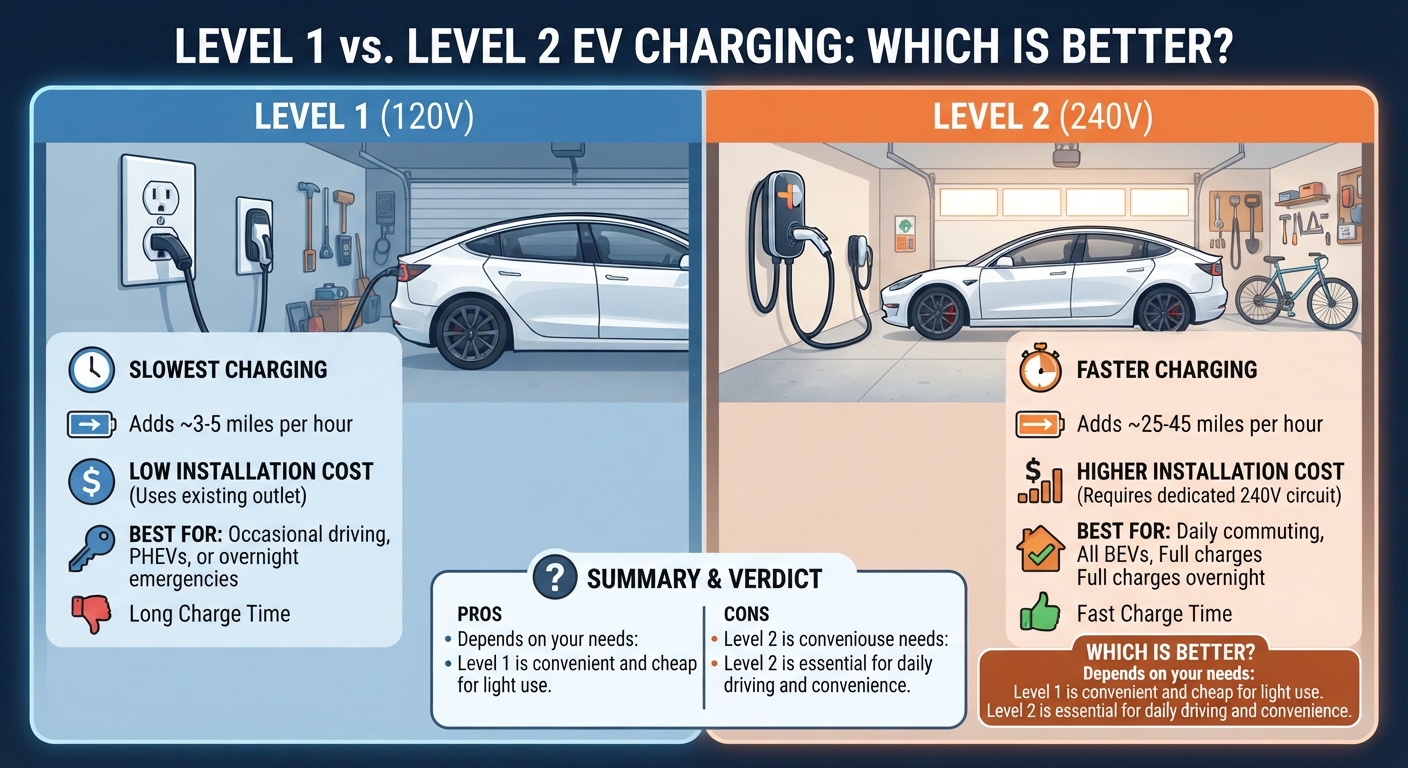
Transitioning to an electric vehicle (EV) is an exciting milestone, but one of the very first practical hurdles every new owner faces is setting up a reliable home charging routine. When researching options, you will inevitably encounter the two primary residential choices: Level 1 and Level 2 charging. To answer the core question directly: Neither charger is universally “better,” as the right choice depends entirely on your daily driving habits, budget, and home infrastructure. However, Level 2 charging is widely considered the superior option for full battery electric vehicles (BEVs) due to its drastically faster speeds and higher energy efficiency, while Level 1 charging is the most convenient and cost-effective entry point for plug-in hybrids (PHEVs) or short-distance commuters.
Navigating these options requires a clear understanding of how electricity delivery, hardware installation, and charging speeds impact your day-to-day routine. Let’s dive deep into a comprehensive comparison.
1. Understanding Level 1 Charging (The 120V Standard)
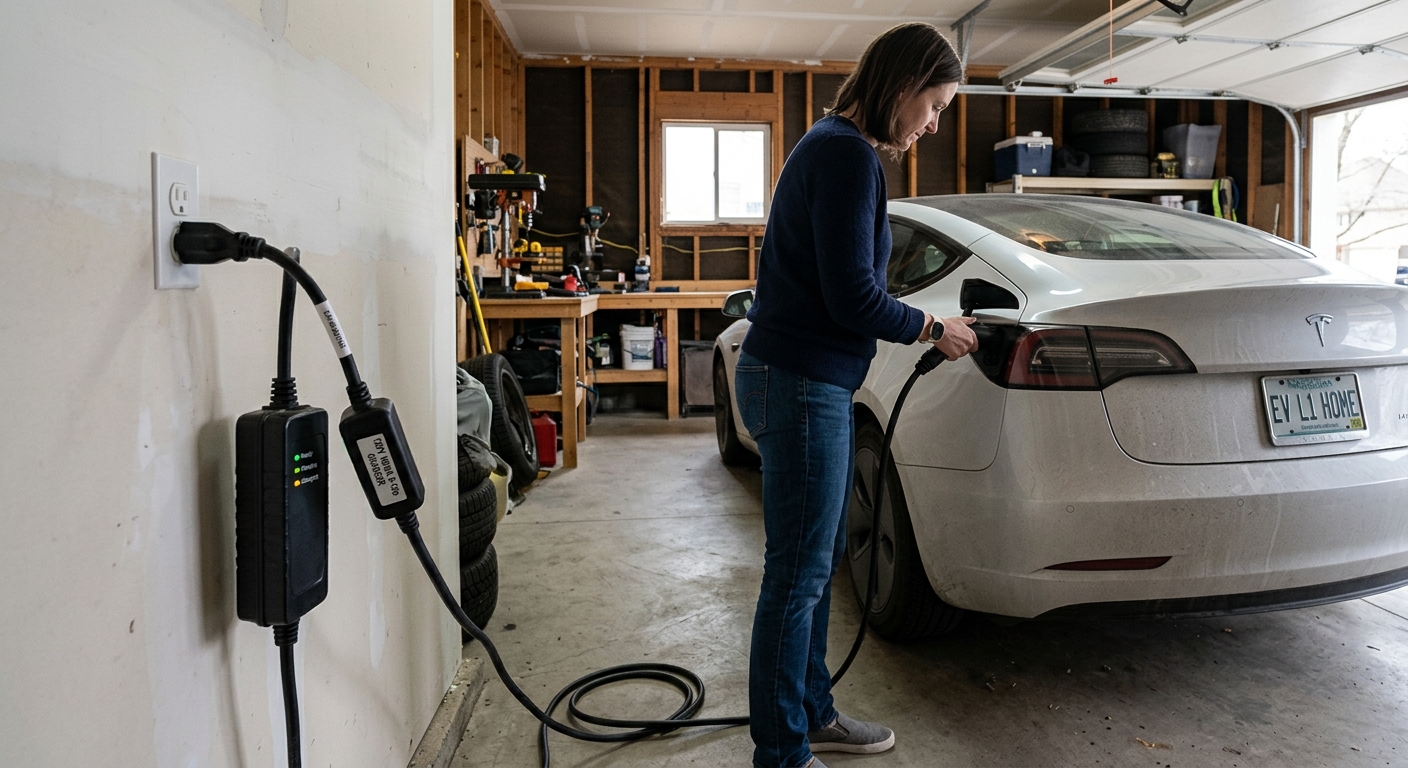
Level 1 charging is the simplest and most accessible way to replenish an electric vehicle’s battery. It utilizes a standard, everyday three-prong 120-volt household outlet—the exact same plug you use for lamps, smartphones, and laptops.
-
How It Works: Level 1 equipment typically comes included with your electric vehicle at no extra purchase cost (often called the “occasional use” or trickle charger). You simply plug it into any standard wall socket and connect it to your car.
-
Charging Speed & Output: It delivers between 1.2 kW to 1.9 kW of power, translating to roughly 2 to 5 miles of driving range per hour of charge.
-
Who It Suits Best: It is ideal for drivers with short daily commutes (under 30-40 miles round trip), owners of plug-in hybrid electric vehicles (PHEVs) with smaller battery packs, or apartment/renter setups where upgrading electrical infrastructure is impossible.
To explore how standard power outlets fit into baseline setups, review our overview of various charging types.
2. Understanding Level 2 Charging (The 240V Upgrade)
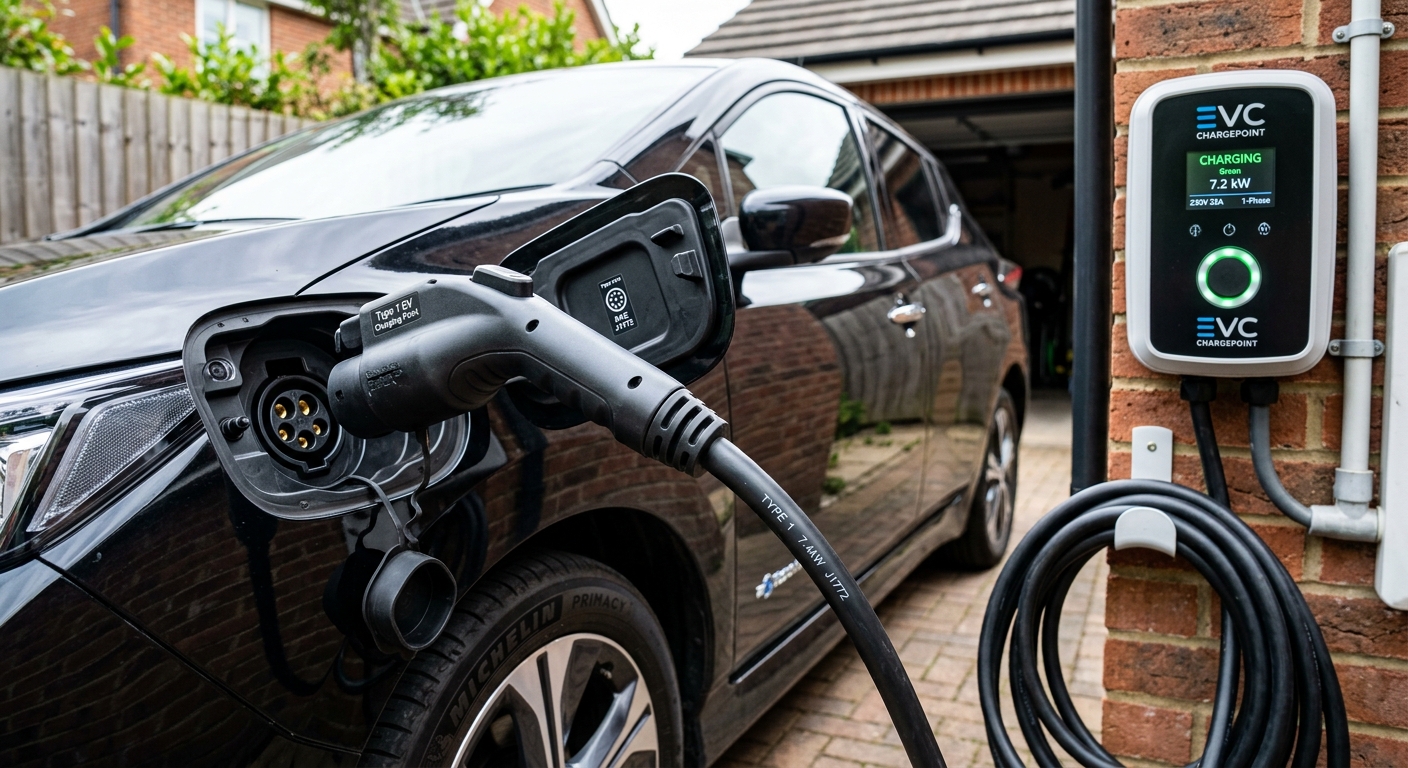
Level 2 charging acts as the residential gold standard for modern EV owners, mirroring the power delivery of large household appliances like electric clothes dryers or ovens.
-
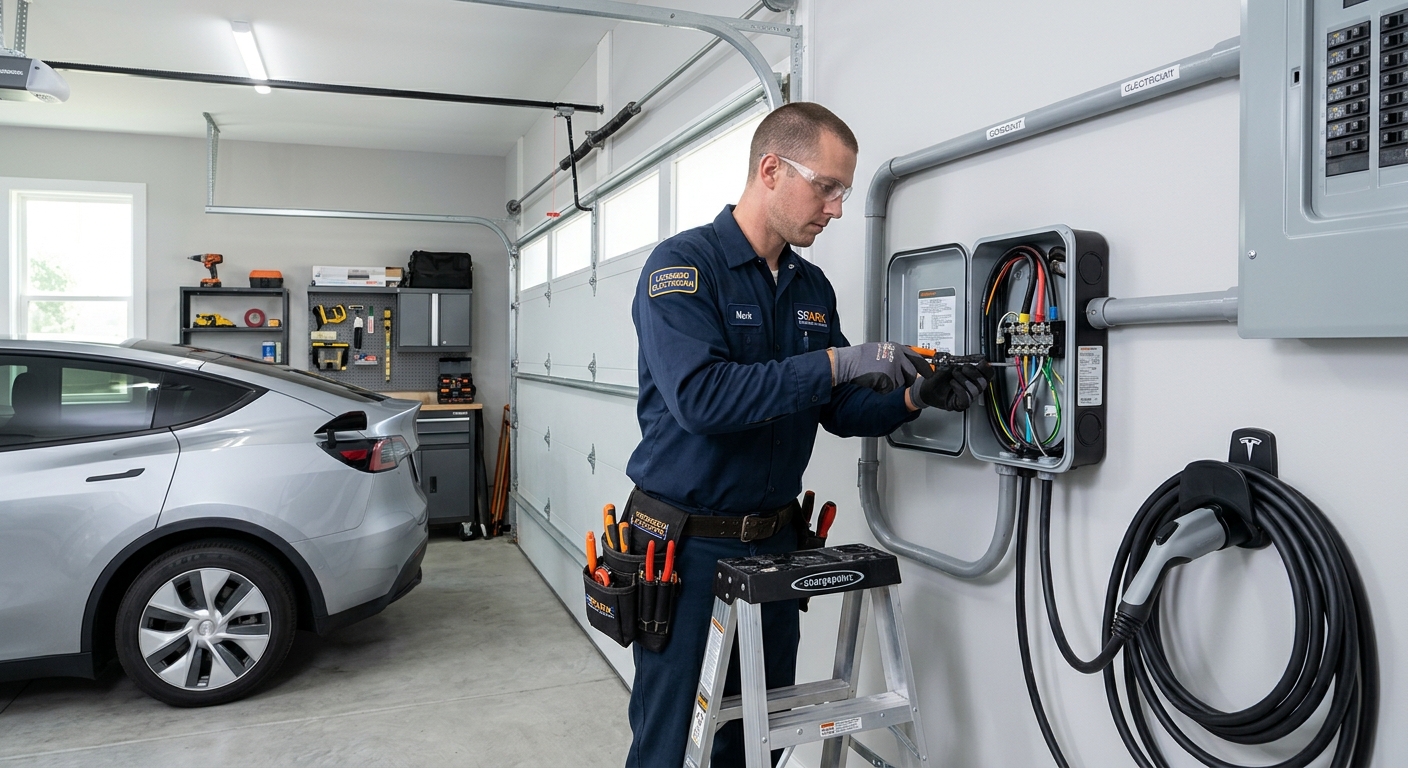
How It Works: It requires a dedicated 240-volt electrical circuit and a mounted wall unit (or plug-in unit) installed by a professional electrician.
-
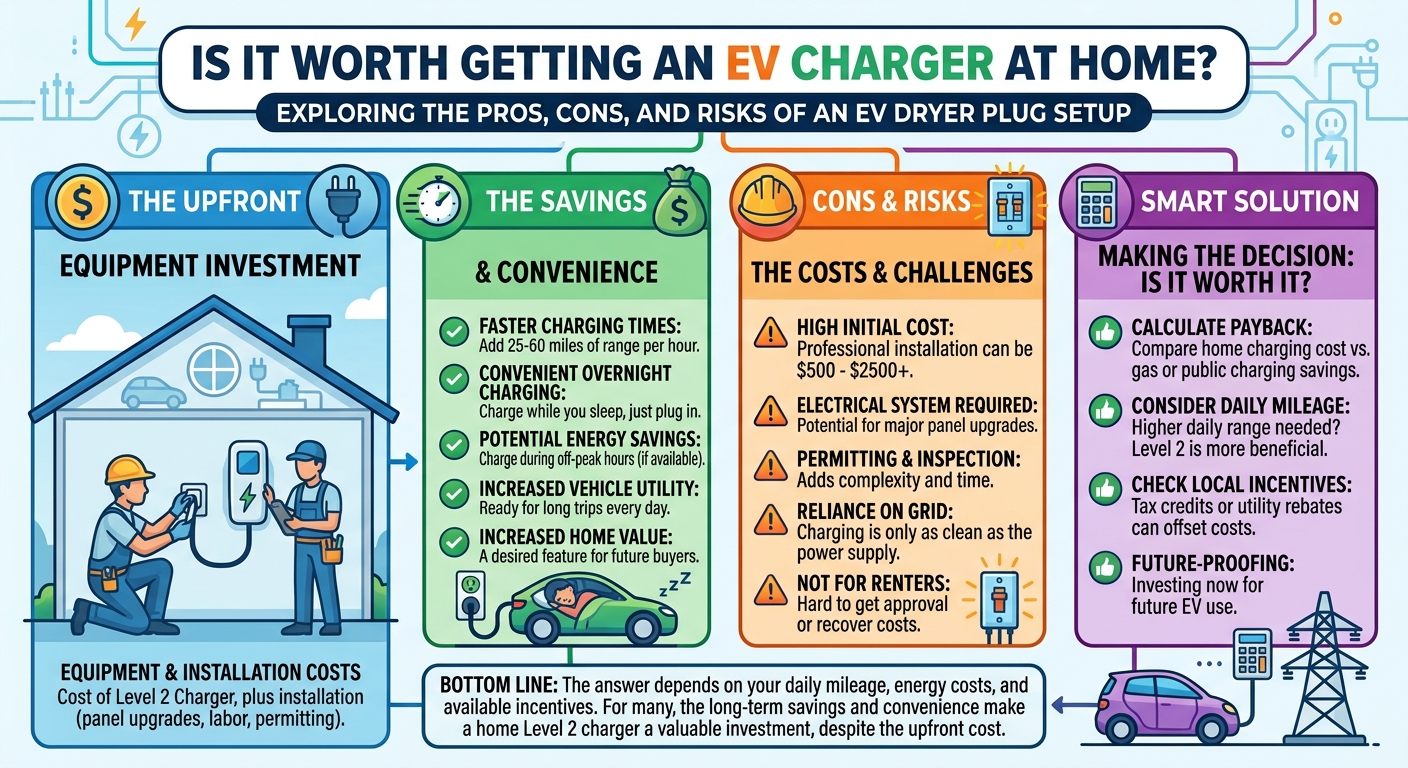
Charging Speed & Output: Ranging from 3.3 kW to 19.2 kW (with 7 kW to 9.6 kW being the most common residential sweet spot), Level 2 units pump 10 to 60+ miles of range per hour into your vehicle. This fills a completely depleted standard EV battery overnight (4 to 8 hours).
-
Who It Suits Best: Perfect for full battery-electric vehicle (BEV) owners, multi-EV households, long-distance commuters, and anyone who wants ultimate peace of mind and convenience.
3. Key Comparison Factors: Cost, Efficiency, and Installation
When weighing which system suits your household, you must evaluate three core pillars:
A. Upfront Financial Investment
-
Level 1: Costs $0 in installation fees. You use what is already in your garage.
-
Level 2: Requires purchasing external hardware ($400 to $1,200) plus professional electrical wiring, circuit breaker installation, and potentially a panel upgrade, bringing total costs anywhere from $500 to over $2,000.
B. Energy Efficiency and Power Loss
Because electric vehicle systems (onboard computers, coolant pumps, and battery thermal management) must remain active while charging, Level 1 takes an extremely long time to complete a session. This extended runtime results in higher energy conversion overhead losses (often 10% to 20% wasted as heat). Level 2 completes cycles much faster, achieving superior conversion efficiencies (90% to 95%+).
C. Smart Control and Time-of-Use Savings
Most utility providers offer cheap off-peak electricity rates during late-night hours. Because Level 2 fills your battery rapidly, you can easily schedule your vehicle to draw power exclusively during cheap windows. Managing these schedules efficiently is critical for cutting long-term utility bills, which you can learn more about via our insights on smart home EV solutions.
To evaluate your home’s total infrastructure needs and budget alignment, look through our core recommendations at EV Charger Advisor.
4. Pros and Cons Summary
Level 1 Charging
-
Pros: 100% free hardware setup, zero installation hassle, plugs into any existing wall socket.
-
Cons: Painfully slow speeds (40+ hours for a full charge), lower electrical efficiency, impractical for heavy daily drivers.
Level 2 Charging
-
Pros: Fast overnight charging, high energy efficiency, unlocks smart scheduling features, increases home resale value.
-
Cons: Expensive upfront hardware and professional installation costs, requires dedicated 240V home infrastructure.
Conclusion: Which One Should You Choose?
Ultimately, the choice boils down to your driving profile. If you drive fewer than 30 miles a day and own a plug-in hybrid, Level 1 will serve you just fine without costing a dime. However, if you own a full electric vehicle, commute long distances, or simply value convenience and time-saving efficiency, upgrading to Level 2 is hands down the better and more cost-effective long-term choice.





Leave a Reply