
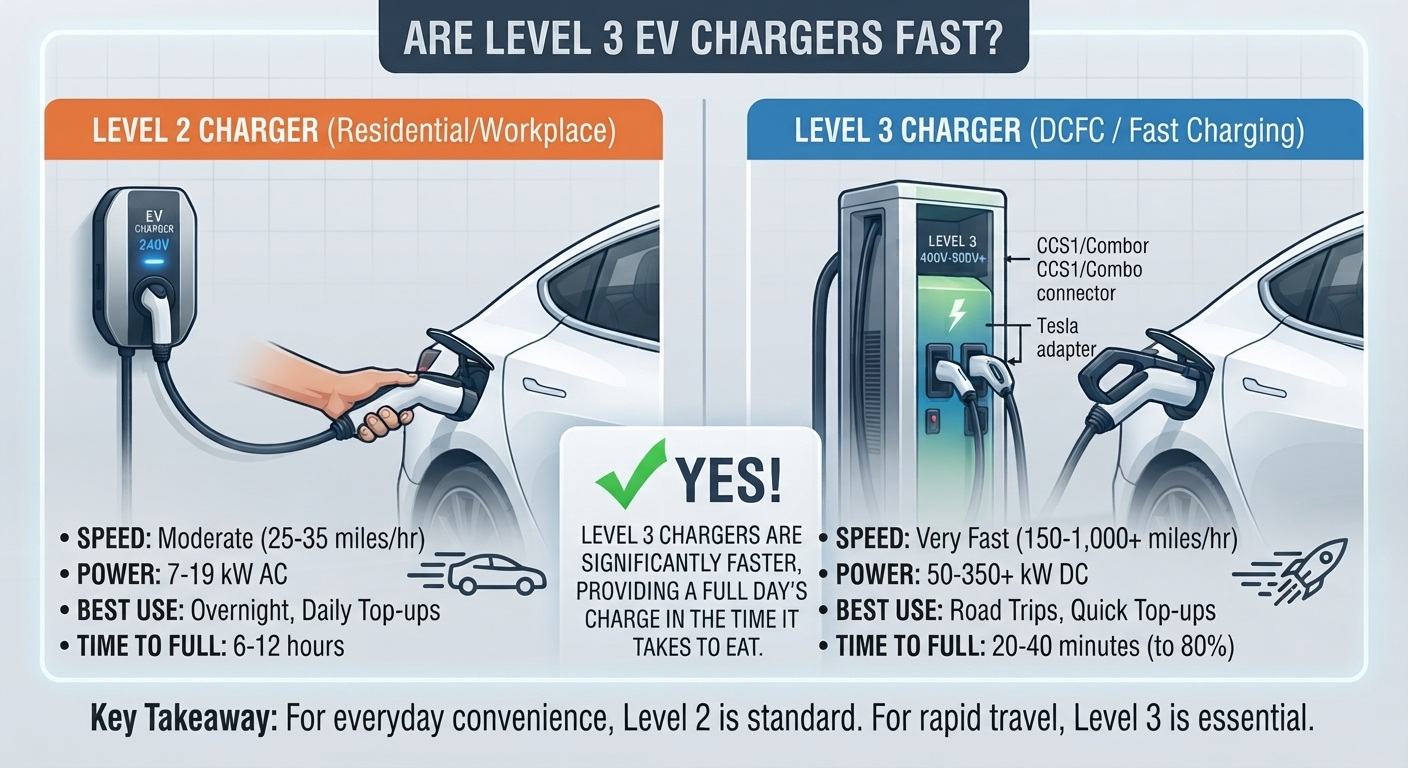
When electric vehicle owners talk about rapid refueling on long road trips, the conversation inevitably turns to ultra-high-speed infrastructure. To answer directly: Yes, Level 3 electric vehicle chargers, also known as DC Fast Charging (DCFC) stations, are very fast and can charge most electric cars from 10% to 80% in about 20 to 40 minutes.
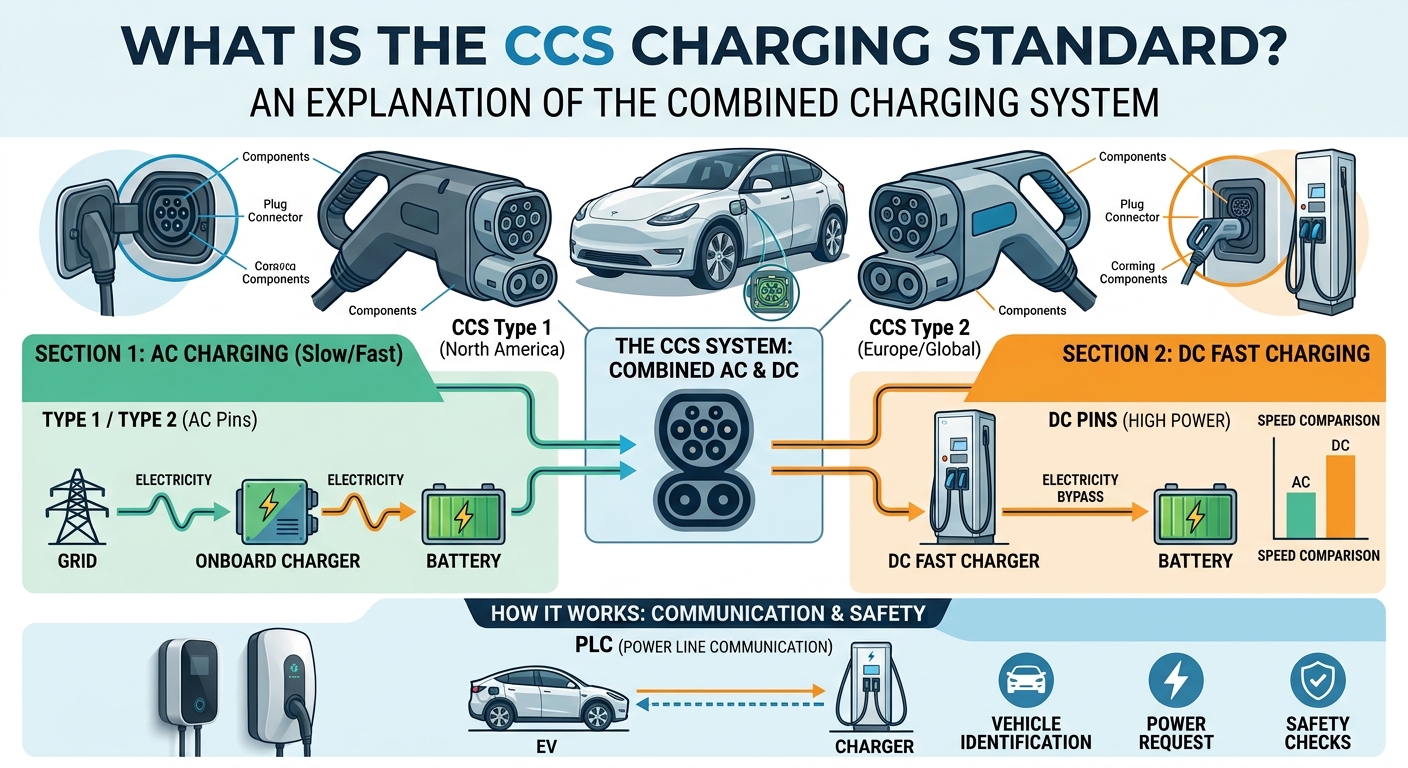
Unlike home systems that plug into standard residential circuits, Level 3 chargers bypass the vehicle’s onboard AC charger entirely, pumping high-voltage direct current (DC) straight into the battery pack. But how do they work, what makes them so rapid, and are there any drawbacks to using them frequently?
Here is everything you need to know about ultra-fast electric vehicle refueling.
1. How Level 3 (DC Fast Charging) Works
To understand why Level 3 stations operate at such high speeds, it helps to compare them with standard residential equipment. While standard setups convert alternating current (AC) from the grid into direct current (DC) using the car’s internal hardware, DC Fast Chargers carry out this heavy conversion externally inside a massive freestanding cabinet.
-
High Voltage and Amperage: Level 3 chargers typically operate on 400-volt to 800-volt (and higher) architectures, delivering power outputs ranging from 50 kW to over 350 kW.
-
Bypassing Limitations: Because the power conversion happens outside the vehicle, the energy flows straight into the battery cells at maximum velocity, skipping the bottleneck of the car’s onboard charger limits.
To review how these rapid systems differ from traditional residential setups, check out our detailed guide on various charging types.
2. The Speed Breakdown: What to Expect on the Road
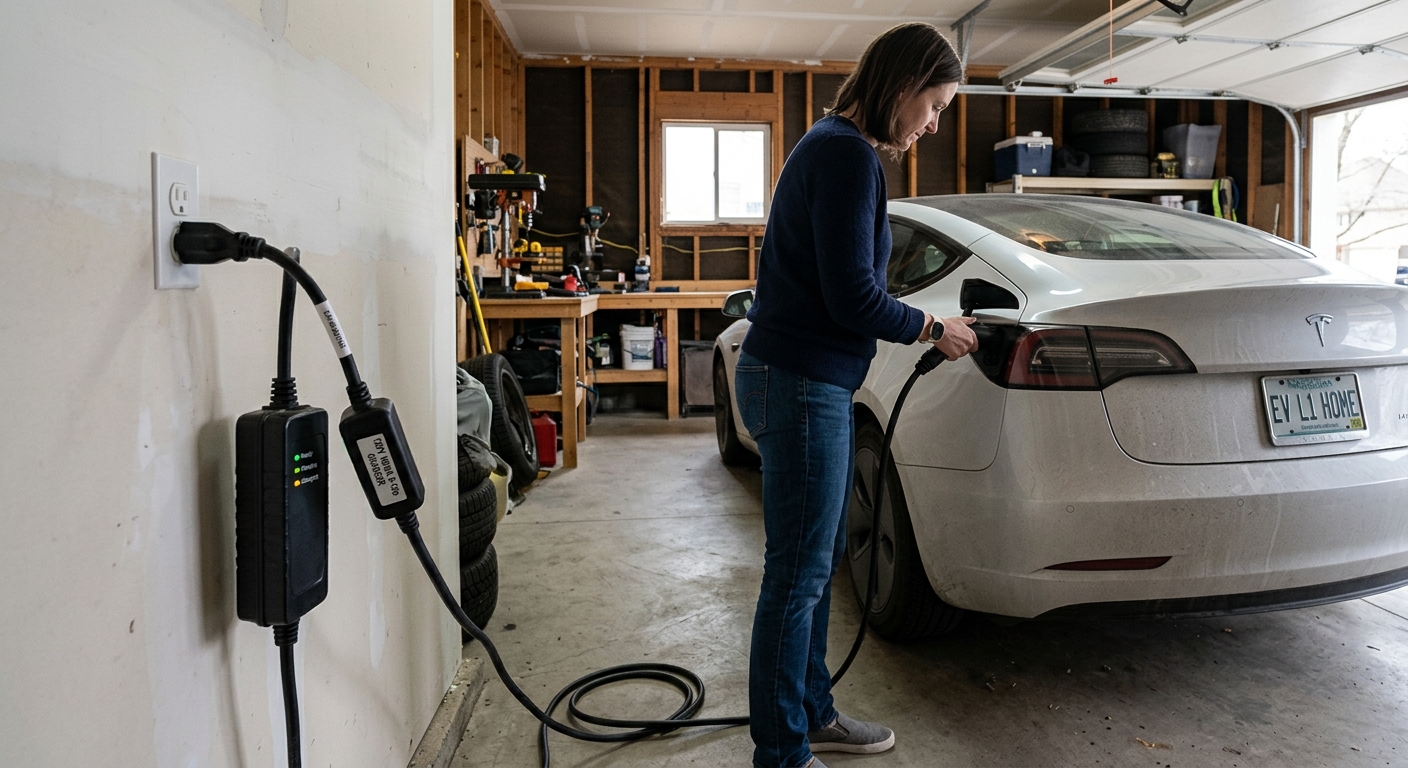
While home setups are designed for slow, convenient overnight top-ups, Level 3 stations are built for highway corridors and quick pit stops.
-
10% to 80% in Minutes: Most modern EVs connected to a 150 kW or 350 kW DC fast charger can replenish their battery levels from 10% to 80% in roughly 20 to 40 minutes.
-
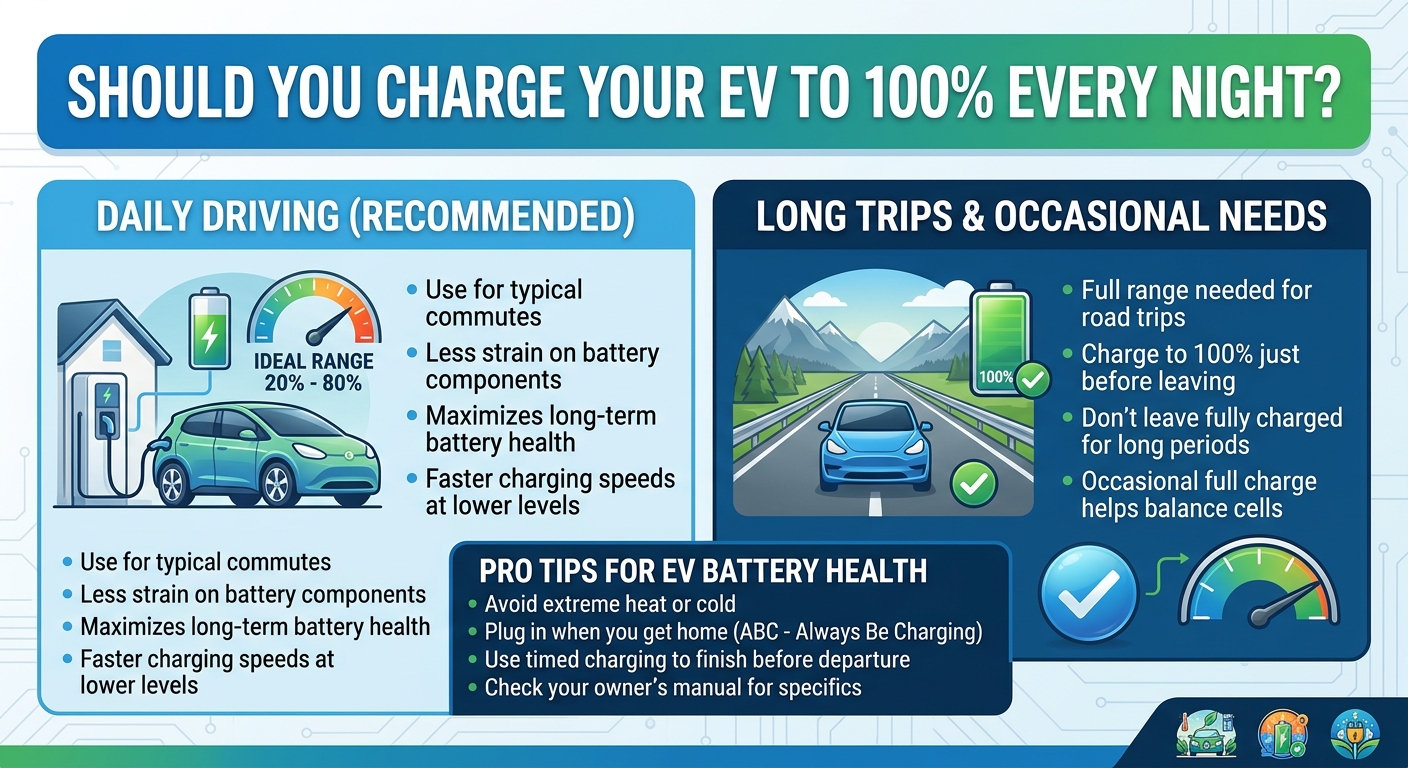
Why Stop at 80%?: Charging speeds are not linear. To protect the chemical composition of the battery pack, vehicle management systems intentionally throttle or slow down the charging rate significantly once the battery hits 80%. Pushing the last 20% to a full 100% can sometimes take as long as the initial 10% to 80% jump.
If you are evaluating how to manage energy distribution and equipment limits, you can learn more through our insights at EV Charger Advisor.
3. Are There Any Downsides to Level 3 Charging?
Despite their incredible speed, DC Fast Chargers are generally not recommended for everyday, 100% routine charging due to a few key factors:
-
Higher Costs: Because of the massive infrastructure, commercial electricity demand charges, and fast turnaround, charging at a public Level 3 station is significantly more expensive than plugging in at home overnight.
-
Thermal Stress: Pumping massive amounts of electricity into a battery in a short window generates substantial heat. While modern EVs feature advanced liquid-thermal cooling systems, frequent high-power DC fast charging can accelerate long-term battery degradation more than slow AC charging.
-
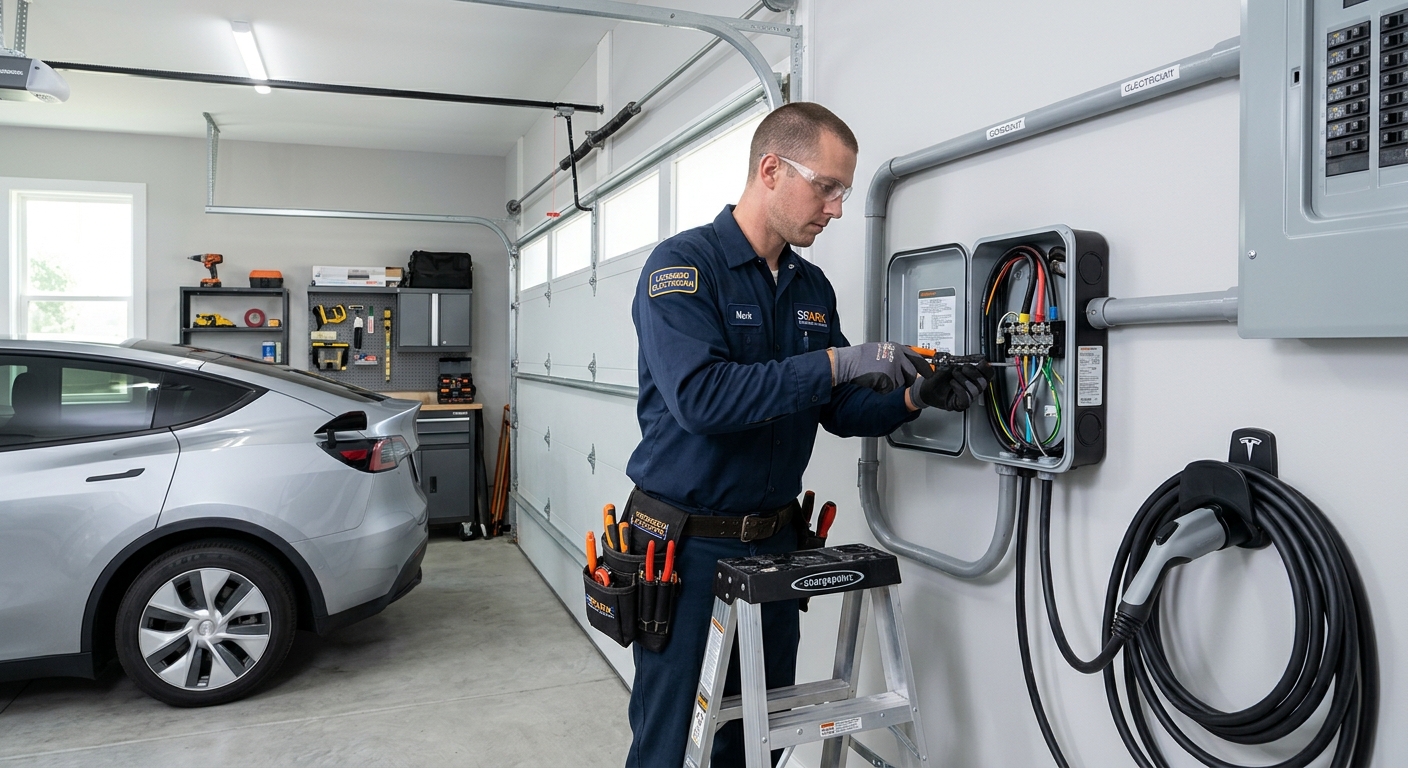
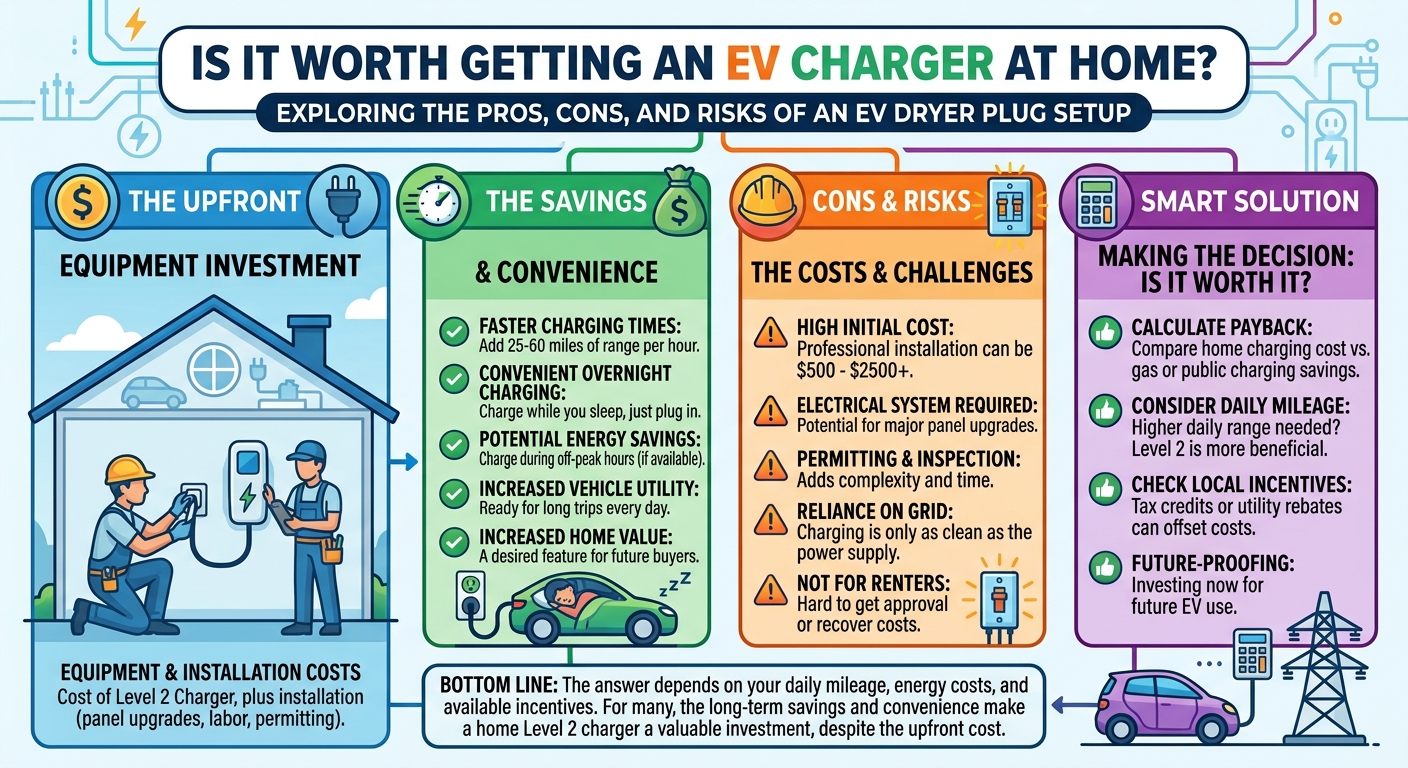
Smart Management at Home: To avoid the high costs of public fast chargers, many drivers rely on automated domestic scheduling. Installing efficient equipment—such as the options covered in our guide on smart home EV solutions—allows you to take advantage of cheap, gentle overnight rates instead.
4. Who Should Use Level 3 Chargers?
DC Fast Chargers are essential tools, but they serve a specific purpose in the EV ecosystem:
-
Road Trippers: Essential for long-distance travel where waiting 8 hours for a standard charge is impractical.
-
Fleet and Commercial Drivers: Ride-share operators, delivery vans, and taxis that need a rapid midday turnaround to stay operational.
-
Drivers Without Home Access: Urban apartment dwellers who lack garage access and rely occasionally on public rapid hubs to keep moving.
Summary: The Verdict on Speed
Level 3 chargers are indisputably the fastest way to replenish an electric vehicle’s battery on the go, transforming a multi-hour wait into a quick coffee break. However, for maximum financial savings and long-term battery health, they are best reserved for road trips and emergency top-ups, leaving daily replenishment to slower, more cost-effective home charging.





Leave a Reply