
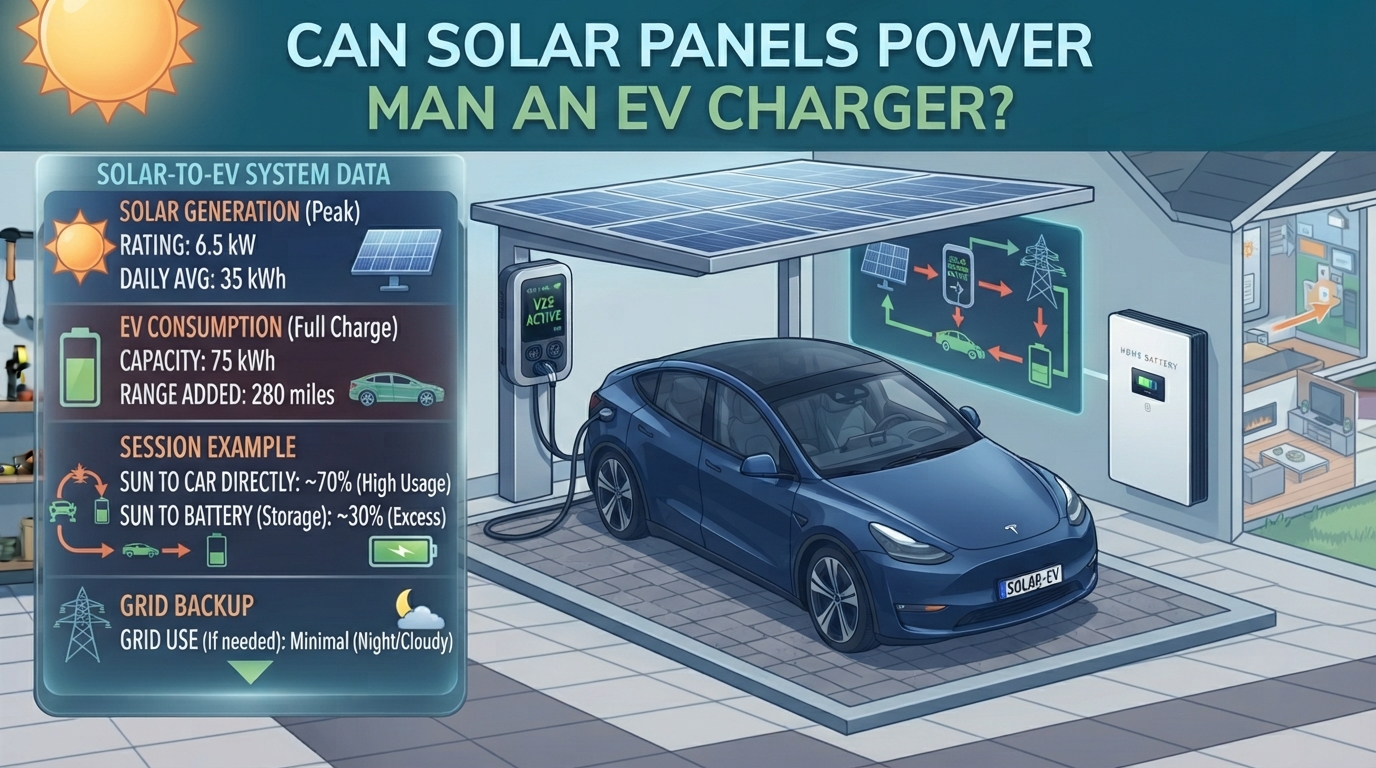
Yes. Solar panels can power an EV charger, and most drivers need about 5-10 extra panels to cover a year of charging. In most homes, though, the panels don’t charge the car directly all the time. Daytime sun supplies your home and any plugged-in car, surplus goes to the grid, and you draw from the grid or a battery at night.
Quick answer by setup
| Setup | Does solar power the charger? |
|---|---|
| Grid-tied with net metering | Yes, offset over the month. Daytime solar, nighttime grid |
| Grid-tied, car plugged in during the day | Yes, directly, when the sun is shining |
| Grid-tied with home battery | Yes, including overnight from stored solar |
| Off-grid | Yes, but needs a large battery and inverter |
How solar EV charging actually works
In a standard grid-tied system, your panels produce power that flows to your home’s main electrical panel, where your appliances, your EV charger and the grid are all connected. If your car is plugged in while the sun is shining, solar can supply it directly. This suits people who work from home or park at home all day.
If you charge overnight, which most owners do, your panels are idle. In that case, surplus solar from the day goes to the grid and earns net-metering credits. At night you draw from the grid, and over a month the totals balance out. A home battery stores daytime solar and lets the car charge from it overnight without touching the grid.
How many solar panels do you need?
An EV typically needs about 3,000-5,000 kWh a year, which usually means 5-10 panels. Use this formula:
Panels = annual EV kWh ÷ annual output per panel
A 400-watt panel produces roughly 520-580 kWh a year in many US locations. At 5 peak sun hours, one 400W panel makes about 2 kWh a day.
| Annual miles | Efficiency | kWh needed per year | Panels (400W) |
|---|---|---|---|
| 8,000 | 3.5 mi/kWh | ~2,285 | 4-5 |
| 12,000 | 3.5 mi/kWh | ~3,430 | 6-7 |
| 12,000 | 2.5 mi/kWh | ~4,800 | 8-9 |
| 15,000 | 2.5 mi/kWh | ~6,000 | 10-11 |
Larger EVs such as the F-150 Lightning can need 12-16 panels.
Why you’ll see different answers online
Some guides say 2-3 panels, others 10 or more. The difference comes from what they’re measuring: daily vs annual energy, the amount of sun where you live, panel wattage and your mileage. Always check what each source assumes.
Want a solar quote that includes your EV? Get a quote from a licensed installer https://evchargeradvisor.online/
Can solar fully recharge an empty battery in a day?
Technically, but it’s rarely how systems are sized. Fully recharging a 60 kWh battery in one day would take about 37 panels of 450W. Most drivers only top up what they used that day, so panels are sized for the daily energy you drive, not the battery’s total capacity.
Can you charge at night with solar?
Only with a battery, or via net-metering credits from the grid. Without storage, you can either charge during the day when your panels produce, or charge from the grid at night. One guide estimates home battery storage at $8,000-$20,000 installed, so many homeowners rely on daytime charging or net metering instead.
Off-grid solar EV charging
It’s possible but demanding. An off-grid setup typically needs about 15-20 kWh of battery storage to bridge one to two cloudy days, plus a hybrid inverter of 5 kW or more. For most households, a grid-tied system is simpler and cheaper.
What your home needs
- Enough panel capacity: Your EV charger adds load, so the electrician should check your panel.
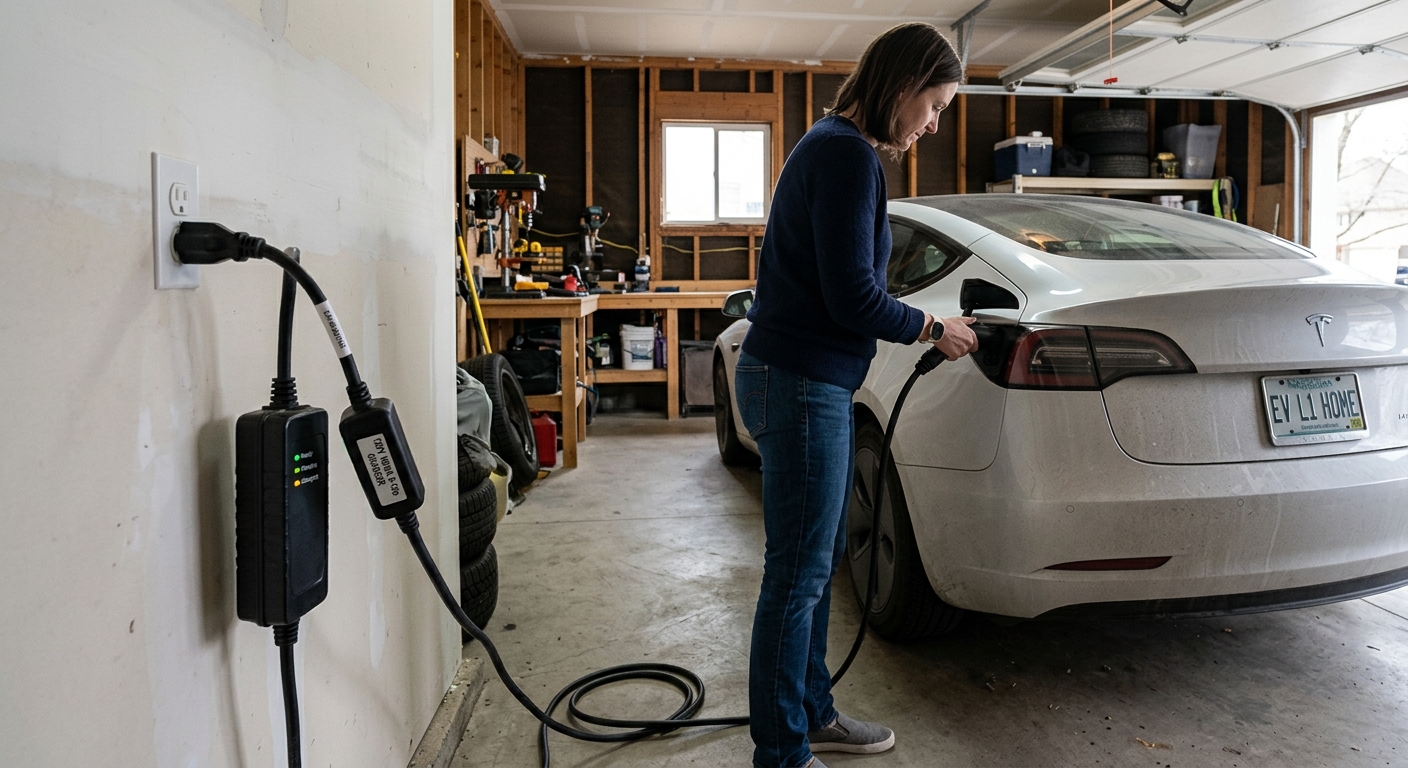
- A dedicated 240V circuit for the charger.
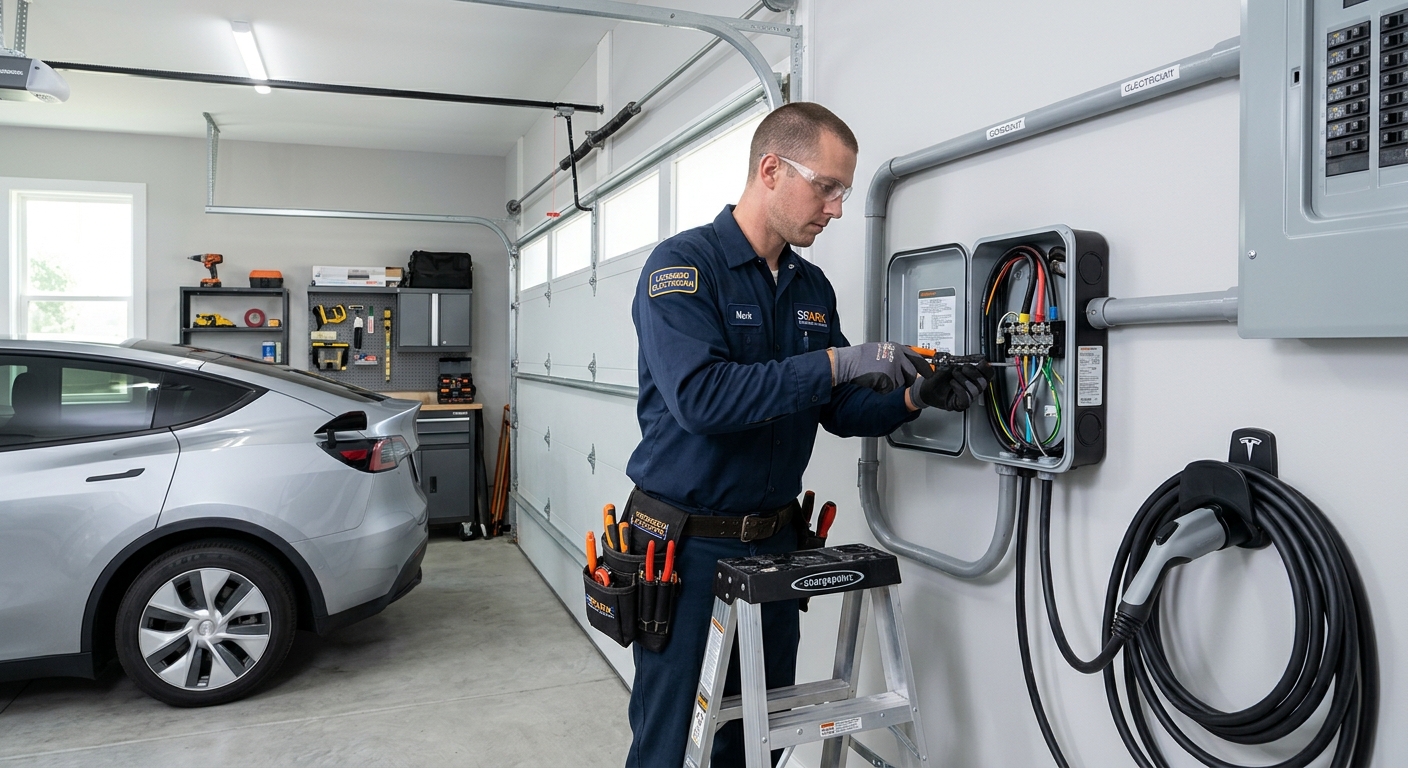
- Coordination: A licensed electrician or solar installer should design the combined system, including the inverter, the charger circuit and any battery.
- Net metering rules: These vary by utility, so ask your installer what applies to you.
Is it worth it?
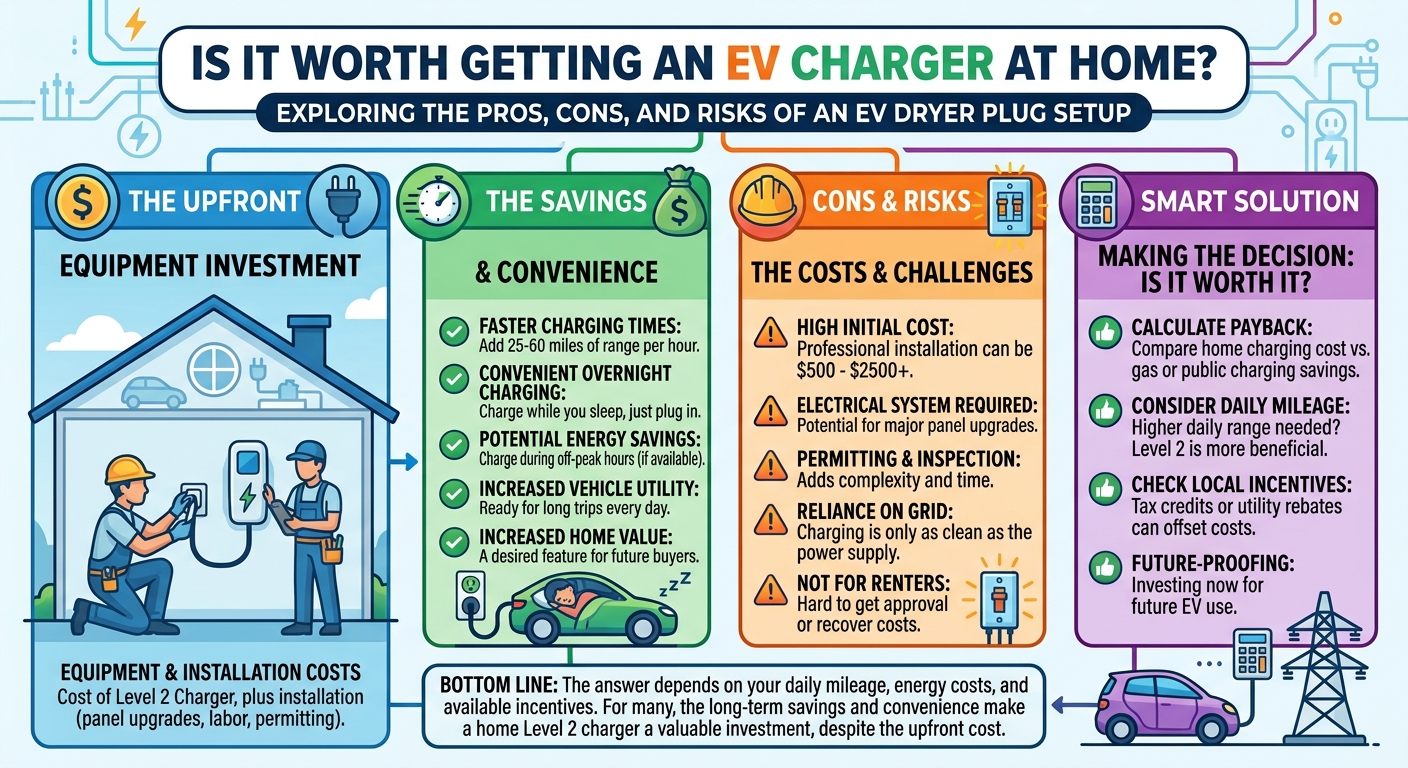
Solar tends to pay off most where electricity rates are high, sun is plentiful and net-metering terms are favourable. If you’re on a time-of-use plan, pairing solar and a battery with off-peak or midday charging can improve the economics. A local installer can model your own numbers.
Quick checklist
- Estimate your annual EV kWh (miles ÷ miles per kWh).
- Estimate panel output for your location.
- Divide to get the panel count.
- Decide on battery storage or net metering.
- Have your panel capacity checked.
- Get quotes from licensed installers.
Next step: Compare Level 2 home chargers https://evchargeradvisor.online/
FAQs
Can solar panels power an EV charger?
Yes. Panels can supply it directly during the day, and offset the rest through net metering or a battery.
How many solar panels do I need to charge an EV?
Typically 5-10, depending on your mileage, car, and local sunshine.
Can I charge my EV at night with solar?
Only with battery storage, or by drawing grid power offset by net-metering credits.
Do I need a battery to charge my EV with solar?
Not necessarily. You can charge during the day, or use the grid at night.
Can I charge an EV entirely off-grid with solar?
Yes, but it needs a large battery and an inverter, and it’s costlier than a grid-tied system.
How many panels to fully charge an EV battery in a day?
For a 60 kWh battery, around 37 panels. Most systems are sized for daily top-ups instead.
What happens to excess solar power?
In a grid-tied system, it flows back to the grid, and you may earn credits through net metering.
Final thoughts
Solar can absolutely power your EV charging, usually through a mix of daytime generation, the grid and sometimes a battery. Work out your kWh first, then get a local quote.
Ready to plan your setup? Get a licensed installer quote https://evchargeradvisor.online/
General information with approximate figures. Solar output, net metering rules and costs vary. Always get quotes from licensed installers.





Leave a Reply