Load balancing automatically shares a limited amount of electrical capacity so your EV charger doesn’t overload your circuit or panel.…
Read More
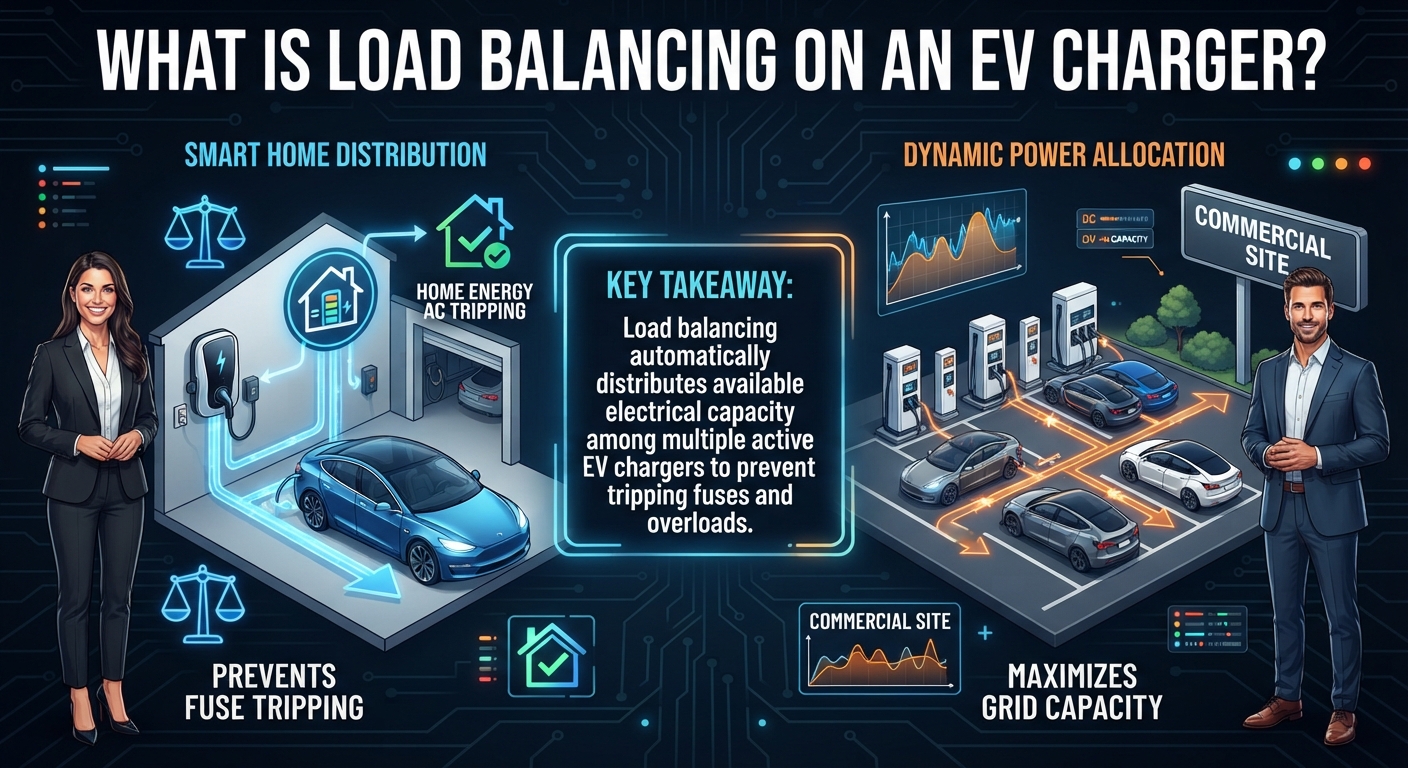
Load balancing automatically shares a limited amount of electrical capacity so your EV charger doesn’t overload your circuit or panel.…
Read More!["An infographic titled 'How Does Smart EV Charging Work?' featuring a silver Lucid Air electric car parked in a futuristic smart mobility hub, with data panels detailing grid optimization, V2X services, and renewable energy mix[cite: 9]."](https://evchargeradvisor.online/wp-content/uploads/2026/10/Gemini_Generated_Image_ebe0eoebe0eoebe0.jpg)
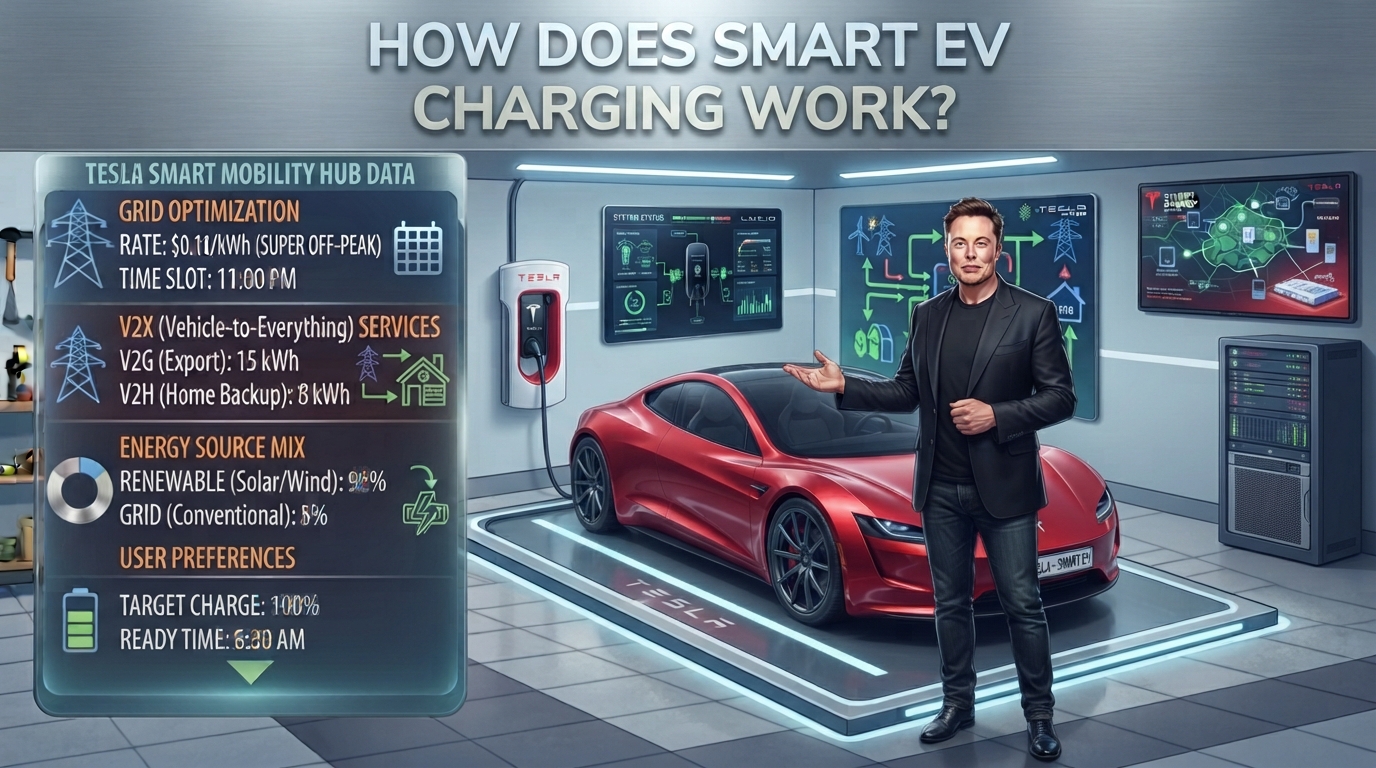
Smart EV charging connects your charger, your car and, often, your utility or home energy system, so charging happens at…
Read More!["An infographic titled 'Can Solar Panels Power an EV Charger?' showing a blue Tesla Model Y under a solar carport with a home battery, alongside a data panel detailing solar generation (6.5 kW) and EV consumption (~70% sun-to-car directly)[cite: 1]."](https://evchargeradvisor.online/wp-content/uploads/2026/10/Gemini_Generated_Image_pkjqcfpkjqcfpkjq-1.jpg)
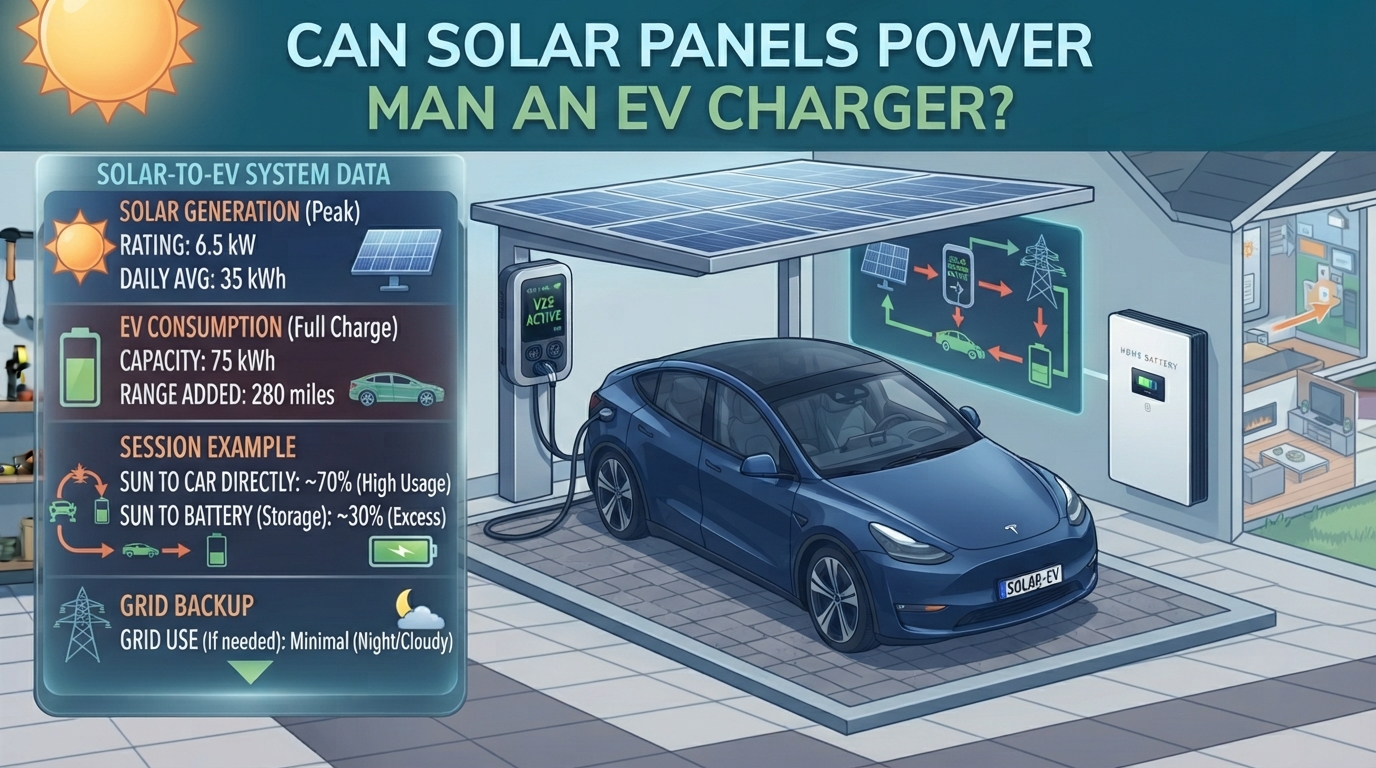
Yes. Solar panels can power an EV charger, and most drivers need about 5-10 extra panels to cover a year…
Read More!["An infographic titled 'Does EV Charging Cost More at Peak Hours?' featuring a green Mercedes-Benz EQS connected to a smart charger. A detailed data panel on the left compares off-peak ($0.12/kWh) and on-peak ($0.36/kWh) rates, alongside diagrams illustrating V2G (Vehicle-to-Grid) savings and renewable energy integration[cite: 1]."](https://evchargeradvisor.online/wp-content/uploads/2026/10/Gemini_Generated_Image_bjcn9tbjcn9tbjcn-1.jpg)
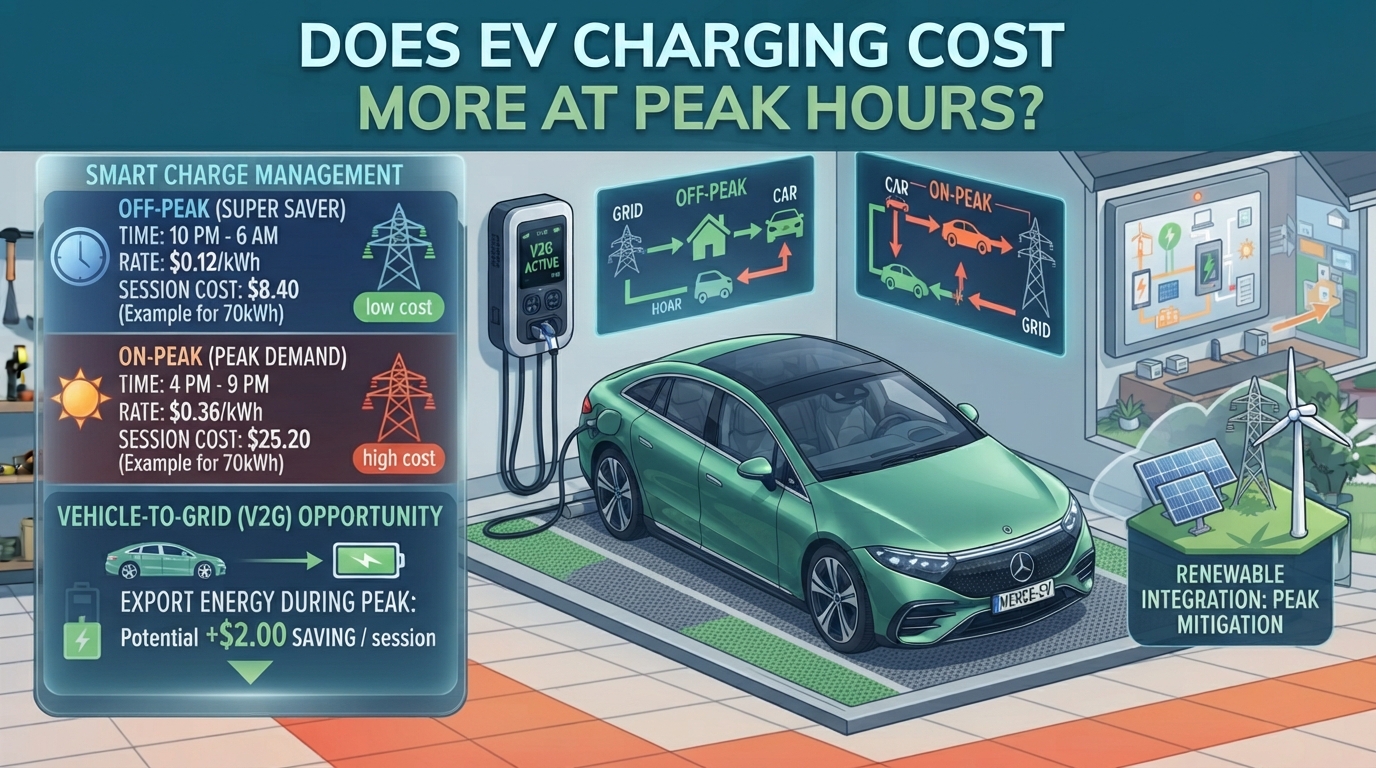
It depends on your electricity plan. On a time-of-use (TOU) plan, yes. Charging during peak hours, commonly 4-9 pm on…
Read More!["A blue BMW i4 electric car charging inside a home garage, accompanied by a large digital dashboard displaying charging data like energy consumption (~82 kWh), projected range (260-310 miles), and session costs ($17.50) at different electricity rates[cite: 1]."](https://evchargeradvisor.online/wp-content/uploads/2026/10/Gemini_Generated_Image_ofapbtofapbtofap-1.jpg)
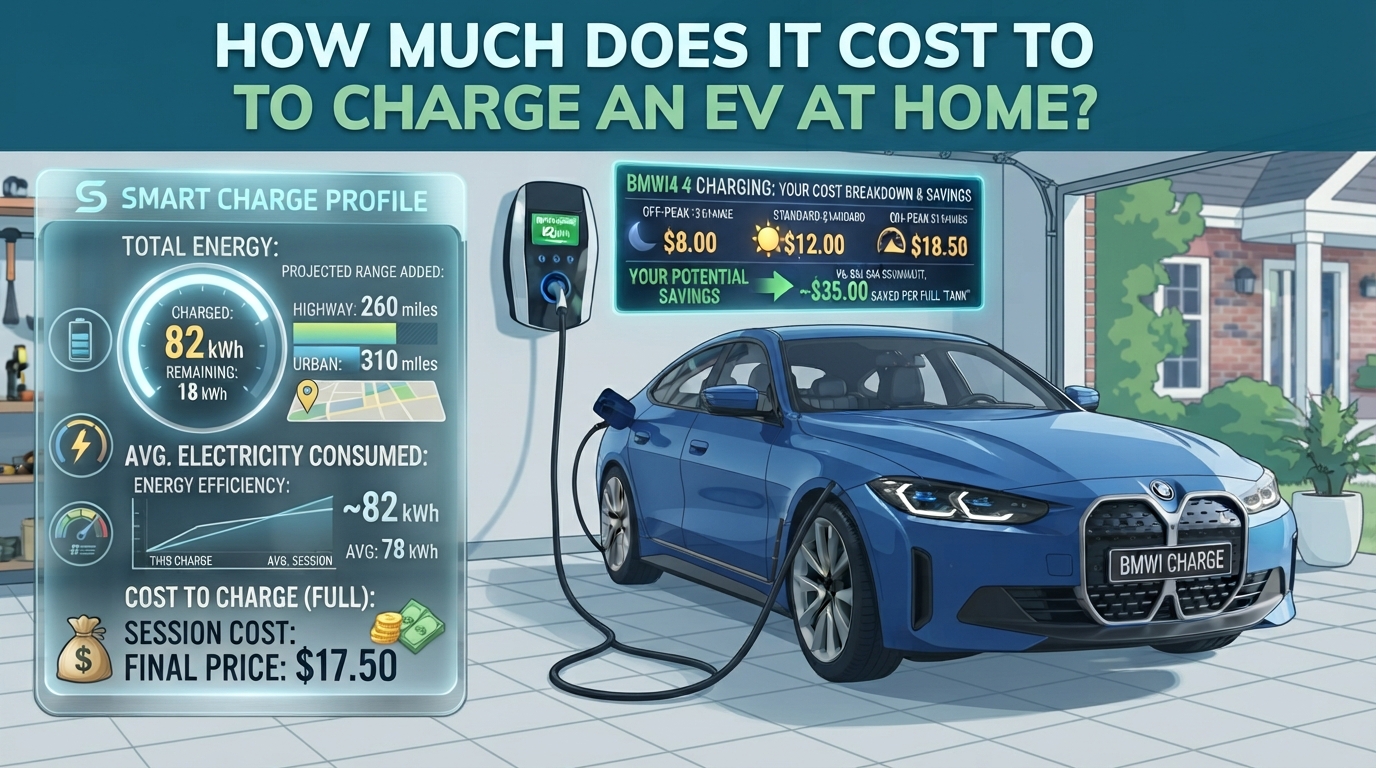
Charging an EV at home costs about 5 to 6 cents per mile in the US. For a typical driver…
Read More
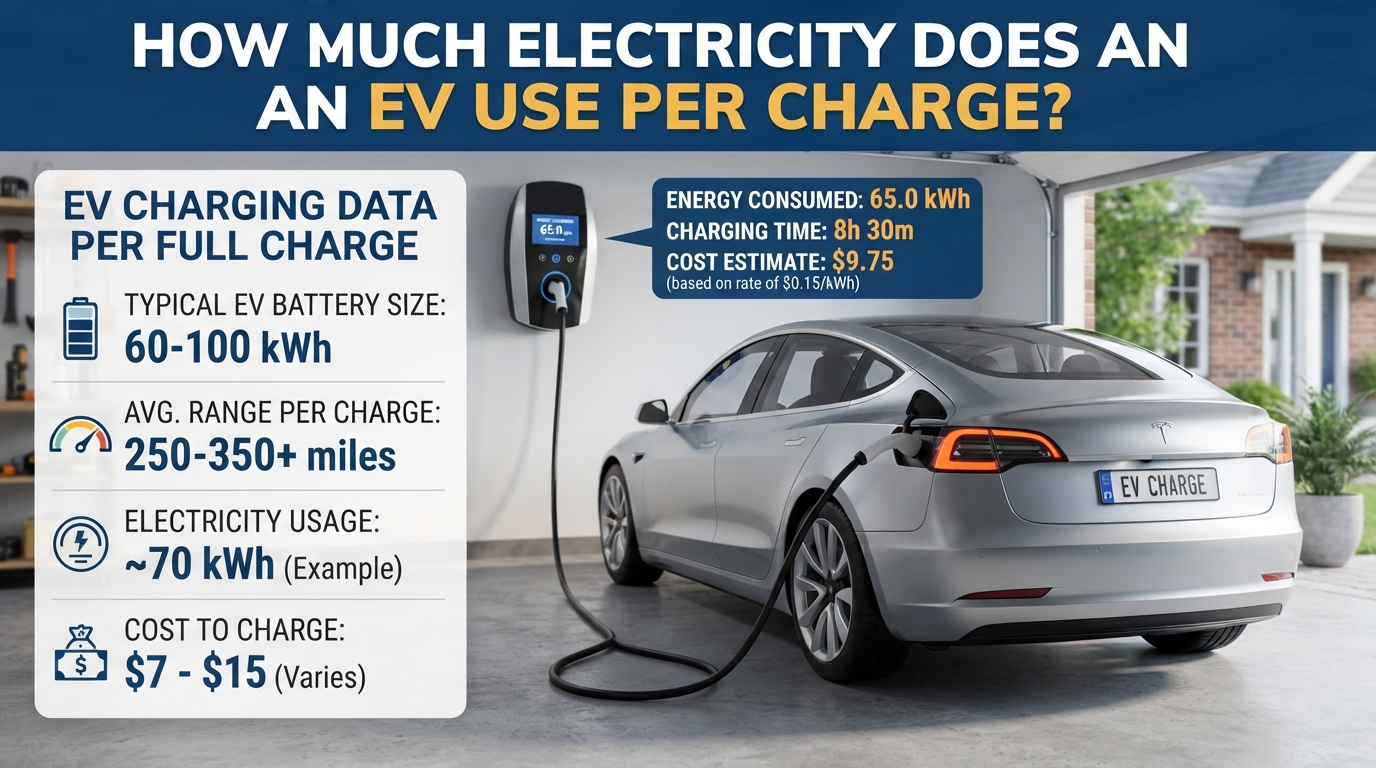
A full charge from empty uses roughly 70-140 kWh from the wall, depending on the vehicle, which equals its usable…
Read More
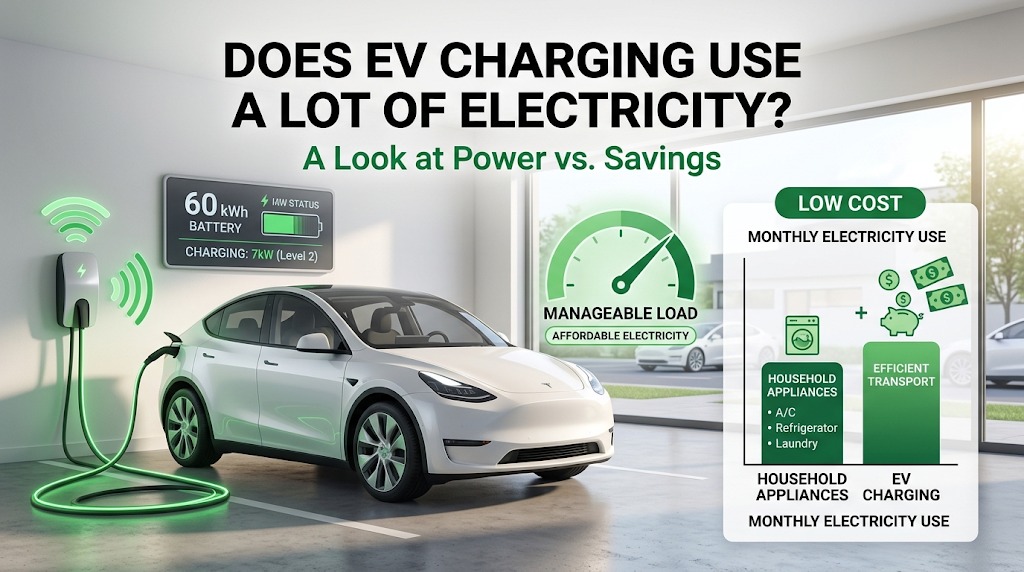
It uses a moderate amount. The average driver needs about 13 kWh a day, or roughly 4,700 kWh a year.…
Read More![Simplified infographic showing that EV chargers can be left plugged in overnight, contrasting a waterproof, weather-resistant NEMA 4X unit with an exposed, non-rated indoor setup labeled as a hazard[cite: 1, 3].](https://evchargeradvisor.online/wp-content/uploads/2026/10/Gemini_Generated_Image_bzc7jpbzc7jpbzc7.jpg)
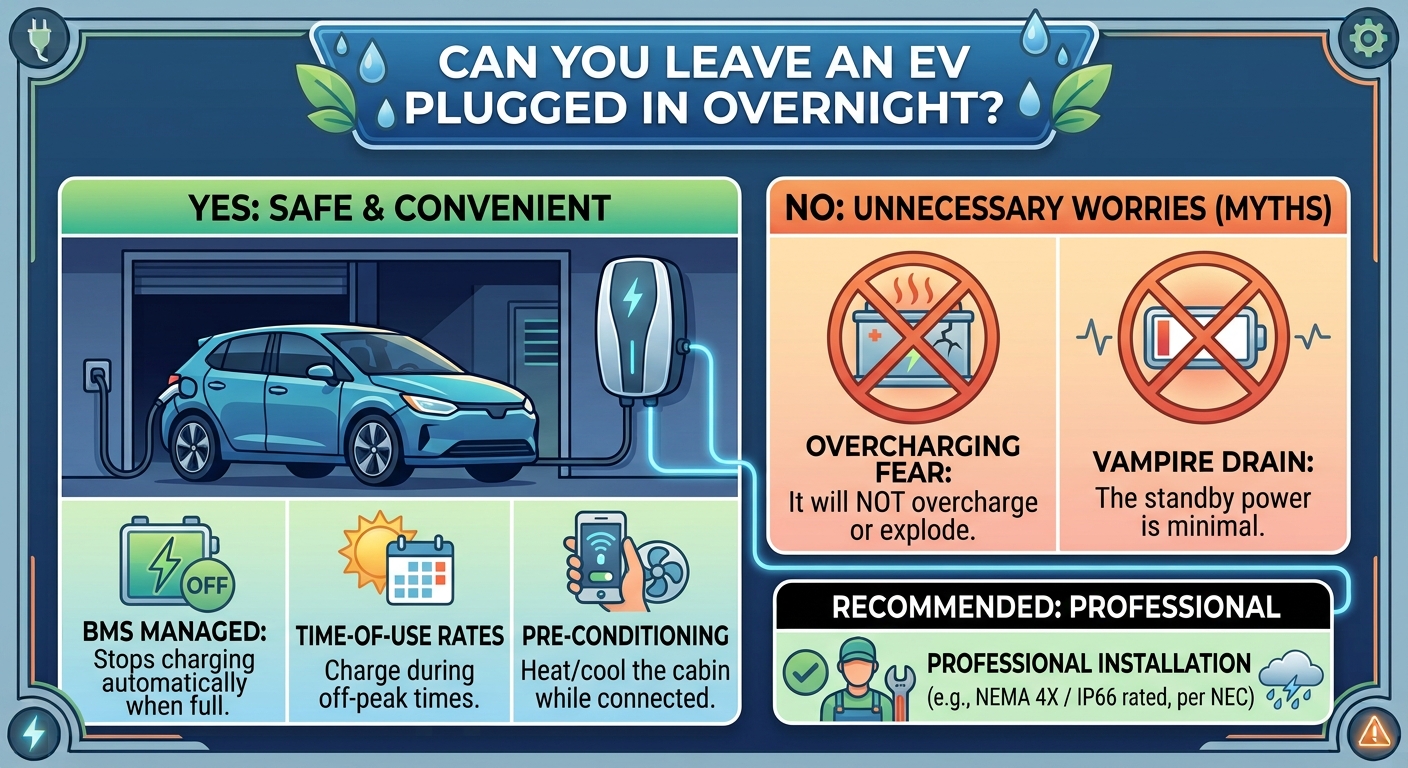
Leaving an EV plugged in overnight is safe, and it’s how most owners charge every day. Your car’s battery management…
Read More![Simplified infographic showing that EV chargers can be installed outside, contrasting a waterproof, weather-resistant NEMA 4X unit with an exposed, non-rated indoor setup labeled as a hazard[cite: 1, 3].](https://evchargeradvisor.online/wp-content/uploads/2026/10/Gemini_Generated_Image_uk9rpsuk9rpsuk9r-1.jpg)
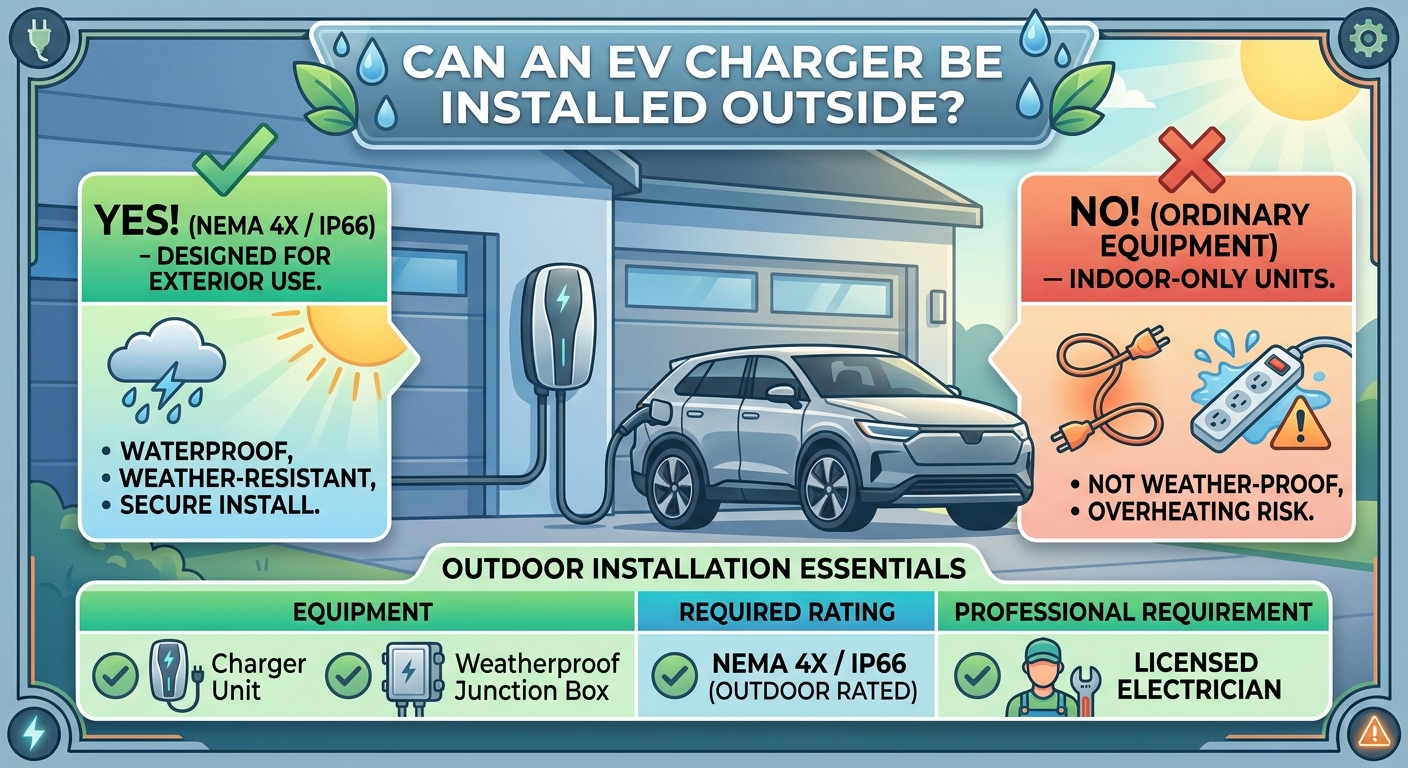
Most Level 2 EV chargers are designed for outdoor use, as long as they carry an outdoor rating (NEMA 3R…
Read More
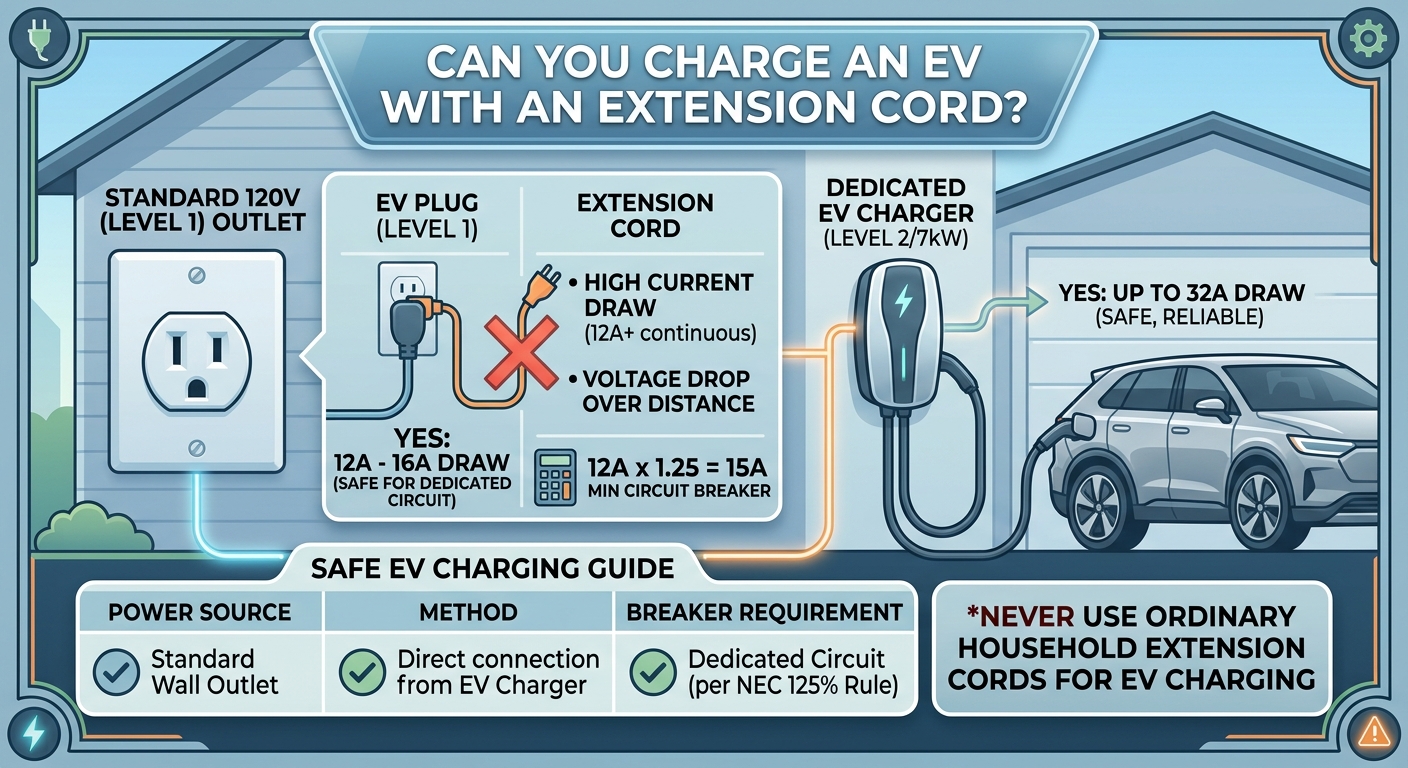
It’s not recommended. A heavy-duty, 12 gauge extension cord can technically bridge a Level 1 charger in limited, temporary situations,…
Read More
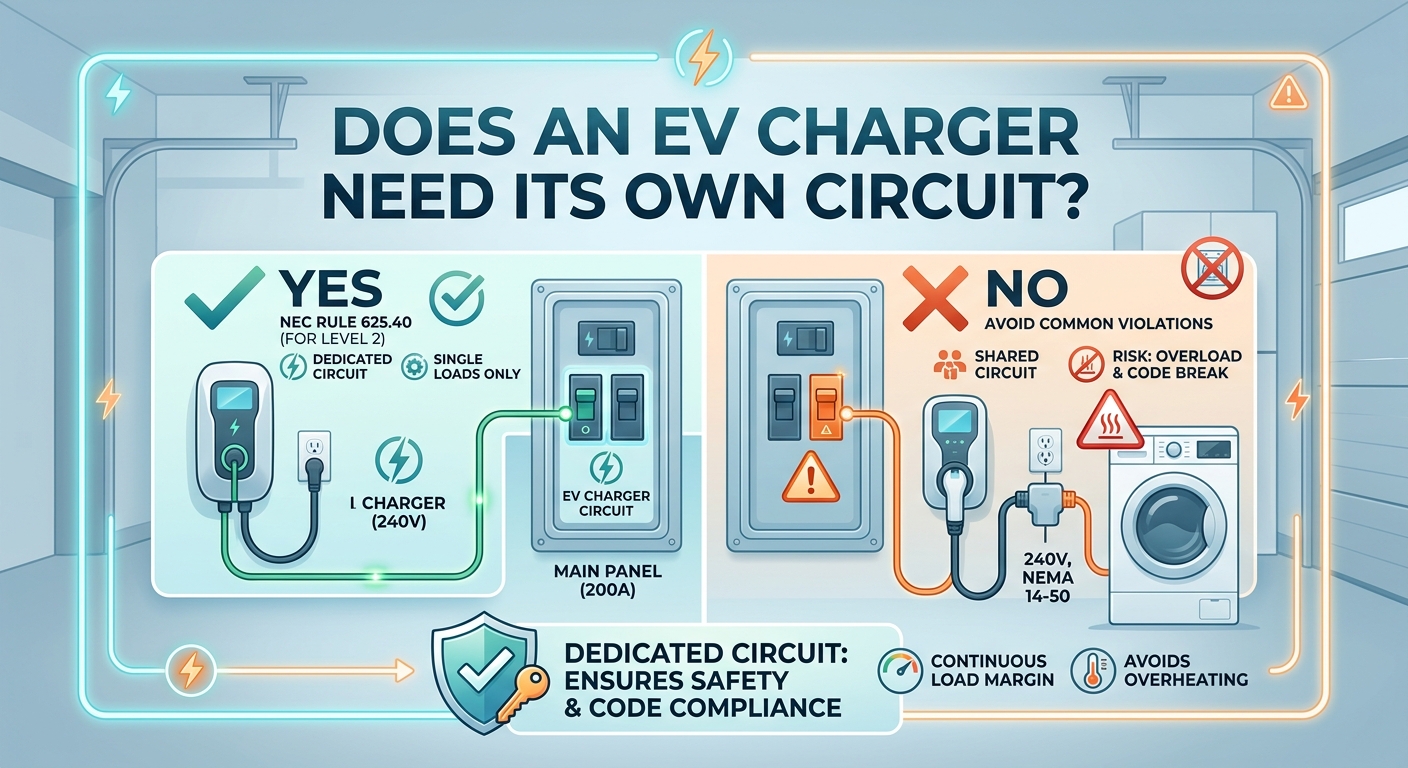
For Level 2 charging, yes. The National Electrical Code (NEC) requires each EV charger to be supplied by its own…
Read More
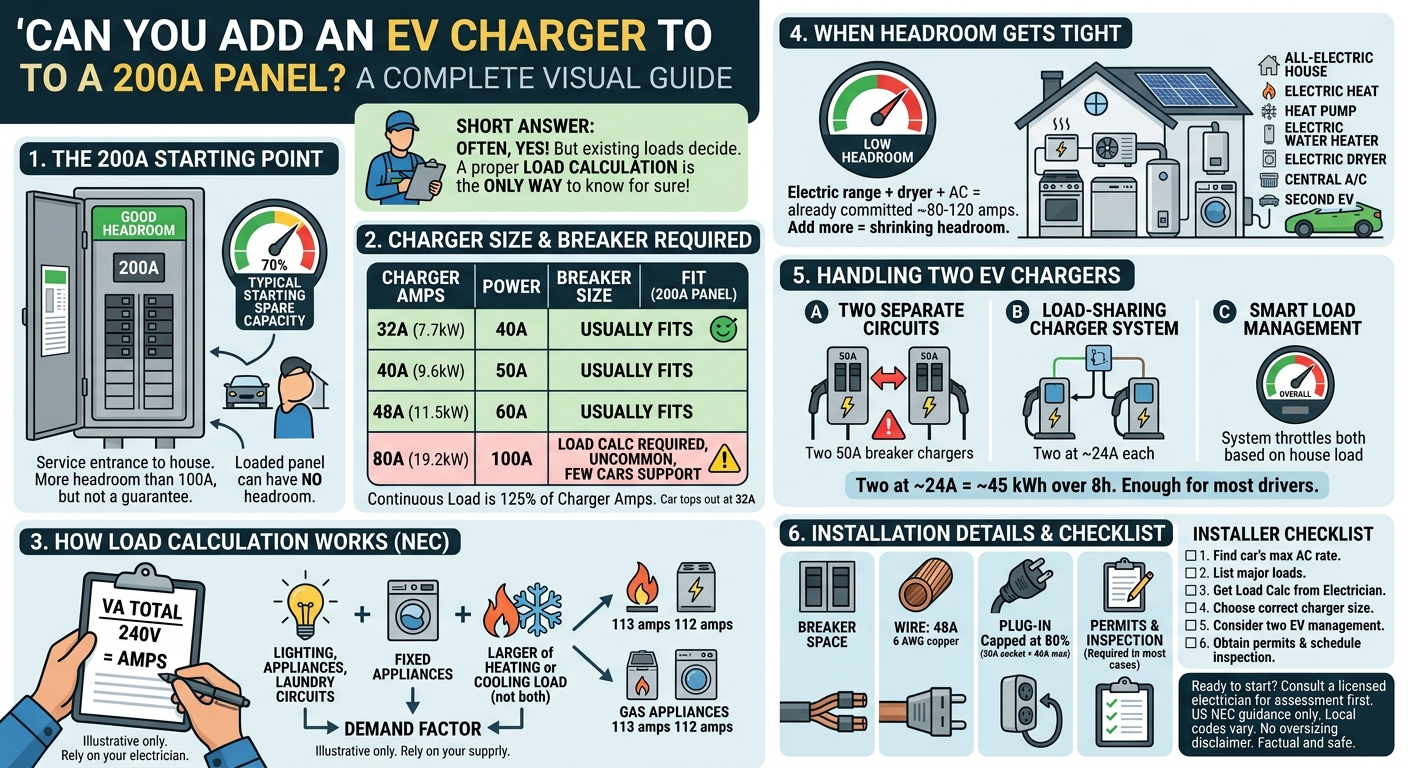
Usually, yes. Most homes with a 200-amp panel can add a Level 2 EV charger, even a 48-amp (11.5 kW)…
Read More



