





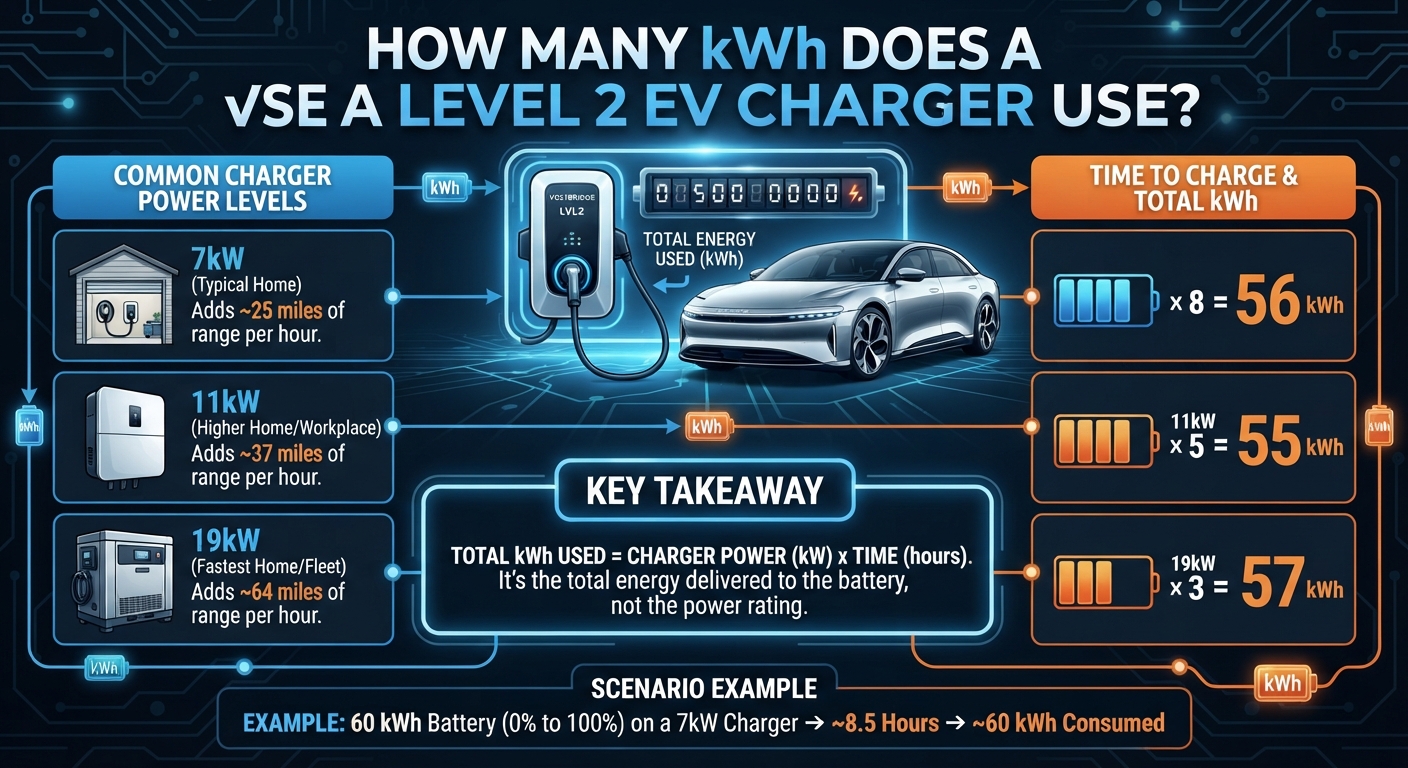
How Many kWh Does a Level 2 EV Charger Use?
A Level 2 EV charger uses about 3.8 to 11.5 kWh for every hour it runs, depending on its amperage.…
Read More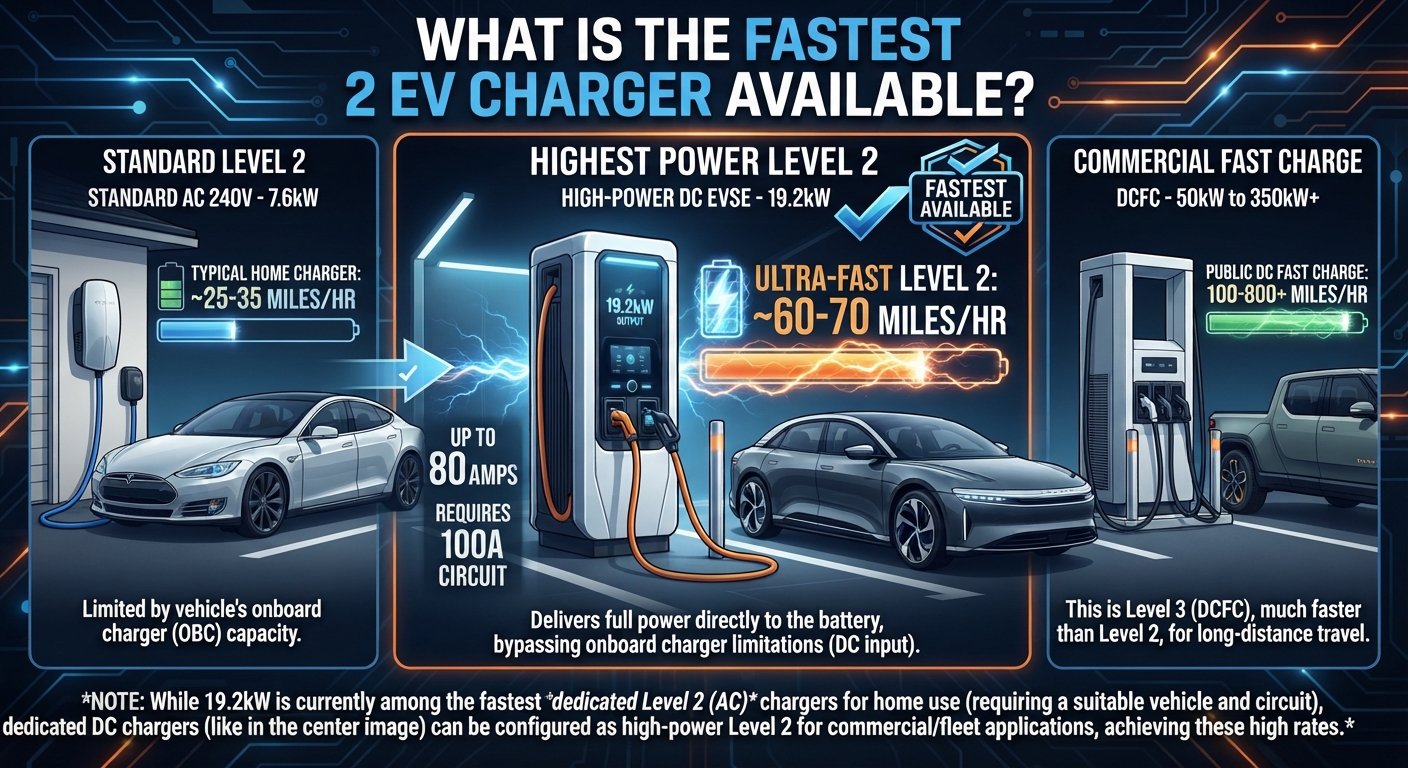
What Is the Fastest Level 2 EV Charger Available?
The fastest Level 2 EV chargers available for homes are 80-amp, 19.2 kW units. They can add roughly 55 to…
Read More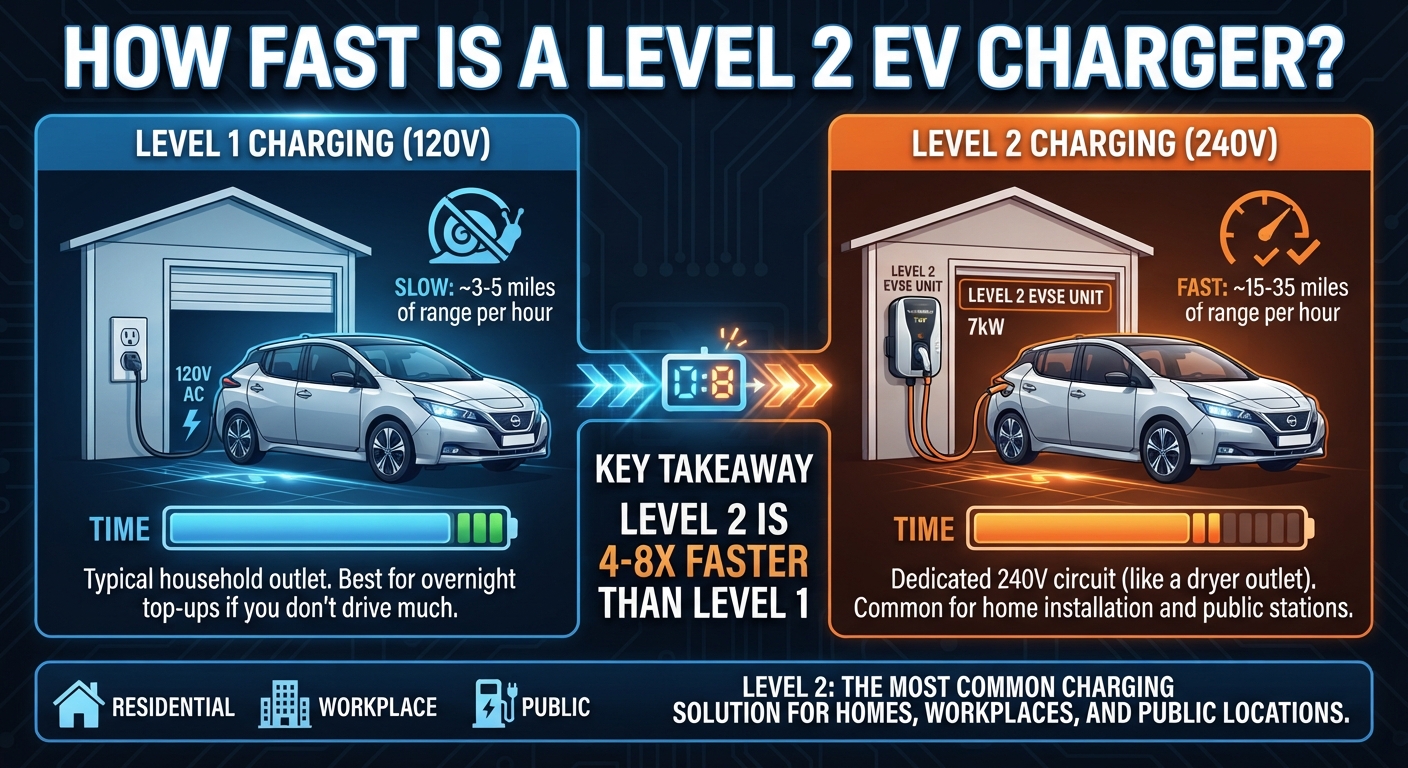
How Fast Is a Level 2 EV Charger?
Most home Level 2 EV chargers add about 12 to 36 miles of range per hour. Power runs from 3.8…
Read More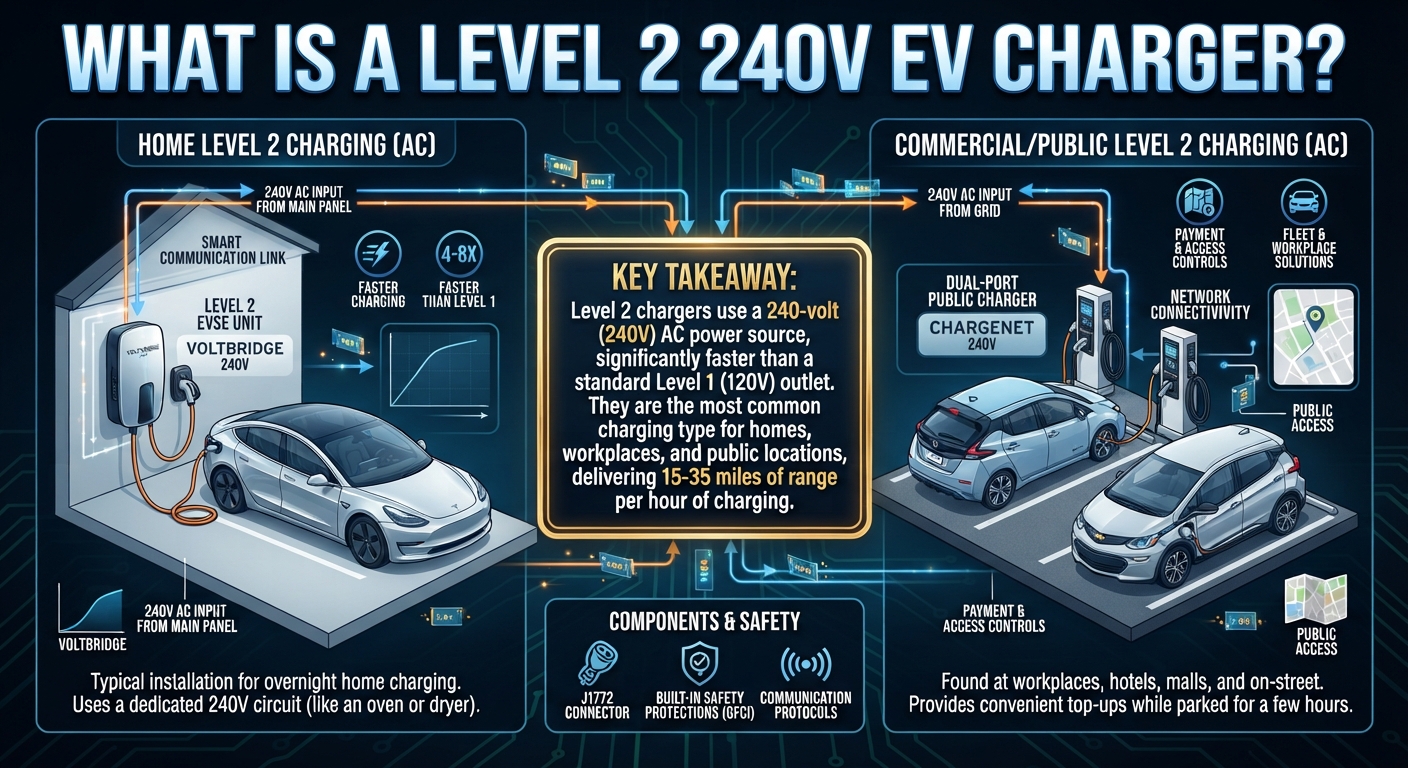
What Is a Level 2 240V EV Charger?
A Level 2 EV charger is a charging station that runs on a 240-volt circuit, the same kind of power…
Read More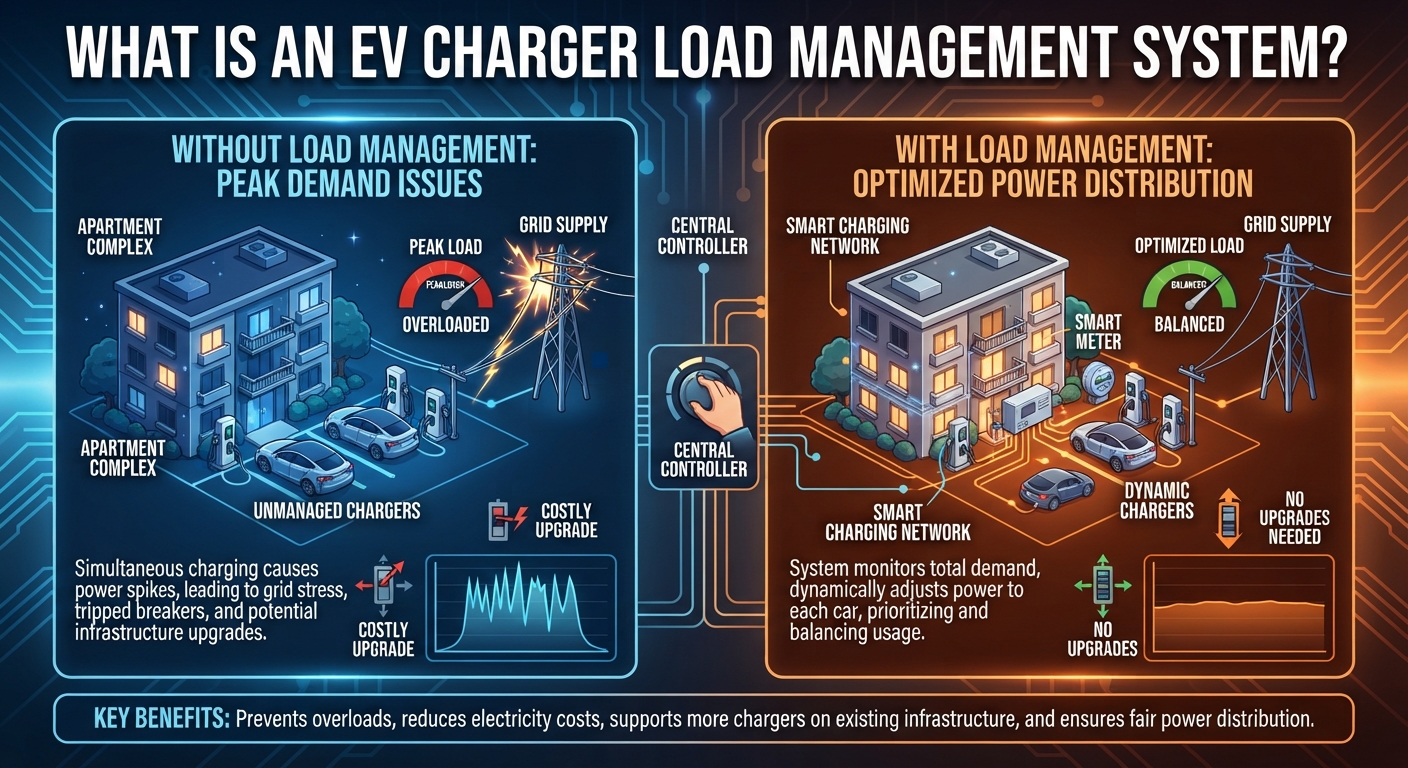
What Is an EV Charger Load Management System?
An EV charger load management system is a set of controls that limits and shares electrical power among one or…
Read More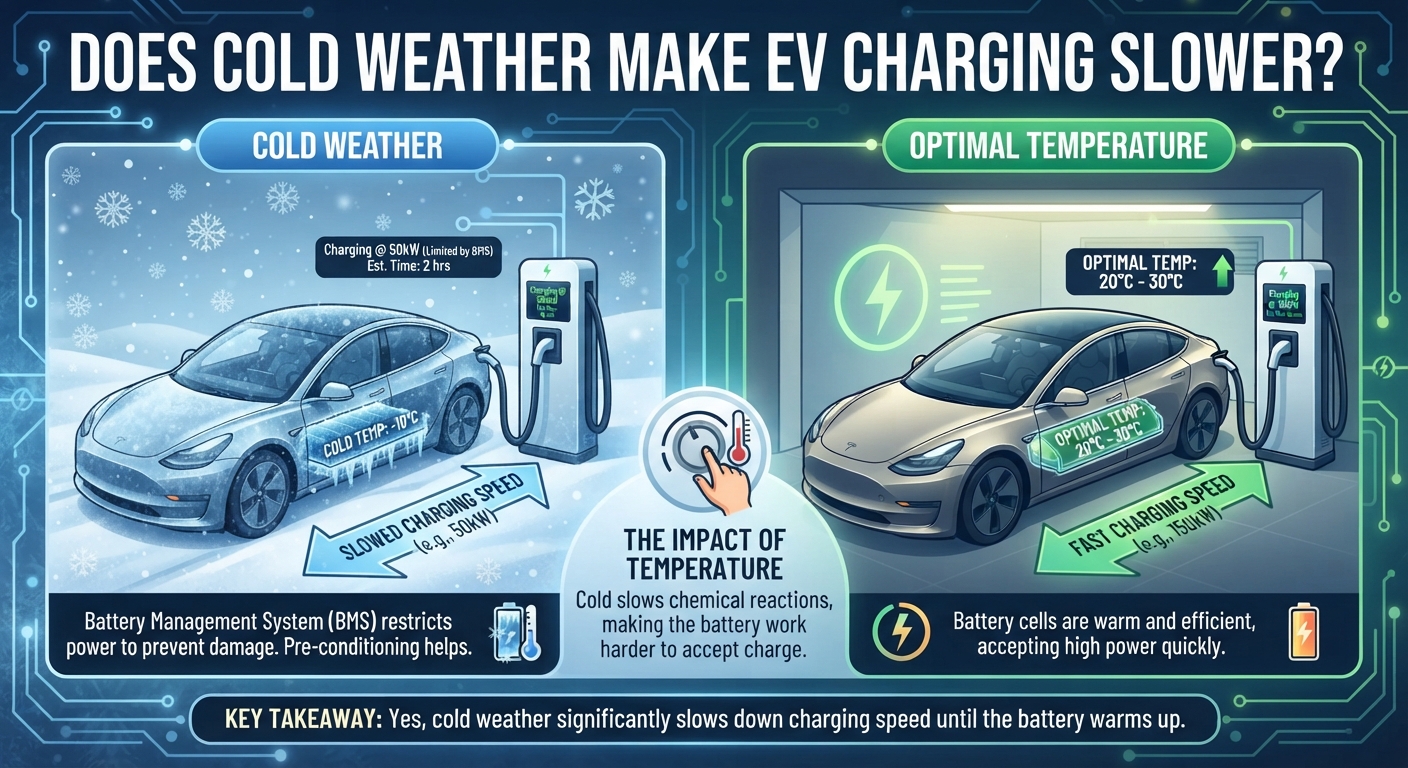
Does Cold Weather Make EV Charging Slower?
Yes, but how much depends on the charger. Cold weather slows DC fast charging the most, often making a stop…
Read More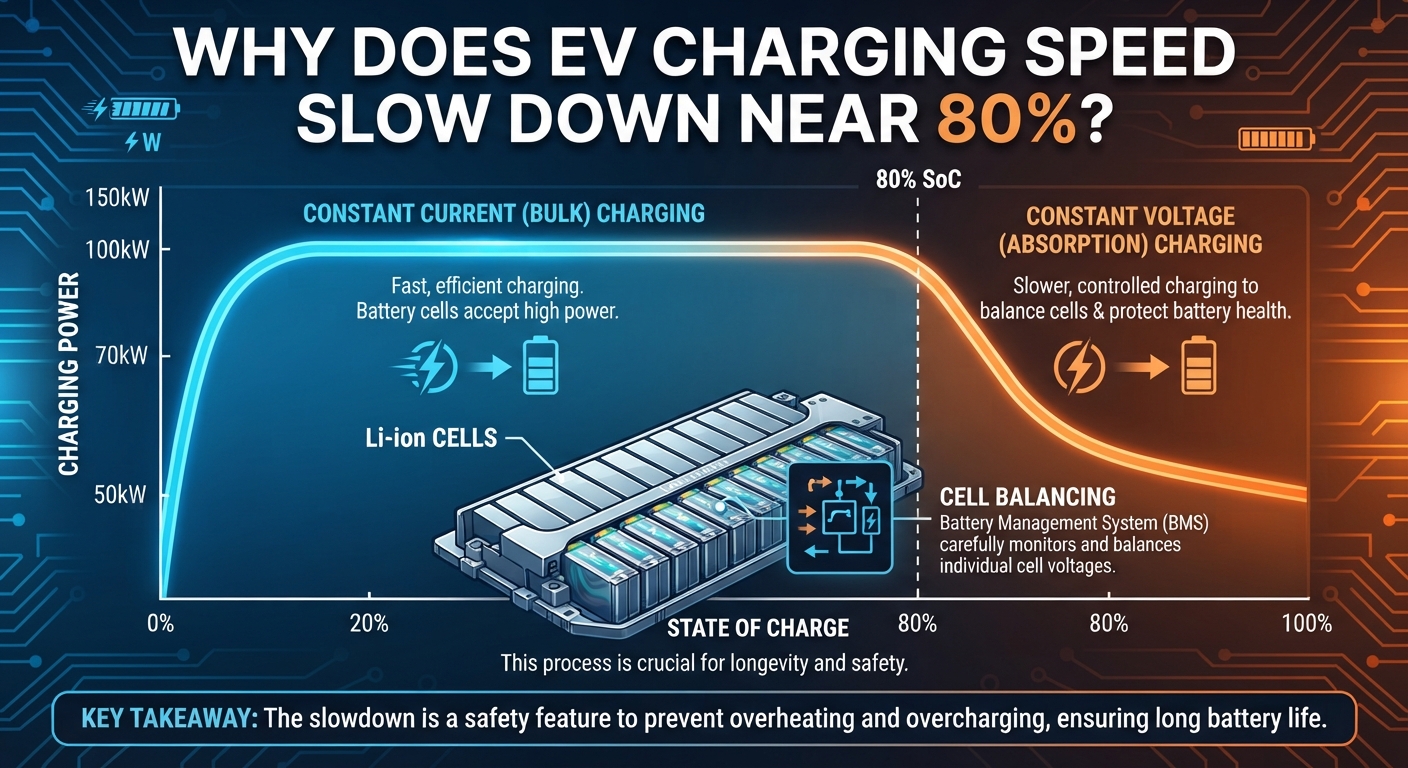
Why Does EV Charging Speed Slow Down Near 80%?
Because your car’s battery management system (BMS) deliberately tapers the charging current as the cells fill up. Near full, cell…
Read More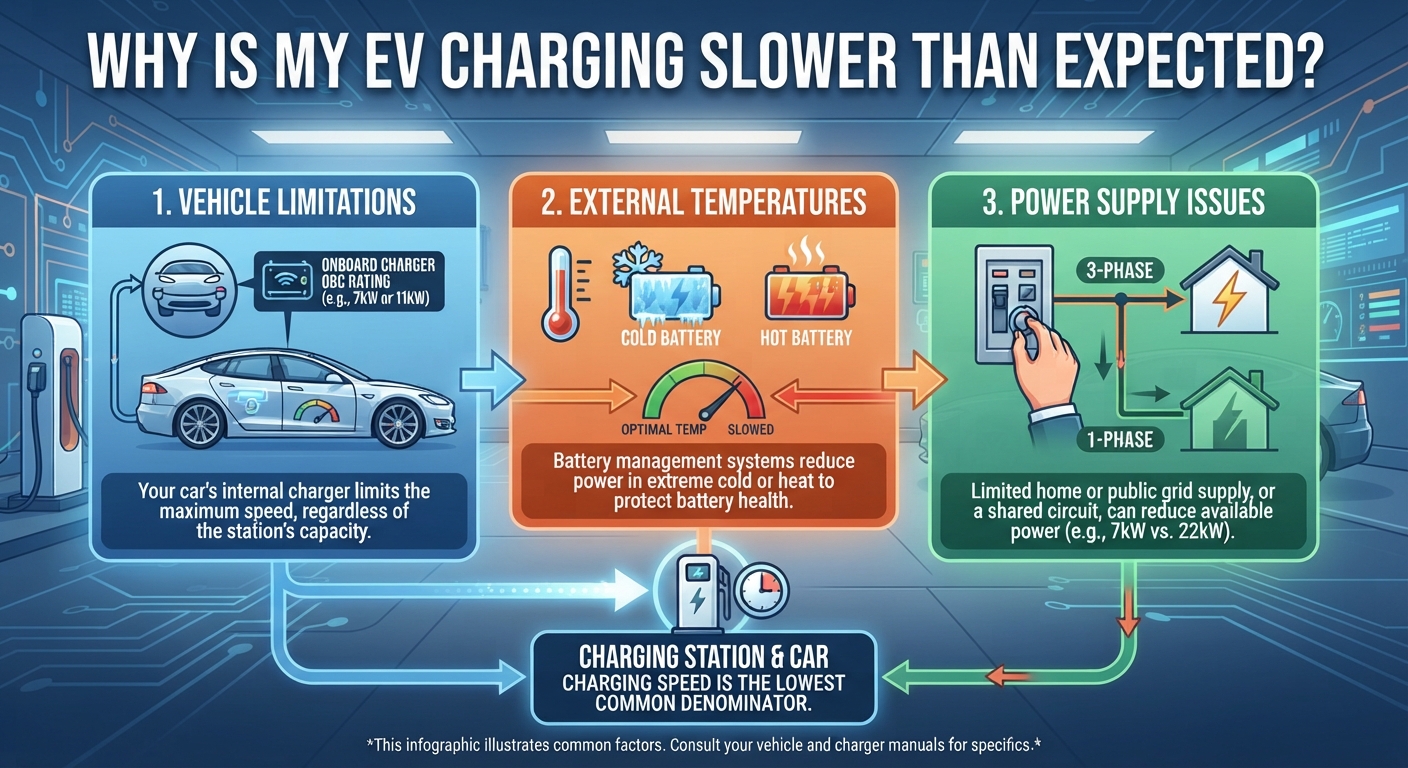
Why Is My EV Charging Slower Than Expected?
Your EV’s charging speed is set by the weakest link in a chain: the charger, the circuit, your car’s onboard…
Read More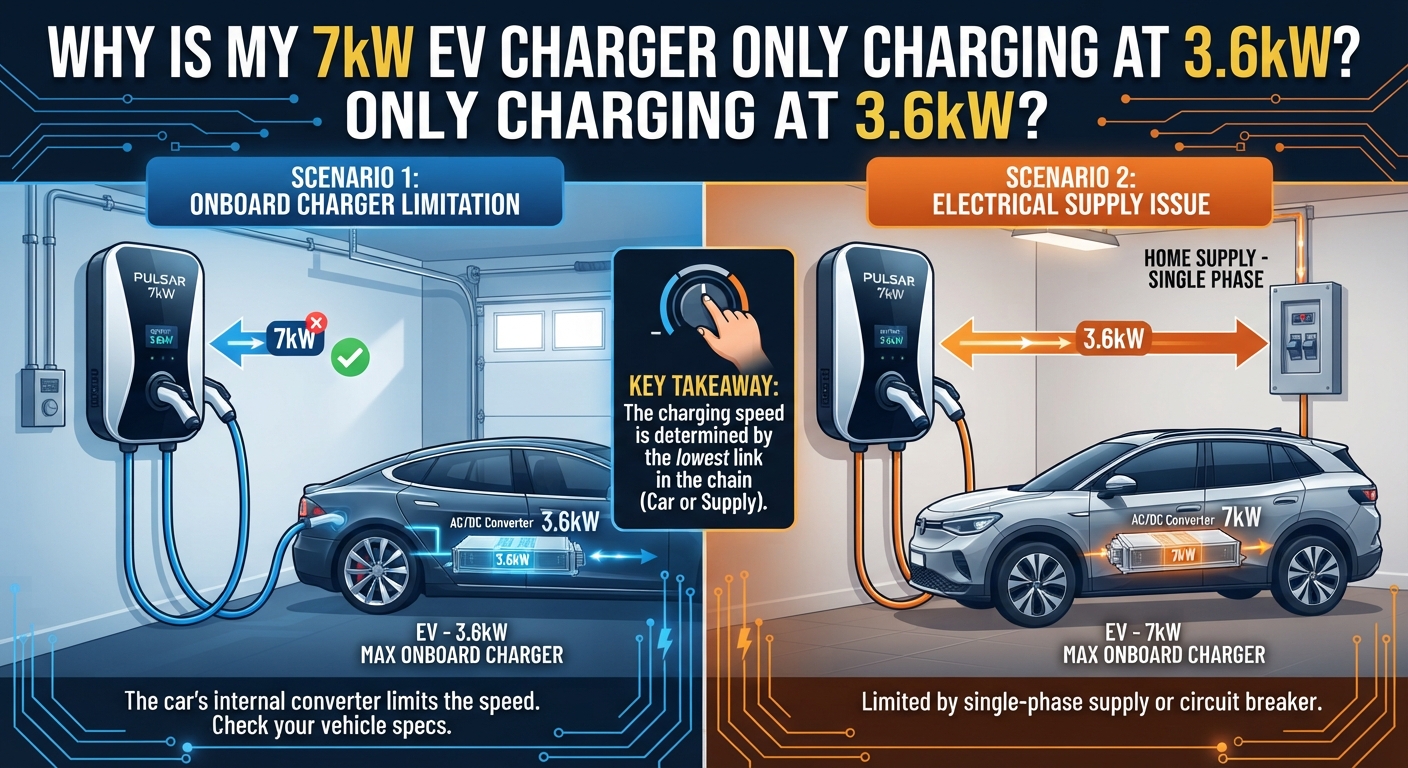
Why Is My 7kW EV Charger Only Charging at 3.6kW?
Your charger is almost certainly delivering 16 amps instead of 32. On a 230V supply, 16A gives about 3.7 kW,…
Read More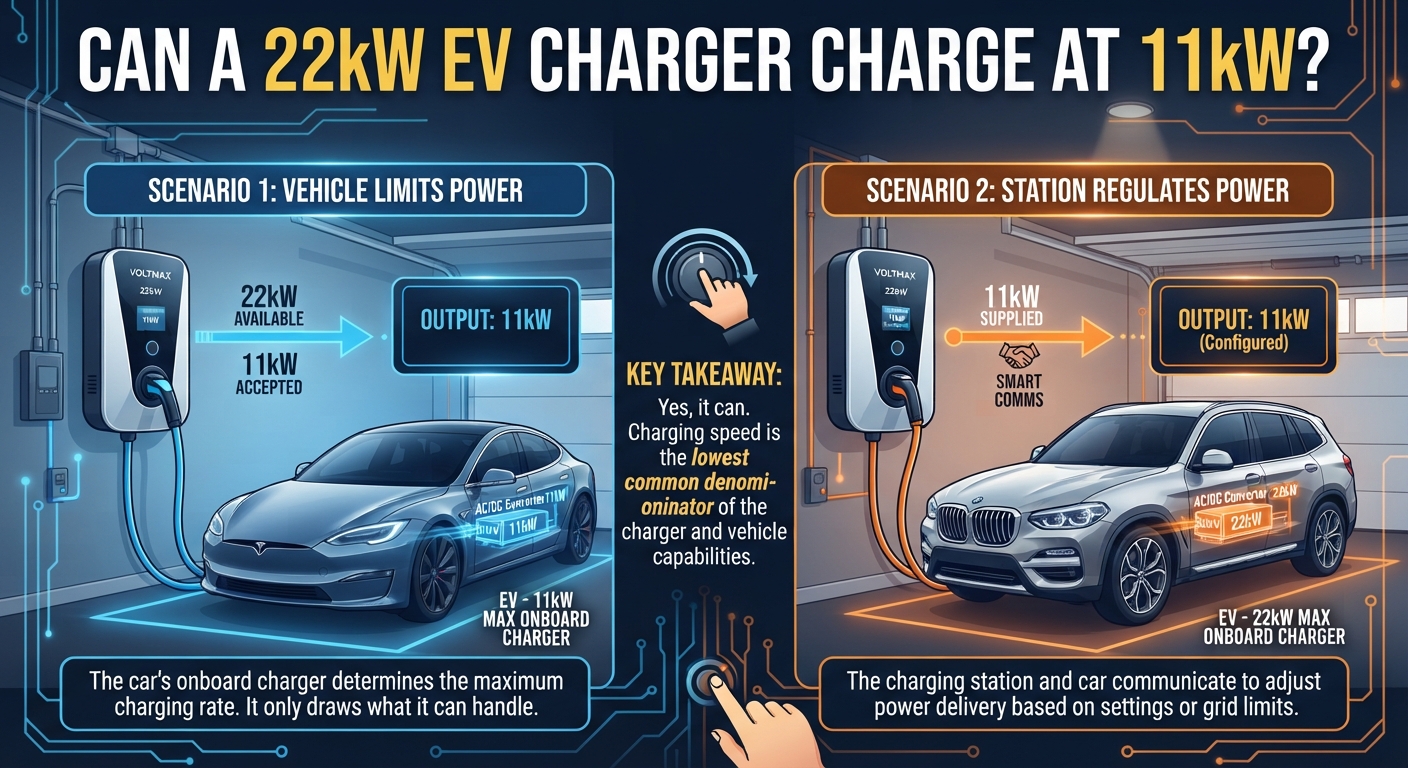
Can a 22kW EV Charger Charge at 11kW?
A 22kW EV charger will charge at 11kW if that’s the most your car’s onboard charger can accept. Many popular…
Read More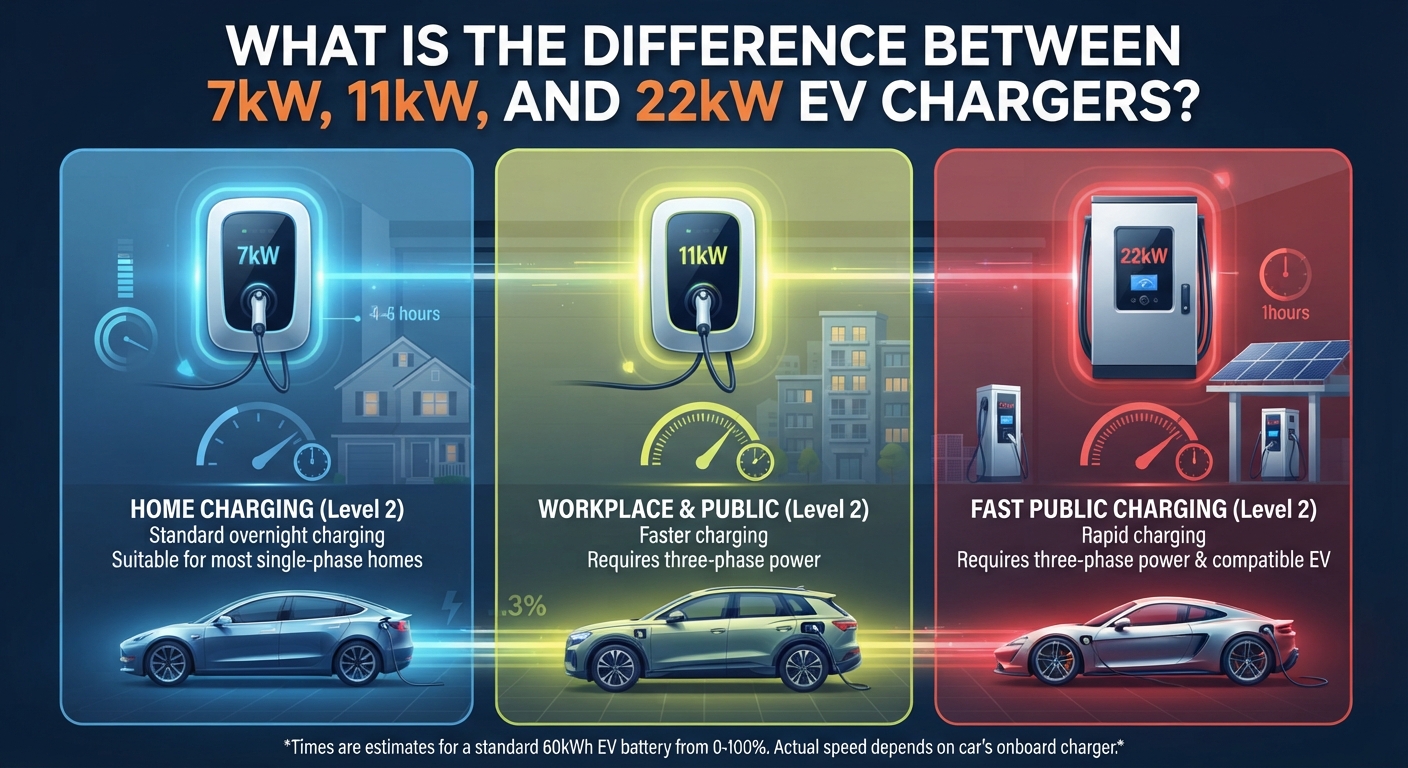
What Is the Difference Between 7kW, 11kW and 22kW EV Chargers?
The number is the charger’s maximum power. A 7kW charger runs on a single-phase supply, which most UK homes have.…
Read More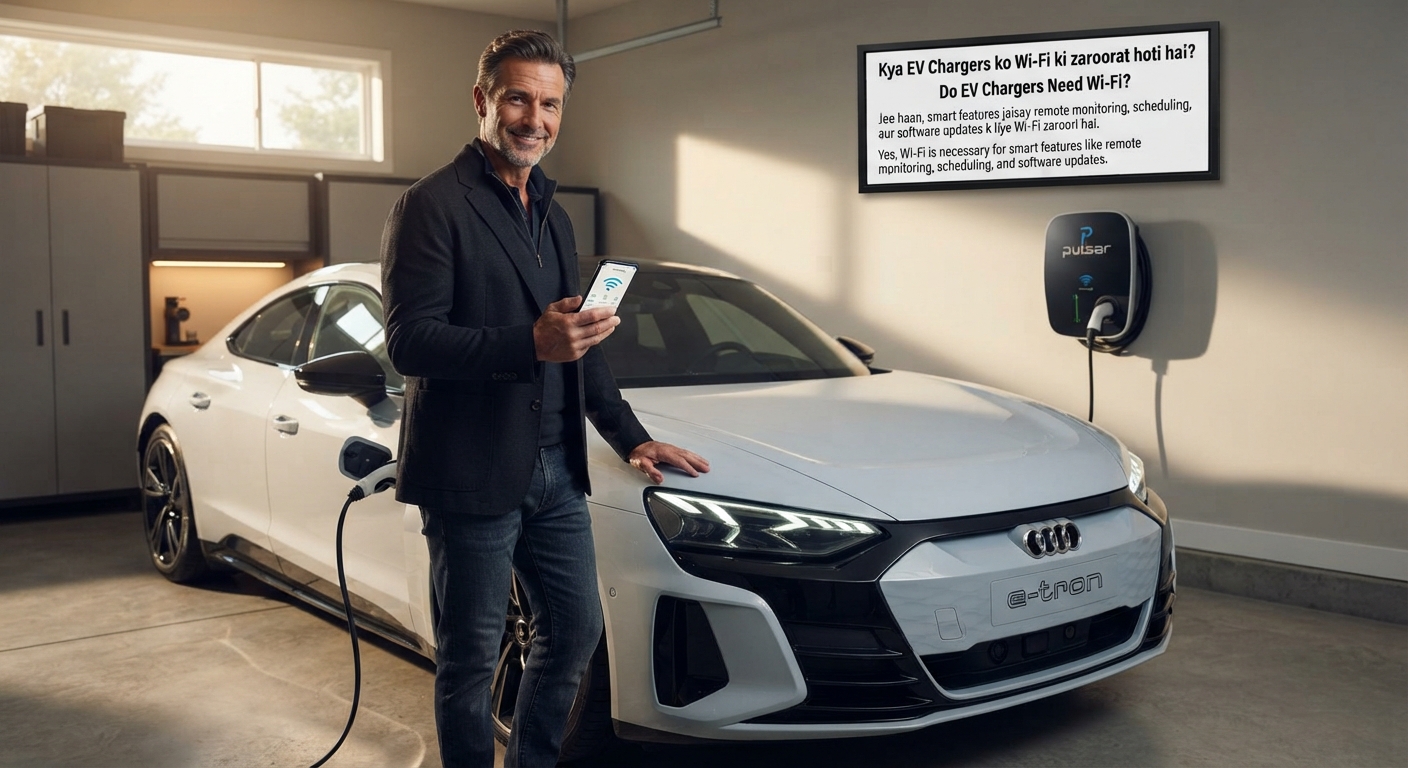
Do EV Chargers Need Wi-Fi?
Most EV chargers can charge your car without Wi-Fi or any internet connection. Wi-Fi is only needed for extras such…
Read More