

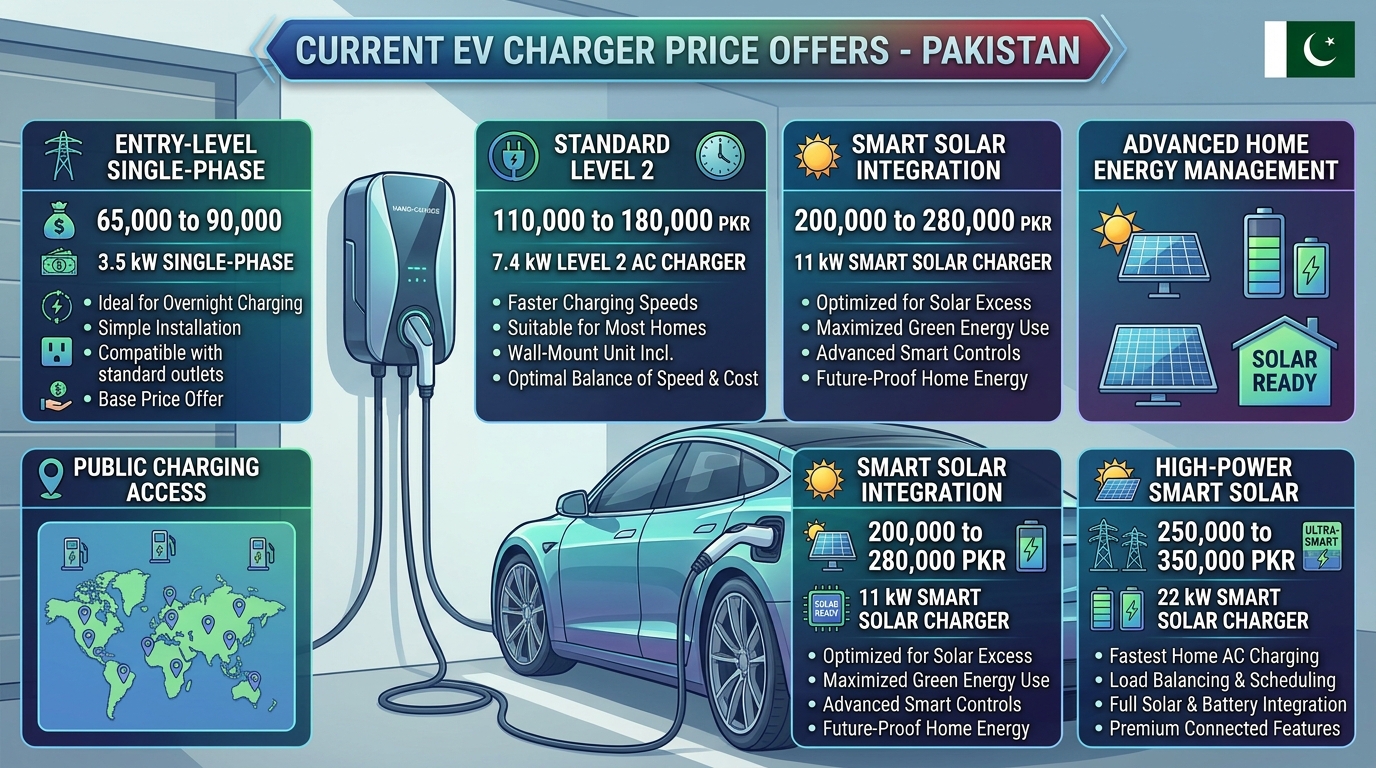
Upgrading your home electrical infrastructure to support electric vehicle (EV) charging provides predictable, low-cost daily refueling. Installing a dedicated 240-volt Level 2 home charging station delivers 20 to 44 miles of driving range per hour over a single-phase or three-phase branch circuit. However, when combining hardware costs with professional electrician labor, heavy-gauge copper wiring, and potential main distribution board upgrades, total installation costs can range from $1,000 to $3,000 globally (or PKR 250,000 to PKR 650,000 in Pakistan). Naturally, many homeowners ask: Can I get financing for an EV home charger installation?
Yes, you can finance an EV home charger installation. Funding options range from bundling the charger into auto financing loans and green home improvement loans to installer point-of-sale buy-now-pay-later (BNPL) installment plans, clean energy Modaraba/Shariah financing, and credit card monthly installment programs (0% APR).
Under National Electrical Code (NEC Article 625) standards, incorporating necessary electrical upgrades—such as dedicated 40A/60A circuit breakers, #6 AWG copper wire, and EVEMS load management—into a single financed package ensures a safe, fully code-compliant setup without massive upfront capital outlay.
For complete hardware reviews, installer guides, and panel load calculators, visit EV Charger Advisor.
1. Top Financing Channels for Home EV Charger Installations
Homeowners can leverage several distinct financing avenues to fund both the hardware and professional labor:
A. Auto Financing Loan Roll-In (Most Common)
-
Vehicle + Charger Bundle: Major commercial banks and automotive financing institutions allow buyers to roll the cost of a home Level 2 wallbox (and certified installation) directly into their primary vehicle loan.
-
Auto Policy 2026–31 Support: Expanded auto credit caps (e.g., State Bank auto loan limits up to PKR 1 Crore over 5-year tenures in Pakistan) allow home charging hardware and installation labor to be amortized inside affordable monthly car payments.
B. Clean Energy & Green Home Improvement Loans
-
Shariah-Compliant Green Financing & Modaraba Facilities: Specialized clean energy fintechs (such as Burj Clean Energy / Eco Fintech) and Islamic banks offer Shariah-compliant financing structures specifically tailored for residential EV charging infrastructure, solar PV systems, and battery storage.
-
Energy Efficiency Mortgages: Standard home equity loans or green mortgage top-ups allow property owners to borrow against home equity at lower interest rates to fund home electrification.
C. Installer Point-of-Sale (POS) & BNPL Installment Plans
-
0% Profit Markup BNPL Plans: Leading EV charger distributors and certified electrical contractors partner with BNPL platforms and commercial banks to offer 3-month to 12-month equal monthly installment (EMI) plans.
-
Credit Card EMI Facilities: Major banks allow customers to convert charger hardware purchases and installer invoices into 0% APR installment plans over 3 to 6 months using point-of-sale terminals.
To learn more about how charger power levels and wire sizes compare, check out our guide on EV charging types.
2. Technical Components to Include in Your Financed Quote
When applying for financing, ensure your installer’s quote covers all NEC-mandated safety and structural components to avoid out-of-pocket surprise expenses:
FINANCED INSTALLATION SCOPE CHECKLIST:
[Main Electrical Panel] ──► [Perform NEC Article 220 Load Check]
                                     │
         ┌───────────────────────────┴───────────────────────────┐
         ▼                                                       ▼
[Hardwired Wallbox Hardware]                         [Electrical Infrastructure Upgrades]
 • 7.4 kW to 22 kW Smart Unit                         • Dedicated 40A or 60A Double-Pole Breaker
 • Wi-Fi / App Scheduling                             • Heavy #6 AWG or #8 AWG Copper Conductors
 • Type B RCD / Surge Protection                      • Conduit, Junction Boxes & Wall Mounting
                                                      • EVEMS Load Management (If Panel Is Limited)
-
NEC 125% Continuous Load Sizing (NEC 625.42): Because EV charging is a continuous load, the branch circuit breaker and conductor wiring must be sized to 125% of the charger’s maximum output (e.g., a 48A continuous charger requires a 60A double-pole breaker and #6 AWG copper wire).
-
EVEMS Integration (NEC 625.42): If an existing 100A main service panel lacks spare capacity, financing an Electric Vehicle Energy Management System (EVEMS) under $1,000 allows dynamic current throttling, bypassing an expensive $2,500–$4,000 main service panel upgrade.
-
Municipal Permitting & Inspection Fees: Ensure permit application and certified inspection fees from local authorities having jurisdiction (AHJ) are included in the financed contract.
To explore Wi-Fi-enabled smart wallboxes engineered with integrated load management features, read our guide on smart chargers.
3. Step-by-Step Guide to Financing Your Installation
Follow this structured pathway to secure approval for your charger financing:
-
Step 1: Obtain a Detailed Itemized Quote: Request an all-inclusive quote from an EVITP-certified or licensed electrician detailing hardware model, wire gauge size, breaker rating, labor hours, and permits.
-
Step 2: Select the Financing Channel: Match your budget with auto loan roll-ins, credit card EMI programs, or dedicated green home improvement loans.
-
Step 3: Verify Warranty & Service Terms: Confirm that financed hardware carries a 2- to 5-year local replacement warranty and that installer workmanship is guaranteed for at least 12 months.
Comparison Table: EV Home Charger Financing Options
| Financing Option | Typical Loan Term | Interest / Profit Rate | Best Suited For |
| Auto Loan Roll-In | 3 to 5 Years | Standard Auto Loan Rate | New EV buyers financing vehicle + charger together |
| Installer BNPL / POS EMI | 3 to 12 Months | Often 0% APR / Low Processing Fee | Hardware purchases & direct contractor installs |
| Green / Shariah Clean Energy Loan | 1 to 3 Years | Subsidized / Low Profit Rate | Complete home energy + EV charger integration |
| Credit Card Installment (EMI) | 3 to 6 Months | 0% Markup (Select Banks) | Fast approval on retail hardware bundles |
Summary & Key Takeaways
-
Multiple Financing Routes Available: You can finance a Level 2 home charger through auto loans, green energy loans, installer BNPL plans, or credit card EMI programs.
-
Finance the Full Installation: Include hardware, heavy #6/#8 AWG copper conductors, 60A circuit breakers, and permitting fees in your financed quote.
-
Roll Charger into Auto Loans: Adding hardware and installation fees to your primary auto loan spreads expenses over 3 to 5 years at low monthly rates.
-
Enforce NEC Safety Standards: Ensure financed installations comply with NEC 625 continuous load rules (125% breaker sizing) and feature certified overcurrent protection.












Leave a Reply