
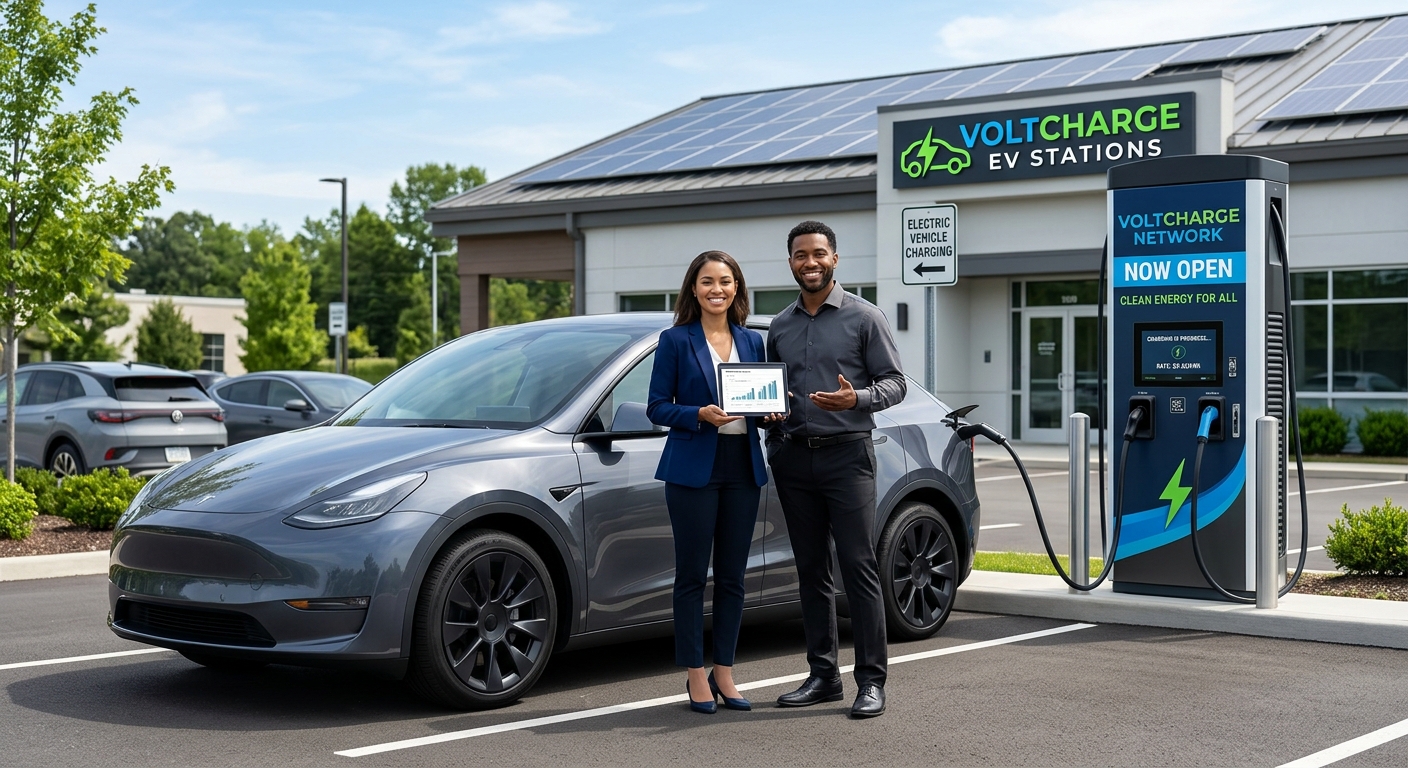
As electric vehicle (EV) adoption accelerates globally, the demand for fast, accessible, and reliable public charging infrastructure is surging. While home Level 2 chargers satisfy standard overnight replenishment, commercial fleet operators, long-distance highway travelers, and urban drivers without private driveways rely heavily on commercial charging networks. Consequently, prospective entrepreneurs and property owners frequently ask: Can you start an EV charging station business?
The short answer is: yes, you can start an EV charging station business by securing a high-traffic location, choosing the appropriate AC/DC hardware, navigating local utility and regulatory approvals, and implementing a profitable software-driven business model.
Whether starting as a private station operator, partnering with existing retail businesses, or managing a network hub, entering the EV infrastructure market allows investors to capture retail energy markups while benefiting from property foot-traffic monetization.
For complete hardware reviews, installer guides, and panel load calculators, visit EV Charger Advisor.
1. Four Primary Business Models for EV Charging
Choosing the right business model dictates your capital expenditure (CapEx), operational costs (OpEx), and revenue potential:
A. Pay-Per-Use Operator (Retail Electricity Markup)
-
How It Works: You purchase wholesale electricity from the local distribution company (DISCO) and resell it to EV drivers at a retail markup per kilowatt-hour ($\text{kWh}$) or per minute.
-
Best Suited For: Highway service plazas, dedicated charging hubs, and high-traffic fuel stations.
B. “Loss-Leader” Destination Charging (Foot Traffic Generation)
-
How It Works: Shopping centers, hotels, and restaurants offer subsidized or low-cost Level 2 charging to attract affluent EV drivers who spend money on-site during 1-to-3-hour dwell times.
C. Fleet & Commercial Workplace Charging
-
How It Works: Installing multi-port charging hubs tailored for corporate vehicle fleets, ride-hailing services, or logistics companies under long-term charging contracts.
D. Fully-Funded Revenue Share Partnerships
-
How It Works: Partnering with a Charge Point Operator (CPO) who installs and maintains hardware on your property in exchange for a monthly land lease or revenue-sharing percentage.
To learn more about how charger power levels compare, check out our guide on EV charging types.
2. Regulatory Approvals & Utility Feasibility
Commercial EV charging stations draw substantial electrical power, making regulatory compliance essential:
-
Utility Feasibility & NOC: Obtain a formal No Objection Certificate (NOC) and commercial tariff agreement from your local utility provider (e.g., LESCO, K-Electric, or regional DISCOs) to verify transformer capacity.
-
National Energy & Environmental Licenses: In jurisdictions like Pakistan, commercial stations must obtain a Form K License from the National Energy Efficiency & Conservation Authority (NEECA), alongside local engineering compliance certificates.
-
Open Charge Point Protocol (OCPP) Software: Ensure hardware utilizes OCPP 1.6J or 2.0.1 software integration to handle automated mobile app billing, remote monitoring, and dynamic load balancing.
To explore Wi-Fi-enabled smart wallboxes engineered with remote monitoring, read our guide on smart chargers.
Step-by-Step Mathematical Example: Station Profitability & Payback Math
Let us calculate the net monthly operating profit for a 60 kW Commercial DC Fast Charger serving 6 vehicles per day, assuming an average charge session of 30 kWh per vehicle ($180\text{ kWh/day}$ total).
Given Parameters:
-
Total Daily Energy Sold ($E_{\text{daily}}$): $180 \text{ kWh / day}$ ($5,400 \text{ kWh / month}$)
-
Wholesale Utility Electricity Cost: $\$0.18 \text{ per kWh}$ (or ~Rs 50/kWh)
-
Retail Selling Price to Customer: $\$0.45 \text{ per kWh}$ (or ~Rs 110/kWh)
-
Gross Retail Margin: $\$0.45 – \$0.18 = \mathbf{\$0.27 \text{ per kWh}}$
-
Fixed Monthly Overhead (Rent, Maintenance, Software fees): $\$450 \text{ / month}$
Calculation 1: Gross Monthly Sales Revenue ($R_{\text{gross}}$)
Calculation 2: Wholesale Electricity Expense ($C_{\text{energy}}$)
Calculation 3: Net Monthly Operating Profit ($P_{\text{net}}$)
Result Breakdown: Under moderate utilization (6 cars/day), a single 60 kW DC fast charger generates $1,008.00 in net monthly profit ($12,096/year), demonstrating a clear return on investment as station utilization grows.
Comparison Table: Commercial EV Charger Hardware Options
| Charger Category | Power Output Range | Average Hardware Setup Cost | Primary Target Location |
| Commercial Level 2 AC | 7 kW – 22 kW | Low ($1,000 – $3,000) | Hotels, workplaces, parking garages |
| Medium DC Fast Charger | 30 kW – 60 kW | Moderate ($15,000 – $35,000) | Retail centers, urban hubs |
| Ultra-Fast DC Charger | 120 kW – 360 kW+ | High ($40,000 – $100,000+) | Motorways, highway service plazas |
Summary & Key Takeaways
-
Yes, You Can Launch One: Starting an EV charging station business is highly viable with proper location selection, hardware choices, and software integration.
-
Location Determines Revenue: Select high-traffic sites near highways, commercial plazas, or corporate parks to maximize daily vehicle utilization.
-
Secure Proper Permits: Complete utility feasibility studies, DISCO NOCs, and national regulatory licenses (such as NEECA Form K) prior to breaking ground.
-
Utilize OCPP Platforms: Equip chargers with open-protocol software to automate mobile payments, monitor network health, and adjust dynamic pricing.













Leave a Reply