
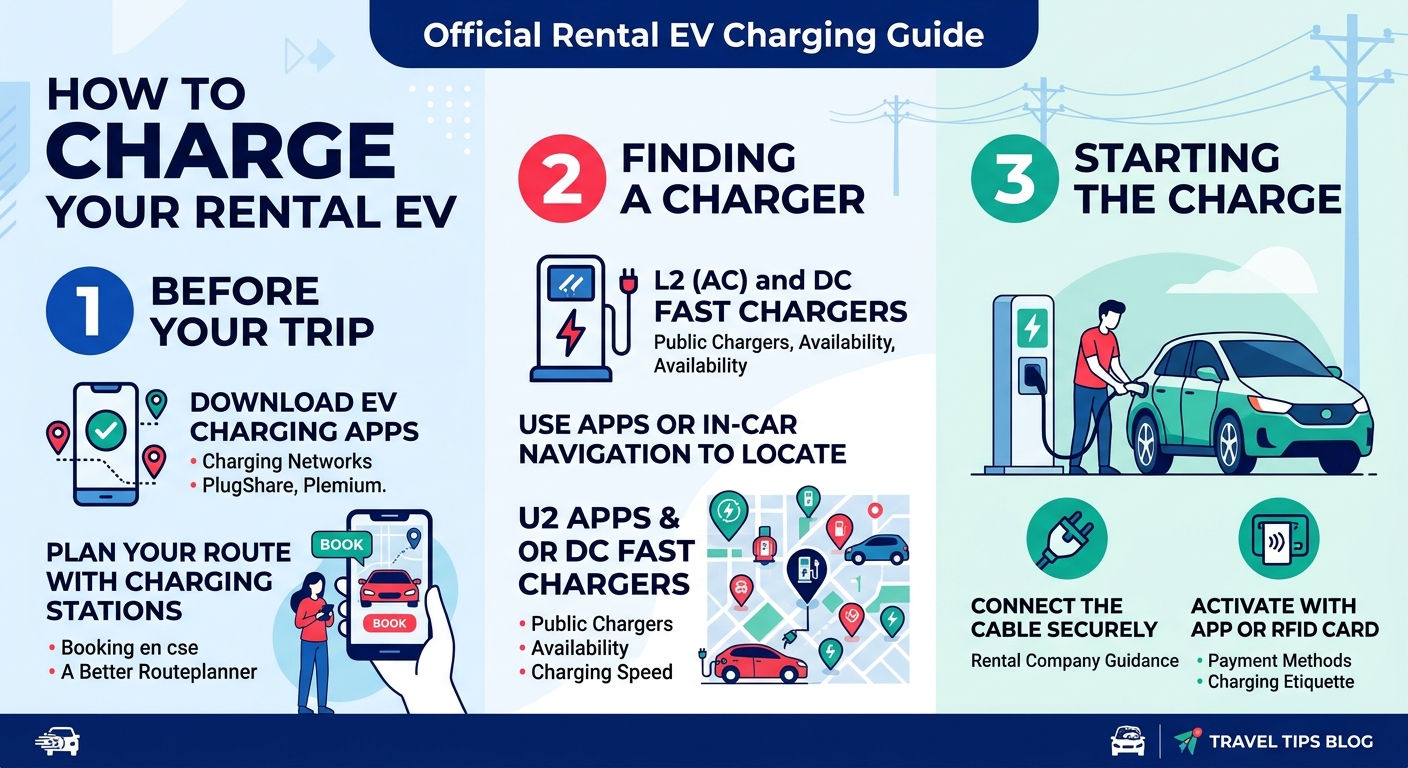
Switching to an electric vehicle (EV) brings instant long-term fuel savings, lower maintenance, and zero daily tailpipe emissions. Delivering 20 to 44 miles of range per hour over a high-voltage 240-volt single-phase supply, setting up a dedicated Level 2 wallbox is the gold standard for homeowners. However, for tenants living in apartments, multi-family units, or leased houses where modifying the property is restricted, a common question arises: How can I charge an EV when renting?
The short answer is: when renting, you can charge an EV seamlessly by relying on a combination of standard 120V Level 1 trickle charging overnight, workplace charging during office hours, and public DC fast charging networks.
By taking advantage of portable Mode 2 cables, smart charging apps, and local utility “Right-to-Charge” laws, tenants can maintain a reliable daily driving schedule without making permanent or expensive landlord modifications.
For complete hardware reviews, installer guides, and panel load calculators, visit EV Charger Advisor.
1. Three Core Charging Strategies for EV Renters
Lacking a permanently installed home wallbox does not mean you cannot own an EV. Renters successfully use three primary charging strategies:
A. Standard 120V Household Socket Charging (Level 1)
-
How It Works: Plug the portable charging cable (often called a “granny charger” or Mode 2 cable) included with your vehicle directly into a standard 120V domestic wall socket in your garage or carport.
-
Power Output: Delivers a continuous 10A ($1.2\text{ kW} – 1.4\text{ kW}$).
-
Added Range: Adds 3 to 5 miles of range per hour.
-
Best Suited For: Restoring 40 to 50 miles of daily range during a 10-to-12-hour overnight plug-in session, which easily covers typical daily urban commutes.
B. Workplace Charging
-
How It Works: Many modern office buildings, corporate parks, and industrial campuses offer free or subsidized Level 2 ($7.4\text{ kW}$) charging stations for employees.
-
The Benefit: Plugging in during an 8-hour workday completely replenishes your battery while you work, eliminating the need to charge at home during the week.
C. Public DC Fast Charging Networks (Level 3)
-
How It Works: Commercial fast chargers (such as Tesla Superchargers, Electrify America, ChargePoint, or EVgo) deliver high-voltage direct current directly to the battery.
-
Power Output: Ranges from 50 kW to 350 kW.
-
Recharge Speed: Restores 20% to 80% battery capacity in 15 to 30 minutes.
-
Best Practice: Combine a weekly grocery shopping trip or gym visit with a quick DC fast charge top-up.
To learn more about how charger power levels compare, check out our guide on EV charging types.
2. How to Request an EV Charger from Your Landlord
If Level 1 charging is insufficient for your long daily commute, you can request permission to install a Level 2 charger:
-
Leverage “Right-to-Charge” Laws: Many jurisdictions (including states like California, Colorado, Florida, and New York) have enacted legislation prohibiting landlords or HOAs from unreasonably denying a tenant’s request to install an EV charger, provided the tenant pays for installation and electricity usage.
-
Offer Portable / Non-Permanent Solutions: Propose using a 240V plug-in wallbox (NEMA 14-50) or an existing heavy-duty outlet (like an exterior dryer plug). If you move, you simply unplug the wallbox and take it with you.
-
Highlight Property Value Growth: Educate property owners that adding charging infrastructure increases rental property value and attracts high-quality, long-term tenants.
To explore Wi-Fi-enabled smart wallboxes engineered with mobile app tracking, read our guide on smart chargers.
Step-by-Step Mathematical Example: Weekly Energy Replenishment Strategy
Let us calculate a realistic weekly charging plan for a renter driving 250 miles per week in a $60\text{ kWh}$ electric vehicle, combining overnight Level 1 charging and one weekly public DC fast charge session.
Given Parameters:
-
Weekly Driving Distance: $250 \text{ Miles}$
-
EV Driving Efficiency: $3.3 \text{ Miles per kWh}$ ($0.303 \text{ kWh/mile}$)
-
Total Weekly Energy Demand: $\frac{250}{3.3} = \mathbf{75.75 \text{ kWh / week}}$
-
Overnight Level 1 Output (120V / 10A): $1.2 \text{ kW net}$
Calculation 1: Overnight Level 1 Energy Supply (4 Days/Week, 10 Hours/Night)
Calculation 2: Deficit to Be Covered by Public DC Fast Charging
Calculation 3: Public Fast Charging Time ($50\text{ kW}$ DC Fast Charger)
Result Breakdown: By plugging into a standard 120V wall socket 4 nights a week ($48\text{ kWh}$ restored), a renter only needs one 36-minute public fast charging session per week to cover 250 miles of driving.
Comparison Table: EV Charging Options for Renters
| Charging Method | Typical Setup Cost | Landlord Approval Required? | Added Range per Hour |
| Level 1 Wall Socket (120V) | $0 | No (Uses existing plug) | $3 – 5 \text{ miles/hr}$ |
| Workplace Level 2 (240V) | $0 (Provided by employer) | No | $25 – 30 \text{ miles/hr}$ |
| Plug-in Portable Level 2 | $300 – $600 | Yes (Requires 240V socket) | $25 – 30 \text{ miles/hr}$ |
| Public DC Fast Charging | Pay-per-use | No | $150 – 300+ \text{ miles/hr}$ |
Summary & Key Takeaways
-
No Driveway Needed: Renters can easily own an EV without a private charger by combining overnight Level 1 trickle charging, workplace charging, and public fast chargers.
-
Level 1 Adds 40+ Miles Overnight: Plugging into a standard 120V household socket overnight restores enough battery for typical daily commutes.
-
Check Right-to-Charge Laws: Look into regional tenant laws that protect your right to install removable charging hardware at your rental property.
-
Use Portable Plug-in Wallboxes: If installing a 240V outlet, opt for a plug-in Level 2 wallbox so you can pack it up and take it with you when moving.













Leave a Reply