
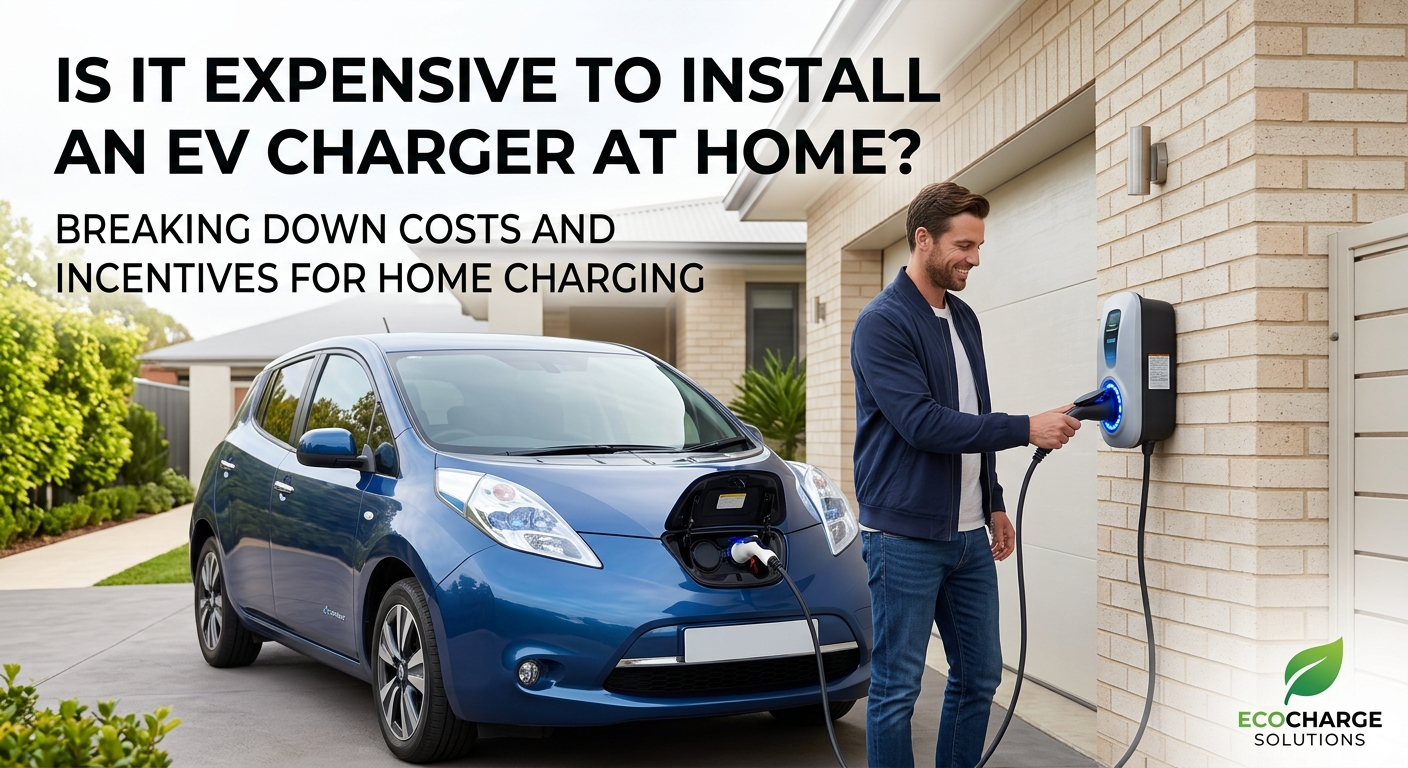
Upgrading to an electric vehicle (EV) brings instant cost benefits, allowing drivers to bypass volatile fuel prices and enjoy lower long-term vehicle maintenance. Delivering 20 to 44 miles of driving range per hour over a high-voltage 240-volt single-phase supply, setting up a dedicated Level 2 wallbox transforms home charging into a simple, overnight routine. However, during project planning, prospective owners frequently ask: Is it expensive to install an EV charger at home?
The short answer is: installing a home EV charger can range from moderate to expensive, typically costing anywhere from $1,000 to $5,000+ (USD) globally, or roughly 350,000 to 600,000 PKR in Pakistan, depending heavily on your home’s existing electrical infrastructure.
While a basic plug-and-play installation near an existing electrical panel is highly affordable, complex setups requiring main electrical service panel upgrades (e.g., upgrading from 100A to 200A), long conduit runs, or specialized earthing systems increase turnkey project costs.
For complete hardware reviews, installer guides, and panel load calculators, visit EV Charger Advisor.
1. Major Cost Components of a Home EV Charger Installation
To accurately budget for your home Level 2 installation, total expenses are divided into three primary categories:
A. Hardware Costs ($350 – $900 USD / ~100,000 – 250,000 PKR)
The physical Level 2 wallbox accounts for a significant portion of upfront expenses. Standard hardwired chargers (32A to 48A) with basic scheduling features fall on the economical end, while smart Wi-Fi-enabled wallboxes with solar integration, RFID access control, and dynamic load management fall into the premium price range.
B. Standard Installation Labor & Electrical Materials ($500 – $1,500 USD / ~150,000 – 300,000 PKR)
A licensed electrician must mount the wallbox, install a double-pole circuit breaker (40A to 60A), run heavy-gauge copper conductors (#8 or #6 AWG), and install protective conduit. Short cable runs adjacent to the main breaker panel keep labor costs low, whereas long runs across basements, attics, or underground driveways increase material expenses.
C. Electrical Service Panel Upgrades ($1,500 – $3,500+ USD / ~200,000 – 500,000 PKR)
If your property operates on an older 100-Amp main panel that lacks spare breaker capacity or thermal load margin under NEC Article 220 calculations, a panel upgrade to 200 Amps—or installing an Electric Vehicle Energy Management System (EVEMS) load shedder—is required.
To learn more about how charger power levels and wire sizes compare, check out our guide on EV charging types.
Step-by-Step Mathematical Example: Financial Payback Sizing
Let us perform a formal financial comparison evaluating the payback period of installing a $1,500 USD (~420,000 PKR) turnkey Level 2 home charger setup versus relying on public DC fast chargers for an annual driving distance of 12,000 miles.
Given Parameters:
-
Annual Commute: $12,000 \text{ Miles}$
-
EV Driving Efficiency: $3.3 \text{ Miles per kWh}$ ($0.303 \text{ kWh/mile}$)
-
Public Fast Charging Cost: $\$0.48 \text{ per kWh}$
-
Home Off-Peak Electricity Cost: $\$0.14 \text{ per kWh}$
-
Turnkey Home Charger & Installation Cost: $\$1,500$
Calculation 1: Annual kWh Required
Calculation 2: Annual Cost Comparison
Calculation 3: Investment Payback Period Math
Result Breakdown: While a $1,500 upfront investment requires initial capital, paying lower home electricity rates generates $1,236 in annual savings, completely paying off the installation in just 14.5 months.
To explore Wi-Fi-enabled smart wallboxes that optimize off-peak home charging rates, read our guide on smart chargers.
Comparison Table: Home EV Charger Installation Cost Tiers
| Installation Complexity Tier | Expected Scope of Work | Estimated Cost (USD) | Estimated Cost (PKR) |
| Basic (Low Cost) | Short wire run ($<10\text{ ft}$), existing panel capacity, hardwired wallbox | $800 – $1,400 | 250,000 – 400,000 PKR |
| Standard (Moderate Cost) | Moderate wire run ($20-50\text{ ft}$), outdoor wall mount, 40A/50A breaker | $1,400 – $2,500 | 400,000 – 600,000 PKR |
| Complex (High Cost) | 100A to 200A panel upgrade, underground trenching, long cable runs | $3,000 – $5,000+ | 700,000 – 1,200,000+ PKR |
Summary & Key Takeaways
-
Turnkey Costs Range $1,000–$5,000: The total cost of installing a Level 2 EV charger depends on your home’s existing electrical service and proximity to the main breaker panel.
-
Panel Capacity Is the Biggest Variable: Homes requiring a panel upgrade from 100A to 200A will see higher installation expenses.
-
Fast Payback Period: Massive savings on home electricity rates compared to public charging or petrol allow most home charger installations to pay for themselves in 1 to 2 years.
-
Hardwiring Saves Money: Hardwiring a wallbox directly avoids purchasing expensive GFCI breakers and heavy-duty 14-50 receptacles.













Leave a Reply